
By mid-2025, most American workers didn’t get a real raise-even if their paycheck went up. The numbers looked okay on paper: wage growth hit 2.9% year-over-year, and compensation costs for private workers rose 3.5%. But here’s the catch: inflation didn’t disappear. It was still at 2.7%. That means nearly half of all workers saw their buying power shrink, not grow. For many, a higher paycheck felt like a trick-more dollars, same groceries, same rent.
Who Actually Got Ahead?
The story of 2025’s wage growth wasn’t one story. It was two. On one side, engineers, lawyers, and marketing pros saw steady pay bumps. These high-skill roles kept climbing, partly because companies couldn’t find enough replacements. The Atlanta Fed found that workers in these fields were still getting income growth above 4%. But that wasn’t the norm. Most people weren’t in those jobs.
For the rest-cashiers, home health aides, fast food workers, childcare staff-wage growth stalled. Many saw increases that matched inflation, or even fell short. The Indeed Wage Tracker showed that 43% of workers didn’t outpace prices in June 2025. That’s up from 44% at the worst of the 2022 inflation spike. Progress? Barely. For workers already living paycheck to paycheck, this wasn’t recovery. It was standing still while everything else got more expensive.
The Real Wage Crash for Low-Income Workers
The Cleveland Fed dug deeper-and found something alarming. Between Q2 and Q3 of 2025, real hourly wages for workers in the bottom half of the pay scale dropped by four cents. Four cents. It sounds tiny. But when you’re earning $15 an hour, that’s a 0.27% loss. Multiply that over months, and it adds up. Cumulative real wage gains since 2020? They’d fallen to just $3.05 per hour. That’s not a raise. That’s a footnote.
Meanwhile, higher-paid workers saw their real wages climb. The gap wasn’t just growing-it was being carved out by corporate cost-cutting. Companies didn’t slash hours or cut salaries. Instead, they stopped hiring. The hire rate dropped. Layoffs stayed low, yes, but so did promotions. That meant upward mobility froze. If you weren’t already in a high-demand job, your odds of climbing didn’t improve. They got worse.
Why the Labor Market Looked Strong-But Wasn’t
The unemployment rate dropped to 4.4% in December 2025. News outlets called it a sign of resilience. But that number lied. It didn’t reflect more jobs. It reflected fewer people looking for them.
Job growth in 2025? Just 584,000 total. The weakest year since 2003 outside a recession. The Federal Reserve Bank of San Francisco confirmed: the slowdown hit every industry. Construction, retail, healthcare, tech-everywhere, hiring slowed. Why? Because the labor force shrank. Fewer immigrants arrived. More people dropped out. Retirements held steady. Younger workers hesitated. The pool of available workers got smaller, not bigger. So employers didn’t need to raise wages to fill slots-they just waited.
That’s why wages rose for some and stayed flat for others. The competition for talent stayed fierce in specialized fields. But for everyone else? There was no shortage of applicants. So companies didn’t have to pay more. They didn’t have to. And they didn’t.
The Invisible Cost: Expectations Are Cracking
It’s not just about today’s paychecks. It’s about what people believe will happen tomorrow.
The New York Fed’s December 2025 survey showed something chilling: job-finding expectations hit a record low. People didn’t believe they could land a better job. Job-loss expectations rose. Delinquency expectations-the chance you’ll fall behind on bills-climbed to the highest level since the pandemic. Yet, oddly, people still thought their household finances would hold steady. That disconnect is dangerous. It means people are spending based on hope, not reality.
When you believe you can’t move up, and you’re scared you might lose what you have, you stop spending. You save. Or you go deeper into debt. Either way, the economy slows. And when consumers pull back, businesses cut back even more. It’s a loop. And 2025 was the year it started tightening.

What This Means for Workers in 2026
Here’s the brutal truth: 2025 didn’t fix wage inequality. It made it more visible.
Companies learned they could hold the line on pay for most workers. Inflation cooled, but not enough to help those at the bottom. The Fed kept rates high, hoping to tame prices. But in doing so, they made hiring even harder for small businesses and startups. The result? A two-tier labor market:
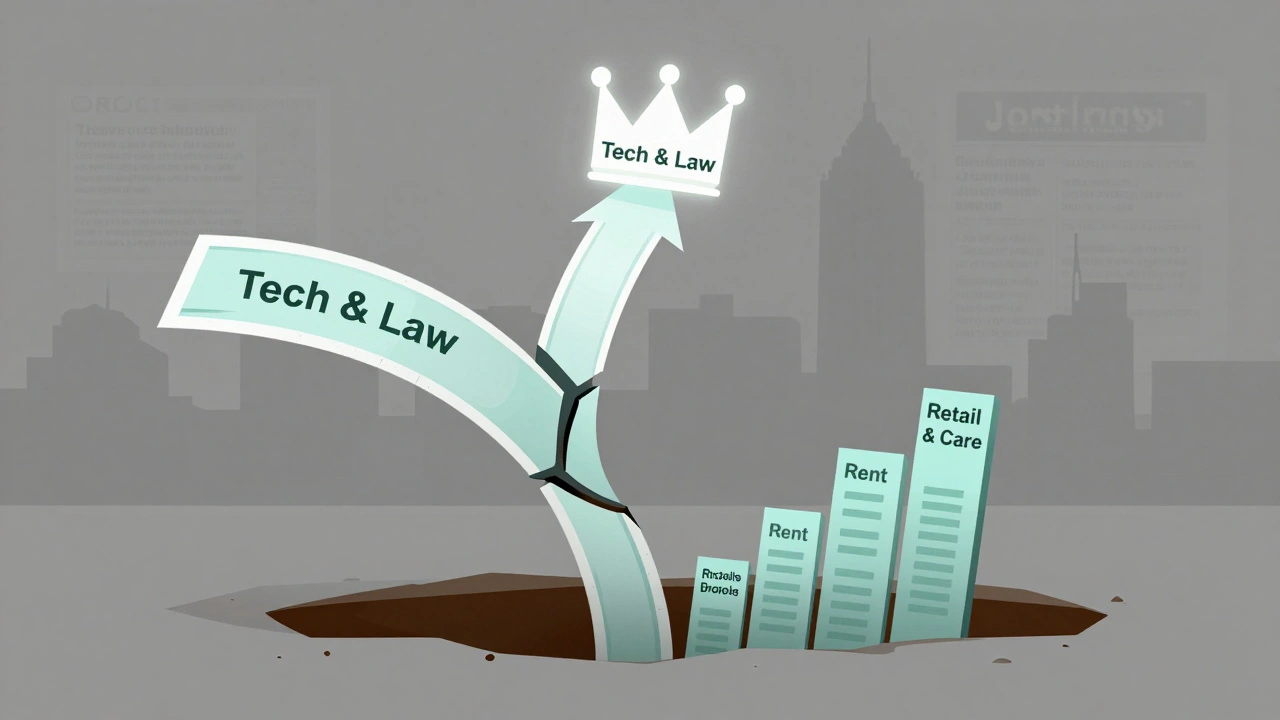
- Top tier: Skilled workers in tech, engineering, and healthcare-still seeing real gains.
- Bottom tier: Essential workers in service, care, and retail-stuck in place, watching prices rise.
And the gap isn’t closing. It’s being cemented by policy, hiring patterns, and economic inertia. If you’re in the top 57%, you’re doing okay. If you’re in the bottom 43%? You’re not just falling behind. You’re being left out.
The Bigger Picture: Wages Are No Longer a Safety Net
For decades, a raise meant security. Even a small one gave you breathing room. In 2025, that’s gone. Paychecks no longer automatically protect you from inflation. They don’t guarantee mobility. They don’t even guarantee stability.
Employers have shifted from “pay to retain” to “pay only if you’re rare.” That’s a fundamental change. And it’s not going back. The workers who benefited from pandemic-era labor shortages-those who got raises just because jobs were hard to fill-won’t get that again. The market reset. And the reset didn’t favor the majority.
The real question now isn’t whether wages will rise. It’s whether they’ll rise for you. And for millions of Americans, the answer is no.
Why did wage growth slow in 2025 if inflation was still high?
Wage growth slowed because employers stopped competing as fiercely for workers. After the pandemic surge, hiring cooled across nearly every industry. Companies didn’t need to raise pay to fill jobs-there were enough applicants. Meanwhile, inflation didn’t vanish; it just dropped from 9% to 2.7%. That meant even modest wage increases no longer outpaced prices, especially for lower-income workers.
Who benefited most from wage growth in 2025?
Workers in high-skill, hard-to-replace roles-like electrical engineers, lawyers, and IT specialists-saw the biggest gains. These jobs had persistent shortages, so employers kept raising pay to attract talent. Meanwhile, workers in food service, childcare, and retail saw pay increases that barely matched inflation, or fell short. The benefits were concentrated at the top.
Why did unemployment drop even though few jobs were added?
Unemployment fell because fewer people were looking for work. The labor force shrank due to lower immigration, more retirees, and people leaving the workforce permanently. So even with weak hiring, the unemployment rate dropped because the denominator-total workers looking for jobs-got smaller. It wasn’t a sign of strength; it was a sign of retreat.
Did real wages improve for everyone in 2025?
No. Only 57% of workers saw their real wages rise above inflation. The other 43% lost ground. For those in the bottom half of earners, real hourly wages actually declined in Q3 2025. This wasn’t a broad recovery-it was a split. A few did well. Many did worse.
Is wage growth likely to rebound in 2026?
Unlikely for most. Companies are still focused on controlling costs. Hiring remains slow, and labor supply isn’t growing. Unless inflation spikes again or Congress forces wage hikes, the pattern will continue: strong gains for specialized workers, stagnation for everyone else. The labor market isn’t broken-it’s stratified.