Health Facility Climate Resilience Calculator
Assess Your Facility's Climate Resilience
This tool helps health facilities identify climate vulnerabilities and implement WHO's Climate-Health Blueprint recommendations. Based on your inputs, you'll receive tailored adaptation strategies.
Risk Assessment Results
Current Vulnerability Level
High risk of service disruption during climate events. 30% chance of power failure during extreme heatwaves.
WHO recommends reducing vulnerability to below 30% within 2 years.
Key Vulnerabilities
- No backup power during extreme heat events
- Medical storage at ground level (flood risk)
- No climate-adapted building design
WHO Blueprint Adaptation Recommendations
Solar Power Integration
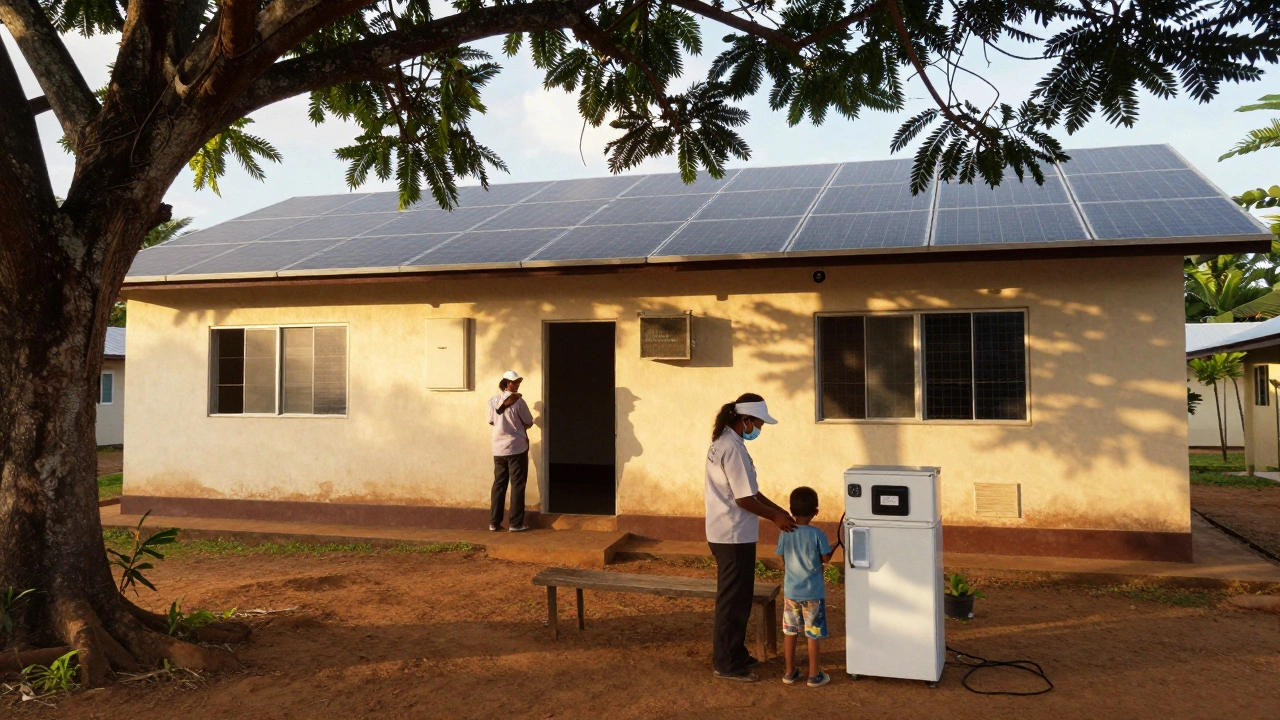
Install solar panels with battery storage for critical services. Reduces carbon footprint by 40% and ensures power during outages.
Elevated Medical Storage
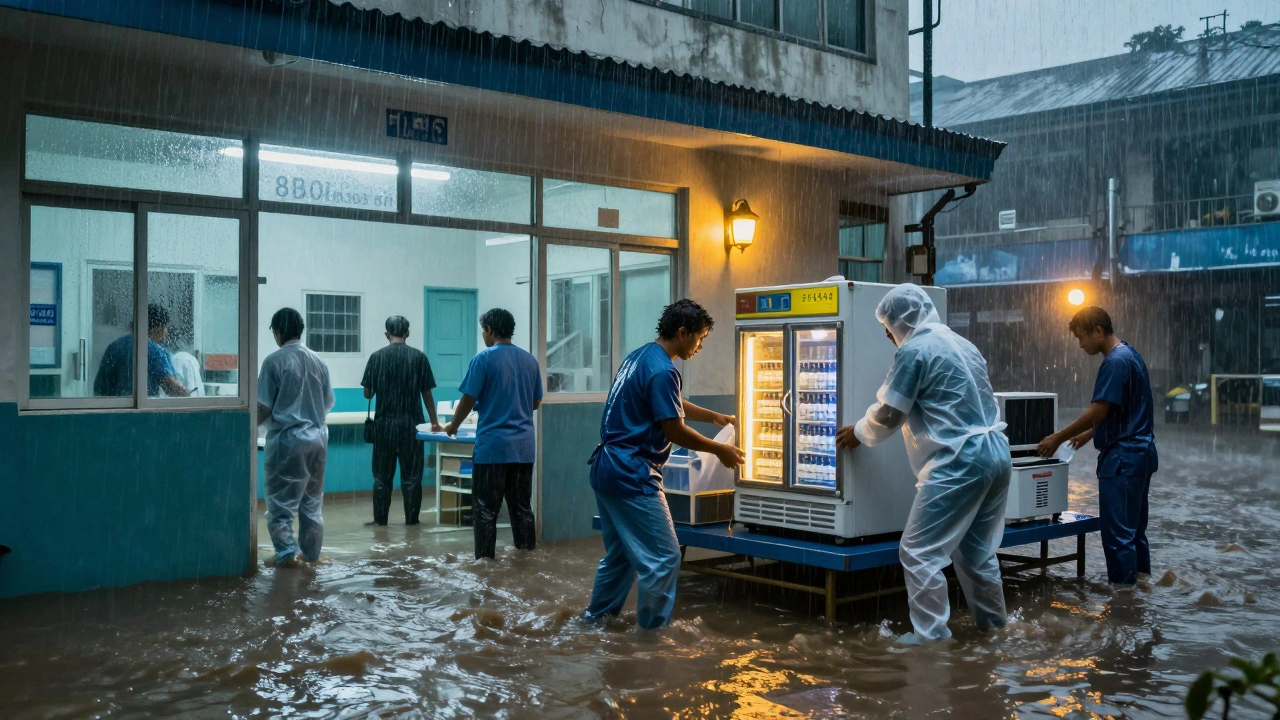
Raise vaccine and medicine storage to 1.5m above ground level. Prevents damage during flooding events.
Passive Cooling Design
Implement natural ventilation, reflective roofing, and green shading. Reduces cooling needs by 50% during heatwaves.
Estimated Impact
Reduces vulnerability by 55% within 1 year
Carbon footprint reduction: 25 tons CO2/year
Cost savings: $8,500/year on energy
Implementation Timeline
- Week 1-2: Assess current infrastructure
- Week 3-4: Procure solar equipment
- Week 5-6: Install and test systems
When hospitals flood during a hurricane, when air pollution spikes and asthma cases surge, when heatwaves knock out power and refrigeration for vaccines - health systems aren’t just struggling to treat patients. They’re breaking down. And they’re part of the problem too. The World Health Organization (WHO) doesn’t see climate change as a distant environmental threat. It sees it as a direct, daily threat to every clinic, every ambulance, every hospital bed. That’s why, in November 2023, WHO launched its Climate-Health Blueprint: a practical, no-nonsense plan to make health systems both tougher and cleaner.
Health Systems Are Both Victims and Villains
Think about it. A hospital in Manila needs air conditioning to keep medicines from spoiling. But that air conditioner runs on diesel or grid power, spewing CO2. A rural clinic in Bangladesh relies on kerosene lamps for lighting because the grid fails during monsoons. Those lamps pollute the air and cost families money they don’t have. Meanwhile, rising temperatures are making dengue fever spread farther, and wildfires are choking cities with smoke. The same system trying to save lives is also heating up the planet.That’s the uncomfortable truth WHO lays out: the global health sector contributes about 5% of all greenhouse gas emissions. That’s more than aviation. And yet, health systems are among the first to collapse when climate disasters hit. In 2024, floods in Pakistan shut down over 1,200 health facilities. In 2023, heatwaves in India forced emergency rooms to turn away patients because there was no power for cooling. WHO’s blueprint says: stop treating this as two separate problems. Fix both at once.
The Four Pillars of the Blueprint
The WHO framework isn’t a list of vague goals. It’s a checklist for action. Four clear objectives guide every country, whether they’re rich or poor:- Collaborate across sectors - Health ministries can’t do this alone. They need to work with energy, transport, water, and agriculture agencies. A hospital’s power source? That’s an energy policy issue. A city’s heat island effect? That’s urban planning.
- Strengthen core health functions - That means making sure supply chains don’t break during floods, training staff to handle heat-related illness, and keeping emergency generators fueled. It also means designing buildings to stay cool without AC, using passive ventilation and shading.
- Act on specific risks - If your region gets more dengue, stock up on diagnostics and mosquito nets. If air pollution spikes in winter, expand asthma clinics. If sea levels rise on your coast, move critical equipment to higher ground.
- Define who does what - Every health minister, hospital director, and city planner needs to know their role. No more blaming someone else.
Crucially, the blueprint doesn’t treat all countries the same. A hospital in Sweden can switch to solar panels overnight. A clinic in Vanuatu needs to first get reliable electricity. WHO’s approach recognizes that. It pushes for smart, step-by-step upgrades - not impossible perfection.
Asia-Pacific: The Frontline
More than 2.2 billion people live in the Asia-Pacific region. It’s also the most climate-vulnerable place on Earth. Rising seas are swallowing islands. Cities like Jakarta and Manila are sinking. Heatwaves hit harder here than anywhere else. And health systems here are stretched thin.In October 2025, WHO rolled out its five-year Asia-Pacific strategy - not as a follow-up, but as the engine of the global plan. It’s built on three concrete priorities:
- Climate-resilient health systems - Hospitals that stay open during floods. Clinics with solar-powered refrigerators. Emergency plans for heatwaves that include cooling centers and outreach to elderly residents.
- Healthy urban and island systems - Cities need cleaner air, not just more hospitals. That means electric ambulances, green spaces to cool neighborhoods, and water systems that don’t get contaminated after storms. For Pacific islands, it means moving clinics inland before the sea rises.
- Sustainable food systems - Malnutrition is rising as crops fail. WHO is pushing health systems to partner with farmers, not just treat the sick. Better nutrition = stronger immune systems = less strain on clinics.
The WHO Asia-Pacific Centre for Environment and Health, based in Seoul, is the nerve center for this work. It doesn’t just give advice. It trains nurses in climate-first care, helps cities build heat action plans, and connects island health workers with engineers who design flood-proof clinics.
One Health: The Bigger Picture
WHO’s strategy doesn’t stop at hospitals. It sees health as part of a bigger system - the “One Health” approach. Human health is tied to animal health, which is tied to environmental health. When forests burn, bats move into cities - and viruses jump to humans. When rivers dry up, livestock die - and people lose protein and income. When air pollution rises, children’s lungs are damaged for life.This means health ministries now need to talk to wildlife agencies, farmers, and water boards. A single policy change - like banning open burning of crop waste - can cut air pollution, reduce respiratory hospital visits, and prevent wildfires. The blueprint says: stop silos. Start connections.
What Countries Must Do Now
The blueprint doesn’t work unless governments act. WHO gives the tools. But each country must build its own path. Here’s what that looks like in practice:- Align policies - Health ministries must have a seat at climate negotiation tables. Climate adaptation plans must include health impact assessments.
- Track progress - How many hospitals have backup power? How much CO2 does your health system emit? You can’t fix what you don’t measure.
- Find the money - Climate funding for health is still too low. WHO is pushing donor countries to direct at least 15% of climate finance to health infrastructure.
- Partner across sectors - A hospital can’t fix its own power grid. It needs energy companies. It can’t reduce air pollution alone. It needs city planners and transport agencies.
Some countries are already ahead. Rwanda built solar-powered health centers that work even during blackouts. Sri Lanka trained 5,000 community health workers to spot early signs of heat stress. Bangladesh moved 800 clinics off flood-prone land. These aren’t miracles. They’re smart, low-cost steps anyone can take.

Why This Matters Beyond Health
This isn’t just about saving lives in hospitals. It’s about saving economies. When a health system collapses during a climate disaster, businesses shut down. Workers miss days. Children fall behind in school. The cost? WHO estimates climate-related health damage could cost the global economy $4 trillion a year by 2030.But the reverse is also true. When health systems become resilient, they become anchors for recovery. A clinic that stays open after a flood becomes a hub for food distribution, emergency shelter, and mental health support. A solar-powered hospital reduces long-term energy costs. A clean ambulance fleet cuts fuel spending. Every dollar spent on climate-proofing health care pays back - in lives saved, in money saved, in stability restored.
And it ties directly to the UN’s Sustainable Development Goals. No health equity without climate resilience. No clean water without climate-smart infrastructure. No poverty reduction without health systems that don’t collapse when the weather turns.
What Comes Next
The WHO blueprint isn’t a final document. It’s a living plan. In 2026, countries will start reporting progress using standardized metrics. The Asia-Pacific strategy will expand to Africa and Latin America. New funding models - like climate-health bonds - are being tested. And WHO is pushing for climate-health training to become mandatory for all health professionals.The message is clear: you can’t have a healthy population on a dying planet. And you can’t fix the planet by ignoring the people who keep it alive - the nurses, the cleaners, the paramedics, the pharmacists. The WHO Climate-Health Blueprint isn’t about saving the environment. It’s about saving health care - and through it, saving communities, economies, and futures.