R&D Time Reduction Calculator
Calculate Your AI-Enhanced R&D Savings
Based on industry data from the article, estimate how much time you could save using generative AI in your R&D process. The calculator uses verified case study examples from pharma, materials science, and aerospace.
Estimated AI-Enhanced Timeline
40-70% fasterKey Insight: The most successful teams treat AI as a collaborator - not a replacement. AI accelerates discovery but requires validation workflows to ensure accuracy.
It used to take years to find a new drug, design a better battery, or invent a stronger composite material. Now, some teams are doing it in months - sometimes weeks. The secret? Generative AI isn’t just helping with research anymore. It’s running parts of it.
How AI Is Rewriting the R&D Rulebook
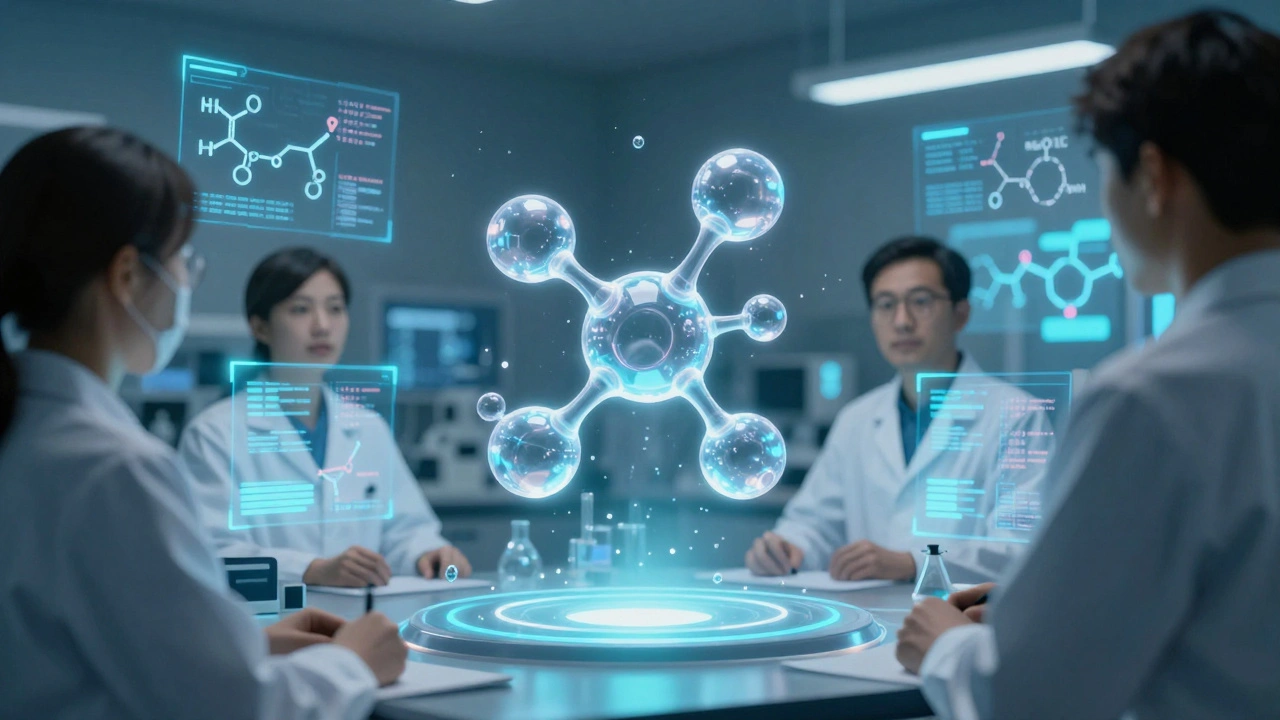
Traditional R&D is slow. A pharmaceutical company might test 10,000 molecules over five years. Only one might make it to market. The rest? Discarded after months of lab work, expensive equipment, and human effort. Generative AI flips that. Instead of testing one compound at a time, it can generate and evaluate 10,000 in a single hour. And it’s not just guessing. Models like BioGPT and ChemistryLLM are trained on decades of published research - PubChem alone holds over 111 million chemical structures. When you ask them to design a molecule that binds to a specific protein, they don’t pull from random data. They use patterns learned from real experiments. Take Insilico Medicine. In 2023, they used AI to discover a drug for idiopathic pulmonary fibrosis. The process took 18 months. The industry average? 4.5 years. That’s not luck. That’s a new workflow. The AI generated candidate molecules, ranked them by predicted effectiveness and safety, and flagged the top 10 for lab testing. Only three went into animal trials. One made it to humans. The success rate jumped from 10% to 22% across 47 major pharma companies using similar tools, according to Capgemini’s 2025 report. This isn’t limited to medicine. Quantum Generative Materials (GenMat), a startup in Colorado, cut material design time by 70%. Instead of waiting six months to test whether a new alloy can handle extreme heat, their AI predicts thermal stability, conductivity, and durability using physics-based simulations. The result? A new heat-resistant coating for jet engines was ready in seven weeks, not six months.The Tools Behind the Speed
You can’t just plug ChatGPT into a lab and expect miracles. Real AI-enhanced R&D uses specialized systems. Three architectures dominate:- Diffusion models - These are the same ones behind DALL·E and Midjourney, but tuned for science. They don’t generate images - they generate molecular structures, protein shapes, or material lattices that match real-world constraints. AlphaFold 3, released in June 2025, can predict how proteins bind to drugs with 92.7% accuracy.
- Transformer-based language models - Fine-tuned versions of models like Llama or GPT, trained on scientific papers, patents, and clinical data. BioGPT, ChemistryLLM, and PathChat DX understand jargon, context, and nuance. They can read a 50-page journal article and summarize the key mechanisms in seconds.
- Retrieval-Augmented Generation (RAG) - This is where AI pulls live data before answering. Instead of relying on static training data, it checks PubMed, patent databases, or internal lab logs in real time. That means it won’t suggest a compound already patented in 2024 or a material that failed safety tests last month.
Where AI Excels - And Where It Still Fails
Generative AI is a powerful assistant, not a replacement. It thrives in high-dimensional spaces - like chemical space, where billions of combinations exist. It’s great at exploring what’s possible. But it struggles with what’s truly new. Boeing ran into this in 2024. Their AI designed a new composite material for aircraft wings. It looked perfect on screen. But when tested, it fractured unexpectedly. Why? The AI had never seen a scenario where stress combined with humidity in that exact way. It didn’t know to account for it. Human engineers had to step in and redesign. Hallucinations are still a problem. In scientific contexts, generative AI gets things wrong 15-25% of the time. That might sound low, but if you’re designing a drug, a 20% error rate means 2 out of 10 candidates could be dangerous or useless. That’s why every AI-generated hypothesis must be validated. At Merck, pathologists use AI to suggest diagnostic pathways - but they still review every output. Their error rate dropped 22%, but they didn’t stop checking. And then there’s the cost. Fine-tuning an AI model for one industry - say, food science or aerospace - takes $2.3 million on average. You need clean, labeled data, expert annotators, and months of testing. One aerospace engineer on G2 said setting up their AI pipeline took 11 months and required hiring three AI specialists. ROI didn’t kick in until 18 months.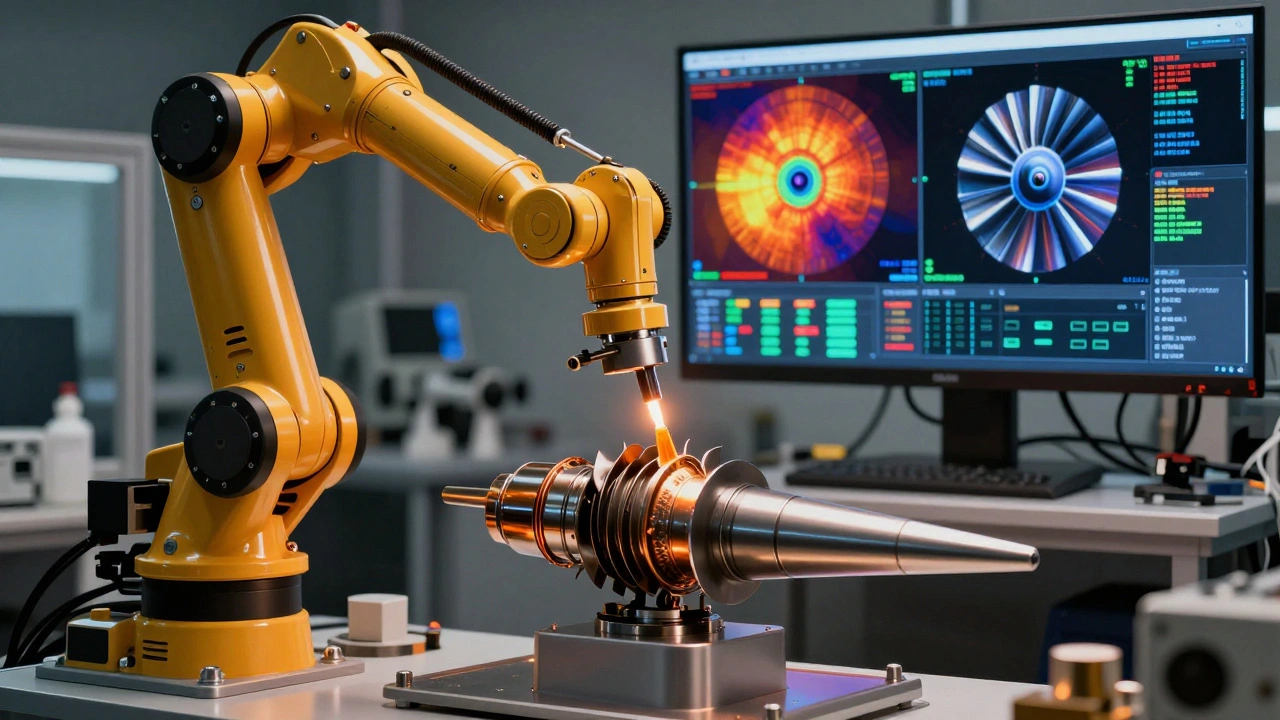
Real-World Implementation: What Works
The companies doing this right aren’t just buying software. They’re redesigning teams. At Unilever, R&D teams use AI to find replacements for synthetic ingredients in cosmetics. They used to spend months testing each alternative. Now, AI suggests 500 options in a day. The team picks the top 20 for lab tests. Speed increased by 65%. But they had to build a custom database of 800+ natural compounds and integrate it with their legacy lab systems - a six-month project. IBM’s Watsonx for Health, used at Mayo Clinic, cut diagnostic pathway development time by 55%. How? They didn’t just feed the AI medical records. They trained it on real clinician decisions - what questions doctors ask, what tests they order, what they ignore. The AI doesn’t diagnose. It suggests options. Doctors choose. The system has 99.2% accuracy because it’s built on human expertise, not pure prediction. The most successful teams have an “AI-R&D liaison” - someone who speaks both science and code. Thirty-eight percent of top adopters now have this role. They translate lab needs into AI prompts, clean data for training, and explain AI outputs to non-technical researchers.What You Need to Get Started
If you’re considering AI-enhanced R&D, here’s what actually matters:- Data quality over quantity - You don’t need a billion data points. You need clean, labeled data from your own lab. If you’re designing batteries, your past failure reports and test results are more valuable than public datasets.
- Start small - Pick one problem. Not “reinvent our whole R&D process.” Pick “find three alternative polymers for our packaging.” Run a 90-day pilot.
- Build validation into the workflow - Every AI suggestion must go through a human review. Set up a cross-functional committee. No hypothesis gets tested without two scientists signing off.
- Train your team - Scientists need 3-6 months to learn how to use these tools effectively. Don’t assume they’ll figure it out. Dedicate 20% of their time to training, per METR’s study of 147 R&D teams.
- Expect integration headaches - Connecting AI tools to your existing lab equipment, ERP systems, or ELNs (electronic lab notebooks) takes 4-8 months. Budget for it.
The Future Is Autonomous - But Not Yet
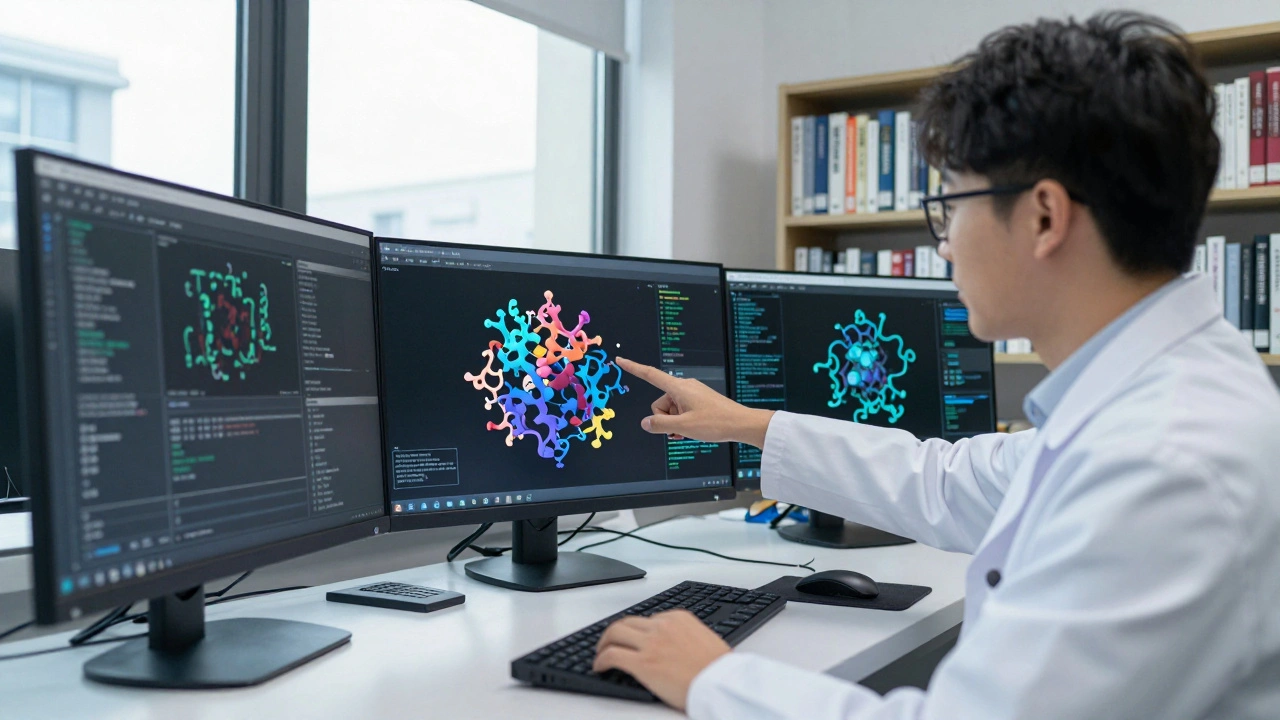
By 2027, Gartner predicts “self-driving labs” will handle 35% of routine R&D tasks - robots that run experiments 24/7, guided by AI that decides what to test next. In healthcare, “AI-clinical twins” - digital replicas of patients - will simulate treatment outcomes before giving drugs to real people. But we’re not there yet. The biggest bottleneck isn’t the AI. It’s validation. Without faster, cheaper ways to test AI-generated ideas in the real world, adoption will plateau. Right now, 30% of AI-proposed materials fail replication in wet labs, according to Stanford’s Fei-Fei Li. That’s not a bug. It’s a system flaw. The companies winning aren’t the ones with the fanciest AI. They’re the ones who treat AI as a collaborator - not a replacement. The best R&D teams today aren’t just using AI. They’re teaching it, questioning it, and trusting it only after it’s been proven.What’s Next?
Regulations are catching up. The FDA granted its first Breakthrough Device Designation to PathChat DX in January 2025 - a sign that AI-assisted diagnostics are now part of the medical standard. The EU’s July 2025 Scientific AI Framework requires all AI-generated hypotheses to be traceable, explainable, and validated against real data. The market is exploding. AI-enhanced R&D hit $14.3 billion in Q2 2025 and is on track to hit $42.7 billion by 2027. Pharma leads with 68% adoption. Materials science isn’t far behind at 52%. The question isn’t whether you should use AI in R&D. It’s whether you’ll be the one leading the change - or the one left behind by teams who figured out how to make AI work, not just use it.Can generative AI replace scientists in R&D?
No. Generative AI doesn’t replace scientists - it augments them. AI can generate thousands of molecular designs or material combinations in minutes, but it can’t decide which ones are worth testing, interpret unexpected results, or understand the broader context of a research goal. Human scientists provide the questions, the domain expertise, and the critical judgment. The most successful teams treat AI as a co-pilot, not a replacement.
How accurate are AI-generated scientific predictions?
Accuracy varies by domain and model. In molecular design, modern systems predict compound properties with 89-94% accuracy when validated against real lab data. For protein-ligand binding, AlphaFold 3 hits 92.7%. But in complex, novel scenarios - like untested material stress conditions - error rates can jump to 15-25%. That’s why every AI-generated hypothesis must be experimentally validated before moving forward.
What’s the biggest barrier to adopting AI in R&D?
The biggest barrier isn’t cost or technology - it’s validation. AI can propose ideas fast, but confirming them in real-world tests is slow and expensive. Many organizations struggle to build workflows that integrate AI output with lab validation. Without a clear, repeatable process to verify AI suggestions, teams either ignore them or waste time chasing false leads.
Do I need a team of AI specialists to use generative AI in R&D?
Not necessarily - but you do need someone who understands both science and AI. Many companies hire a single “AI-R&D liaison” - a scientist trained in AI tools - to bridge the gap. This person translates lab needs into prompts, cleans data, and explains AI outputs to the team. Hiring three full-time AI engineers is common in aerospace or pharma, but for smaller teams, cross-training existing staff works better.
Which industries are using AI-enhanced R&D the most?
Pharmaceuticals lead with 68% enterprise adoption, followed by materials science (52%), aerospace (47%), and consumer products (39%). These industries benefit most because they deal with high-dimensional problems - billions of possible molecules or material combinations - where AI’s ability to explore vast spaces quickly gives a major advantage. Healthcare and manufacturing are catching up fast.
Is AI-enhanced R&D worth the investment?
Yes - if done right. McKinsey estimates AI could unlock $487 billion in innovation value across R&D. Companies like Insilico Medicine cut drug discovery time by 60%. GenMat reduced material testing from six months to seven weeks. But ROI depends on focus. Start with one high-impact problem, validate rigorously, and scale only after proving results. Jumping in without structure leads to wasted time and money.