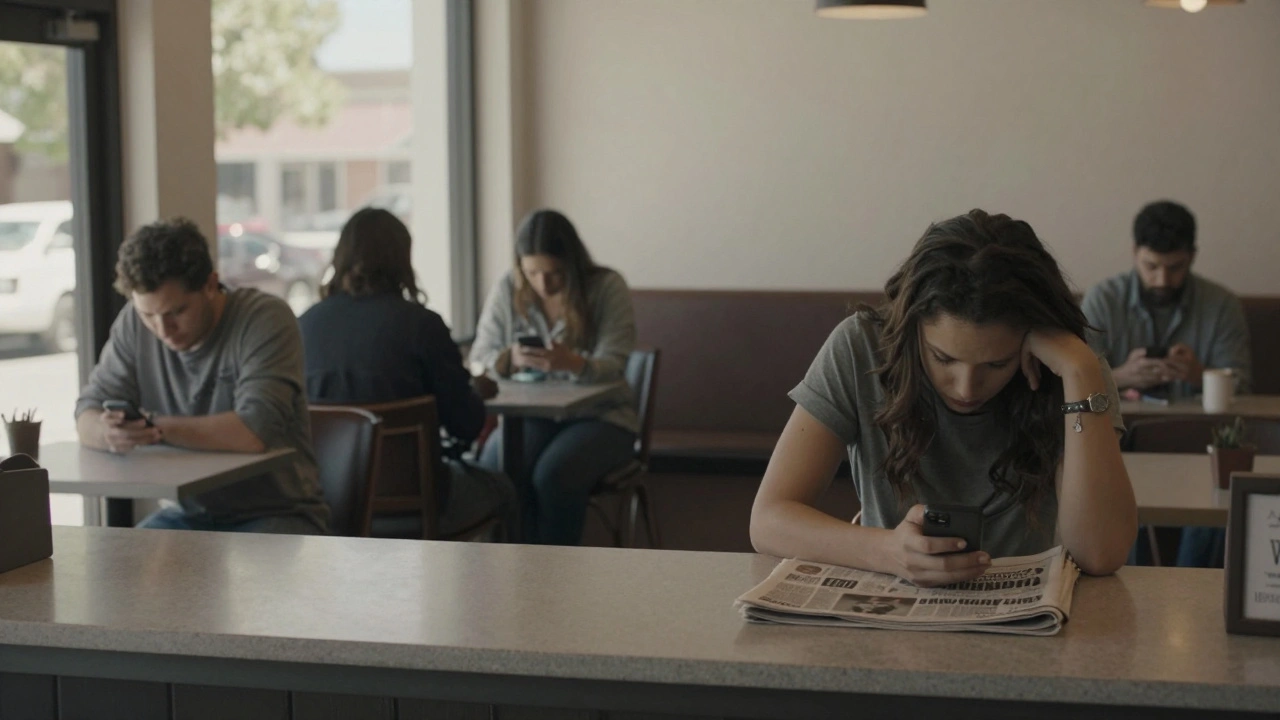
By 2025, if you walked into a coffee shop in Albuquerque, Berlin, or Tokyo, you’d notice something different. People aren’t just scrolling more-they’re quieter. More guarded. Less likely to join the neighborhood cleanup, attend a town hall, or even take public transit without checking the news first. This isn’t just fatigue. It’s anxiety-deep, persistent, and shaped by three overlapping crises: war, terrorism, and the lingering shadow of a global pandemic.
The Numbers Don’t Lie
In 2021, nearly 360 million people worldwide were diagnosed with an anxiety disorder. That’s one in every 22 people. By 2024, the U.S. alone saw 43% of adults say their anxiety had increased from the year before. That’s up from 32% just two years earlier. The World Health Organization calls it the most common mental health condition on the planet-and it’s getting worse, not better. The pandemic didn’t start this trend, but it lit the fuse. In 2020, anxiety jumped globally by 0.4 percentage points overnight. That’s 374 million people suddenly living with heightened fear. Then came the war in Ukraine. Then the October 2023 attacks in Israel. Then the constant stream of headlines, body counts, and supply shortages. Each event didn’t just add stress-it multiplied it. Experts call it the “anxiety synergy effect.” The whole becomes worse than the sum of its parts.Who’s Feeling It Most?
It’s not evenly spread. Young adults aged 18 to 29 are more likely to report anxiety than any other age group. Women are 1.6 times more likely than men to be diagnosed. In the UK, 37% of women reported high anxiety in 2023 compared to just under 30% of men. And it’s not just about personal fear-it’s about survival instincts kicking in. People in active war zones experience anxiety at rates three times higher than the global average. In Ukraine, Syria, or Gaza, nearly one in seven people live with clinical anxiety. Meanwhile, in places like Portugal, where anxiety prevalence hit 9.7% in 2021, even civilians far from conflict zones are overwhelmed by the global sense of instability.How Anxiety Changed What People Do
You can’t measure anxiety in dollars alone. You see it in behavior. In 2023, Pew Research found that public meeting attendance for civic groups-like neighborhood associations, school boards, or volunteer fire departments-dropped 28% since 2019. Why? Sixty-one percent of people said they were afraid of health risks or safety concerns. They weren’t lazy. They were scared. Social media tells the same story. On Reddit, posts about “war anxiety” jumped 217% between early 2022 and late 2023. Users described compulsively checking news apps, avoiding crowds, and losing sleep over headlines. On Twitter, hashtags like #WarAnxiety and #PandemicPTSD spiked 340% after October 2023. People wrote about skipping subway rides, hoarding water and batteries, and canceling birthday parties because “it felt wrong to celebrate when the world was falling apart.” Remote work didn’t just stick because it was convenient-it stuck because it felt safer. In 2025, 28% of the U.S. workforce worked remotely full-time. That’s up from 6% before the pandemic. Seventy-three percent of those workers said their decision was driven by anxiety over public spaces, crowded offices, or unpredictable emergencies.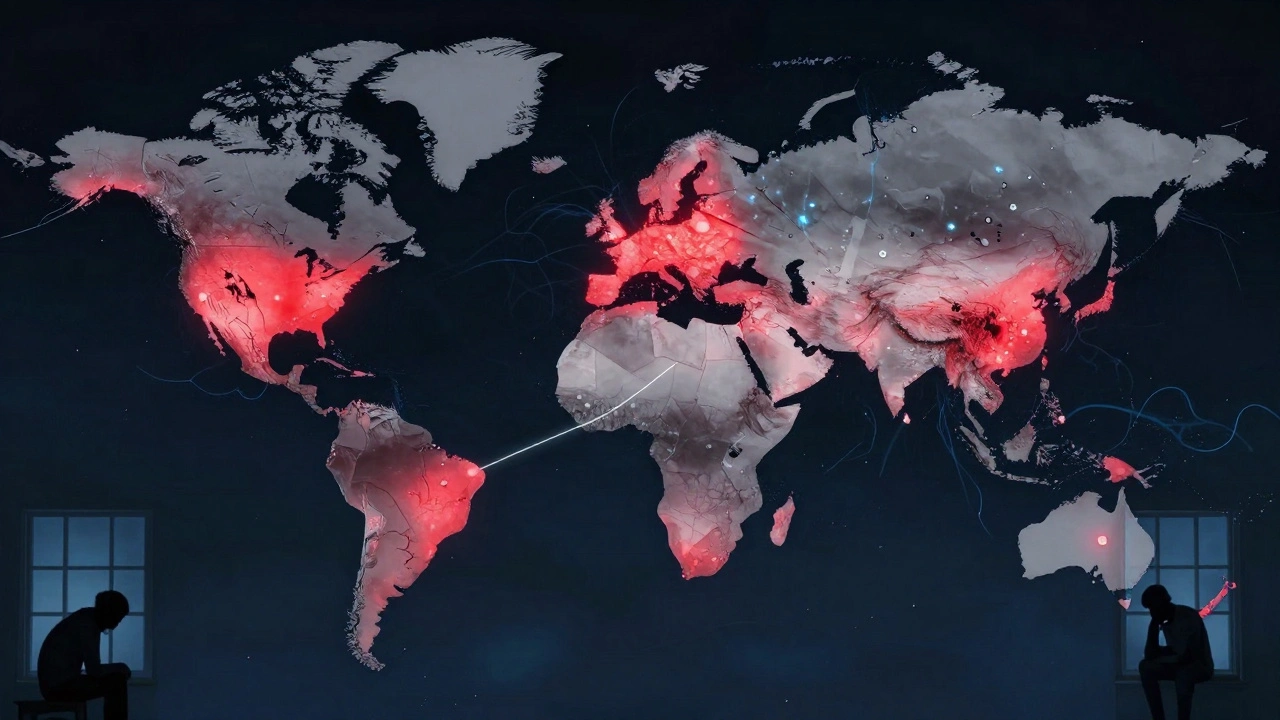
The Trust Gap
When you’re anxious, you stop trusting. Not just institutions-but people. The Edelman Trust Barometer showed a 15-point drop in institutional trust between 2019 and 2024. People stopped believing governments would protect them. They stopped believing corporations cared. They stopped believing their neighbors had their back. That’s not paranoia. It’s a rational response to broken promises: lockdowns without clear end dates, military interventions with no exit strategy, and pandemic aid that never reached the most vulnerable. This erosion of trust shows up in everyday choices. People don’t donate to local food banks as much. They don’t sign petitions. They don’t show up for protests. They watch from behind screens. Civic life isn’t dead-it’s frozen.What’s Being Done About It?
The mental health industry is booming. Global spending on anxiety treatment hit $384 billion in 2024 and is expected to climb to nearly $590 billion by 2028. Apps like Calm and Headspace grew their user bases by over 100% during the pandemic. Teletherapy platforms like BetterHelp saw double-digit spikes after every major global event. But access is still a mess. In high-income countries, there are about 12 mental health professionals per 100,000 people. In low-income countries, it’s less than one. That’s not a gap-it’s a canyon. And stigma? Still alive. In many cultures, saying “I’m anxious” still feels like admitting weakness. Some places are trying new things. In Ukraine, community centers started “safe circle” groups where people meet weekly to talk about fear without judgment. In Japan, local governments partnered with temples to offer free mindfulness sessions. In Israel, schools began teaching “crisis resilience” as part of the curriculum. Early results show anxiety symptoms dropped by 35% to 42% in these communities.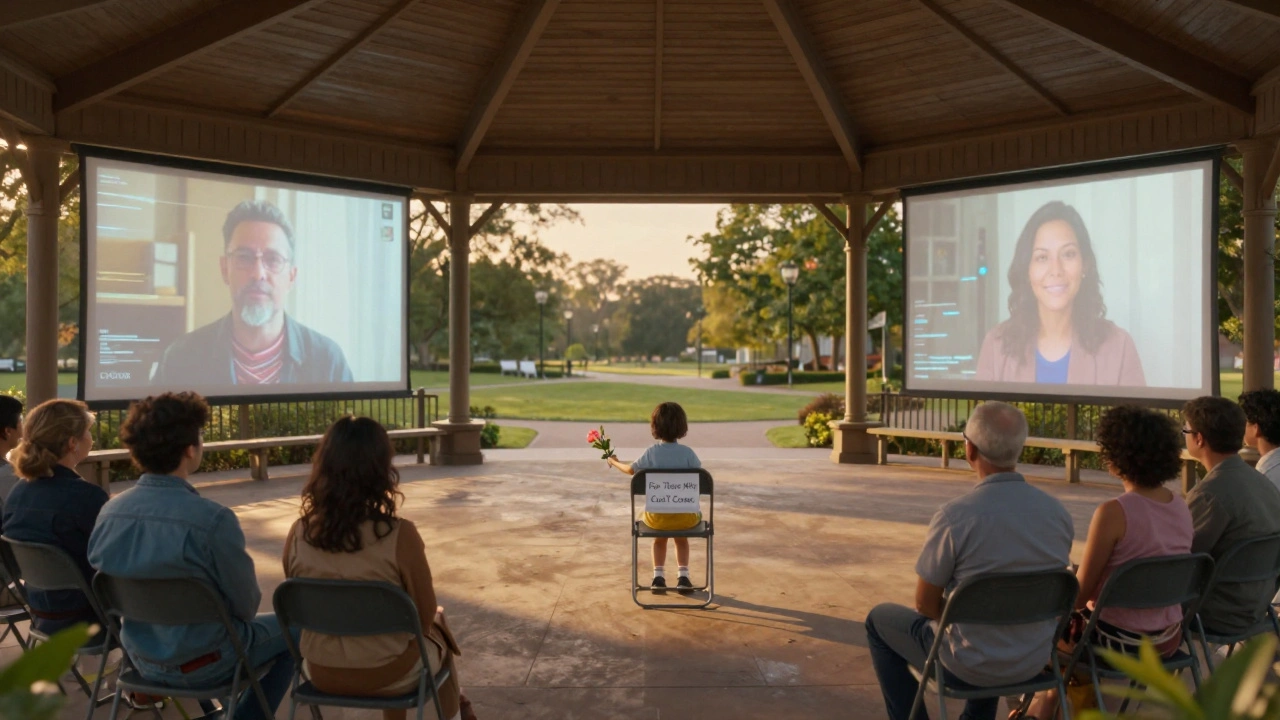
The Future Isn’t Just About Treatment-It’s About Design
We can’t therapy our way out of this. We need to redesign how society works. Imagine workplaces that don’t just offer mental health days but build in quiet rooms, flexible hours, and real-time crisis alerts instead of silent panic. Imagine public transit systems that offer virtual waiting rooms so people can check in from home before stepping on a bus. Imagine city councils holding hybrid meetings so people who can’t physically attend can still vote, speak, and be heard. The American Psychiatric Association warns that by 2030, anxiety-related lost productivity could cost the global economy $1.6 trillion a year. That’s not a future forecast-it’s a warning. If we keep treating anxiety as an individual problem, we’ll keep missing the real issue: it’s a social one.What You Can Do Right Now
You don’t need a therapist to start rebuilding civic trust. Start small:- Text a neighbor you haven’t talked to in months. Ask how they’re doing-really.
- Join one local event. Doesn’t matter if it’s a park cleanup or a library book swap. Show up.
- Turn off notifications for 30 minutes a day. Let yourself be unconnected.
- Call your city council rep. Ask what they’re doing to support mental health in public spaces.