Supply Chain Resilience Checker
Identify Vulnerabilities
Enter your critical medical supplies and their current suppliers to identify single points of failure in your healthcare supply chain.
When your hospital runs out of N95 masks, it’s not a logistics problem-it’s a life-or-death crisis.
During the peak of the pandemic, hospitals across the U.S. faced impossible choices: reuse masks beyond safe limits, delay surgeries because test kits were gone, or watch patients suffer because life-saving drugs hadn’t arrived. This wasn’t a failure of individuals-it was a failure of a system built for efficiency, not resilience. The healthcare supply chain had been optimized for low cost and just-in-time delivery, with no room for disruption. When global shipping stalled and factories shut down, the cracks turned into chasms. Today, health systems are rebuilding-not to go back to how things were, but to survive what comes next.
What makes a healthcare supply chain resilient?
Resilience isn’t about having more stock. It’s about having options. A resilient supply chain can absorb shocks, adapt quickly, and keep critical items flowing even when one part breaks. The U.S. Department of Health and Human Services defines three core capabilities: monitoring what’s happening across the chain, planning for disruptions before they hit, and managing risks with real tools-not just wishful thinking.
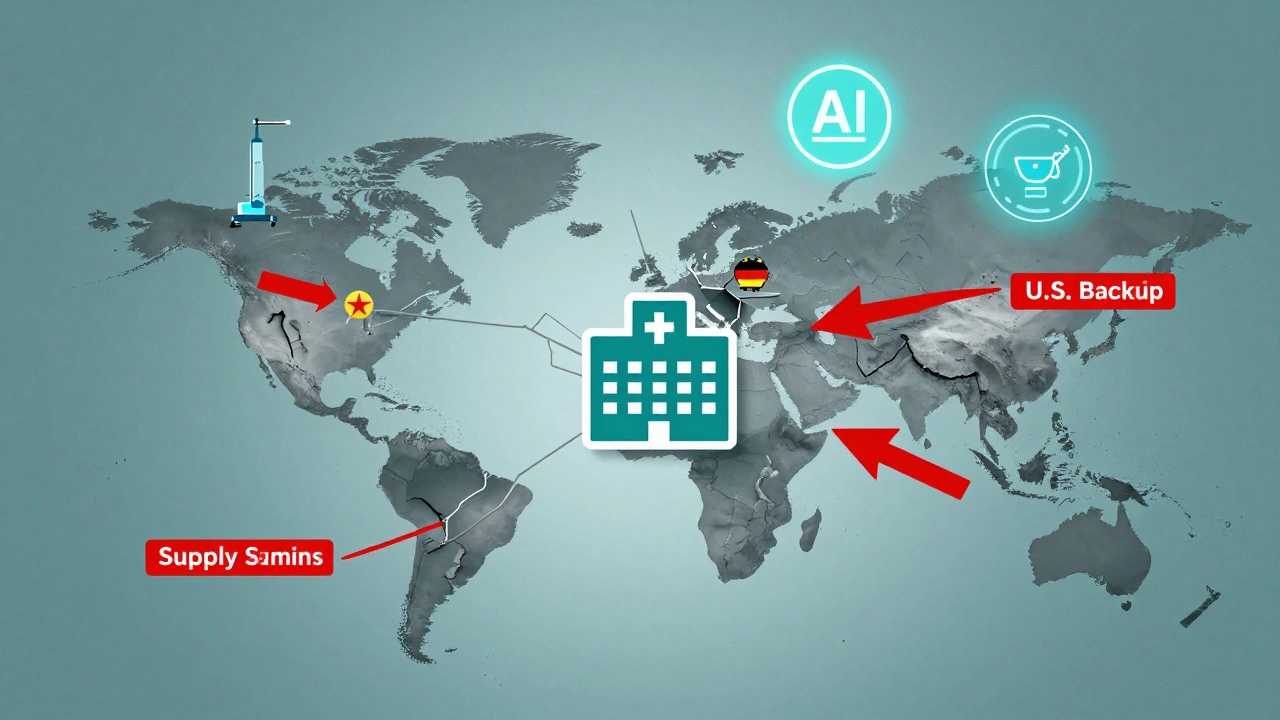
For PPE, diagnostics, and essential medicines, that means three things: visibility, redundancy, and collaboration. Visibility means knowing where your supplies are at every level-not just from your distributor, but from the raw material supplier in Vietnam, the factory in Germany, and the shipping container stuck in a port. Redundancy means having more than one source for everything that keeps people alive. Collaboration means sharing data, not hoarding it. One Midwest network of 12 hospitals cut their shortages by 25% simply by pooling forecasts and coordinating orders.
Why just-in-time doesn’t work for health
Before 2020, most hospitals trusted Group Purchasing Organizations (GPOs) to handle everything. These middlemen negotiated bulk deals with manufacturers, saved money, and promised reliability. But when the pandemic hit, those same GPOs couldn’t deliver. Why? Because they relied on single-source suppliers, thin inventory, and long lead times. A 2021 McKinsey analysis found hospitals using just-in-time models suffered 60-75% more disruptions than those with strategic reserves.
Some hospitals learned the hard way. One urban hospital in Ohio ran out of ventilator tubing because their only supplier was in Italy. Another in Texas had to ration COVID-19 rapid tests because their distributor couldn’t get more from Asia. Meanwhile, a few forward-thinking systems like PrivateHospitalGroup1 went direct. They skipped the middlemen, bought masks straight from Chinese manufacturers, hired quality control teams to inspect shipments, and built their own logistics network. Yes, it cost more upfront. But lead times dropped by half, and they avoided 15-25% in distributor markups. The catch? Only large systems could afford the expertise and staff to pull it off.
Building redundancy: More suppliers, less risk
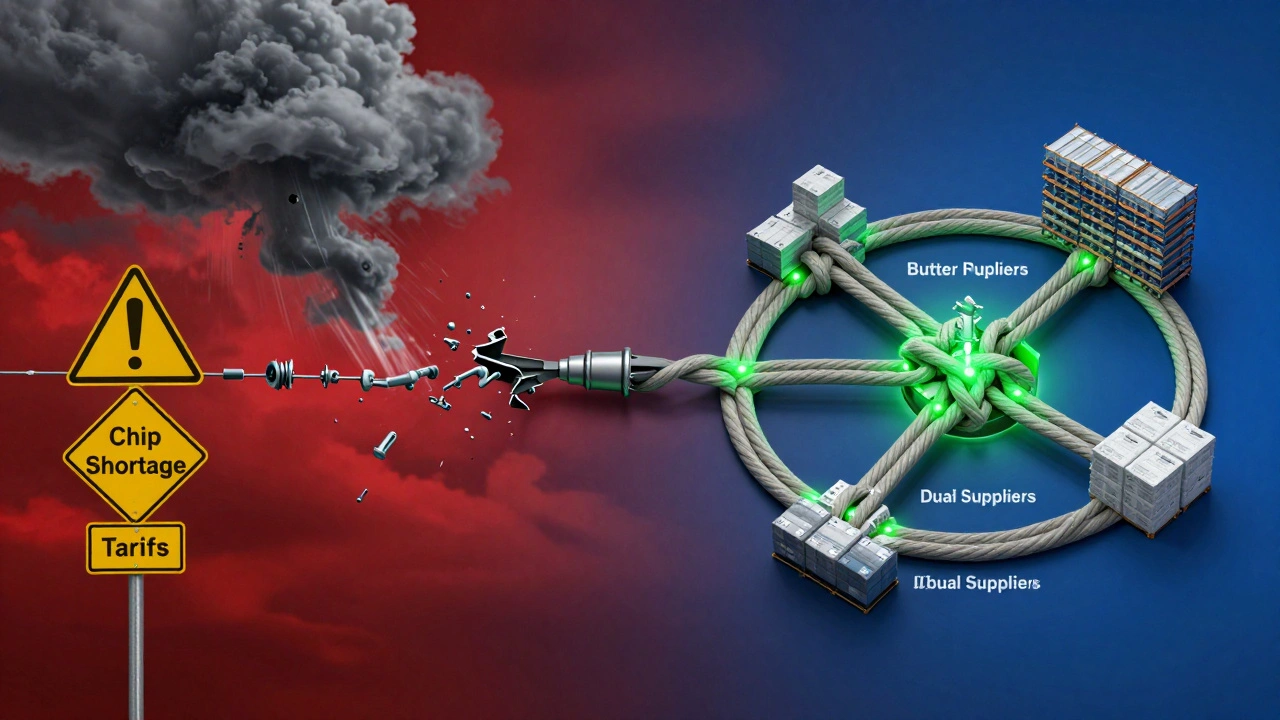
Reliance on a single supplier is the biggest vulnerability in health supply chains. One factory in China makes 80% of the world’s surgical gowns. One plant in India produces half of the global supply of generic antibiotics. When either shuts down, hospitals panic.
Resilient systems don’t wait for disaster. They act before it happens. Hospitals that added even one more supplier for critical items saw a 30-40% drop in disruption impact, according to a 2019 study. That doesn’t mean buying from five different mask makers-it means qualifying a backup for every essential product. For example, if you normally get your glucose test strips from Company A, find and test Company B. Don’t wait until you’re out of stock. Do it now.
Some hospitals are going further. PublicHospitalGroup reactivated old machines to produce disinfectant and critical ICU drugs themselves. Within 60 days, they were 30% self-sufficient. It wasn’t easy. They had to retrain staff, get new FDA approvals, and navigate regulatory red tape. But when the next surge came, they weren’t begging for supplies-they were giving them to others.
The role of government: On-shoring vs. regulation
There’s growing consensus that the U.S. can’t keep depending on foreign countries for life-saving drugs. The FDA now defines certain medications as “critical”-those without which patients will die. In January 2023, the Biden administration pledged $1 billion to bring domestic production of antibiotics and antivirals back to U.S. soil, aiming to cut foreign dependency by 25% by 2027.
But not everyone agrees on how to get there. Some experts, like former FDA Commissioner Dr. Scott Gottlieb, argue that national security demands on-shoring. Others, like industry groups, warn that heavy regulation could raise prices by 10-15% without making supply chains safer. The truth? It’s not either/or. The National Academies recommend a three-pronged approach: bring some production home, stockpile what you can’t make, and diversify your global sources.
Meanwhile, tariffs are becoming a wildcard. A 2023 report from the AAMC found that changing trade policies could push up the cost of imported medical gear by 15-25%. Hospitals are now lobbying for exemptions, but the fight is far from over.

Technology and tools: Visibility is power
Resilience isn’t just about people and processes-it’s about data. The best hospitals today use digital tools to track inventory in real time, predict shortages using AI, and simulate disruptions with “digital twins.” Gartner predicts that by 2025, 40% of large health systems will use digital twin technology to test supply chain scenarios before a crisis hits. That’s up from just 5% in 2021.
Software platforms like Epic’s supply chain module are helping hospitals gain control. With 4.2 out of 5 stars from 35 reviews, it’s one of the most trusted systems. But it’s not cheap. Training staff to use these tools takes 6-9 months. Smaller hospitals struggle to afford them. That’s why alliances matter. The Healthcare Supply Chain Association’s Resilience Task Force grew from 12 members in 2020 to over 250 by 2022, helping smaller providers share tools, templates, and even staff.
The human cost of failure
Behind every statistic is a nurse, a patient, a family. In 2021, the American Hospital Association found that 89% of hospitals delayed treatments because of supply shortages. 42% said patient outcomes got worse as a result. On Reddit, an ER doctor wrote: “We reused N95 masks for 72 hours during the January surge. We knew it was dangerous. We had no choice.”
Rural hospitals were hit hardest. A 2022 ASHP survey found 68% of rural facilities went more than 30 days without critical meds like epinephrine, insulin, or sedatives. Meanwhile, big city hospitals formed “supply chain war rooms”-dedicated teams that cut decision time from two weeks to 48 hours. One nurse described it as “running a hospital like a military operation.”
Resilience isn’t a buzzword. It’s the difference between a patient getting their medicine on time-or not.
What you can do today
You don’t need a billion-dollar budget to start building resilience. Start small:
- Map your critical items. List every product that, if gone, would endanger lives: PPE, diagnostics, antibiotics, insulin, blood products. Don’t skip anything.
- Find your single points of failure. For each item, ask: Do we have only one supplier? Is there only one factory making this? If yes, start looking for alternatives.
- Build a 30-day buffer. Even a small stockpile of masks, gloves, or test kits can buy you time during a crisis.
- Connect with others. Join a regional health alliance. Share data. Ask: “What are you stocking that we’re not?”
- Train your team. Procurement staff need new skills: international sourcing, quality inspection, logistics coordination. Don’t wait for a crisis to start learning.
The goal isn’t perfection. It’s preparedness. The next pandemic, cyberattack, or climate disaster won’t wait for us to be ready. But if we act now-with clear strategy, real partnerships, and smart tools-we won’t be caught off guard again.