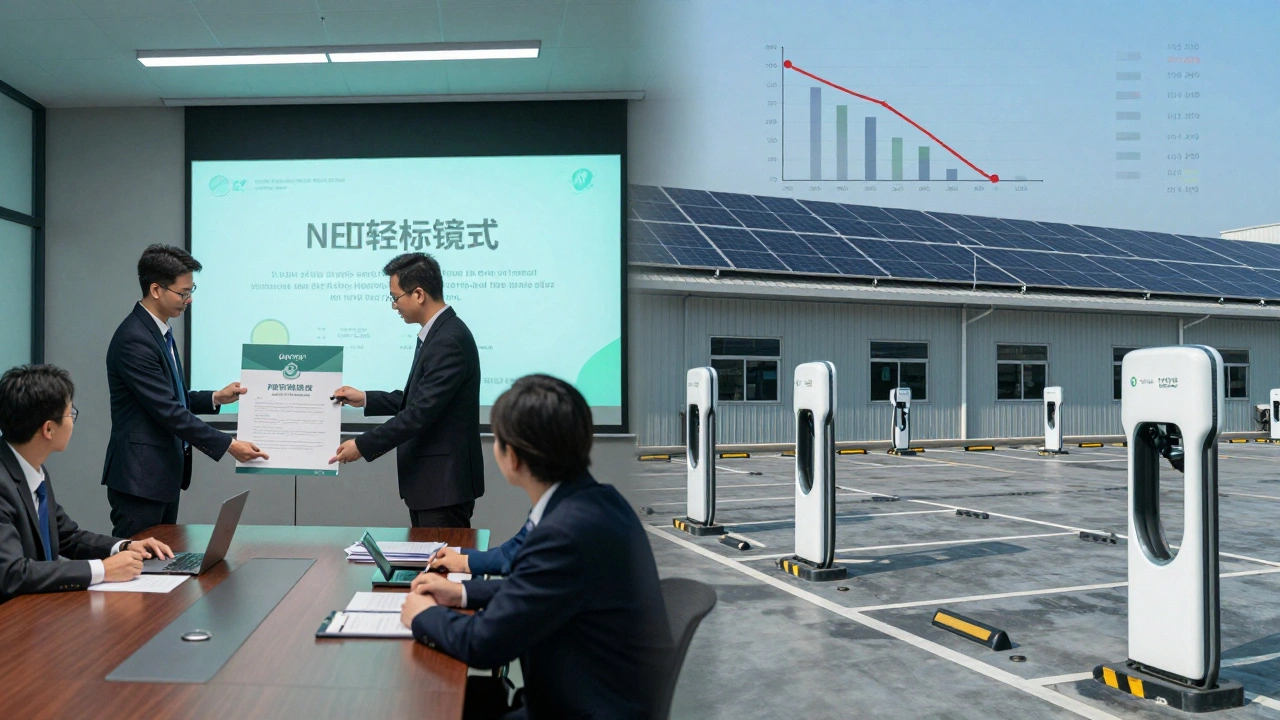
Capex Shift Calculator
Calculate Your Net-Zero Capex Shift
Track how your company's capital expenditures are aligned with net-zero goals. Based on SBTi requirements, companies must shift at least 30% of capex to decarbonization by 2025.
Your Capex Shift Analysis
Enter your current capex allocations to see your net-zero alignment.
Key Insight from the Article
"Unilever shifted over $1 billion in capex toward renewable energy and sustainable packaging since 2020. Their 2025 capex plan has 38% allocated to decarbonization projects — up from 12% in 2020."
Companies around the world have made hundreds of net-zero pledges. But how many are actually cutting emissions - and where are they spending their money to make it happen? The gap between promise and progress is wide. In 2025, over 6,000 companies had publicly committed to net-zero, yet fewer than 30% had science-based targets approved by the Science Based Targets initiative (SBTi) a global body that validates corporate climate goals against the 1.5°C warming limit set by the Paris Agreement. The real test isn’t the press release. It’s the balance sheet.
What Net-Zero Really Means (And Why It’s Not Carbon Neutrality)
Net-zero isn’t just buying offsets. It’s not planting trees while keeping your coal-powered factory running. True net-zero means slashing emissions as close to zero as possible - then using permanent carbon removal to handle what’s left. The SBTi Corporate Net-Zero Standard the only globally accepted framework for corporate net-zero targets makes this clear: companies must cut at least 90% of their emissions by 2050. The remaining 10% or less? That’s where carbon capture, mineralization, or other verified removal technologies come in. Anything else is carbon neutrality - and it’s not enough.
Most companies still focus only on Scope 1 and 2 emissions - what they burn directly and what they buy as electricity. But the real problem? Scope 3. That’s everything else: supply chains, product use, employee commuting, shipping, even waste. For most firms, Scope 3 makes up 75% or more of their total footprint. Ignore it, and you’re ignoring the biggest part of the problem.
The Three-Step Framework: Measure, Target, Act
There’s no magic shortcut. Every company that’s actually moving the needle follows a clear sequence.
- Measure everything - not just your own operations. Use the Greenhouse Gas Protocol the global standard for accounting and reporting greenhouse gas emissions to break down emissions into Scope 1, 2, and 3. Start with 2020 as your baseline. Track year-over-year changes. Publicly report this. If you won’t show your numbers, you’re not serious.
- Set real targets - not vague promises. SBTi requires near-term targets (cut emissions by half by 2030) and long-term targets (90%+ cut by 2050). If your company says "we’ll go net-zero by 2050" without a 2030 milestone, it’s not a strategy - it’s a marketing slogan.
- Act on the biggest levers - not the easiest ones. Energy efficiency? Good. Switching to renewables? Essential. But the real shift happens when you redesign products, change logistics, force suppliers to decarbonize, or invest in circular systems. That’s where capital gets reallocated.
Where the Money Goes: The Capex Shift
This is where most companies fail. They talk about net-zero but keep spending on fossil fuel infrastructure. The shift in capital expenditure isn’t optional - it’s inevitable.
Look at the data: In 2024, global corporate capex on decarbonization hit $1.2 trillion - up 42% from 2022. That’s not a drop in the bucket. It’s a tide. Companies are moving money from:
- Old combustion engines → electric fleets and charging networks
- Single-use packaging → reusable, refillable, or compostable systems
- High-emission manufacturing → low-carbon steel, green hydrogen processes, and electrified production lines
- Traditional supply chains → localized sourcing and low-emission transport
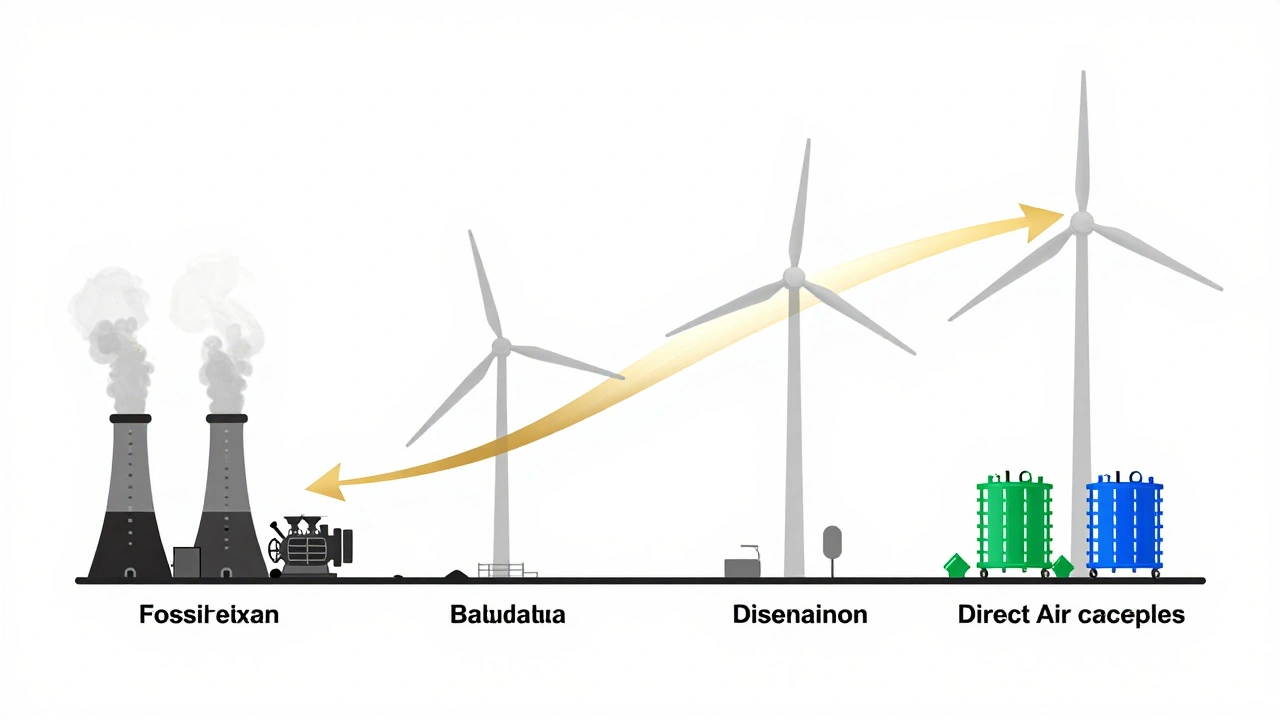
- Offset purchases → permanent carbon removal (like direct air capture or mineralization)
Take Unilever a global consumer goods company that has shifted over $1 billion in capex toward renewable energy and sustainable packaging since 2020. They didn’t just install solar panels. They redesigned their entire supply chain - switching to low-carbon transport, requiring suppliers to report emissions, and investing in biodegradable materials. Their 2025 capex plan has 38% allocated to decarbonization projects - up from 12% in 2020.
Same story with Maersk the world’s largest shipping company, which has ordered 12 methanol-fueled container ships at a cost of $1.7 billion, replacing older diesel vessels. They didn’t wait for regulation. They bet on green fuel before it was cheap. That’s the kind of capex shift that moves markets.

Reporting Isn’t Optional - It’s Accountability
You can’t manage what you don’t measure. And you can’t prove you’re managing it without public reporting.
The best companies use three standards together:
- CDP formerly the Carbon Disclosure Project, now the leading global system for environmental reporting - for emissions data transparency
- TCFD Task Force on Climate-related Financial Disclosures, a framework for reporting climate risks and opportunities - to show how climate change affects finances
- GRI Global Reporting Initiative, the most widely used sustainability reporting standard - for broader environmental and social impact
These aren’t checkboxes. They’re legal and financial risks. In 2025, the EU’s Corporate Sustainability Reporting Directive (CSRD) made this mandatory for 50,000+ companies. In the U.S., the SEC is moving toward similar rules. If you’re not reporting, you’re not just behind - you’re exposed.
The Human Factor: Employees and Suppliers Are Your Secret Weapon
Net-zero isn’t just a CFO’s project. It’s a culture shift.
Companies that succeed engage employees early. At Salesforce a cloud software company that has trained over 10,000 employees on sustainability practices and embedded climate goals into performance reviews, every manager has a carbon budget. Teams compete to reduce emissions in their departments. That’s not charity - it’s innovation.
Same with suppliers. You can’t cut Scope 3 emissions if your vendors keep burning coal. Leading companies now require suppliers to:
- Report their emissions annually
- Set their own SBTi targets
- Use renewable energy
- Share data via digital platforms
Those who don’t comply? They get phased out. In 2024, Apple a technology company that cut its supply chain emissions by 25% in three years by requiring suppliers to switch to 100% renewable energy cut ties with 11 suppliers who refused to meet their clean energy requirements. That’s not punishment - it’s strategy.
What’s Next? Adapt or Get Left Behind
Net-zero isn’t a one-time project. It’s a continuous process. New tech emerges. Regulations tighten. Costs change. The companies that win are those that build flexibility into their plans.
Look at carbon capture. In 2020, it cost $600 per ton. Today, it’s $200. In five years? Maybe $80. Companies that locked in long-term contracts for outdated tech are stuck. Those that built modular, scalable systems are ready to pivot.
Same with policy. The U.S. Inflation Reduction Act gave $370 billion in clean energy incentives. Europe’s Carbon Border Adjustment Mechanism (CBAM) will tax imports based on emissions. Companies that didn’t build climate risk into their financial models are now paying higher tariffs, losing customers, and facing investor pressure.
Net-zero isn’t about being green. It’s about being resilient. It’s about future-proofing your business. The companies that are already cutting emissions, shifting capex, and engaging their teams aren’t just doing the right thing - they’re building the most valuable businesses of the next decade.
Is net-zero the same as carbon neutrality?
No. Carbon neutrality means offsetting emissions with credits - like planting trees or funding renewable projects. Net-zero means cutting emissions by at least 90% first, then using permanent carbon removal for the rest. Net-zero is science-based. Carbon neutrality often isn’t.
Why do Scope 3 emissions matter so much?
Scope 3 covers everything outside your direct operations - suppliers, product use, shipping, waste. For most companies, it’s 75% or more of total emissions. If you only cut your own energy use, you’re missing the biggest piece of the puzzle. Real progress means fixing your supply chain.
How do I know if a company’s net-zero pledge is real?
Check if they’re validated by the Science Based Targets initiative (SBTi). Look for public annual reports using GRI or CDP. See if they’ve set a 2030 target to halve emissions. And check their capex - are they spending on renewables, electrification, and supply chain changes? If they’re only buying offsets, it’s not real.
What’s the biggest mistake companies make when starting a net-zero strategy?
Starting with offsets instead of reduction. Many companies buy carbon credits before even measuring their emissions. That’s like trying to lose weight by buying a bigger scale. You need to measure first, cut hard, then only use removal for what’s truly unavoidable.
Can small businesses afford a net-zero strategy?
Yes - but not all at once. Start with Scope 1 and 2: switch to LED lighting, optimize heating/cooling, move to renewable energy. Then engage your suppliers. Even small changes add up. Many utilities offer free energy audits. Governments offer tax credits. You don’t need a billion-dollar budget - just a clear plan.
Next Steps: What to Do Now
If you’re leading a company and want to move from pledge to progress:
- Get your full emissions inventory done - include Scope 3. Use the GHG Protocol.
- Apply for SBTi validation. It takes 6-12 months, but it’s worth it.
- Set a 2030 target: cut emissions in half. Then a 2050 target: cut 90%+.
- Review your capex plan. Where is money going? Shift at least 20% of next year’s capital budget to decarbonization.
- Start talking to your top 10 suppliers. Ask them to report emissions. Make it a contract requirement.
- Report publicly. Use CDP or GRI. Don’t wait for regulators to force you.
Net-zero isn’t about being perfect. It’s about being honest, consistent, and relentless. The companies that win aren’t the ones with the flashiest slogans. They’re the ones who changed their spending, their people, and their supply chains - and never looked back.