Scope 3 Emissions Impact Calculator
Why This Matters
Scope 3 emissions (70%+ of most companies' footprint) are the hidden competitive advantage. Reducing them isn't just environmental—it cuts costs, builds resilience, and wins customer trust.
"Scope 3 is where the real leverage is. Ignoring it means leaving money on the table and ignoring your biggest risk."
Your Impact Calculation
Companies that treat climate action as a side project are already falling behind. The real shift isn’t about going green-it’s about building a smarter, more resilient business. Organizations that tie decarbonization directly to their core strategy aren’t just reducing emissions. They’re cutting costs, unlocking new markets, and outmaneuvering competitors who still see sustainability as a PR checklist.
Why Your Emissions Inventory Isn’t Enough
Measuring your carbon footprint is step one, but it’s not the goal. Too many companies stop there, thinking a report is progress. That’s like tracking your bank balance without changing how you spend. The real leverage comes from understanding Scope 3 emissions-the hidden emissions buried in your supply chain, logistics, and how customers use your products. These often make up 70% or more of a company’s total footprint. If you ignore them, you’re leaving money on the table and ignoring your biggest risk. Take Unilever’s tomato supply chain. Instead of just buying cleaner energy for factories, they worked directly with farmers. They planted wildflower borders to attract pollinators, switched to regenerative soil practices, and cut transportation waste. The result? A 37% drop in emissions per kilo of tomatoes, soil carbon increased by 27%, and pollinator populations jumped 173%. That’s not just sustainability-it’s a supply chain upgrade that made their costs more predictable during global food price swings.Decarbonization as a Profit Engine, Not a Cost Center
The myth that going low-carbon means spending more money is outdated. The truth? It’s often the opposite. Renewable energy isn’t just ethical-it’s economic. Microsoft cut its Scope 2 emissions to near zero by locking in long-term power purchase agreements for wind and solar in the exact regions where its data centers operate. That didn’t just make them greener. It locked in stable energy prices for decades, shielding them from fossil fuel volatility. Their enterprise clients noticed. Companies now choose Microsoft’s cloud services partly because they want to reduce their own Scope 2 footprint by using a low-carbon provider. Energy efficiency upgrades follow the same pattern. A warehouse that installs LED lighting, smart HVAC controls, and better insulation doesn’t just use less power. It reduces maintenance costs, extends equipment life, and improves worker comfort-all while cutting emissions. CBRE’s research shows that the best real estate strategies don’t wait for equipment to break. They plan upgrades around natural trigger events: when a roof needs replacing, when a boiler fails, when a new tenant moves in. That’s how you turn climate action into capital efficiency.
The Hidden Advantage: Market Access and Customer Trust
B2B buyers aren’t just asking for ESG reports anymore. They’re demanding verifiable, science-based decarbonization plans. If you can’t show how your product’s carbon footprint compares to competitors, you’re out of the running. The EU Taxonomy, CSRD, and SBTi aren’t just regulations-they’re gatekeepers to future revenue. Companies that build transparent, data-backed climate strategies now get preferential treatment in procurement bids, investor pitches, and partnership deals. Sustainable Solutions Corporation’s approach is telling. They don’t just help companies reduce emissions. They embed life-cycle thinking into product design. That means asking: Where do the raw materials come from? How much energy does manufacturing use? What happens when the customer throws it away? By answering those questions early, product teams can swap out high-emission materials, redesign packaging, or even create repairable versions. That’s not just greener-it’s more profitable. Products with lower lifecycle emissions often cost less to produce, ship, and service. And customers are willing to pay more for them.Technology Is the Force Multiplier
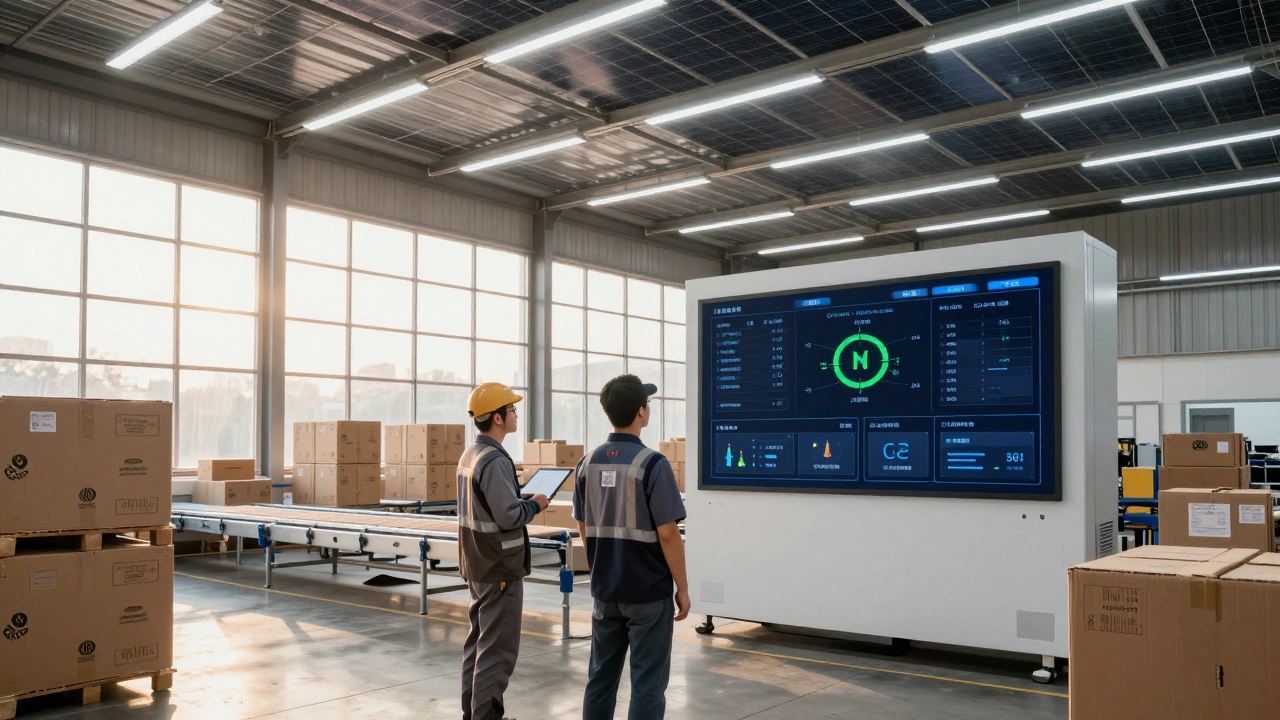
You can’t manage what you can’t measure. And you can’t measure it accurately without the right tools. Carbon accounting software, IoT sensors, and AI-driven forecasting have made real-time emissions tracking possible. One manufacturing plant in Germany now uses sensors on every machine to track energy use second-by-second. When a spike happens, the system flags it, identifies the cause, and even suggests a fix. That’s not science fiction-it’s saving them $200,000 a year in energy costs alone. Integrated modeling platforms take it further. They don’t just show emissions. They combine energy cost forecasts, climate risk maps, and financial ROI into one dashboard. A utility company in Texas used this to decide where to build a new solar farm. The model showed that one location had high solar potential, low grid congestion, and low flood risk. Another had higher output but sat in a flood zone with rising insurance costs. The decision wasn’t just about energy-it was about financial resilience.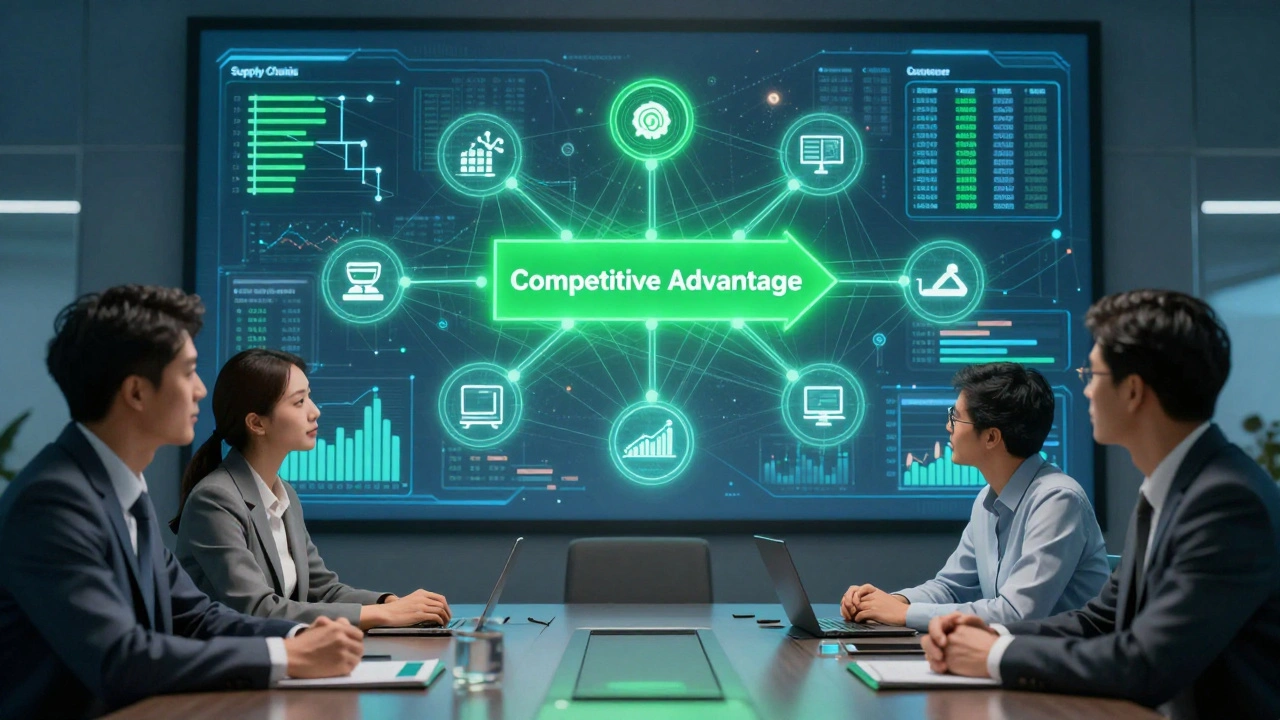
Culture Is the Make-or-Break Factor
Even the best strategy fails if employees don’t believe in it. Decarbonization isn’t a project for the sustainability team. It’s a company-wide shift. The biggest obstacle? Old habits. Engineers who’ve always used diesel-powered equipment. Procurement teams used to choosing the cheapest supplier. Finance departments that only approve projects with a 2-year payback. The companies winning this shift aren’t just announcing targets. They’re changing incentives. They tie bonuses to emissions reductions. They create cross-functional teams that include operations, finance, and R&D. They celebrate small wins-like a warehouse that cut its energy use by 15% without spending a dime. They train managers to explain why this matters: not because it’s the right thing to do, but because it makes the company stronger, cheaper, and more trusted.What Happens If You Wait?
S&P Global found that companies unprepared for climate risks could lose 5% to 25% of their 2050 EBITDA. For utilities, that number jumps to 4.6 times higher than other sectors. Why? Because physical risks-floods, fires, extreme heat-are hitting infrastructure harder. And transition risks-carbon taxes, supply chain disruptions, stranded assets-are accelerating faster than regulators expected. The companies that win aren’t the ones with the fanciest sustainability reports. They’re the ones who built decarbonization into their capital planning, product design, procurement rules, and employee goals. They didn’t wait for a law to force them. They saw it as the next competitive battleground-and they moved first.Decarbonization isn’t about saving the planet. It’s about saving your business. The companies that integrate climate strategy into their core operations aren’t just reducing emissions. They’re lowering costs, securing supply chains, winning customers, and building resilience no one else can match.
What’s the difference between Scope 1, Scope 2, and Scope 3 emissions?
Scope 1 emissions are direct emissions from sources you own or control-like company vehicles or on-site boilers. Scope 2 covers indirect emissions from the electricity, heat, or steam you buy. Scope 3 is everything else: emissions from your suppliers, employee commuting, product use, and disposal. Scope 3 is often the largest-and most overlooked-part of your footprint.
Can small businesses benefit from a climate-integrated strategy?
Absolutely. You don’t need a big budget. Start with your biggest energy use-lighting, heating, or transport. Switch to LED bulbs. Switch to a green energy provider. Encourage telecommuting. These low-cost steps cut emissions and save money immediately. Then, work with your top suppliers to understand their emissions. Many small businesses gain a competitive edge by simply being more transparent than their competitors.
How do I know if my decarbonization plan is working?
Track three things: emissions reduction year-over-year, cost savings from efficiency improvements, and customer or investor feedback. If your energy bills are falling, your suppliers are asking to join your program, and clients are choosing you over competitors because of your climate plan-you’re on the right track. Use dashboards that link emissions data to financial metrics so leadership can see the business case clearly.
Is carbon offsetting a valid part of a climate strategy?
Only as a last step. Offsetting-like planting trees or funding clean energy projects-should only cover emissions you can’t eliminate yet. It’s not a substitute for reducing your own operations. The best companies set hard targets to cut emissions first, then use offsets only for unavoidable residual emissions. Investors and regulators are getting stricter about this. Offsets alone won’t protect you from future regulations or customer demands.
What role does leadership play in making this work?
Leadership sets the tone. If the CEO talks about climate as a cost center, it stays one. If they tie executive bonuses to emissions targets, integrate climate goals into annual planning, and publicly celebrate progress, the whole organization follows. The best leaders don’t just approve budgets-they change incentives, reward innovation, and make decarbonization part of the company’s identity.