Tariff Impact Calculator
Input Your Business Data
Strategy Comparison
Enter your business data above to see comparison results
Results
Current Margin
Projected Margin
Cost Impact
Customer Impact
When tariffs suddenly jump from 5% to 18% overnight, your cost structure doesn’t just shift-it shatters. That’s exactly what happened on April 2, 2025, when the U.S. imposed what became known as "Liberation Day" tariffs on over $650 billion in imports. Companies that treated this like a temporary tax hike are now scrambling. But the ones with a corporate playbook for tariff volatility didn’t just survive-they gained market share.
This isn’t about reacting. It’s about building systems that turn tariff chaos into control. Three pillars make up the playbook: how you hedge currency risk, how you adjust prices without losing customers, and how you rewrite contracts to protect your business when governments flip the script. Companies using all three see 42% less margin erosion than those using just one. And it’s not just for big corporations. Mid-market firms are adopting this faster than ever.
How Hedging Changed After April 2025
Before 2025, most companies hedged currency risk for 3 to 6 months. It was enough to cover quarterly earnings reports. But when tariffs hit, exchange rates started swinging 8% in a single week. That’s not volatility-that’s instability. By Q3 2025, 64% of North American firms had shifted to 12- to 18-month forward contracts. In the UK, the average hedge length jumped from 5.2 months to 6.74 months.
Why? Because short-term hedges locked in losses every time tariffs changed. A company might hedge euros at 1.08, then see the tariff on German machinery drop, causing the euro to surge to 1.15. If they’d locked in that 1.08 rate, they’d have lost money on paper-even though the real cost of goods hadn’t gone up. Longer hedges smooth out those spikes. But there’s a catch: extending beyond 18 months creates its own risk. The Bank for International Settlements found that during the May 2025 tariff pause on Vietnamese imports, firms with 24-month hedges saw volatility increase by 19% because they were stuck on outdated rates.
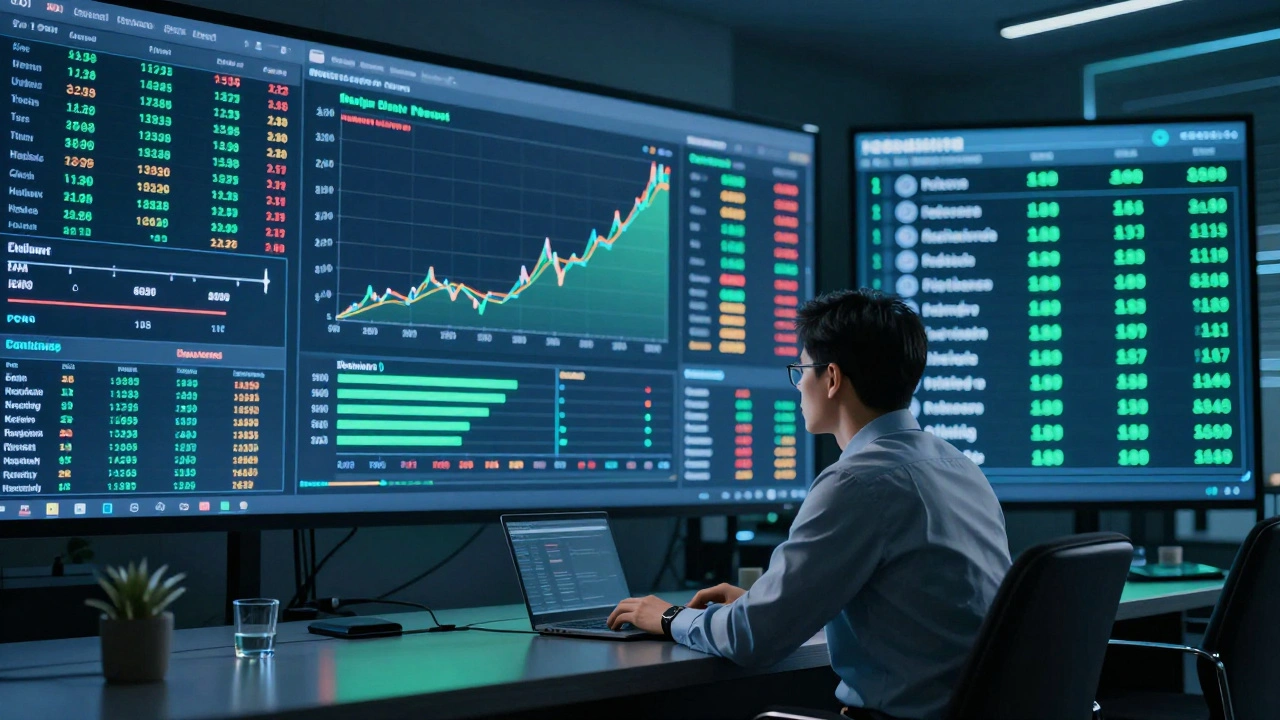
Top performers now use a mix: 60% of their exposure is hedged with 12-month forwards, 30% with options for downside protection, and 10% left open to capture favorable moves. Treasury teams that mastered this approach saw a 3.7% improvement in operating margins. And it’s not just about the tools-it’s about integration. Deloitte found that 73% of Fortune 500 companies now run tariff exposure models alongside FX risk in the same system. One manufacturer in Ohio reduced its hedging errors by 61% after connecting its tariff classification database to its hedging platform.
Pricing That Doesn’t Scare Customers Away
Most companies panic and raise prices permanently when tariffs hit. Big mistake. Customers notice. Competitors don’t. And when tariffs are paused-as happened with Vietnam in May 2025-those price hikes stick around, turning loyal buyers into churned ones.
The smart approach? Tariff surcharges. Transparent, temporary, and tied directly to government action. By 2025, 58% of large U.S. companies had implemented these. Instead of saying "prices are going up," they say: "Due to the April 2025 U.S. tariffs on electronics components, a 7.5% surcharge is now applied to all orders until further notice. This will be removed if the tariff is lifted."
One electronics distributor in Chicago tracked customer retention after switching from permanent price increases to surcharges. Retention jumped 31%. Why? Customers understood it wasn’t greed-it was policy. And when the tariff on Vietnamese imports was paused, they removed the surcharge within 14 days. That kind of trust builds loyalty.
But surcharges aren’t just about wording. They need structure. The best firms set triggers: a 5% tariff increase triggers a 3% surcharge. A 7.5% increase triggers a 5% surcharge. They cap the surcharge at 8% to avoid customer backlash. And they update customers monthly via email or portal notifications. Companies doing this right saw pricing power hold steady even as competitors lost 12-15% in volume.
Contract Clauses That Actually Work
Old contracts assumed stability. New ones assume chaos. The playbook’s third pillar is rewriting supplier, distributor, and customer agreements with three non-negotiable clauses.
First: Tariff Adjustment Clauses. These say: "If a tariff on this product increases by 5% or more, both parties must renegotiate pricing within 30 days." It’s not about forcing the supplier to absorb the cost-it’s about forcing a conversation. A manufacturer in Michigan used this clause when China tariffs jumped from 7% to 15%. Instead of losing $1.2M in margins, they renegotiated volume discounts and extended payment terms. They kept the supplier. They kept their margins.
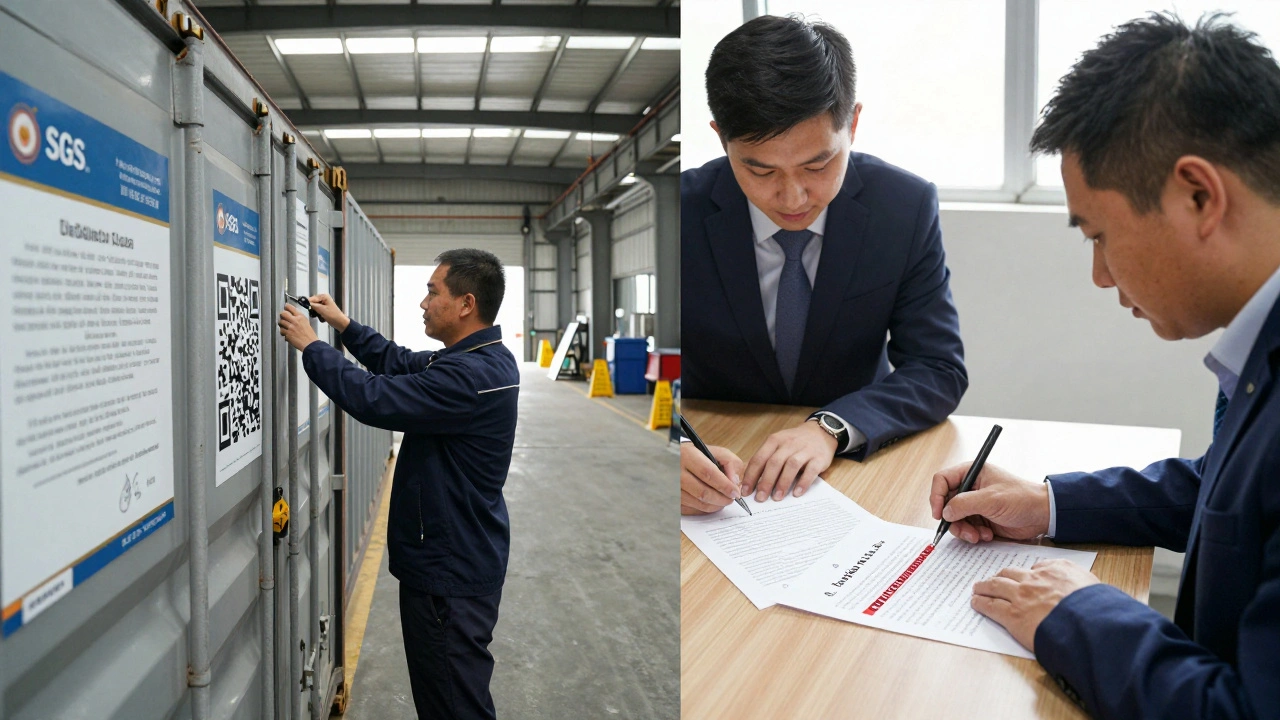
Second: Country of Origin Verification. After the 2025 tariff changes, many suppliers tried to reroute shipments through third countries to avoid duties. The U.S. Customs and Border Protection cracked down hard. Fines for misdeclaring origin jumped 200% in 2025. Now, contracts require suppliers to provide digital COO documentation-certified by third parties like SGS or Bureau Veritas-with every shipment. 73% of firms have added this requirement. One auto parts supplier lost $480,000 in penalties in early 2025 because their contract didn’t require verification. They’ve since added blockchain-based tracking.
Third: Extended Payment Terms. With tariff uncertainty, cash flow gets squeezed. Companies that used to demand net 30 now negotiate net 60 or even net 90. It’s not a favor-it’s a risk-sharing tool. A study by Oliver Wyman found that firms using extended terms saw their cash conversion cycle improve by 18-22 days on average. And suppliers? They’re more willing to accept it if they know the tariff surcharge clause will cover their costs.
Who Benefits-and Who Gets Left Behind
This playbook isn’t one-size-fits-all. It works best for manufacturers with gross margins above 25%. Industrial equipment, specialty chemicals, and medical devices saw the biggest gains. But for basic textiles with 10% margins? Passing on tariff costs means losing half your customers. They’re better off relocating production or absorbing losses.
Geography matters too. European firms outperformed U.S. ones on hedging because they’ve been managing 10+ currency pairs for decades. U.S. companies focused on the dollar-euro trade and got blindsided when the peso and ringgit swung. Companies with customers in three or more continents outperformed single-market players by 28% in maintaining pricing power. Why? Because when tariffs hit one region, they shifted volume to another.
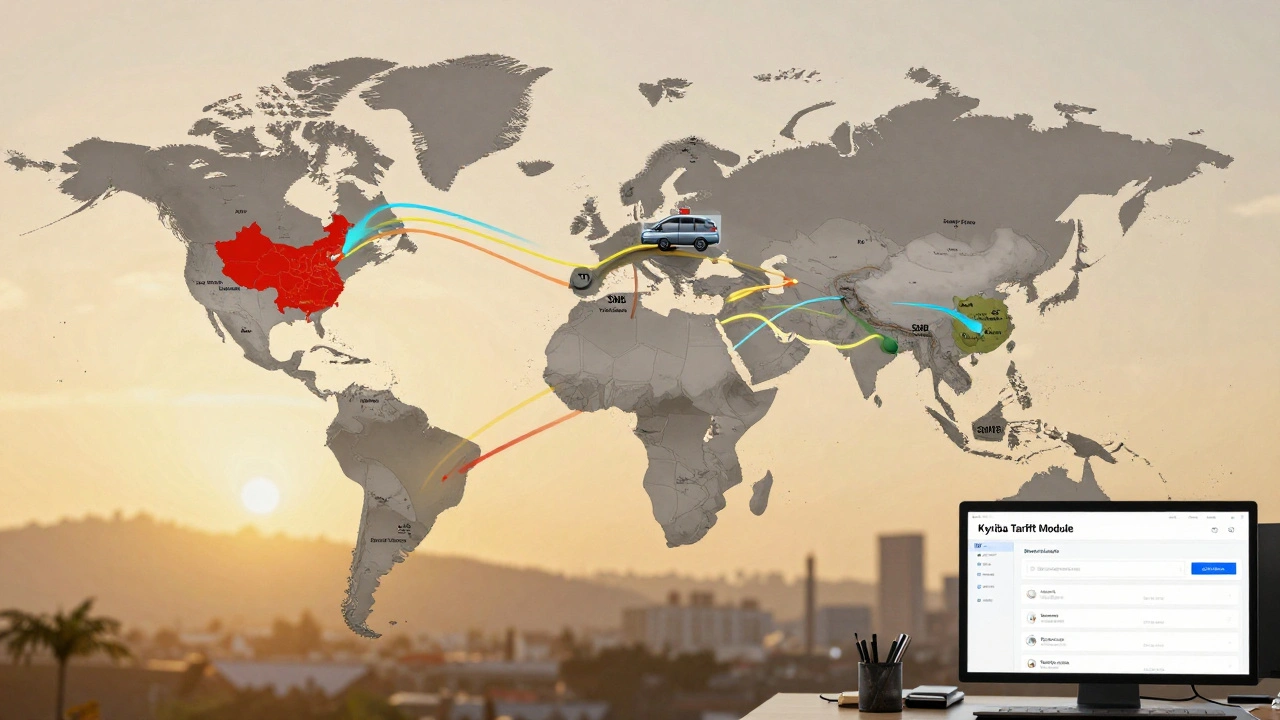
Small businesses? They’re struggling. Bradley’s 2025 survey of 350 SMBs found 68% couldn’t navigate Foreign Trade Zones (FTZs) or multi-currency hedging. The tools are too complex. The legal fees too high. Many are waiting for software solutions to get simpler. Kyriba and HighRadius added tariff modules in Q1 2025, but SMBs still report a 4.2-month learning curve just to understand the options.
And then there’s the "China +1" strategy. Electronics makers saved 37% more than automotive companies by shifting assembly to Mexico and Vietnam. Why? Electronics have hundreds of components. Automotive parts are heavier, bulkier, harder to move. For auto, the answer was FTZs-storing parts in U.S. zones until tariffs cleared. That saved them 19% in landed costs.
What Happens When You Don’t Use the Playbook
Companies that only adjusted prices? Lost 17% of customers in 12 months. Those that only hedged short-term? Saw $1.8M in unexpected P&L losses when tariffs paused. Those that didn’t update contracts? Got stuck with supplier defaults when costs spiked.
David Bloom of Treasury Management put it bluntly: "Firms treating tariffs solely as a pricing problem will fall behind by 22% in operational efficiency within 18 months." The data backs it up. One retail chain that raised prices permanently and didn’t hedge or revise contracts saw inventory sit unsold for 89 days longer than competitors. They lost $11M in revenue.
The playbook isn’t optional anymore. It’s operational hygiene. And it’s evolving fast. AI-driven tariff forecasting is being piloted by 41% of Fortune 500 companies. Blockchain COO verification is being tested by 28% of manufacturers. CFOs are now asking: "Are we hedging enough? Are our contracts future-proof? Can we prove origin?"-not "What’s the tariff rate?"
By 2027, Deloitte predicts every company managing global supply chains will have a version of this playbook embedded in their finance and procurement systems. The question isn’t whether you need it. It’s whether you’re building it now-or playing catch-up in 2027.
What’s the difference between a tariff surcharge and a permanent price increase?
A tariff surcharge is a temporary, transparent fee tied directly to government-imposed duties. It’s clearly labeled, automatically removed if the tariff is lifted, and communicated as a policy-driven cost-not a profit grab. A permanent price increase is a structural change to your pricing model. Customers see it as inflation or greed. Surcharges retain trust. Permanent hikes destroy it. Companies using surcharges saw 31% higher customer retention than those using permanent hikes.
Can small businesses use this playbook?
Yes-but with limits. Companies under $50 million in revenue struggle with the complexity of multi-currency hedging, Foreign Trade Zone (FTZ) logistics, and legal contract revisions. 68% of SMBs in a 2025 survey said they couldn’t implement these tools without outside help. The best path for SMBs: start with contract clauses and tariff surcharges. Use third-party logistics providers for FTZ storage. Use software like Kyriba’s SMB tariff module. Focus on one region first. Don’t try to do everything at once.
Why do longer hedge lengths sometimes increase risk?
Hedging locks in an exchange rate. If tariffs change unexpectedly-like the May 2025 pause on Vietnamese imports-the market can move sharply in the opposite direction. A 24-month hedge might lock you into a rate that’s now 12% worse than the market. That’s called basis risk. The Bank for International Settlements found that extending hedges beyond 18 months increased volatility exposure by 19% during policy whiplash events. The fix? Use a mix: 60% 12-month forwards, 30% options, 10% unhedged. That gives you stability without being trapped.
How do companies verify country of origin now?
In 2025, 73% of firms require certified digital documentation from suppliers. This includes origin certificates issued by third parties like SGS, Bureau Veritas, or DNV. Many are now testing blockchain-based systems where each shipment’s origin, components, and transit path are recorded on an immutable ledger. Customs authorities can scan a QR code to verify everything in seconds. Companies without this risk fines up to 200% higher than in 2024. One electronics firm avoided $1.4M in penalties after implementing blockchain COO tracking.
What role do Foreign Trade Zones (FTZs) play in this playbook?
FTZs let companies store imported goods in the U.S. without paying tariffs until the goods leave the zone. This is critical for companies with fluctuating tariff rates. If a tariff is expected to rise, they can import early and store in an FTZ. If it’s paused, they can release goods without paying. Companies using FTZs improved cash flow by 18-22 days on average. But 38% of users made customs documentation errors in 2025. Success requires training, third-party brokers, and integrated software. It’s not a shortcut-it’s a strategic timing tool.