
Process Automation Cost Savings Calculator
Estimate how much you could save by automating your high-volume business processes. Based on industry data from McKinsey, Forrester, and Deloitte.
Average hours spent manually completing this process
Total hourly cost for your staff (including benefits)
Number of process cycles completed annually
Results will appear here after calculation
Companies aren’t just cutting costs anymore-they’re rebuilding how they work. The old way of slashing budgets through layoffs or renegotiating vendor contracts is fading. Today’s winners are using AI, automation, and process mining to turn cost reduction into a strategic advantage. It’s not about doing more with less. It’s about doing things differently-so well that expenses drop naturally, employees become more engaged, and customers get faster, cleaner service.
How AI and Automation Are Slashing Operational Costs
Think about invoice processing. In most companies, someone manually checks each invoice against purchase orders, matches delivery receipts, enters data into the system, routes it for approval, and files it. That’s hours of repetitive work. One pharmaceutical company automated this entire workflow using robotic process automation (RPA) and AI-powered document extraction. The result? 99.99% accuracy, 70% faster processing, and a 35% drop in labor costs per invoice. No more missed deadlines, no more human errors, no more overtime. This isn’t rare. According to McKinsey, companies using AI and automation cut operational costs by 20-30%. Forrester found similar numbers: up to 30% savings by eliminating manual tasks like data entry, procurement, and payroll reconciliation. Deloitte reported that 53% of firms using RPA saw over 10% cost reductions-some even hit 25% faster processing and 30% lower compliance costs. These aren’t guesses. These are real results from real businesses. Generative AI is pushing this further. A global tech firm used AI to draft internal reports, marketing copy, and compliance documents. Instead of paying teams of writers and editors, they now generate 80% of routine content in minutes. Their marketing team saved $120 million in a single year-not by hiring fewer people, but by freeing them to focus on campaigns that actually move the needle.Process Mining: The Hidden Cost Detector
Automation tools are powerful, but they only work if you automate the right thing. That’s where process mining comes in. It’s not a flashy AI tool. It’s a digital microscope that watches how work actually flows through your systems. It pulls data from ERP, CRM, and finance tools to map out every step of a process-then shows you where delays, bottlenecks, and wasted steps hide. One mid-sized manufacturer used process mining to analyze their order-to-cash cycle. They thought they were efficient. The data said otherwise: 42% of orders sat idle for over 48 hours because approval workflows were stuck in email chains. A simple automation rule-auto-approving orders under $5,000-cut that wait time to under 2 hours. That one change saved $2.1 million in working capital over six months. Process mining doesn’t just find waste. It shows you where automation will have the biggest return. You don’t need to automate everything. You need to automate the right things. And process mining tells you exactly which ones.IT Costs Aren’t Just About Software Licenses
Most CFOs think IT costs are about licenses, cloud bills, and hardware. They’re wrong. The real cost is what’s hidden: unused software, over-provisioned servers, manual patching, and downtime from preventable failures. AI-driven IT cost management changes that. Instead of manually auditing licenses, AI scans your network and finds software that hasn’t been used in six months. It identifies cloud instances running at 5% utilization and shuts them down automatically. It analyzes support tickets to predict when a server will fail-so you replace it before it crashes, avoiding $80,000 in lost production time. One utility company used this approach to cut its annual IT spend by $14 million. They didn’t buy new tools. They just started using AI to see what they were already paying for-and stopped paying for what they didn’t need.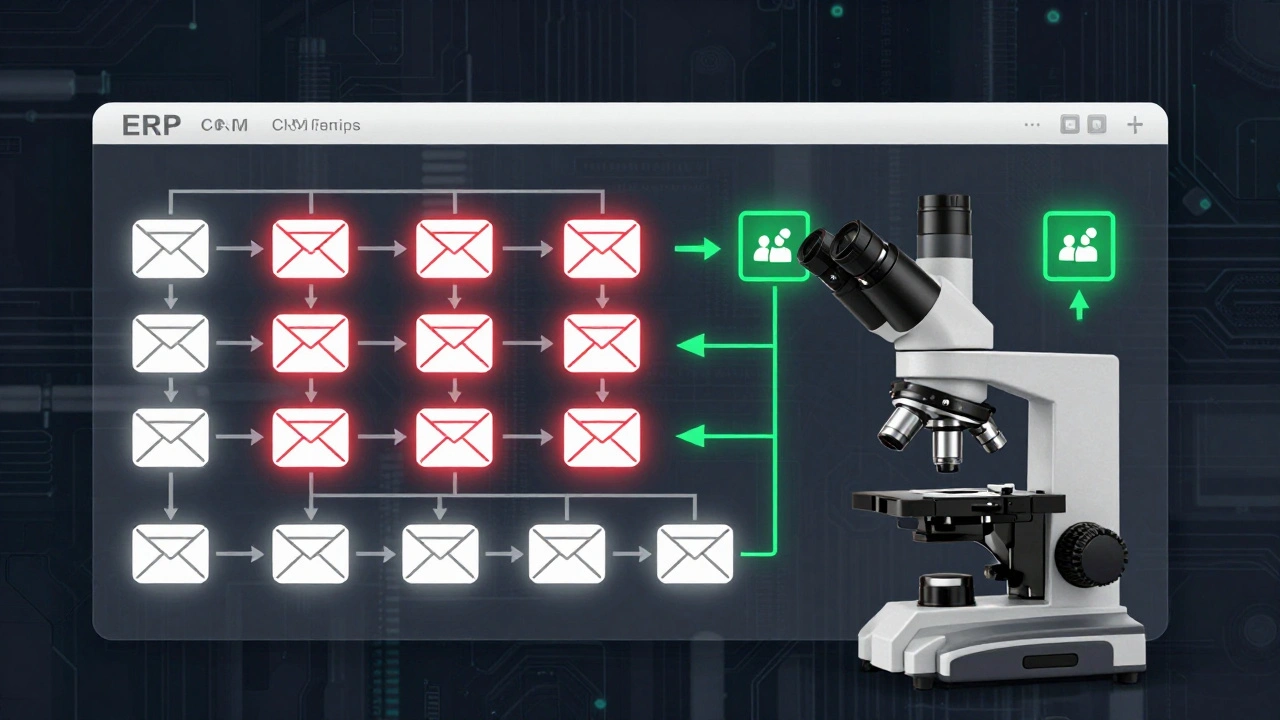
Why Most Cost Transformation Efforts Fail
Here’s the hard truth: 60% of automation projects fail to deliver promised savings. Why? Because companies treat AI like a plug-in, not a transformation. They slap RPA on a broken process and wonder why it still takes 12 days to approve a purchase order. They automate data entry but leave the approval rules unchanged. They measure success by how many bots they deployed, not by how much time or money they actually saved. Boston Consulting Group studied four companies that succeeded. All of them did three things differently:- They didn’t just automate tasks-they redesigned entire functions from scratch.
- They tied every automation project to a clear financial target: “Reduce accounts payable processing cost by 40% in 12 months.”
- They embedded AI into broader cost transformation programs-not as a side project, but as the engine driving change.
The Ripple Effect: More Than Just Savings
Cost transformation isn’t just about numbers on a balance sheet. It changes how people work. When employees stop entering data and start solving problems, morale improves. A bank that automated loan document processing saw employee turnover drop by 30%. Why? Because tellers weren’t stuck in front of screens all day-they were helping customers navigate complex financial situations. Customer satisfaction rises too. One telecom company automated its outage response system. Instead of waiting 48 hours for a technician, customers got real-time updates, estimated repair times, and compensation offers-all generated by AI. Net promoter score jumped 22 points in six months. And here’s the biggest win: agility. When you cut $50 million in waste, you don’t just save money. You get flexibility. You can invest that $50 million into new products, customer experience upgrades, or market expansion. You’re not just cutting costs-you’re creating room to grow.
What’s Next? The 2026 Reality
Gartner predicts that by 2026, 75% of businesses will use AI-driven automation to reduce costs and boost agility. That’s not a forecast. It’s a warning. If you’re still using spreadsheets to track vendor contracts, manually approving invoices, or relying on IT teams to manually audit licenses-you’re already behind. The companies that win in the next five years won’t be the ones with the biggest budgets. They’ll be the ones that used AI and process mining to build leaner, smarter, more responsive operations. The question isn’t whether you should invest in these technologies. It’s whether you can afford to wait.Where to Start
You don’t need to overhaul everything tomorrow. Start here:- Choose one high-volume, low-value process-like invoice processing, employee onboarding, or IT ticket routing.
- Use process mining tools to map how it actually works-not how you think it works.
- Identify the top three bottlenecks. Which steps cause delays? Which ones cause errors?
- Automate just those steps. Use off-the-shelf RPA or AI tools. No custom coding needed.
- Measure the outcome: How much time did you save? How much did it cost? How many errors disappeared?
- Repeat with the next process.