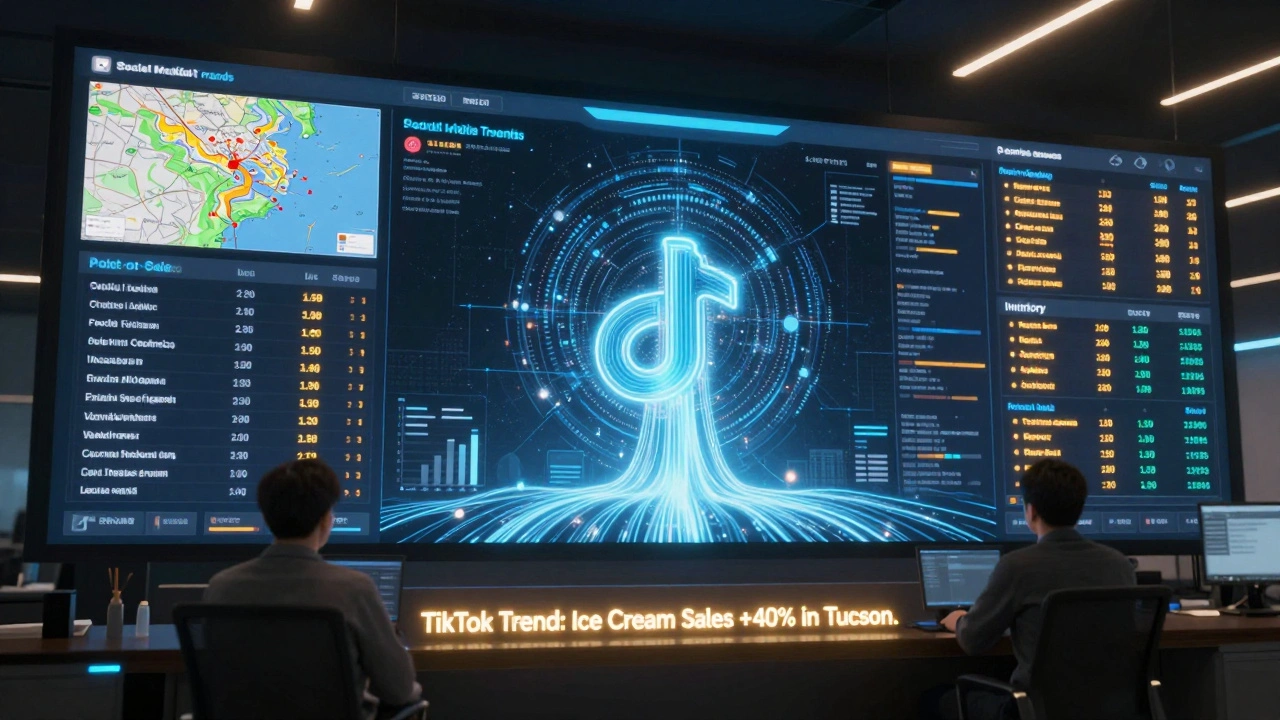
Customs Price Comparison Tool
How It Works
This tool simulates how customs agencies use advanced analytics to compare declared import prices with real market values. By comparing your declared price against prices from major e-commerce platforms, you can see if there's potential undervaluation that might trigger a customs investigation.
Risk Analysis
What This Means
Advanced analytics systems like those used by customs agencies analyze these price discrepancies alongside historical patterns, shipping routes, and trader behavior to determine if a shipment is high-risk for fraud or undervaluation.
Customs agencies are no longer just checking boxes at the border. They’re predicting where fraud will happen before a shipment even leaves the dock.
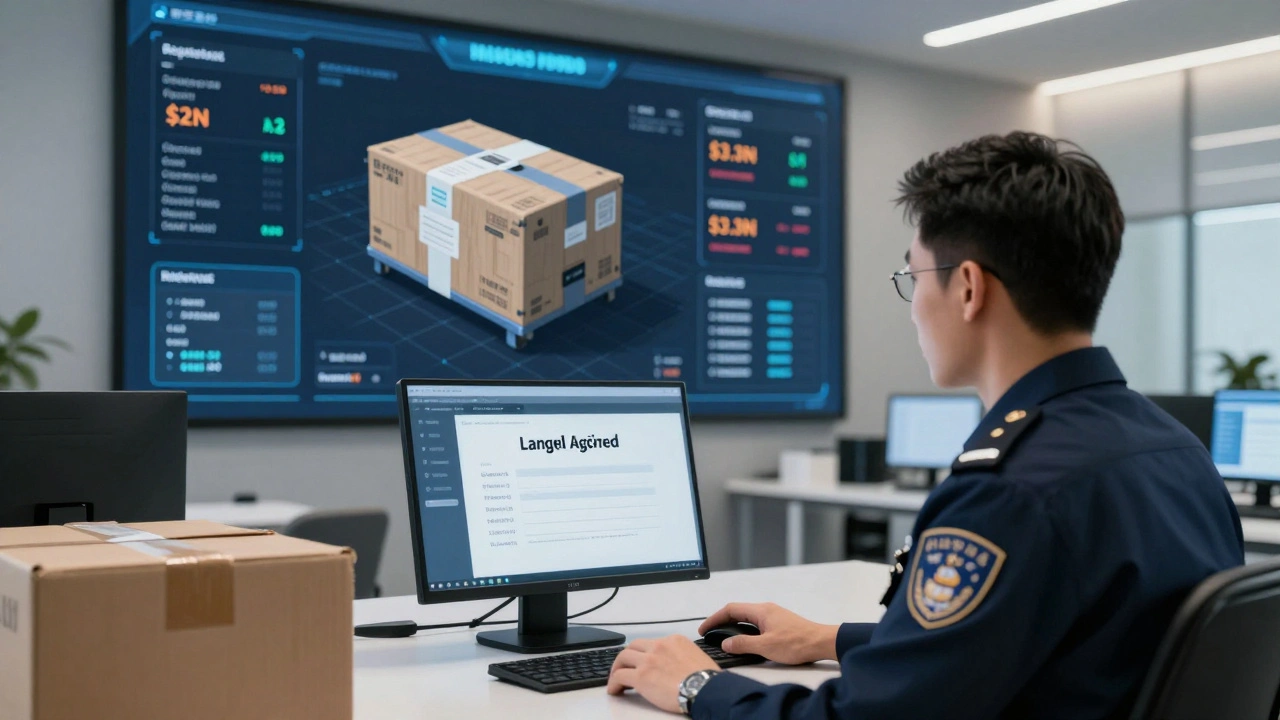
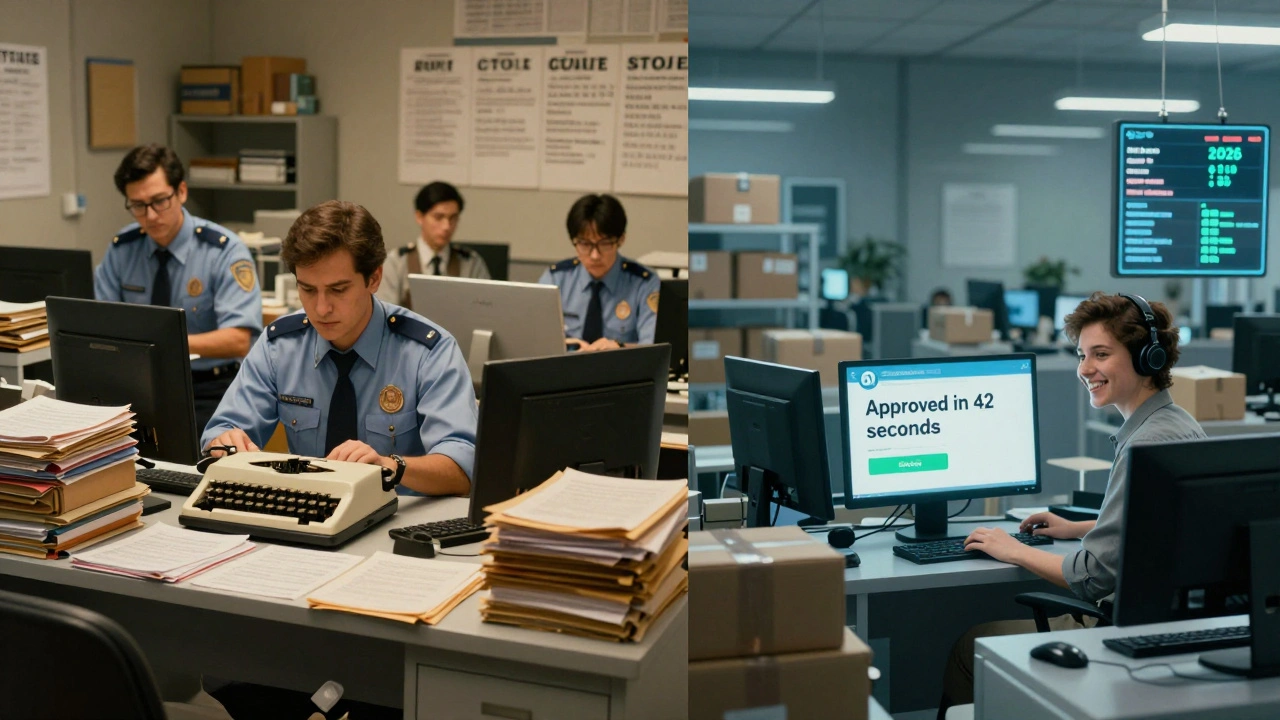
Twenty years ago, customs officers opened random containers, compared paper forms by hand, and guessed which shipments might be under-declared. Today, a system in Belgium flags a $2 million shipment of medical devices as high-risk because the importer’s last five shipments were all plastic toys-and the supplier’s website shows the same product selling for 40% more than declared. No human opened a single box. The algorithm did it in 12 seconds.
This isn’t science fiction. It’s happening right now in the European Union, the U.S., Canada, and Singapore. Customs modernization isn’t about fancy software-it’s about fixing a broken system that can’t keep up with $28.5 trillion in global trade. And the tool making it possible? Advanced analytics.
What advanced analytics actually does in customs
Advanced analytics in customs means using machine learning, AI, and big data to turn thousands of scattered data points into real-time risk scores. It’s not just automation-it’s prediction.
Before a shipment arrives, systems analyze:
- Who the importer is-have they been flagged before for undervaluation?
- What they’re importing-does a company that sells laptops suddenly declare a shipment of baby strollers?
- What the product should cost-scraping eBay, Alibaba, and Amazon to compare declared prices with real market rates.
At the border, analytics tell customs agents where to focus. Instead of inspecting 10% of all shipments, they now inspect 3%-but those 3% are 90% more likely to contain fraud. That’s the power of targeting.
After clearance, the system keeps learning. If a shipment gets through but later turns out to be misclassified, the model adjusts. It remembers. It gets smarter.
One G-20 country saw its detection rate jump from 30% to 60% after deploying two machine learning models: one that looked for patterns in past fraud cases, and another that spotted anything wildly out of the ordinary-even if it had never been seen before.
The numbers don’t lie: efficiency gains are massive
Let’s talk about results. In the Netherlands, customs used to take 14 days to catch price mismatches on e-commerce imports. Now, with real-time web scraping, they do it in two hours. In Belgium, risk assessments that used to take half a day now take 35% less time. In Central America, one agency found $12 million in missed duties in just three months-money that had been slipping through for years.
Workforce productivity? Up 75%. Revenue per auditor? Up 15 times. That’s not a small win. That’s a complete overhaul of how customs functions.
And here’s the kicker: compliant traders benefit too. Low-risk shipments that used to sit for days waiting for manual checks now clear in under an hour. A Dutch customs officer told us: "I used to spend eight hours preparing a single audit. Now I do it in 45 minutes. I have time to actually talk to businesses instead of drowning in spreadsheets."
Why most customs agencies are still stuck in the past
Despite the clear benefits, only 22% of customs agencies worldwide have reached the "predictive analytics" stage. Why? Because the barriers are brutal.
First: data. 45% of agencies still operate with fragmented, inconsistent data-spreadsheets, PDFs, paper forms, and legacy systems that don’t talk to each other. One IT manager in Southeast Asia spent $250,000 and 72 system outages trying to connect blockchain tech to a 1990s customs database. It failed.
Second: integration. EY found that 65% of modernization budgets go toward stitching together old systems. You can’t just plug in AI if your declarations are still faxed in.
Third: skills. Only 15% of customs agencies have a dedicated data science team. Most officers were trained to count boxes, not interpret dashboards. Training takes 80 to 120 hours-and older staff take twice as long to learn.
And fourth: culture. Customs agencies are bureaucratic. Change is slow. Many still think, "If it ain’t broke, don’t fix it." But the truth is, the system is broke. Fraud is more sophisticated. Trade volumes are exploding. Manual checks can’t keep up.
What works: real-world success stories
The EU’s PROFILE project is the most advanced case study in the world. Launched in 2023 in Belgium, the Netherlands, and Norway, it’s now expanded to 11 countries. Here’s what they did right:
- They built a "control tower"-one central system that pulls data from every source: import declarations, shipping logs, company registrations, and even e-commerce marketplaces.
- They didn’t try to replace everything at once. They started with one high-risk category: pharmaceuticals. Got it right. Then added electronics. Then textiles.
- They trained officers as data users, not just data consumers. Every officer now knows how to read a risk score and question why a shipment was flagged.
Result? False positives dropped from 32% to 8% in six months. Accuracy for high-value medical imports hit 92%. And they did it all without hiring a single new analyst.
In the U.S., Customs and Border Protection now uses AI to screen over 1.2 million e-commerce shipments daily. They flag suspicious sellers based on past behavior, not just declared value. Last year, they recovered $310 million in duties that would have been lost without the system.
The road ahead: what’s next by 2026
The World Customs Organization says 50% of its members will use predictive analytics by 2025. By 2026, McKinsey predicts AI will handle 80% of low-risk shipments without human input. That means:
- Small businesses shipping via Amazon or Shopify will get instant clearance-no delays, no paperwork.
- Large importers will get real-time compliance feedback before they even ship.
- Corrupt practices like commodity code switching (declaring "plastic toys" to avoid high tariffs on "electronic devices") will become nearly impossible.
But it won’t be perfect. Fraudsters will adapt. New loopholes will emerge. That’s why the system must keep learning. The best analytics platforms don’t just run models-they retrain themselves daily based on new data.
What you need to get started
If you’re a customs official or policymaker wondering where to begin, here’s the realistic path:
- Assess your data-What’s actually in your system? Is it consistent? Can you pull it all into one place?
- Start small-Pick one product category with high fraud risk (like cosmetics, electronics, or pharmaceuticals).
- Choose a pilot platform-You don’t need IBM or SAP. Cloud-based tools like Microsoft Power BI or Tableau can integrate with existing systems and offer dashboards anyone can use.
- Train your team-Don’t wait for data scientists. Teach officers how to interpret risk scores. Make it part of their daily workflow.
- Measure and adjust-Track false positives, detection rates, and clearance times. If the numbers don’t improve in 6 months, you’re doing something wrong.
The goal isn’t to replace people. It’s to free them from grunt work so they can focus on what matters: protecting borders, collecting fair revenue, and helping legitimate trade move faster.
What happens if you don’t act
Here’s the hard truth: if your customs agency doesn’t adopt advanced analytics, you’re not just falling behind-you’re becoming irrelevant.
Trade volumes keep rising. Fraud is getting smarter. Manual systems are crumbling under the weight of e-commerce shipments, cross-border deliveries, and complex supply chains. By 2030, the WCO expects every member to use predictive analytics. If you’re not there by then, you’ll be the agency that missed the boat.
And when that happens, businesses will go elsewhere. Investors will avoid your country. Revenue will dry up. And the public will lose trust in a system that can’t even catch basic fraud.
Customs modernization isn’t about technology. It’s about survival.
How does advanced analytics detect undervaluation in imports?
Advanced analytics compares declared import prices against real-time market data from e-commerce platforms like Alibaba, Amazon, and eBay. If a shipment declares a smartphone at $120, but the same model sells for $350 on Amazon, the system flags it. It also looks at historical patterns-does this importer always declare low prices? Does the supplier have a history of under-declaring? Machine learning models combine these signals to generate a risk score, often with over 90% accuracy after training.
Can small customs agencies afford advanced analytics?
Yes. While large agencies use enterprise platforms like IBM TradeLens or SAP, cloud-based tools like Microsoft Power BI, Tableau, and Google Cloud’s AI services offer affordable, scalable options. Many small agencies start with a single use case-like checking e-commerce shipments-and build from there. Cloud solutions eliminate the need for expensive hardware and reduce upfront costs by over 60% compared to legacy systems.
What’s the biggest mistake agencies make when implementing analytics?
Trying to fix everything at once. The most successful agencies start with one problem: say, undervaluation of electronics. They clean their data, build one model, train their staff, and measure results. Only after proving success do they expand. Agencies that try to overhaul their entire system in 12 months end up with broken tools, frustrated staff, and wasted budgets.
Do analytics replace customs officers?
No. They replace repetitive, low-value tasks. Officers used to spend hours sorting through paper files or manually checking declarations. Now, they focus on investigating high-risk cases, interviewing traders, and improving the system itself. The role shifts from checker to investigator and advisor. This makes the job more meaningful and reduces burnout.
How long does it take to see results from customs analytics?
Most agencies see initial results within 6 to 9 months. Detection rates improve quickly once the model is trained on real data. Revenue recovery often starts within the first quarter. Full deployment-including staff training and system integration-takes 18 to 36 months. But even at the 6-month mark, you should see fewer false alarms, faster clearance times, and higher audit accuracy.
Are there privacy risks with collecting so much data?
Yes. Collecting e-commerce prices, company histories, and shipment details raises privacy concerns, especially under GDPR and similar laws. Successful agencies use anonymized data, strict access controls, and clear data retention policies. They only collect what’s necessary for compliance and audit purposes. Transparency with traders and regular audits of data use are critical to maintaining public trust.
Customs modernization isn’t a luxury. It’s the only way to keep up with today’s trade reality. The tools exist. The data is there. The question isn’t whether you can afford to do it-it’s whether you can afford not to.