Europe Energy Dependency Calculator
Calculate how Russia's gas dependence has changed in Europe since the 2022 war. Input your values to see the real-world impact of LNG imports, renewable growth, and demand reduction.
Current Energy Dependence
Based on 2025 data: Russia's share dropped from 45% to 5% with 80% reduction in 3 years.
Europe’s Energy Security Was Rewritten by War
Before February 2022, most Europeans took their gas supply for granted. Russia delivered nearly half of the EU’s natural gas through pipelines, and no one seriously questioned it. Then the war started. Russia didn’t just invade Ukraine-it turned off the taps. Within months, gas prices spiked, industries shut down, and households faced impossible bills. But instead of collapsing, Europe did something unexpected: it rebuilt its entire energy system from the ground up. By late 2025, Russian gas imports had dropped from 45% of total imports to just 5%. That’s not a minor shift. That’s a complete overhaul.
How Europe Cut Russian Gas in Just Three Years
The EU didn’t wait for a perfect plan. It acted fast. The REPowerEU plan, launched in May 2022, set one goal: cut Russian fossil fuels by 2027. They didn’t just aim-they hit it early. By 2024, they’d slashed Russian energy imports by 80%. How? Three things: LNG, renewables, and demand cuts.
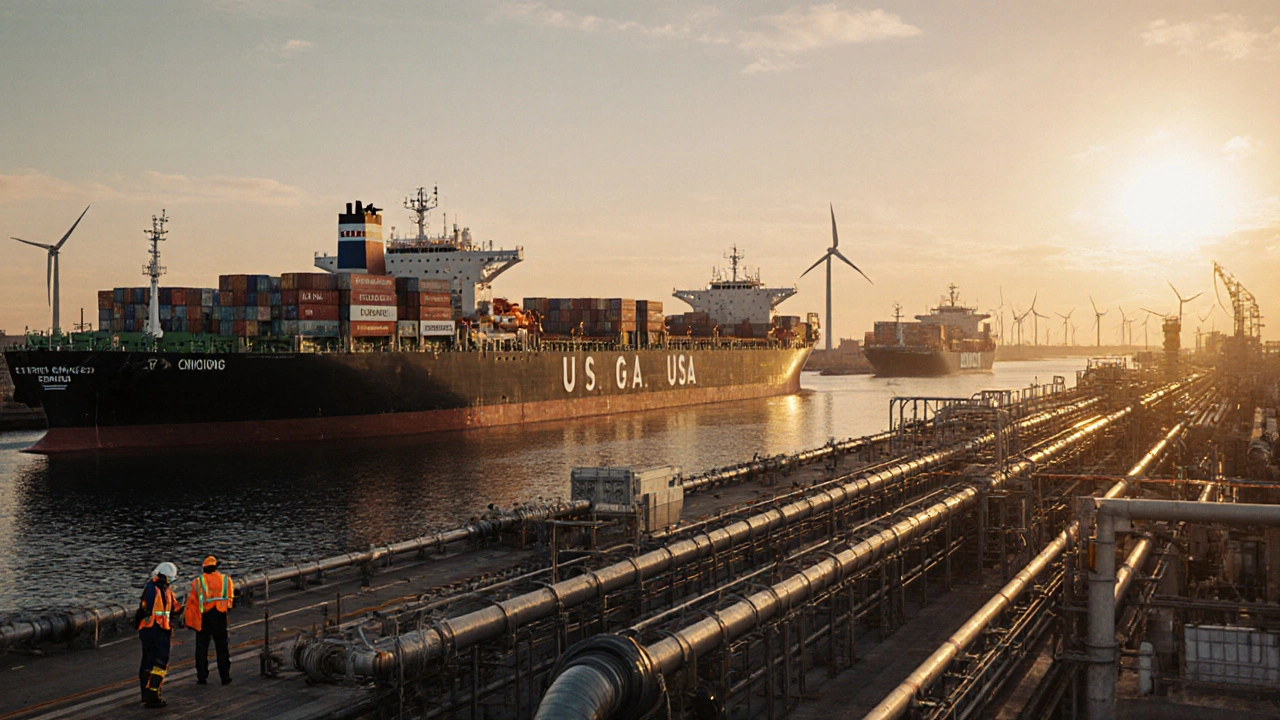
Liquefied Natural Gas (LNG) became the lifeline. Europe imported 50% of its gas as LNG by 2024, up from just 16% in 2021. The U.S. became the top supplier, sending 54 billion cubic meters annually. Norway, already a reliable partner, jumped to second place, covering 22% of EU gas needs. Meanwhile, pipelines from Azerbaijan, the Middle East, and North Africa expanded. The Baltic Pipe from Norway to Poland, the Vertical Corridor from Greece to Ukraine, and the Adriatic pipeline from North Africa to Italy all came online, bypassing Russian routes entirely.
But the biggest win? Lowering demand. Across the EU, gas use dropped 18% in two years. Factories shifted schedules. Cities lowered heating temps. Households swapped old boilers for heat pumps. Germany cut consumption by nearly 30%. Even small changes added up-like switching off streetlights at midnight or using smarter thermostats. The result? Less need for imports, less vulnerability.
Ukraine’s Grid Became Europe’s Secret Weapon
One of the most surprising developments wasn’t in Brussels or Berlin-it was in Kyiv. On March 16, 2022, Ukraine’s power grid synchronized with the Continental European Network. That’s not just a technical detail. It was a strategic game-changer.
Before the war, Ukraine’s grid was isolated, tied to Russia’s system. Russia could cut power to Ukraine-or use it as leverage. After synchronization, Ukraine started exporting electricity to Poland, Slovakia, Hungary, and Romania. At first, it was 3.5 gigawatts. By 2023, it hit 5.2 GW. That’s enough to power over 4 million homes. And when Russian missiles knocked out Ukrainian power plants, the EU filled the gap. Today, EU imports cover 70-85% of Ukraine’s energy deficits caused by attacks.
It’s a two-way street. Ukraine’s 31 billion cubic meter underground gas storage network-once meant for Russian flows-is now a critical buffer for landlocked countries like Slovakia and Hungary. Even though Russia damaged 30% of Ukraine’s above-ground storage infrastructure by late 2025, the underground facilities held strong. Europe didn’t just help Ukraine survive-it turned Ukraine into a key part of its own energy backbone.
Grid Resilience: The Weak Link Nobody Saw Coming
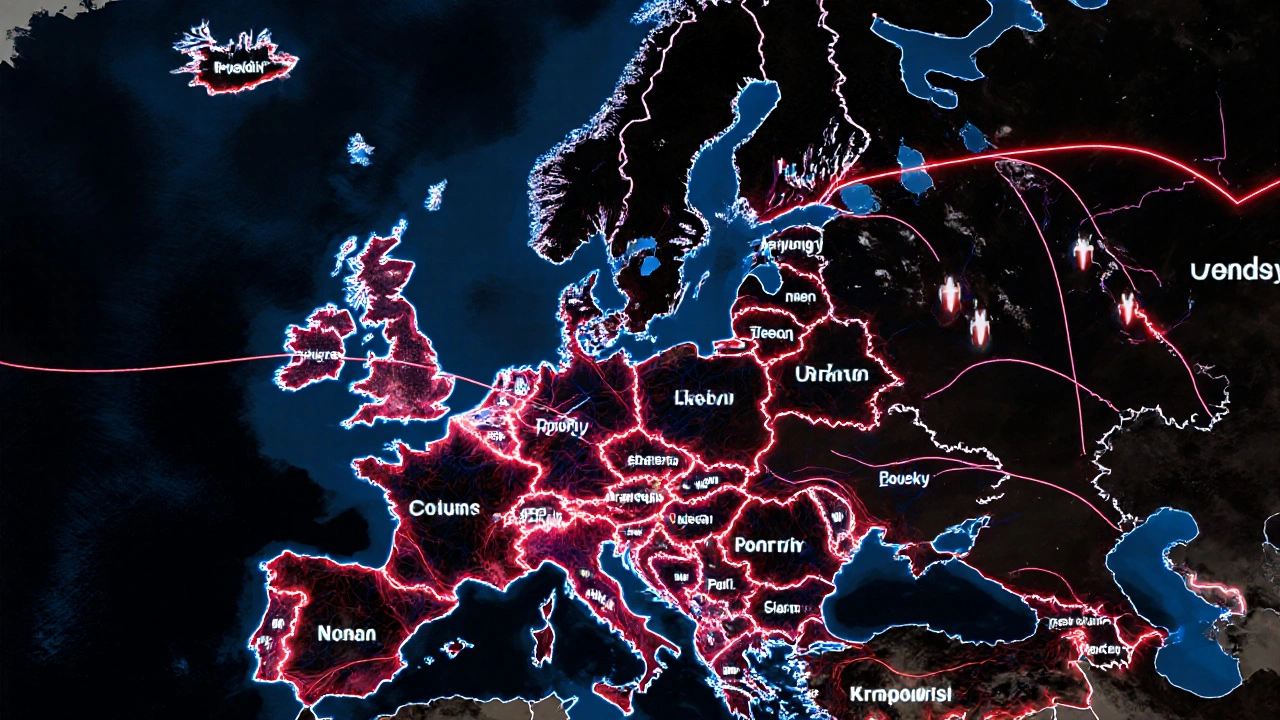
Europe’s grid wasn’t built for war. It was built for efficiency. North-south connections worked fine. But east-west links? Barely there. That’s the hidden problem.
Take Poland and Hungary. Poland imports gas from Norway and LNG terminals. Hungary still relies on Russian pipelines, even if they’re now routed through Turkey. The transmission lines between them? Underdeveloped. So when Poland has surplus power, it can’t easily send it south. The same goes for Ukraine’s neighbors. The LitPol Link between Lithuania and Poland runs at 92% capacity. The NordLink between Norway and Germany? Only at 65% because of red tape.
ENTSO-E’s 2025 plan says Europe needs another €67 billion in cross-border grid upgrades by 2030-especially in Central Europe. Without it, energy can’t flow where it’s needed. A blackout in Slovakia could ripple into Austria. A surge in wind power from Denmark can’t reach Bulgaria. The grid is only as strong as its weakest connection. And right now, the weakest links are in the east.
Storage Isn’t Just About Tanks-It’s About Timing
Gas storage used to be a seasonal afterthought. Now it’s a strategic asset. In 2022, EU storage levels hit 94.5% by November-way above the 80% target. But that number hides a dangerous divide.
Germany and the Netherlands had full tanks. Bulgaria and Slovakia? Barely 60%. Why? Because storage isn’t just about capacity-it’s about access. Countries with direct pipeline links to LNG terminals or Norwegian gas filled up fast. Others had to wait for deliveries or rely on Ukrainian storage, which itself is under threat.
Battery storage is also growing fast. From 3.2 GW in 2021 to 14.7 GW in 2024. That’s a 360% jump. Solar and wind don’t produce on demand. Batteries smooth out the gaps. But even here, bottlenecks exist. The EU is short on lithium, cobalt, and rare earths. That’s why the Critical Raw Materials Act, passed in April 2025, aims to source 10% of these materials from Ukraine by 2030. Ukraine has untapped deposits-and now, the political will to develop them.
The Hidden Cost: Energy Poverty and Slow Permitting
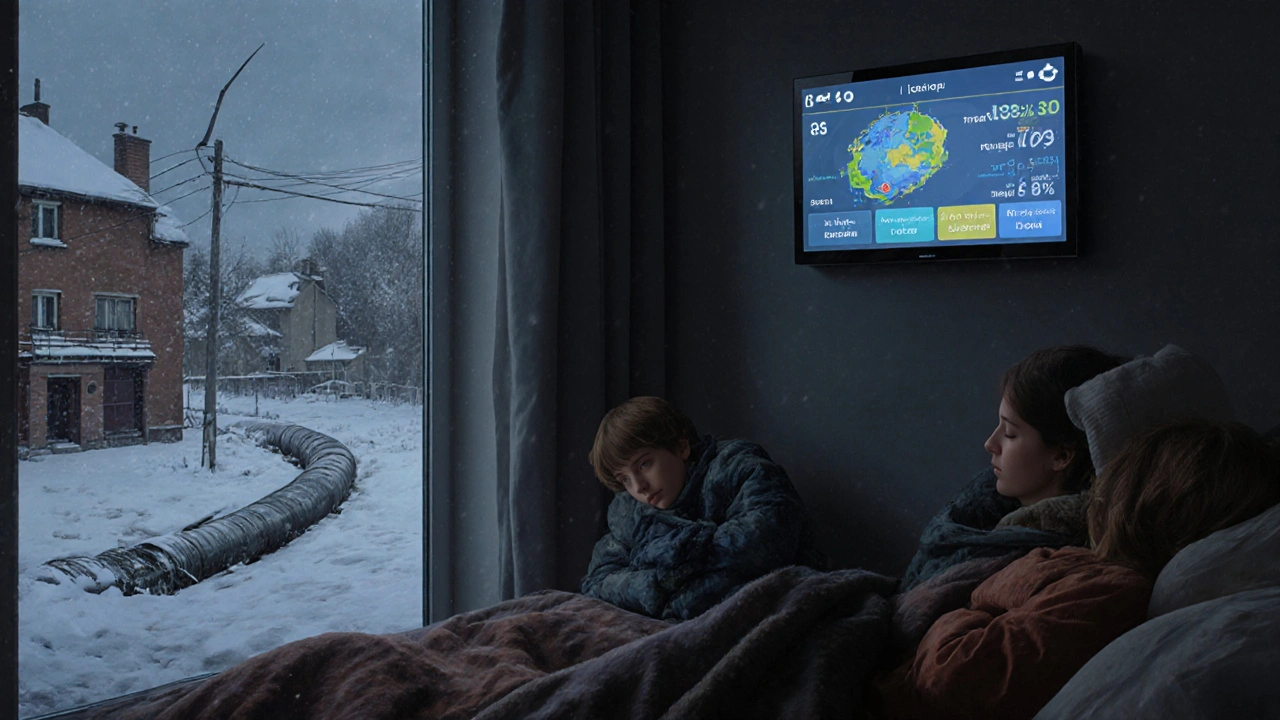
Not every story is a win. While Europe cut Russian gas, it didn’t cut energy bills. In fact, 26.3% of EU households now struggle to afford heating or cooling. That’s one in four. And 75% of European buildings are energy inefficient-old insulation, single-pane windows, outdated boilers.
Permitting for renewables also slowed things down. Even with REPowerEU, only 14 of 27 EU countries sped up approvals enough to hit the 2025 solar target. The average project still took 2.1 years to get approved-down from 5.2 years, but still too long. Solar installers say supply chains for inverters and panels are better, but raw materials like polysilicon and copper are still tight. One installer in Spain told me: “We have the workers. We have the sun. We just can’t get the parts.”
The European Court of Auditors warned in January 2025: the energy transition is becoming socially unsustainable. People aren’t resisting wind turbines. They’re resisting bills they can’t pay.
What’s Next? The Real Test Is Still Coming
Europe’s energy system today is more secure than it was in 2021. But it’s not done. The Affordable Energy Action Plan predicts €45 billion in savings in 2025-and up to €260 billion by 2040. That’s real money. But it depends on three things: faster grids, more storage, and fairer access.
The next big challenge? Winter 2026. If Russia tries to disrupt gas flows again, will Europe’s new infrastructure hold? The Baltic Pipe? The Vertical Corridor? Ukraine’s storage? Yes. But only if the east-west grid links get built. And if energy poverty isn’t addressed, public support for renewables could erode.
The lesson from Ukraine isn’t just about replacing Russian gas. It’s about building a system that can survive conflict, adapt to chaos, and still deliver for people. Europe didn’t just change its energy mix. It changed its mindset. Security isn’t just about supply. It’s about speed, equity, and resilience.
How did Europe reduce its dependence on Russian gas so quickly?
Europe cut Russian gas by 80% in three years by boosting LNG imports-mainly from the U.S.-expanding pipeline connections from Norway, Azerbaijan, and North Africa, and cutting overall demand by 18% through efficiency measures and behavioral changes. Countries like Germany reduced consumption by nearly 30%, while new infrastructure like the Baltic Pipe and Vertical Corridor bypassed Russian routes entirely.
Why is Ukraine’s energy grid important to Europe?
Ukraine’s grid, synchronized with Europe’s in March 2022, now acts as a backup power source. When Russian attacks knock out Ukrainian power plants, the EU sends electricity in-covering 70-85% of the shortfall. Ukraine’s underground gas storage facilities, with 31 billion cubic meters capacity, also serve as critical buffers for landlocked countries like Slovakia and Hungary, reducing their reliance on Russian pipelines.
What are the biggest weaknesses in Europe’s current energy system?
The biggest weakness is uneven grid interconnections, especially east-west links in Central Europe. While north-south routes are strong, countries like Hungary and Slovakia still lack reliable power links to Poland or the Baltics. Storage is also uneven-some nations have full tanks, others don’t. And permitting for renewables, though faster, still lags in many countries, slowing down solar and wind deployment.
Is Europe’s energy transition socially fair?
No, not yet. Energy poverty affects 26.3% of EU households, and 75% of buildings are energy inefficient. While renewables are growing, many people still can’t afford upgrades or face high bills. The transition risks deepening inequality if low-income families aren’t helped with subsidies, retrofits, or direct support. The EU’s Affordable Energy Action Plan aims to fix this, but progress is uneven.
What role does energy storage play in Europe’s security strategy?
Gas storage is now a strategic buffer-EU storage levels hit 94.5% in late 2022, up from 52% in 2021. But storage capacity varies widely by country. Battery storage has also surged, growing from 3.2 GW to 14.7 GW since 2021, helping balance intermittent wind and solar power. Ukraine’s underground storage facilities are now critical for regional stability, especially for countries without direct LNG access.
What’s the biggest threat to Europe’s energy security in 2026?
The biggest threat is not a supply shortage-it’s grid fragmentation. If Russia targets Ukrainian infrastructure again, or if Central Europe’s east-west transmission lines remain underdeveloped, localized blackouts could spread. Without €67 billion in planned grid upgrades by 2030, energy won’t flow where it’s needed. Political will and funding gaps could delay this, leaving Europe vulnerable during peak demand or future conflicts.