CBAM Cost Calculator
Calculate your import costs under the EU's Carbon Border Adjustment Mechanism (CBAM) for key products. Enter your product details and see how carbon pricing affects your supply chain costs.
Enter values above to see your estimated CBAM costs.
When you buy a steel beam or a batch of aluminum in the U.S., you might not think about where it came from-or how much carbon was emitted to make it. But that’s changing. Starting in January 2026, companies importing those materials into the European Union will no longer just report emissions. They’ll have to pay for them. This isn’t a suggestion. It’s the Carbon Border Adjustment Mechanism (CBAM), and it’s rewriting the rules of global trade.
What CBAM Actually Means for Importers
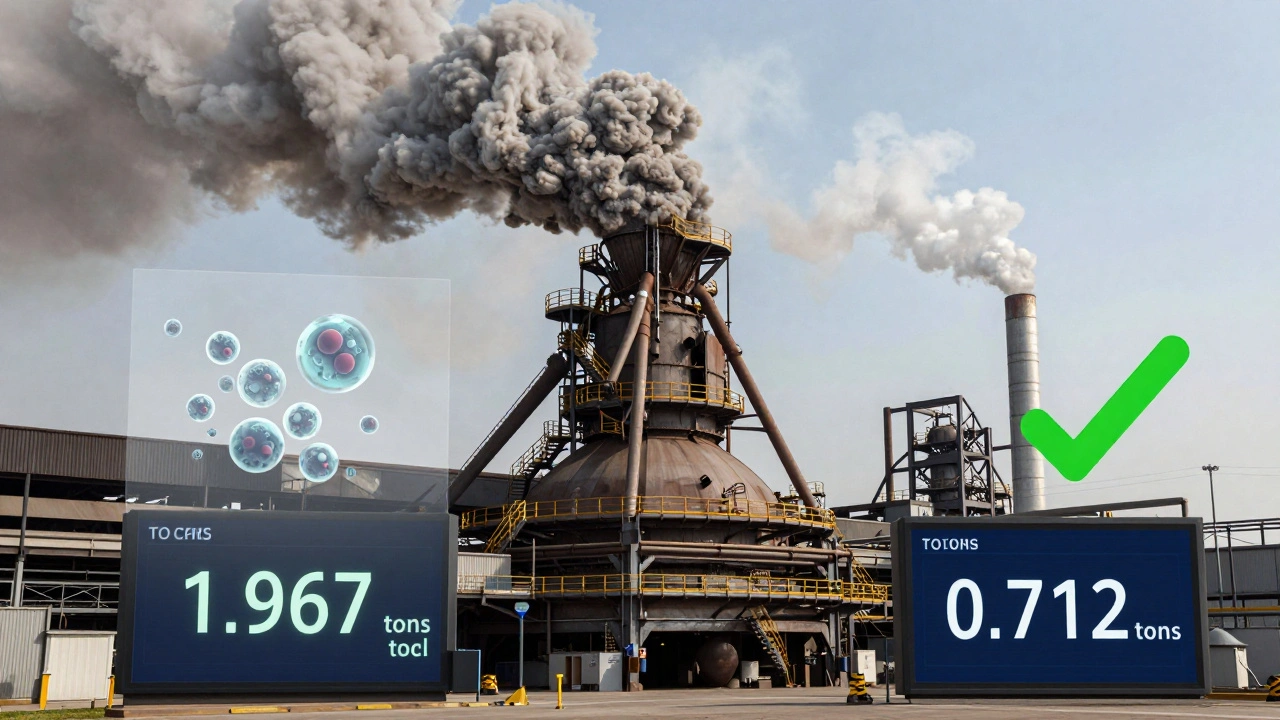
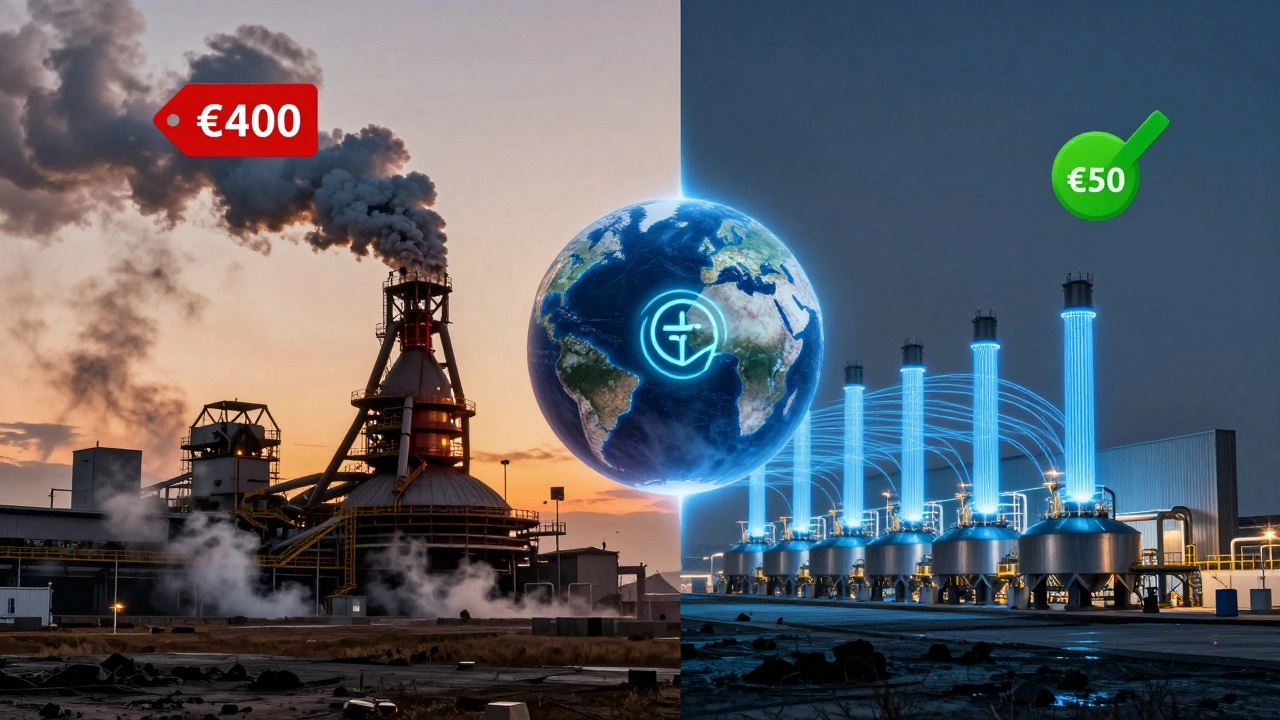
The EU’s CBAM isn’t a tax. It’s a pricing mechanism. If you’re importing cement, steel, aluminum, fertilizers, or hydrogen into the EU, you now have to prove how much CO₂ was released during production. From October 2023 to December 2025, companies only had to report. Starting January 2026, they must buy carbon certificates matching the emissions of their goods. Each certificate costs the same as an EU Emissions Trading System (ETS) allowance. That means if your aluminum plant in India emits 5 tons of CO₂ per ton of metal, and the EU carbon price is €80 per ton, you pay €400 per ton just to import it. This isn’t just about Europe. It’s about global competition. A factory in Germany that uses renewable electricity to make steel might pay €50 in carbon costs per ton. A factory in China using coal might pay nothing-until they try to sell into the EU. Then, suddenly, they’re paying €400. That gap is forcing suppliers to rethink everything: energy sources, production methods, even where they build new plants.The Ripple Effect: Beyond the EU
The EU isn’t alone. Germany’s Supply Chain Due Diligence Act (LKSG) requires companies with over 3,000 employees to monitor human rights and environmental risks in their entire supply chain. If a supplier uses child labor or destroys rainforests to source raw materials, the German company can be sued. The U.S. isn’t far behind. U.S. Customs and Border Protection has seized over $1.2 billion worth of goods since 2021 for suspected forced labor-mostly from Xinjiang, China. These aren’t isolated actions. They’re part of a global trend: trade policy is now a tool for enforcing social and environmental standards. Countries are starting to match each other. Canada is exploring its own carbon border tax. The UK is considering similar rules. Even countries that don’t have formal policies are feeling the pressure. A Vietnamese textile exporter might not sell to the EU, but if its main buyer is a French brand that must prove zero deforestation in its cotton supply chain, the Vietnamese supplier has to adapt-or lose the contract.Supply Chain Transparency Isn’t Optional Anymore
You can’t manage what you can’t measure. That’s why traceability is now the backbone of compliance. Companies can no longer rely on supplier self-reports. They need real-time data: where raw materials come from, how they’re processed, what energy is used, and who works in the factories. The EU’s Deforestation Regulation requires satellite monitoring and geolocation data for commodities like soy, cocoa, and palm oil. If you can’t prove your coffee beans didn’t come from a cleared forest in Brazil, you can’t sell them in Europe. This is where old systems break down. Many companies still use spreadsheets and paper invoices. But a single shipment might pass through five countries, six suppliers, and three logistics hubs. Without digital tracking-blockchain, IoT sensors, or integrated ERP systems-you’re flying blind. And regulators are catching up. The Corporate Sustainability Reporting Directive (CSRD) now forces over 50,000 companies in Europe to disclose detailed ESG data, audited by third parties. The penalty for false reporting? Fines up to 5% of global turnover.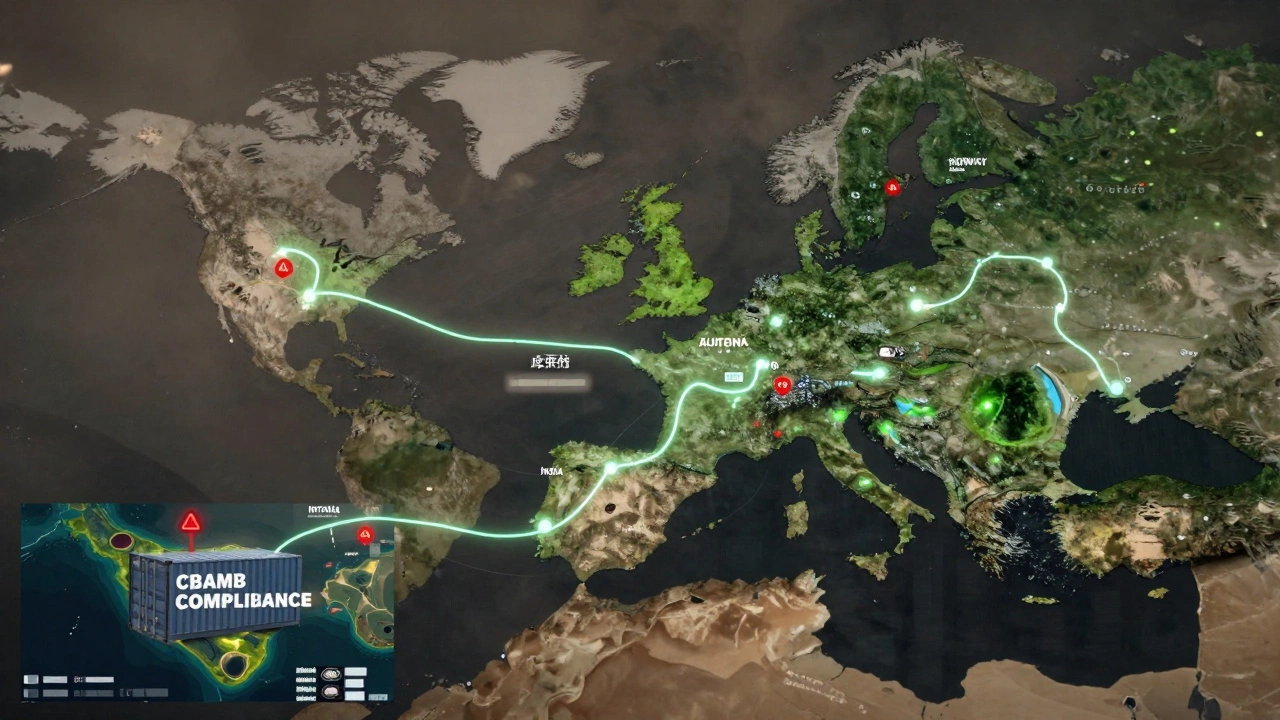
The ICC Principles: Cutting Through the Noise
With so many rules, companies are drowning in green claims. One supplier says they’re “carbon neutral.” Another says they’re “net zero.” But what does that actually mean? The International Chamber of Commerce (ICC) stepped in with its Principles for Sustainable Trade, Wave 3. These aren’t vague guidelines. They’re operational standards. They define exactly what counts as a “green” trade transaction-based on the product, the seller, the buyer, and the distribution path. For example, a bank financing a shipment of solar panels from Malaysia to Poland can now use ICC’s Green Trade Finance principles to verify whether the panels were made using renewable energy, whether the factory meets labor standards, and whether the transport route minimized emissions. Eleven major trade banks have adopted these standards. That means if you’re a supplier and you can’t meet them, you might not get financing. And without financing, you can’t scale.How to Build a Future-Proof Supply Chain
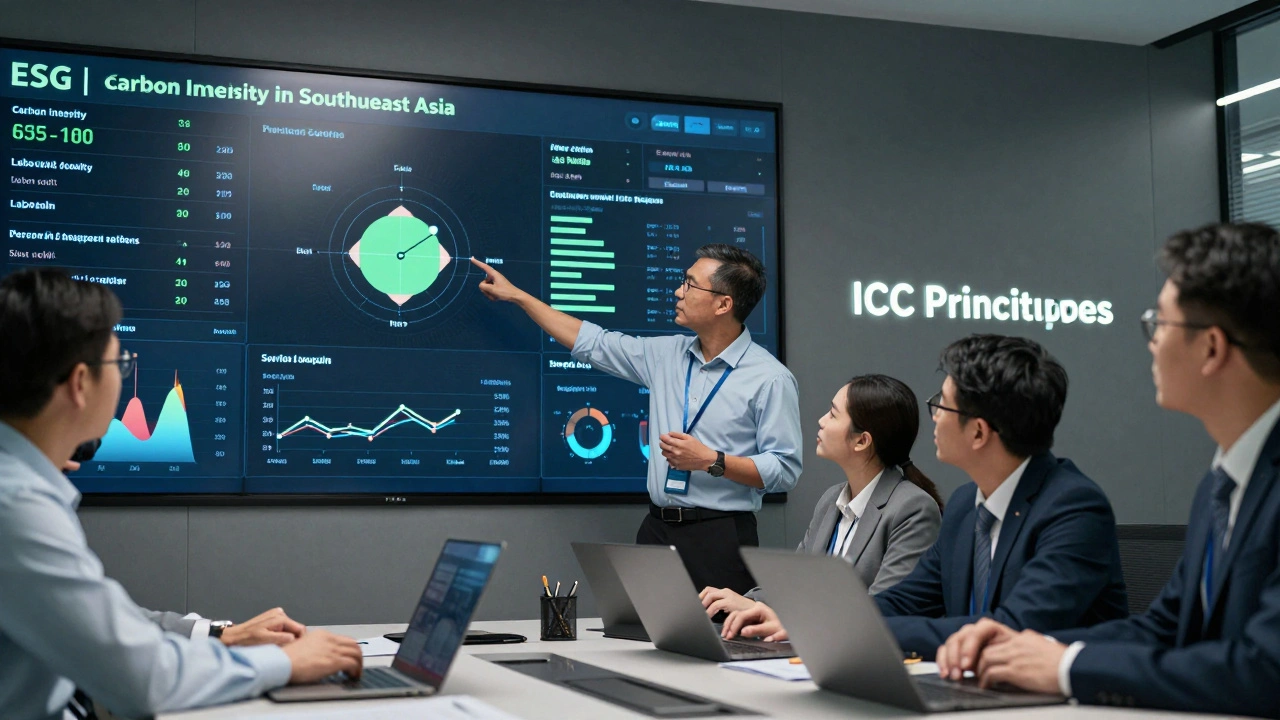
If your company imports goods, here’s what you need to do now:- Map your Tier 1-3 suppliers-not just who you buy from, but who they buy from. You’re liable for their actions.
- Install digital tracking-use platforms that collect emissions data, labor audit reports, and origin certificates automatically.
- Shift your sourcing-if your main supplier is in a high-emission region, start qualifying alternatives in countries with cleaner grids.
- Align with frameworks-use GRI, SASB, or UN SDGs to structure your reporting. Don’t make up your own metrics.
- Train procurement teams-buyers need to understand ESG risks like they understand pricing and lead time.
The Cost of Inaction
Ignoring this isn’t an option. In 2025, a major U.S. automaker was fined €210 million after it was found importing brake pads made with forced labor in Southeast Asia. The parts came from a Tier 3 supplier they’d never audited. The brand lost market share in Europe. Investors pulled out. The CEO resigned. Meanwhile, companies that acted early are seeing benefits. A Danish wind turbine maker switched its aluminum supplier to one powered by hydropower in Norway. Its CBAM costs dropped by 78%. Its ESG rating jumped. It got a €500 million green bond at 1.2% interest-half the rate of competitors.What Comes Next?
By 2027, CBAM will expand to include plastics, electricity, and possibly even services. The U.S. is expected to introduce its own border carbon mechanism, possibly tied to the Inflation Reduction Act. China is developing its own carbon market and may soon require export certifications. The world is moving toward a system where trade isn’t just about price and speed-it’s about impact. The companies that win will be the ones who treat ESG not as a compliance checkbox, but as a core business strategy. Because in the next decade, the most valuable asset won’t be a factory, a patent, or even a brand. It’ll be a clean, transparent, and traceable supply chain.What products are covered by the EU’s Carbon Border Adjustment Mechanism (CBAM) in 2026?
As of January 2026, CBAM applies to imports of steel, aluminum, cement, fertilizers, hydrogen, and electricity. These were chosen because they are energy-intensive and have high carbon footprints. By 2027, the EU plans to expand coverage to include plastics and possibly other goods like chemicals and industrial machinery.
Do U.S. companies need to worry about CBAM if they don’t sell to Europe?
Yes. Even if you don’t export to the EU, your customers might. A U.S. manufacturer that sells solar panels to a German company must ensure the aluminum frames in those panels meet CBAM standards-or the German buyer can’t import them. This creates indirect pressure on U.S. suppliers to adopt cleaner production methods to stay in global supply chains.
How does the German Supply Chain Due Diligence Act (LKSG) affect U.S. businesses?
If a U.S. company has over 3,000 employees and sells goods in Germany, LKSG applies. It requires them to audit suppliers for human rights violations and environmental harm-even if those suppliers are in Asia or Africa. Failure to act can lead to civil lawsuits, fines, and exclusion from public contracts in the EU. Many U.S. firms now require all suppliers to sign LKSG-compliant codes of conduct.
What’s the difference between CBAM and a carbon tax?
A carbon tax is applied to emissions produced within a country’s borders. CBAM applies to emissions produced outside the EU but tied to goods imported into it. It doesn’t tax production-it equalizes the cost between domestic and imported goods. A factory in the EU pays for its emissions via the ETS. CBAM ensures a factory in Saudi Arabia pays the same price when exporting to the EU, preventing carbon leakage.
Can small businesses afford to comply with these ESG trade rules?
It’s harder, but not impossible. The EU offers transitional support for SMEs through simplified reporting tools and free training programs. Many trade associations now offer group compliance services-pooling data across small suppliers to reduce costs. The real cost isn’t the tool-it’s the risk of being cut out of major supply chains. Many large buyers now require ESG compliance from all suppliers, regardless of size.