Climate Finance Impact Calculator
Estimate the potential private investment and implementation efficiency of climate adaptation projects using different financial instruments. Based on data from the article "Financing Climate Adaptation in the Global South: Proven Tools Beyond Grants".
Project Details
CRDCs
Climate-Resilient Debt Clauses
Guarantees
Risk Mitigation Tools
Bonds
Investor Funding
Blended Finance
Layered Capital Approach
Results Preview
Potential Private Investment
Implementation Time Reduction
Effectiveness Rating
When hurricanes destroy crops in Mozambique, or droughts dry up wells in Kenya, communities don’t wait for grant applications to be approved. They need money now. But traditional climate grants-slow, limited, and scarce-are failing to keep up. In 2024, global adaptation finance reached $48.7 billion, yet experts estimate we need $180-300 billion annually just to survive the next decade. The gap isn’t just about money. It’s about how that money moves.
Grants still dominate, especially in Africa, where governments match multilateral funding at around $2.4 billion per year. But grants don’t scale. They don’t unlock private capital. They don’t let countries borrow responsibly when disasters strike. The real shift isn’t in how much we give-it’s in how we lend, guarantee, insure, and bond.
Climate-Resilient Debt Clauses: Pay Later When It Hurts
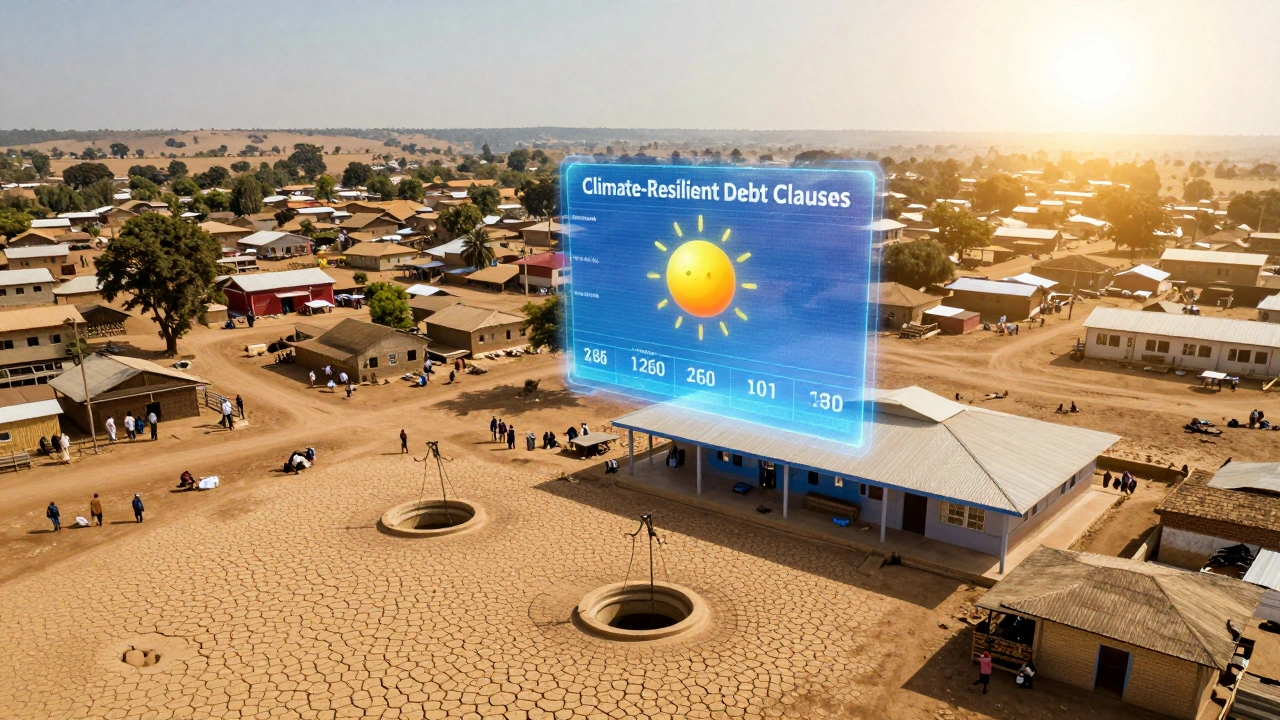
Imagine your loan payments pause automatically after a major drought or Category 3 hurricane. No paperwork. No delays. Just relief. That’s what Climate-Resilient Debt Clauses (CRDCs) do. Since late 2023, the World Bank has applied CRDCs to all loans from the International Development Association (IDA) for 74 of the world’s poorest countries. If a qualifying disaster hits, repayment is deferred for up to two years.
This isn’t just a grace period. It’s a financial shock absorber. Traditional contingent credit lines take 90 to 180 days to activate after a disaster. CRDCs trigger within 30 days because payouts are based on pre-agreed weather data-like rainfall levels or wind speeds-not messy, slow loss assessments. That speed saves lives. It keeps schools open. It stops families from selling their last goat to eat.
But CRDCs have limits. They only work for national governments. Small towns, cooperatives, and private farmers can’t use them. And not every country has the debt management office needed to handle them. Only 38 of the 74 eligible countries currently have that capacity. Still, experts like Dr. Swenja Surminski call CRDCs “the most significant innovation in sovereign adaptation finance since the Paris Agreement.”
Guarantee Mechanisms: Making Private Money Feel Safe
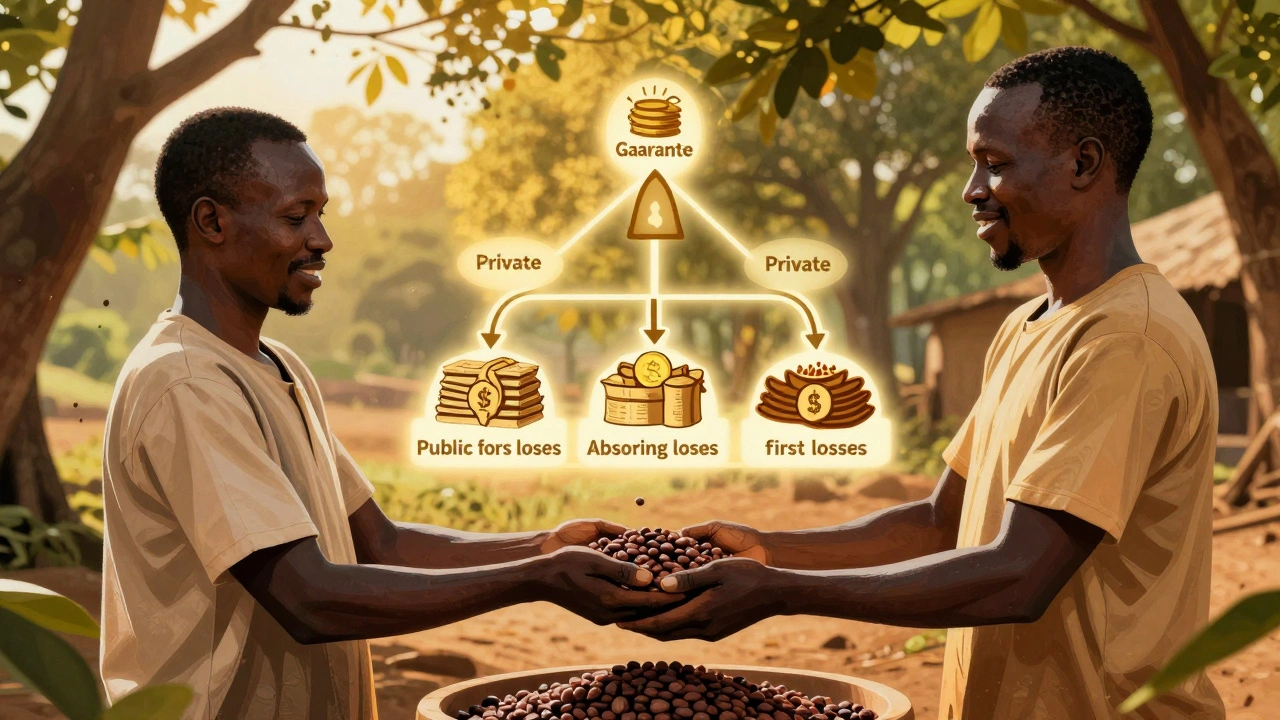
Private investors won’t fund a water pipeline in rural Bangladesh unless they’re sure they’ll get paid. That’s where guarantees come in. The Asian Development Bank’s IF-CAP facility, for example, puts up $500 million in first-loss capital. That means if a project fails, ADB takes the first 10-15% of the loss. Private lenders then step in with the rest, knowing their risk is cut in half.
The result? Every $1 of public guarantee unlocks $5 in private climate loans. That’s a 5:1 leverage ratio. Compare that to direct lending, where $1 only equals $1. In Ghana, the Landscape Resilience Fund used this model to attract over $5 million in private investment for cocoa farms-just by putting in $1.5 million in public funds.
But guarantees need expertise. They require detailed risk modeling, climate data analysis, and legal structuring. Most developing countries don’t have staff trained in this. A 2024 study found only 12% of national development banks in the Global South have the skills to design or manage these tools. Without local capacity, guarantees remain theoretical.
Climate Adaptation Bonds: Investors Get Returns, Communities Get Resilience
Bonds are the most straightforward way to tap institutional investors-pension funds, insurance companies, sovereign wealth funds. The Asian Infrastructure Investment Bank (AIIB) issued a $500 million bond in November 2023 to fund drought-resistant infrastructure in Indonesia and Vietnam. The bond pays 3.5-4.2% interest, a safe return for investors who want to do good.
But here’s the catch: only 37% of all climate adaptation bonds reviewed by the World Resources Institute in 2023 had third-party verification that the money actually went to adaptation. Some labeled as “adaptation bonds” funded generic infrastructure with vague climate benefits. That’s greenwashing.
Successful bonds, like Fiji’s $50 million green bond, require 14 months of preparation just to define what “adaptation” means in their context. That’s double the time needed for mitigation bonds. And even then, only 20% of the proceeds must go to adaptation under AIIB rules. Without clear standards, investors can’t trust the labels.
Blended Finance: Layering Risk to Attract Capital
Blended finance is like building a sandwich. At the bottom: public money absorbs the first losses. In the middle: development banks provide mezzanine debt. On top: private investors put in senior capital, expecting 6-8% returns.
Climate Investor Two (CI2), backed by the Green Climate Fund, uses this model to fund water projects in 15 countries. So far, it’s served 2.3 million people. The public capital acts as a cushion, letting private investors sleep at night.
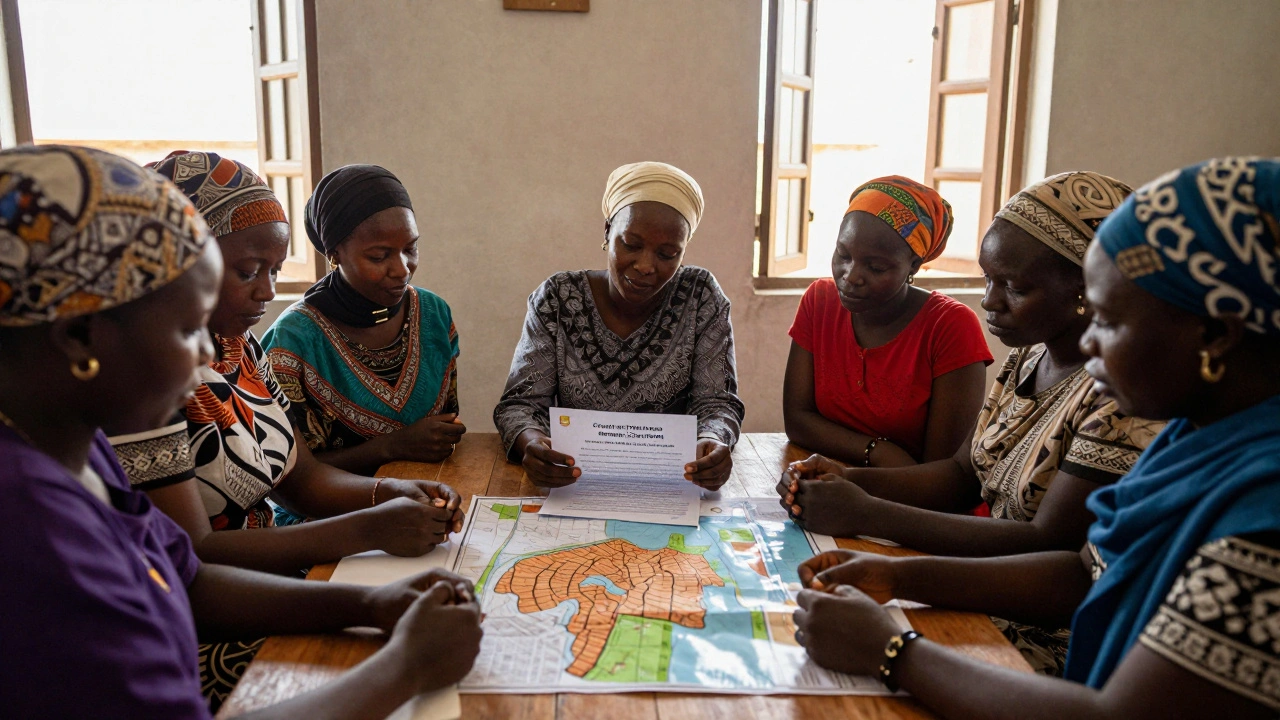
But blended finance is complex. It needs lawyers, accountants, risk analysts, and community liaisons-all working together. In WRI’s 2024 case studies, 28% of CI2 projects ran late because community engagement was rushed or ignored. In Senegal, farmer cooperatives were handed final loan terms instead of being part of the design. That leads to projects that look good on paper but fail on the ground.
The Hidden Cost: Capacity, Not Capital
Here’s the uncomfortable truth: we have the tools. We just don’t have the people to use them.
UNEP FI found that 87% of adaptation projects in the Global South still rely on grants-not because they’re better, but because non-grant instruments are too complicated. A Rwandan official said 37% of their project prep time was spent negotiating risk-sharing terms. African Development Bank staff reported 27 extra forms for guarantee-based loans. One farmer in Senegal told researchers: “We know our land’s vulnerabilities better than any consultant. But no one asks us.”
Successful projects-like the European Investment Bank’s work in Senegal-prove that embedding technical assistance (15-20% of total funding) cuts implementation time by 35% and boosts private investment from 18% to 47%. That’s not magic. That’s investment in local expertise.
The Road Ahead: Local Leadership, Not Foreign Blueprints
The newest trend is “frontline-first” finance. Instead of Western institutions designing tools for the Global South, local banks and cooperatives lead the structuring. The Climate Adaptation Notes for Southern Africa, launched in 2024, lets regional financial institutions design their own instruments. Disbursement time dropped 30%.
That’s the future. Not bigger grants. Not fancier bonds. But empowering people on the frontlines to build their own financial tools. The World Bank’s January 2025 expansion of CRDCs to include slow-onset disasters like droughts is progress. The Global Innovation Lab’s new $200 million agri-finance facility for African smallholders is promising.
But without standardized metrics, without local capacity, and without real inclusion, even the best instruments will fail. The question isn’t whether we have the tools. It’s whether we’re ready to hand them over-and trust the people who need them most to use them right.