
By 2025, nearly one in three workers worldwide is Gen Z. That’s not a trend anymore-it’s the new normal. And companies that still treat them like younger Millennials or expect them to grind like Gen X are losing talent fast. Gen Z didn’t just walk into the workforce. They stormed in,带着 a different set of rules, and they’re not asking for permission to change how work works.
They Won’t Trade Purpose for Pay
Money matters-70% of Gen Z say pay is one of their top three job considerations. But here’s the twist: 44% will walk away from a high-paying job if the company’s values don’t match theirs. It’s not about charity. It’s about integrity. A Gen Z employee might turn down a 15% higher salary because the company won’t commit to remote work. Why? Because the commute triggers anxiety. Because they’ve seen how burnout ruins lives. Because they know their time is finite, and they refuse to waste it on work that feels empty.
This isn’t idealism. It’s survival. Gen Z grew up with climate headlines, school shootings, and pandemic lockdowns. They saw how institutions failed. So when they enter a workplace, they’re not just looking for a paycheck-they’re looking for proof that the company is trying to do better. They check sustainability reports before applying. They Google a company’s labor practices. They ask about DEI metrics in interviews. And if the answers are vague? They move on.
Flexibility Isn’t a Perk-It’s Infrastructure
Remember when “work-life balance” was something companies offered as a bonus? For Gen Z, it’s the baseline. 72% have left-or seriously considered leaving-a job because of rigid schedules. And it’s not just about working from home. It’s about control. Can you choose when you work? Can you take a mental health day without feeling guilty? Can you leave at 5 p.m. without being ghosted by your manager until 9 p.m.?
Companies that think “we offer remote work” are already behind. Gen Z wants structured flexibility. That means clear rules: “You’re in the office three days a week, but no meetings on Fridays.” “You can adjust your hours if you hit your goals.” “We don’t expect replies after 7 p.m.” Adobe’s “FlexTime Fridays” policy-no internal meetings, no emails-cut Gen Z turnover by 34%. Why? Because it showed trust, not just tolerance.
And here’s the kicker: 82% still want some in-person time. They’re not trying to disappear. They just don’t want to be forced into a 9-to-5 box that doesn’t fit their life. The best hybrid models aren’t about where you work-they’re about what you deliver and when you’re allowed to recharge.
They Want to Grow-Fast
Gen Z isn’t waiting 10 years for a promotion. 70% expect to move up within 18 months. That’s not entitlement. It’s logic. They’ve seen how quickly tech changes. They’ve learned new apps in weeks. Why should their career path take decades?
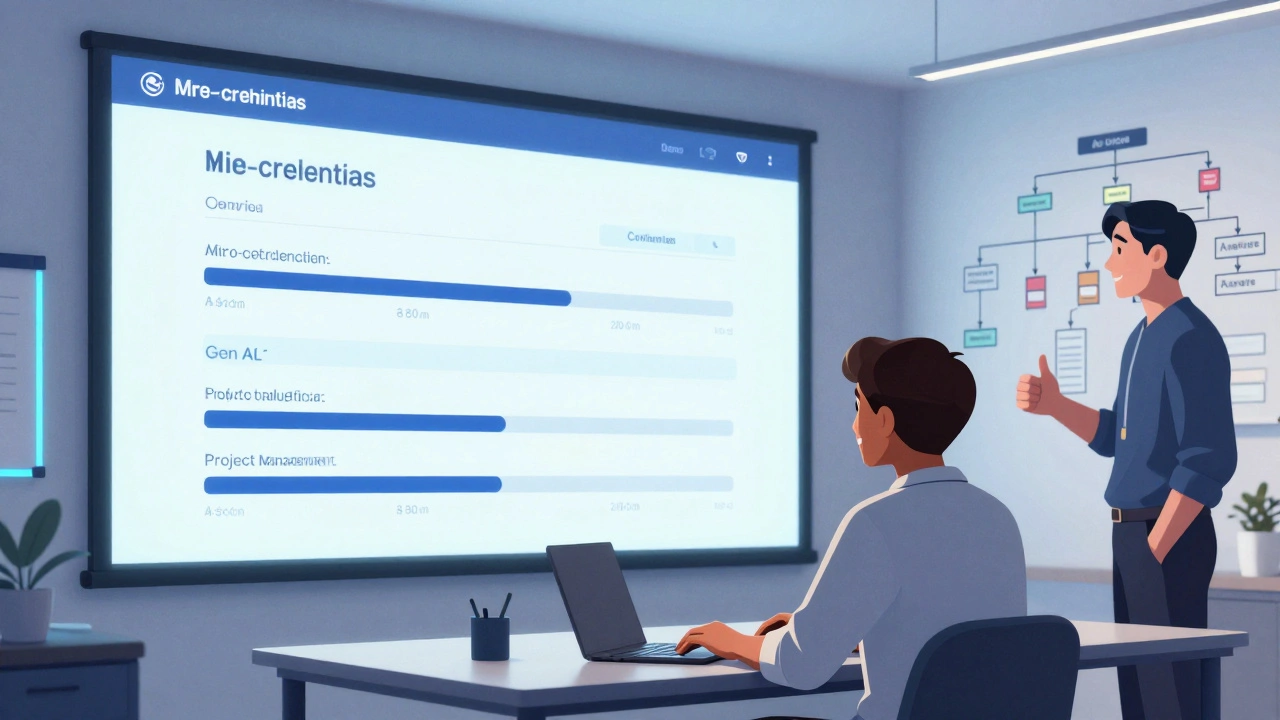
Traditional performance reviews? Out. Skill-based advancement? In. IBM’s “SkillsBuild” platform lets Gen Z employees earn promotions by completing micro-credentials in AI, data analysis, or project management-not by sitting through annual feedback sessions. Result? 28% faster promotions. Companies that tie growth to measurable skills, not tenure, keep Gen Z engaged. Those that don’t? They watch them leave for startups or tech firms that do.
Mentorship isn’t optional either. 86% say learning new skills is more important than climbing the corporate ladder. But only 41% say they have real mentorship. That gap is why Reddit threads like “How I got a mentor at my first job” get 2,000 upvotes. Gen Z doesn’t want a title. They want someone who’ll show them how to get better-and who’ll vouch for them when it’s time to move on.

Mental Health Isn’t a Wellness App
“We offer an EAP!” sounds great on paper. But 63% of Gen Z negative reviews call out “performative wellness programs.” They’ve seen the yoga mats in the breakroom while managers still expect 70-hour weeks. They’ve watched colleagues burn out and leave without anyone noticing.
What they actually want: dedicated mental health days. Managers trained to spot burnout. No stigma around saying “I need a break.” 61% say they’d switch jobs for better mental health support. That’s not a soft demand-it’s a hard business risk. The cost of replacing a Gen Z employee? Up to 1.5x their salary. Investing in real mental health infrastructure isn’t HR fluff. It’s risk mitigation.
Companies like Salesforce and Adobe don’t just offer counseling. They train managers to have honest conversations. They track workload distribution. They stop praising “hustle culture” in all-hands meetings. That’s the difference between a perk and a policy.
They’re Not Job-Hopping-They’re Strategizing
Gen Z’s average job tenure? 1.1 years. That sounds bad-until you look at why. 39% consider switching jobs within six months if they don’t see growth. Compare that to 28% of older generations. It’s not disloyalty. It’s efficiency. They’re not quitting because they’re bored. They’re leaving because the path forward is blocked.
And they’re not just hopping randomly. They’re targeting industries that match their values: tech (42% retention at two years), healthcare (38%), and finance (35%). Why? Because those fields offer clear upskilling paths, visible impact, and flexibility. They’re not chasing titles. They’re chasing progress.
Meanwhile, industries clinging to rigid hierarchies-manufacturing, traditional retail, legacy finance-are bleeding Gen Z talent. The data doesn’t lie: companies that treat Gen Z like a problem to manage are losing. Companies that treat them like partners in reinvention are winning.
The Companies Winning Right Now
It’s not about ping-pong tables or free snacks. It’s about systems.
- Adobe: FlexTime Fridays. No meetings. No emails. Result: 34% higher retention.
- IBM: SkillsBuild platform. Promotions tied to completed competencies, not years served. Result: 28% faster advancement.
- Salesforce: Transparent promotion criteria. Weekly skill-building sessions. Result: 1.7-star higher rating on work-life balance from Gen Z employees.
- Accenture: AI Co-Pilot onboarding. Reduced training time by 37% for Gen Z hires.
These aren’t outliers. They’re the future. And they’re all built on the same principle: trust people to do good work, give them the tools to grow, and respect their time.
What Happens If You Don’t Adapt?
The cost of ignoring Gen Z isn’t just talent loss. It’s innovation loss. Boston Consulting Group found companies that adapted to Gen Z’s expectations saw 28% higher innovation output. Why? Because when people feel safe, respected, and heard-they take risks. They speak up. They build new things.
Meanwhile, companies stuck in old models are seeing higher turnover, lower morale, and slower product cycles. The EU’s 2025 Work-Life Balance Directive isn’t just a law-it’s a warning. If you don’t offer real flexibility, you’ll lose legal compliance, talent, and market relevance.
The “flexibility gap” is real: 73% of Gen Z expect flexible work. Only 39% of companies can deliver it meaningfully. That gap is widening. And the companies that close it first? They’ll dominate the next decade.
Final Thought: This Isn’t About Accommodating Gen Z
This is about fixing broken systems.
Gen Z didn’t invent the need for mental health support. They just refused to ignore it anymore.
They didn’t create the demand for purpose-driven work. They just won’t pretend it doesn’t matter.
They didn’t invent flexible schedules. They just won’t sacrifice their lives for a title that doesn’t mean anything.
The workplace of the future isn’t being shaped by Gen Z because they’re demanding change. It’s being shaped because they’re the first generation to see how broken the old system was-and they’re not going to fix it quietly.
Why do Gen Z workers leave jobs so quickly?
Gen Z doesn’t leave jobs because they’re lazy or entitled. They leave because they don’t see a path forward. If they can’t grow skills, get promoted based on performance, or work in a way that respects their mental health, they move on. The average job tenure is 1.1 years-not because they’re flighty, but because they’re strategic. They’re looking for companies that match their values and offer real growth, not just paychecks.
Do Gen Z workers care about money?
Yes-70% rank pay as a top job consideration. But money alone won’t keep them. Many Gen Z workers live paycheck-to-paycheck, which makes compensation even more critical. Still, 44% will turn down higher pay if the company’s ethics don’t align with theirs. They want fair pay, but they won’t trade their values for a bigger salary.
Is remote work the only thing Gen Z wants?
No. While 72% have left jobs over inflexible policies, 82% still want some in-person interaction. What they want is control. They want to choose when they’re in the office and when they’re not. It’s not about working from bed-it’s about designing a schedule that fits their life, not the other way around. Structured flexibility beats rigid remote or hybrid rules every time.
How can companies keep Gen Z employees?
Start with transparency: publish clear promotion paths, pay bands, and skill requirements. Offer real flexibility-not just “you can work from home sometimes.” Invest in mentorship and skill-building programs. Train managers to recognize burnout. Stop offering yoga mats and call it mental health support. Gen Z wants systems that work, not slogans that sound good.
Do Gen Z workers care about climate change at work?
Yes-two-thirds say climate anxiety affects their job decisions. 63% now screen companies based on verified sustainability reports before applying. They’re not just looking for green marketing. They want proof: carbon reduction goals, ethical supply chains, and real environmental action. Companies that treat this as PR are losing talent. Those that make it part of their mission are attracting top Gen Z talent.
Is Gen Z’s focus on flexibility just a pandemic thing?
No. The pandemic exposed how outdated traditional work models were. But Gen Z’s demand for flexibility isn’t temporary-it’s structural. They’ve seen how remote work can improve mental health, reduce commute stress, and increase productivity. Even as offices reopen, they’re pushing for permanent flexible options. Companies treating this as a temporary concession will keep losing talent. This is the new standard.