Global Innovation Index Comparison Tool
Compare Countries
How Innovation Works
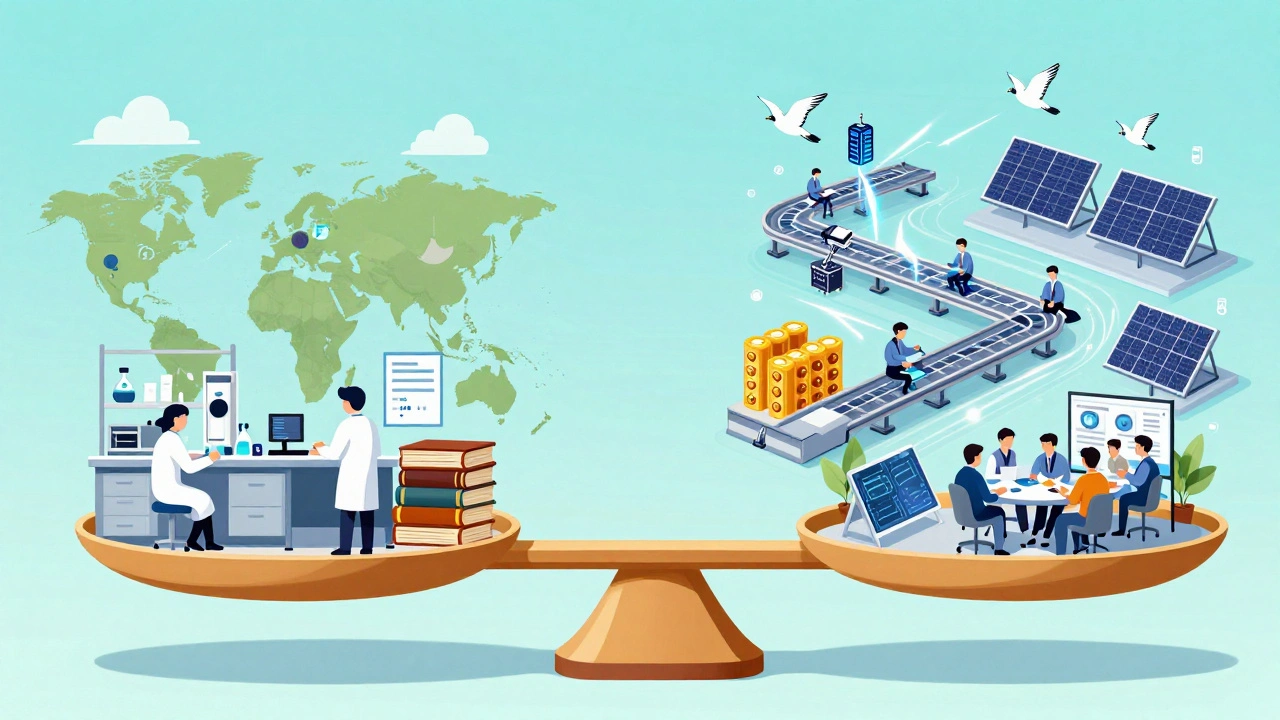
Innovation rankings measure both inputs (R&D spending, education) and outputs (patents, trademarks, exports). China's remarkable rise comes from exceptional output efficiency - getting more innovation results from fewer inputs.
China's Innovation Clusters: Shenzhen-Hong Kong-Guangzhou (#1), Beijing (#4), Shanghai-Suzhou (#6)
China vs. Switzerland Comparison
Key Strengths
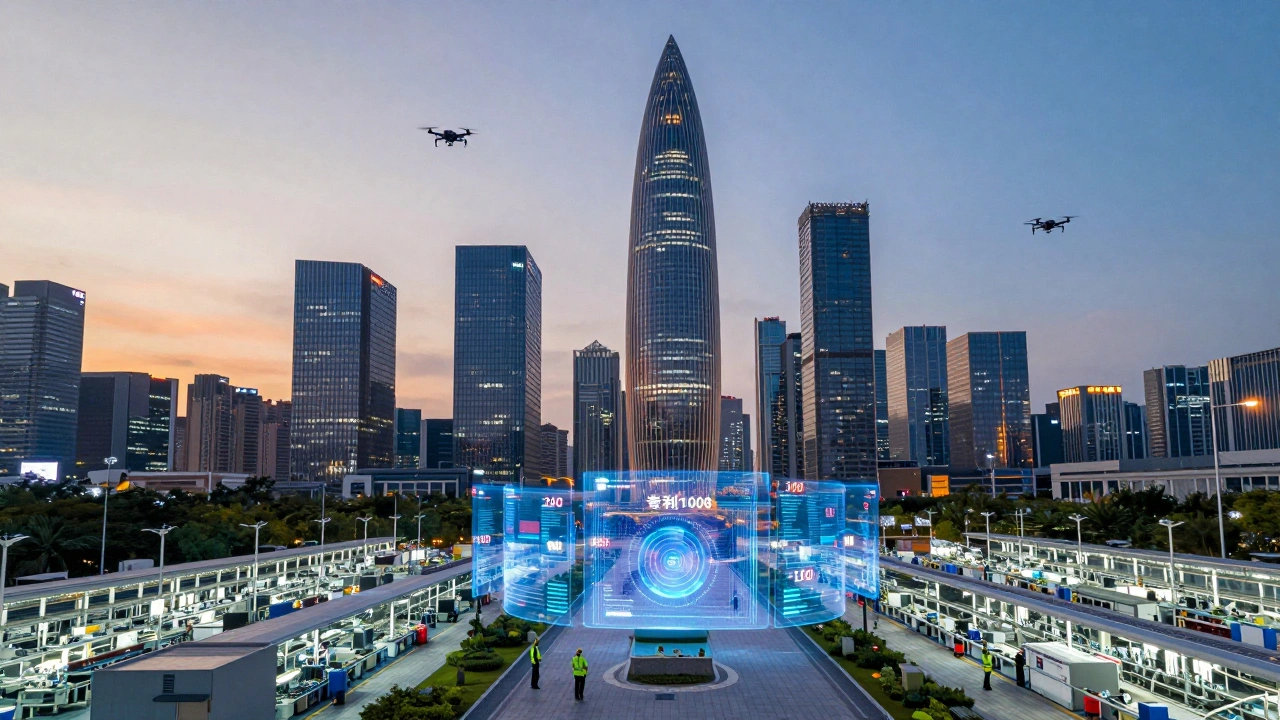
For the first time ever, China cracked the top 10 of the Global Innovation Index in 2025, landing at 10th place with a score of 56.6. This isn’t just a number change-it’s a seismic shift in who controls the future of technology. The World Intellectual Property Organization (WIPO) released the report in September 2025, and the implications are already echoing through boardrooms, research labs, and policy halls from Silicon Valley to Berlin. China didn’t just climb the ladder; it rewrote the rules of how innovation works.
How China Beat the Odds
Most countries that rank high on the Global Innovation Index do so because they spend a lot-on universities, on R&D, on patents, on venture capital. Switzerland, the top-ranked country for the 15th year in a row, pours billions into every corner of its innovation system. Germany and Japan follow closely, with deep institutional support and decades of industrial expertise. China’s story is different. It entered the top 10 not because it matched those countries in spending, but because it got more out of less. Its Innovation Input ranking sits at 19th globally-solid, but not elite. Yet its Innovation Output ranking jumped to 5th. That means China is turning its resources into real-world tech at a rate that outpaces richer nations. It’s like a sprinter who doesn’t train as much but still beats the world champions.The Real Power: Knowledge and Technology Outputs
The clearest sign of China’s breakthrough is in the Knowledge and Technology Outputs pillar. China now leads the world here-no other country ranks higher. This isn’t vague praise. It’s backed by hard data:- China files the most resident utility model patents per billion dollars of GDP-far ahead of any other nation.
- It leads in resident industrial design applications, showing how deeply innovation is embedded in product design.
- Its trademark applications per capita are the highest globally, signaling massive brand-building activity.
- It produces the largest share of creative goods exports in its total trade volume.
Three Innovation Clusters That Rule the World
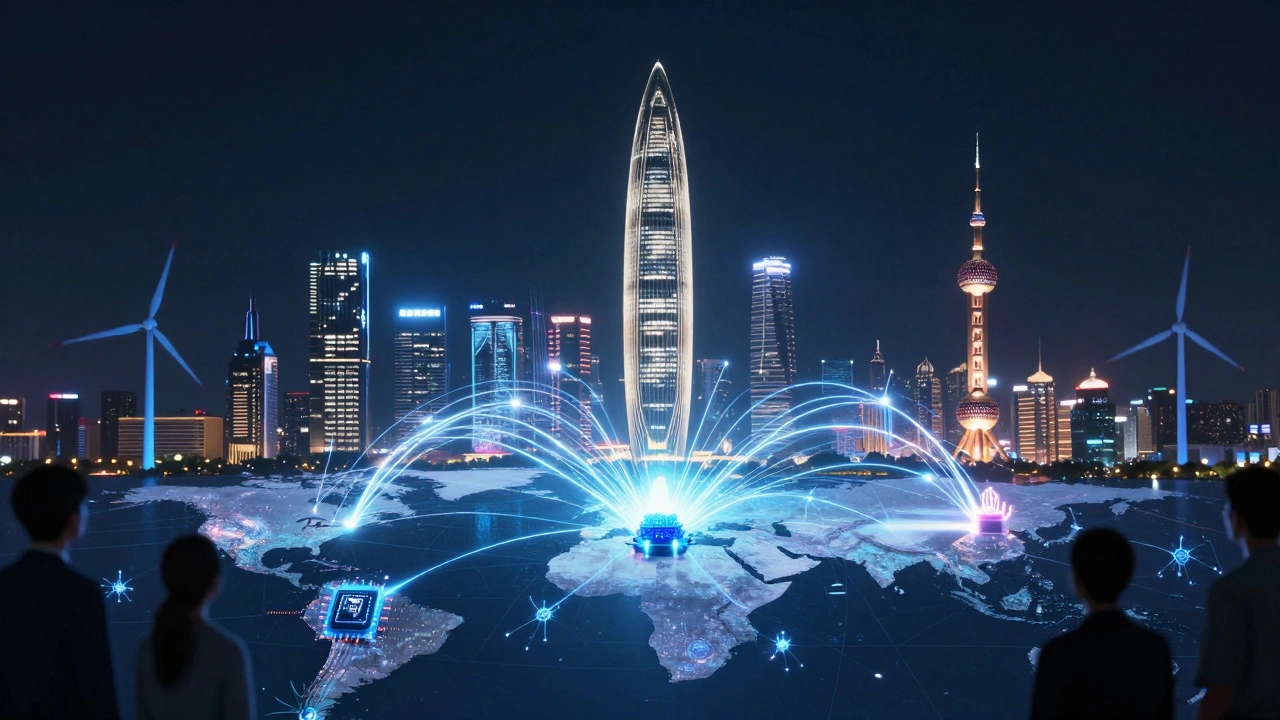
If you want to understand where China’s innovation is happening, look at its cities. China hosts 24 of the world’s top 100 innovation clusters-nearly a quarter of all global hubs. And three of them are in the global top 10:- Shenzhen-Hong Kong-Guangzhou-number one globally. This cluster alone produces more PCT patent applications than entire continents like Latin America or Africa.
- Beijing-4th place. Home to Tsinghua University, the Chinese Academy of Sciences, and hundreds of AI startups.
- Shanghai-Suzhou-6th place. A powerhouse in semiconductors and advanced manufacturing.
Why AI, Semiconductors, and Green Tech Are the New Battlegrounds
China isn’t just winning in general-it’s winning where it matters most for the next 30 years: artificial intelligence, semiconductors, and green technologies.- It’s the second-largest investor in late-stage venture capital deals globally, behind only the U.S.
- It’s the third-largest corporate R&D spender, with Huawei, BYD, and Tencent investing billions annually.
- Its share of business-financed R&D is now second only to South Korea, meaning private companies-not just the government-are driving innovation.
What This Means for the Rest of the World
Germany, Japan, and South Korea still lead in specific areas-Japan in production complexity, South Korea in business R&D intensity, Germany in high-tech manufacturing. But China is no longer playing catch-up. It’s now matching or exceeding their output levels while spending less on inputs. This creates a new kind of competition. It’s not about who spends the most anymore. It’s about who can move fastest, scale smartest, and integrate best. China’s model-tightly linked urban clusters, aggressive IP protection, private-sector-led investment-is now a blueprint others are trying to copy. India is following a similar path, climbing to 38th place with strengths in ICT exports and unicorn startups. But China’s scale, integration, and speed are unmatched. The U.S. still leads in foundational research and venture capital depth, but China is closing the gap in commercialization. The race isn’t about who invents first-it’s about who brings it to market fastest and at scale.The Future Is Already Here
WIPO’s data shows China’s ranking could rise even further. Its R&D spending is on track to become the highest in the world in 2024, and its innovation clusters are still expanding. The Shenzhen-Hong Kong-Guangzhou zone alone has more patents filed than the entire European Union. This isn’t a temporary surge. It’s the result of 12 years of deliberate strategy-from building STEM education pipelines to creating special economic zones for tech. China didn’t get here by accident. It got here because it treated innovation like a national mission. For companies, governments, and investors outside China, the message is clear: the old innovation hierarchy is gone. The next generation of breakthroughs won’t come just from Silicon Valley or Boston. They’ll come from Shenzhen, Beijing, and Shanghai. The question isn’t whether China will lead-it’s whether the rest of the world is ready to compete on its terms.Why did China jump so high in the Global Innovation Index in 2025?
China’s jump to 10th place in 2025 came from massive gains in innovation output, not just input. While it ranked 19th in inputs like R&D spending and education, it soared to 5th in outputs like patents, trademarks, and tech exports. Its three global top-10 innovation clusters-Shenzhen-Hong Kong-Guangzhou, Beijing, and Shanghai-Suzhou-created unmatched speed in turning ideas into products. Strong private-sector investment and government support in AI, semiconductors, and green tech pushed its output beyond that of many wealthier nations.
How does China’s innovation compare to the U.S. and Europe?
The U.S. and Europe still lead in foundational research, university output, and venture capital depth. But China now outpaces them in commercialization speed, patent volume, and scale of production. For example, China files more utility model patents annually than the entire EU. It also leads in creative goods exports and has three innovation clusters in the global top 10, while the U.S. has only two. Europe’s innovation is more spread out; China’s is concentrated, making it faster and cheaper to bring new tech to market.
What role do innovation clusters play in China’s success?
China’s innovation clusters are its secret weapon. Shenzhen-Hong Kong-Guangzhou alone produces more patents than entire continents. These clusters combine universities, factories, suppliers, venture capital, and talent in one geographic area. This proximity cuts development time from years to months. A startup in Shenzhen can get a prototype made, tested, and shipped in under a week. No other country has this level of integration. This is why China leads in high-tech exports and startup scaling.
Is China’s innovation sustainable long-term?
Yes, because it’s built on multiple pillars: massive investment in STEM education, strong IP protection, private-sector funding, and urban innovation hubs. Unlike countries that rely on a few elite universities or government grants, China’s system involves millions of engineers, thousands of startups, and hundreds of industrial zones working together. Its R&D spending is rising faster than any other major economy. With three clusters in the global top 10 and growing, China’s innovation engine is now self-sustaining.
What sectors is China dominating in global tech?
China dominates in three key areas: artificial intelligence (especially computer vision and voice recognition), semiconductors (through SMIC and HiSilicon), and green technologies (solar panels, wind turbines, and lithium-ion batteries). It leads globally in patent filings for these sectors and controls over 80% of the global solar panel supply chain. It’s also second in late-stage venture capital deals and corporate R&D spending, showing that private companies-not just the state-are driving innovation.