Robotics ROI Calculator
Select Your Industry
ROI Results
Annual Savings: $0
Payback Period: 0 months
5-Year ROI: 0%
Recommendation: This investment should not be pursued based on your inputs.
By 2030, the U.S. manufacturing sector could be short 2.1 million workers. At the same time, more than 1 in 5 Americans will be over 65, needing more care than ever before. These aren’t two separate problems-they’re the same crisis: an aging population is draining the workforce just as demand for labor spikes. The answer isn’t more immigrants, higher wages, or longer shifts. It’s robotics.
Robots Aren’t Replacing People-They’re Keeping Jobs Alive
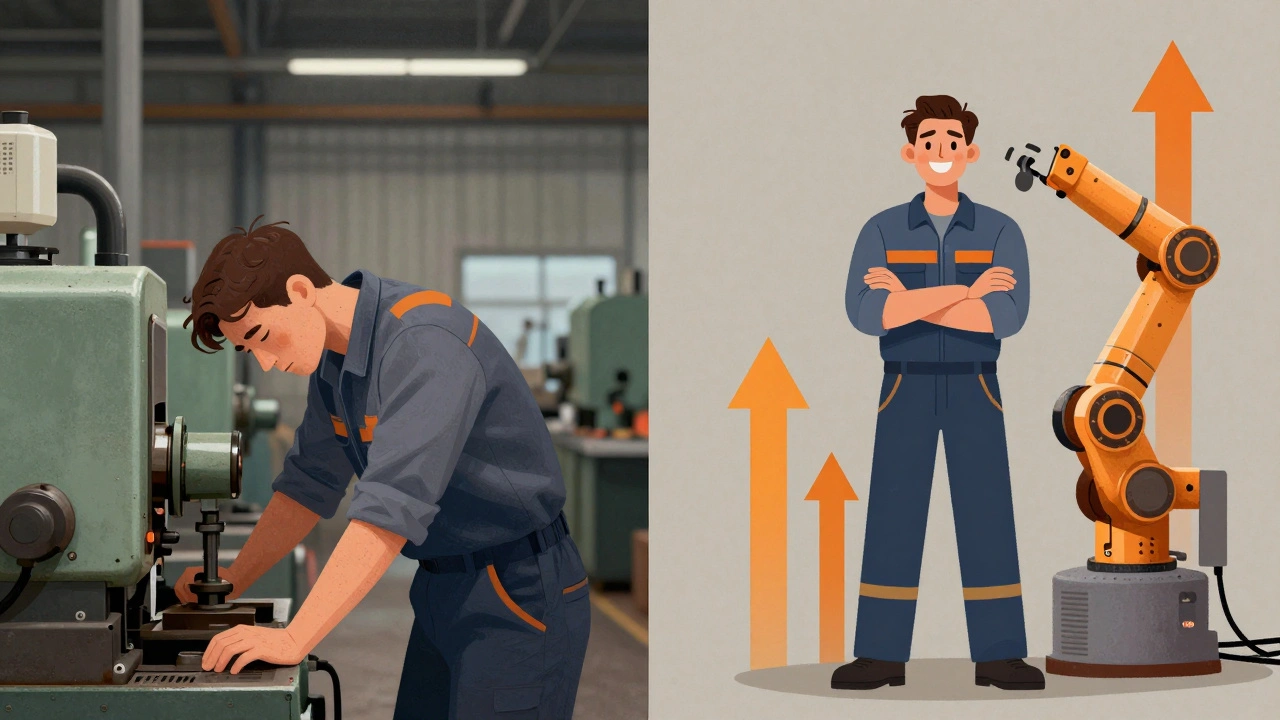
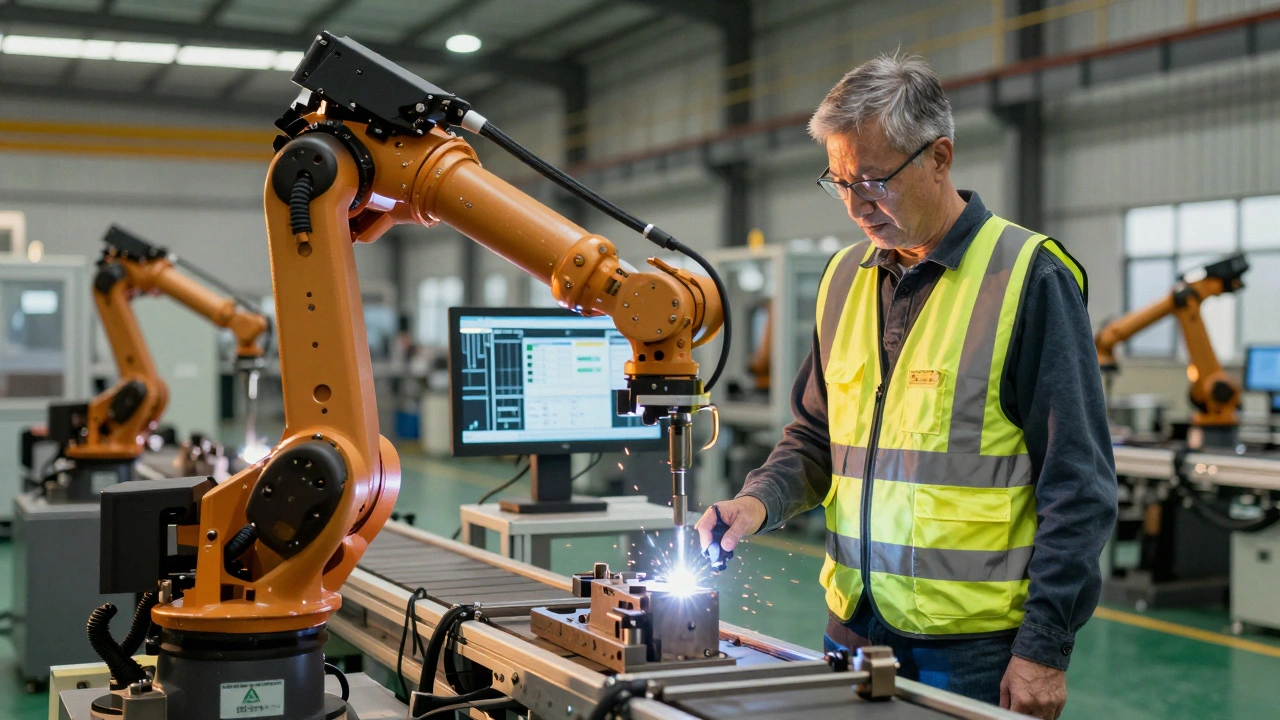
People think robots are here to take jobs. That’s not what’s happening. In factories across Ohio, Wisconsin, and Georgia, robots are helping workers stay on the job longer. A 58-year-old machine operator who can’t lift 40-pound parts anymore? Now he oversees a collaborative robot that handles the heavy lifting. His job doesn’t disappear-it changes. He’s no longer bending over a conveyor belt. He’s monitoring screens, troubleshooting errors, and managing multiple automated stations. His pay went up 22%. His back doesn’t hurt anymore. This isn’t science fiction. It’s happening right now. A 2025 survey found 75% of U.S. workers believe robots reduce injury risk. And 65% say robots help older employees keep working. That’s not optimism. That’s experience. Workers who’ve used cobots (collaborative robots) report fewer strains, fewer doctor visits, and more pride in their work. In manufacturing, robots don’t replace humans-they extend them. A robotic welding arm doesn’t get tired. It doesn’t blink. It doesn’t make a mistake because it’s been on shift for 10 hours straight. It delivers 99.5% weld consistency. Human welders? Around 85-90%. That gap isn’t just about quality. It’s about scrap. Every 1% less scrap means thousands of dollars saved per month. And when you combine that with 24/7 operation, the math is clear: robots make production more reliable, safer, and more profitable.Manufacturing’s Labor Crisis Is Real-and Getting Worse
The numbers don’t lie. In 2024, 82% of U.S. manufacturers said they couldn’t fill production roles. Welding? 76% of positions were vacant. Machine operation? 68%. These aren’t entry-level gigs anymore. They’re skilled trades. And the people who used to fill them are retiring. The average age of a U.S. machinist is now 52. The next generation isn’t stepping in. Why? Because the work is hard. It’s loud. It’s dangerous. And younger workers see better options-tech jobs, remote work, careers that don’t leave you with chronic pain. Robots change that equation. Companies that install automation report a 68% improvement in recruitment. Why? Because robots make the job look modern. They make it look like a place where you learn new skills, not just break your back. Take a warehouse in Tennessee. Before robots, workers spent 8 hours a day walking miles, lifting boxes, and making picking errors. Turnover was 45% a year. After introducing autonomous mobile robots (AMRs), the same workers now monitor robot paths, handle exceptions, and do quality checks. Turnover dropped to 17%. Job satisfaction went up. Pay went up. And the company shipped 40% more orders. This isn’t about cutting costs. It’s about survival. If you can’t fill the shifts, you can’t make the product. And if you can’t make the product, you lose customers. Robotics isn’t optional anymore. It’s the only way to keep factories running.
Why Care Robotics Is Lagging-And Why That’s Changing
Manufacturing adopted robots fast. Care? Not so much. Only 15% of eldercare facilities use any kind of robot. Why? Because caregiving isn’t about lifting boxes. It’s about holding a hand. It’s about recognizing when someone is in pain before they say it. It’s about empathy. Robots can’t replace that. But they can relieve the burden. In Japan, where 28% of the population is over 65, care robots are everywhere. They help people stand. They remind them to take medicine. They monitor heart rate and falls. Toyota’s Human Support Robot has cut caregiver physical strain by 22% in trials. That’s huge. Caregivers in the U.S. are leaving the field at record rates-30% annual turnover in some nursing homes. The job is physically brutal. Robots don’t need to do everything. They just need to do enough to let humans focus on what matters. New systems are emerging. A robot that lifts a patient from bed to wheelchair. One that delivers meals without a human walking 10 miles a shift. Another that tracks movement patterns and alerts staff if someone’s mobility is declining. These aren’t sci-fi. They’re here. And they’re being tested in U.S. nursing homes right now. The biggest barrier isn’t technology. It’s perception. Some say, “Robots in care? That’s cold.” But ask a nurse who’s been on her feet for 12 hours, lifting patients, with no break, no help, and no end in sight. She doesn’t want a robot to replace her. She wants a robot to carry the load so she can still be human.Costs, ROI, and the Real Price of Doing Nothing
A robot isn’t cheap. A collaborative robot costs between $50,000 and $150,000. Add installation, training, and integration, and you’re looking at $75,000 to $200,000. Sounds like a lot. But compare it to the cost of hiring and replacing workers. In manufacturing, the average cost to hire and train a machine operator is $18,000. Turnover is 35% a year. That’s $6,300 per worker, per year, just to keep the position filled. Multiply that by 10 positions? That’s $63,000 annually-almost the price of a robot. And that’s before workers’ comp claims, overtime pay, or lost production from vacancies. Most robotic systems pay for themselves in 12 to 18 months. In high-turnover roles, sometimes less. And over five years, total cost of ownership drops 30-50% compared to human labor. That’s not speculation. It’s data from TW Automation’s client case studies. In care settings, the ROI is harder to measure in dollars. But consider this: the average home health aide earns $15 an hour. The average turnover rate? 60%. That means you’re spending $18,000 a year to replace each aide. And when they leave, someone else has to cover their shifts-often at overtime rates. A robot that helps with mobility or medication reminders might cost $40,000 upfront. But if it reduces turnover by 30%, you’re saving $54,000 in replacement costs over three years. Plus, you’re keeping residents safer. Doing nothing costs more.