
Israel Tech Ecosystem Calculator
Estimate your country's potential for deep-tech unicorns using Israel's innovation model
Israel's Model: 90+ tech unicorns with 9.5M population, 18.4% GDP from tech exports ($63.2B in 2025)
Key Metrics: 68% of funding goes to cybersecurity/fintech; unicorn creation time: 4.2 years
Estimated Unicorns
Based on Israel's per capita unicorn density (90+ unicorns/9.5M people)
Estimated Funding Potential
Based on Israel's $3.6B cybersecurity funding across 80 deals
Israel doesn’t have the population of a mid-sized U.S. city, yet it’s producing more billion-dollar tech companies per capita than any other country on Earth. With over 90 tech unicorns as of early 2025, this small nation of 9.5 million people has outpaced Silicon Valley in density, and its impact is felt in boardrooms from New York to Singapore. The secret isn’t luck. It’s a tightly woven system of military-grade engineering, government-backed risk-taking, and a culture that treats failure as a tuition fee-not a stigma.
How Israel Built a Unicorn Factory
The story starts in the early 1990s, after the fall of the Soviet Union. Thousands of highly trained engineers arrived in Israel, bringing with them deep technical skills and a hunger to build. At the same time, the government launched the Yozma program-a $100 million venture fund that matched private investment dollar for dollar. It wasn’t just about money. It was about signaling: Israel believes in its innovators. That signal changed everything. Suddenly, engineers who once worked on missile guidance systems were building encryption tools for banks. Pilots turned into founders. Intelligence officers started cybersecurity firms. The military didn’t just train them-it gave them access to real-world problems at scale: securing networks under attack, processing data in hostile environments, making decisions with incomplete information. These weren’t theoretical challenges. They were survival skills. By 2025, that pipeline had produced companies like Wiz, which built a cloud security platform so effective it attracted 100 enterprise customers in under a year-no sales team needed. By March 2025, Google bought Wiz for $32 billion, the largest tech acquisition in Israeli history. That deal didn’t come out of nowhere. It was the culmination of 15 years of focused R&D, honed in Israel’s unique crucible.The Sector Breakdown: Cybersecurity and Fintech Dominate
Israel’s unicorns aren’t scattered randomly. They cluster in two areas: cybersecurity and fintech. In 2024 alone, cybersecurity startups raised over $3.6 billion across 80 funding rounds. Fintech followed closely with nearly $1 billion across 57 deals. Why these two? Because they solve problems that scale globally, even if the home market is tiny. Take Rapyd. Founded in Tel Aviv, it lets businesses accept payments in 150 countries using local methods-mobile wallets in Kenya, bank transfers in Indonesia, cash vouchers in Mexico. Seventy percent of its revenue comes from outside Israel. Its $15 billion valuation in 2025 wasn’t built on hype. It was built on infrastructure that works where others fail. On the cybersecurity side, companies like Orca Security and Cato Networks use AI to detect threats in real time across hybrid cloud environments. These aren’t just tools. They’re essential for global enterprises that can’t afford a single breach. The U.S. Department of Defense, the European Central Bank, and Fortune 500 companies all rely on Israeli-built systems. Why? Because Israeli engineers have been fighting digital wars for decades. They know how attackers think.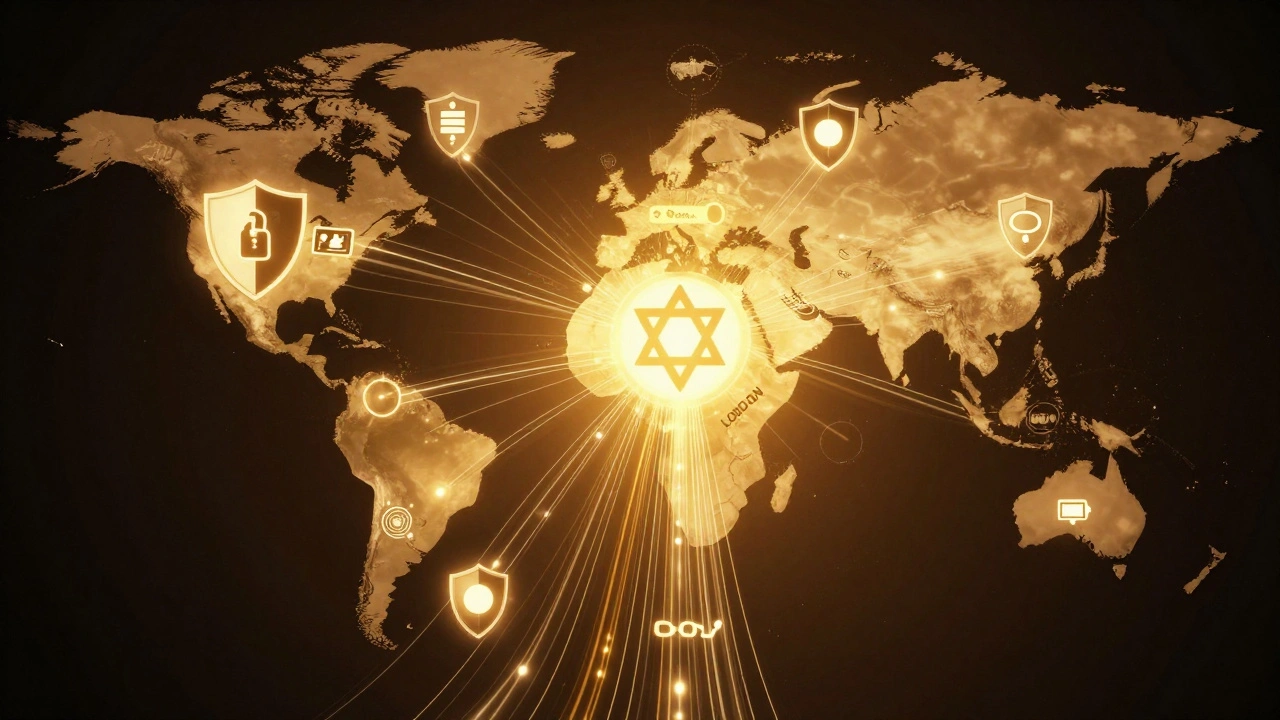
Deep-Tech Isn’t a Buzzword-It’s the Default
When people say “deep-tech,” they usually mean AI, quantum computing, or advanced semiconductors. In Israel, it’s just how things are done. StarkWare Industries, for example, solved a fundamental problem in blockchain: scaling without sacrificing security. Their technology powers decentralized apps used by millions. Valued at $8 billion in early 2026, they didn’t raise money by pitching to VCs in Silicon Valley. They raised it by proving their tech worked under real-world load. AI21 Labs, another Israeli standout, raised over $626 million to build generative AI models optimized for enterprise use-not chatbots for consumers, but legal document analyzers, financial report generators, and compliance engines. Their models are smaller, faster, and more accurate than larger ones because they were trained on real business data, not internet scrapings. NextSilicon took it further. They designed a custom AI chip that accelerates machine learning tasks without relying on NVIDIA’s GPUs. The U.S. National Security Agency now uses it. That’s not a partnership. That’s a validation. These aren’t startups trying to be deep-tech. They’re deep-tech companies that happened to start as startups. The difference matters.Why the World Is Watching
In 2025, Israeli tech exports hit $63.2 billion-18.4% of the country’s entire GDP. That’s higher than any other nation relative to size. And it’s growing. Goldman Sachs forecasts exports will reach $85 billion by 2027, nearly double the global average growth rate. Part of that growth comes from multinational R&D centers. Google has 1,200 engineers in Tel Aviv. Intel employs 10,000 at its Kiryat Gat semiconductor plant. Microsoft, Apple, and Meta all have major labs there. These aren’t outsourcing centers. They’re innovation hubs where engineers from around the world collaborate with Israeli talent. The result? A constant flow of ideas, talent, and capital back into the startup ecosystem. Even more telling: Israeli companies now account for 35% of all tech acquisitions by foreign firms in 2025, up from 23% in 2024. That’s not just exit activity. It’s market dominance. Companies like Rapyd and Cato Networks are no longer just targets-they’re becoming acquirers themselves.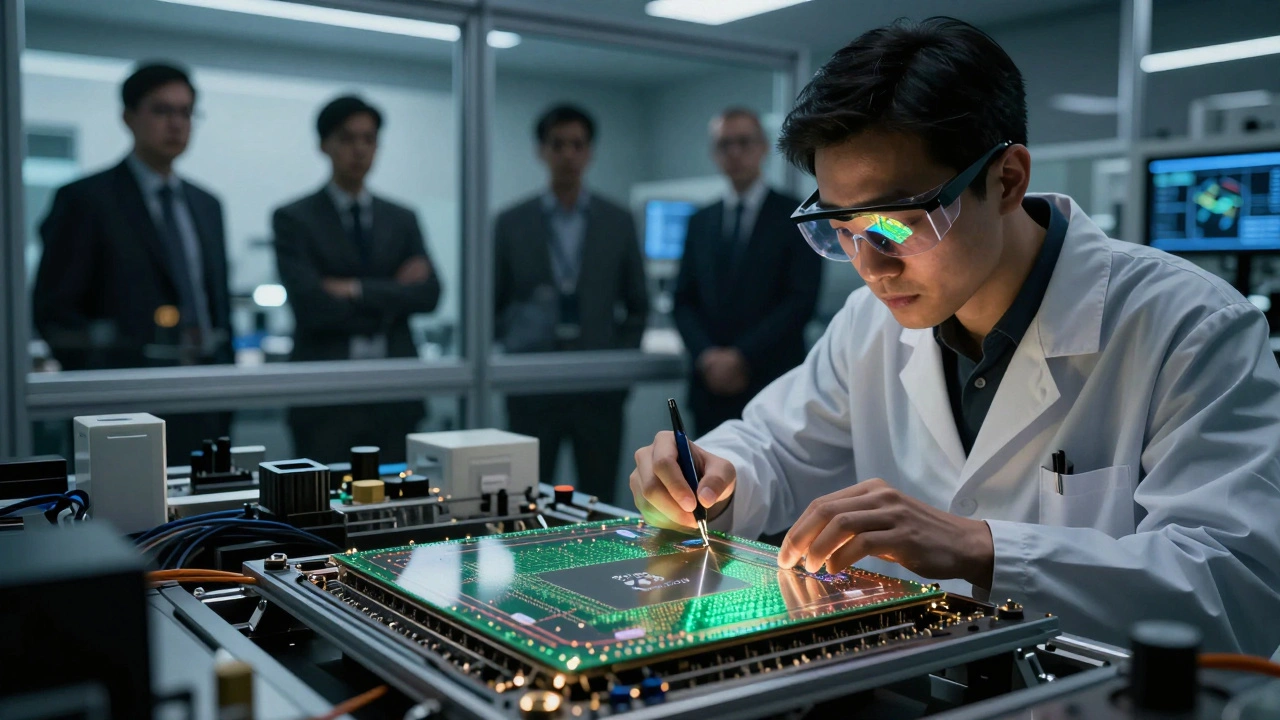
The Hidden Costs: Talent Drain and Geopolitical Risk
This success doesn’t come without strain. The biggest threat isn’t war, or sanctions, or market shifts. It’s talent drain. In 2025, 42% of senior Israeli engineers received offers to relocate to the U.S.-with salaries 30-40% higher. Some left. But here’s the twist: 28% of those who left are now returning. Why? Because Israel’s ecosystem is growing faster than Silicon Valley’s. The money, the impact, the momentum-they’re here. Geopolitical risk is real. Insurance premiums for Israeli startups rose 15-25% between 2023 and 2025. Some investors pulled back. But others doubled down. Why? Because the problems Israeli startups solve are too critical to ignore. A cyberattack on a European bank? A payment system failure in Nigeria? These aren’t abstract risks. They’re daily realities-and Israeli tech is often the only solution. There’s also a concentration risk. Cybersecurity and fintech made up 68% of all funding in 2024. If either sector hits a wall, the whole ecosystem feels it. Analysts like Maya Cohen warn this could make Israel vulnerable to global downturns. But the counterargument? These sectors are growing faster than any others. Demand isn’t fading-it’s exploding.The Future Is Already Here
In November 2025, the Israeli government launched its National AI Initiative, committing $1.2 billion to build AI infrastructure, train 10,000 new engineers, and fund 500 deep-tech startups. It’s not a reaction. It’s a strategy. Meanwhile, the average time to reach unicorn status has dropped from 5.7 years in 2020 to just 4.2 years in 2025. Why? Because founders now have access to tools, mentors, and capital that didn’t exist a decade ago. They don’t need to reinvent the wheel. They just need to build something better. Israel’s ecosystem isn’t about being the biggest. It’s about being the most focused. It’s about turning constraints into advantages. A small market? Fine. Build for the world. Limited access to capital? Fine. Build something so valuable, the world comes to you. Geopolitical instability? Fine. Build systems that work under pressure. This isn’t a miracle. It’s a model. And it’s working.Why does Israel produce so many tech unicorns compared to larger countries?
Israel’s success comes from a unique mix of mandatory military service that trains engineers in high-pressure problem-solving, strong government support through programs like Yozma, and a culture that rewards risk-taking. With only 9.5 million people, there’s no room for inefficiency-startups must solve global problems from day one. This forces deep innovation, not incremental improvements.
What sectors are Israeli unicorns mostly focused on?
Cybersecurity and fintech dominate, accounting for 68% of all venture funding in 2024. Companies like Wiz, Orca Security, and Cato Networks lead in cloud security, while Rapyd and eToro dominate cross-border payments and digital finance. These sectors thrive because they solve universal problems-security breaches and payment friction-that affect enterprises worldwide, regardless of location.
How did Wiz become the most valuable Israeli startup ever?
Wiz achieved unicorn status in under four years by building a cloud security platform that required no sales team. Using AI to map an organization’s entire cloud infrastructure and automatically flag vulnerabilities, it gained 100 enterprise customers within 12 months. Its product-led growth model, combined with solving a critical pain point for global enterprises, made it irresistible to Google, which acquired it for $32 billion in March 2025.
Is Israel’s tech ecosystem too dependent on cybersecurity and fintech?
There is legitimate concern. These two sectors made up nearly 70% of funding in 2024, creating potential vulnerability if either faces a downturn. But the counterpoint is strong: demand for cybersecurity and fintech solutions is growing faster than ever, especially with rising cybercrime and financial inclusion needs in emerging markets. Plus, new sectors like AI, semiconductors, and climate tech are now gaining traction, with 3,007 active startups across 15 categories as of late 2025.
Why do so many Israeli startups move their headquarters to the U.S.?
Israel’s domestic market is too small-just 9.5 million people-to support scaling consumer-facing products. To reach global customers, access talent, and attract U.S.-based investors, 78% of Israeli unicorns set up U.S. headquarters within 18 months. Rapyd’s revenue grew 200% after opening in New York. It’s not a sign of weakness-it’s a strategic pivot to survive and scale.
Can Israel sustain its tech growth amid ongoing regional instability?
Yes. Despite geopolitical risks that raised insurance costs and caused temporary funding delays, Israeli tech exports hit $63.2 billion in 2025 and are projected to reach $85 billion by 2027. The ecosystem has proven resilient through multiple crises, including the pandemic and recent conflicts. Investors like Morgan Stanley rate Israel’s tech ecosystem as ‘A’ for resilience, citing its military-civilian innovation pipeline and deep technical talent as enduring advantages.