Global Voting Power Calculator
How Voting Power Works
International institutions like the IMF and World Bank have voting power systems that often don't reflect current economic or population realities. This calculator shows the gap between current voting power and what it should be based on GDP and population.
Current voting power is based on outdated systems. For example, the U.S. has 16.5% of IMF voting power despite having just 15% of the world's GDP. In contrast, India has a larger economy than Germany but much less voting power.
Why This Matters
Voting power determines who gets to make decisions on global economic policies, debt relief, and financial stability. When voting power doesn't match economic reality, decisions don't represent the world's needs.
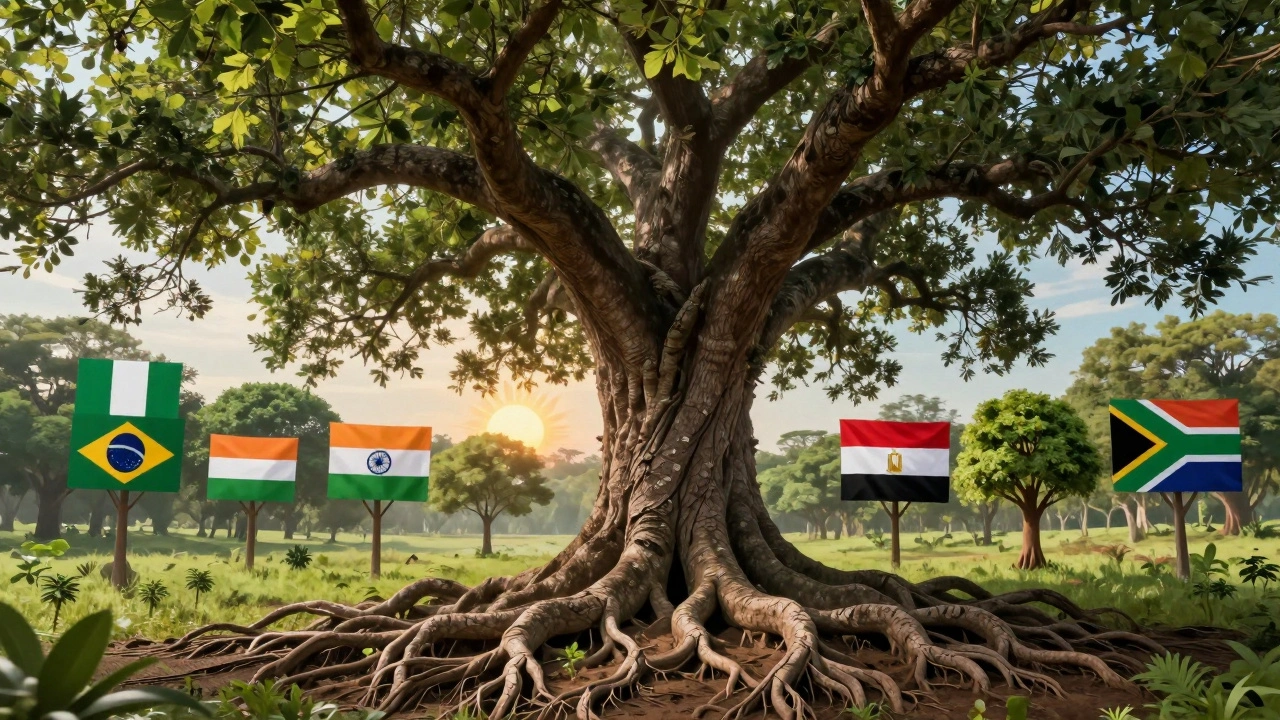
For example, the IMF was created when the U.S. and Europe dominated the global economy. Today, the Global South has nearly 40% of global GDP but less than 30% of voting power. This mismatch is why countries like India and Brazil are demanding reform.
For decades, international institutions like the IMF, World Bank, and UN Security Council have operated under rules written by a handful of wealthy nations. The Global South - a collective of over 130 developing countries from Africa, Latin America, Asia, and the Pacific - has long been sidelined in decisions that shape global trade, finance, and security. But something has shifted. Since 2020, these nations have stopped asking politely and started demanding change. And they’re winning real, measurable victories.
How the System Was Built - and Why It’s Broken
The IMF and World Bank were created in 1944 at Bretton Woods, when the U.S. and Western Europe dominated the global economy. Today, emerging economies like India, Brazil, Nigeria, and Indonesia account for nearly 40% of global GDP, yet they hold less than 30% of voting power at the IMF. In the World Bank, just six countries - the U.S., Japan, Germany, France, the U.K., and China - control over half the votes. The rest? 180 countries share the other half. This isn’t just unfair. It’s economically irrational. When a country like Nigeria, with a population of 220 million and growing GDP, has less influence than Luxembourg, which has 650,000 people, the system loses legitimacy. The same imbalance exists at the UN Security Council. Five permanent members - all Western or former colonial powers - hold veto power. No African nation has ever held a permanent seat. No Latin American country. Not even India, the world’s most populous nation.The Turning Point: 2023-2025
The real change didn’t start with speeches. It started with action. In 2023, India’s G20 presidency made history by inviting the African Union as a full member - not as an observer, but as a voting participant. For the first time, Africa’s voice was heard at the table where global economic policy is set. Then in 2024, Brazil took over the G20 presidency and doubled down: it pushed through a resolution demanding quota reform at the IMF. The proposal? Shift voting shares to reflect current economic weight, not 1940s power structures. BRICS, once a loose alliance, became a real counterweight. In 2023, it added six new members: Egypt, Ethiopia, Iran, Saudi Arabia, the United Arab Emirates, and Argentina. That’s not just expansion - it’s a geopolitical realignment. These countries now control 40% of the world’s oil reserves, 25% of global grain exports, and over 1 billion people. They’re building their own payment systems, development banks, and even a common currency fund. Why? Because they no longer trust the dollar-dominated system to act fairly.How the Global South Is Fighting Back
They’re not waiting for permission. They’re using existing tools - and making them work harder. In January 2024, South Africa filed a case at the International Court of Justice accusing Israel of genocide in Gaza. It wasn’t a symbolic gesture. It was a legal strategy backed by 42 Global South nations. The U.S. and EU called it biased. But in the Global South, it was seen as justice - using international law to hold powerful actors accountable. At the same time, regional organizations became powerhouses. The African Union now coordinates positions on debt relief, climate finance, and trade tariffs before any global summit. ASEAN speaks with one voice on supply chain reforms. CELAC (the Community of Latin American and Caribbean States) pushed through a unified stance against unilateral sanctions - a move that forced the UN General Assembly to vote on the issue in 2024. Even the WTO, long seen as a Western-dominated trade forum, is changing. In 2025, a coalition of 68 Global South countries successfully blocked a proposed agreement that would have forced developing nations to open their agricultural markets without compensation. They didn’t walk out. They negotiated. And they won.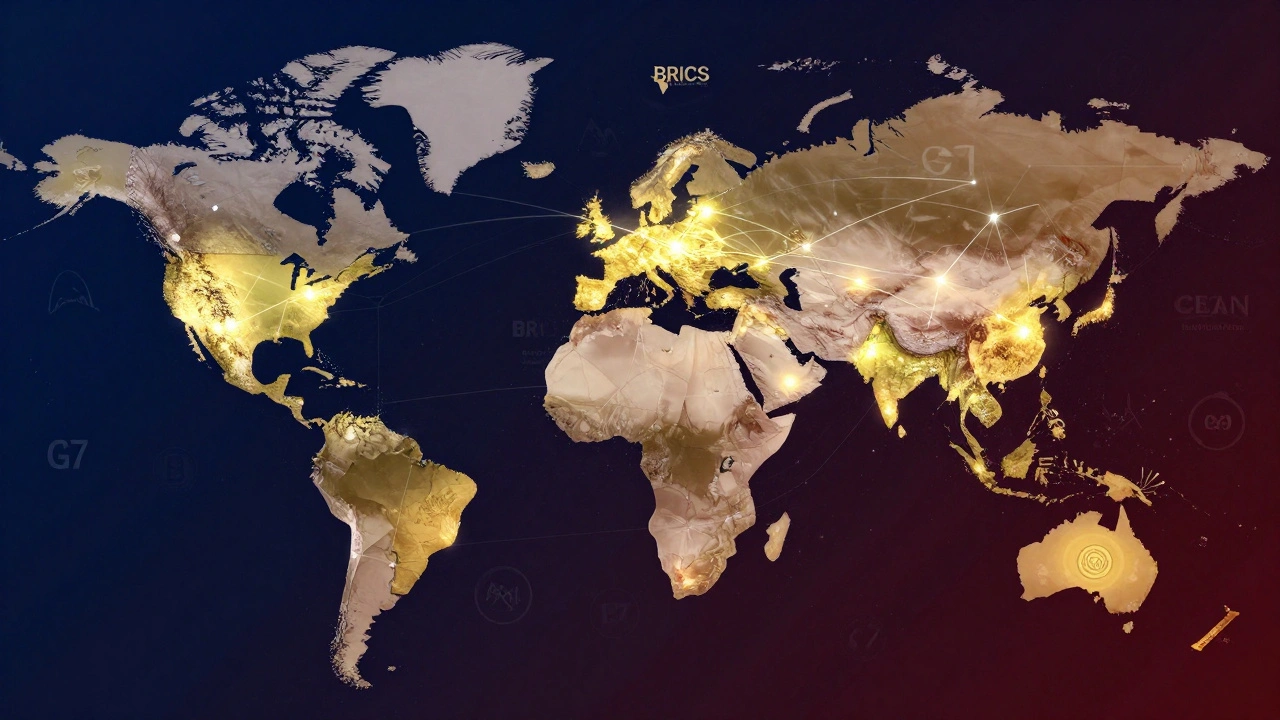
The New Tools of Influence
The Global South isn’t just protesting - it’s building. The BRICS New Development Bank is a multilateral development bank established in 2015 to fund infrastructure and sustainable development projects in member countries without the conditionalities of the World Bank. By 2025, it had approved over $18 billion in loans - all to developing nations, with no demands for privatization or austerity. Meanwhile, the Shanghai Cooperation Organization has become a key security and trade platform for Central Asia, South Asia, and the Middle East - including nations like Pakistan and Iran that are locked out of Western-led institutions. South-South cooperation is no longer just aid. It’s strategic. China’s Belt and Road Initiative has built ports, railways, and power grids across 70 countries. India is exporting affordable vaccines and solar tech to Africa. Brazil is sharing its agricultural science with Southeast Asia. These aren’t charity projects. They’re partnerships built on mutual benefit - and they’re reshaping global influence.What They Want - And Why
The Global South isn’t asking for handouts. They’re demanding three things:- Real voting power - Not symbolic seats, but proportional representation at the IMF and World Bank based on GDP, population, and trade.
- An end to unilateral sanctions - The U.S. and EU impose economic penalties on countries like Venezuela, Iran, and Zimbabwe. Global South nations argue these violate the UN Charter and hurt ordinary people, not elites.
- A fairer financial system - They want alternatives to the dollar, more access to IMF emergency funds without harsh conditions, and debt relief that doesn’t require selling off national assets.
Who’s Standing in the Way?
Change is slow because the winners of the old system aren’t ready to give up. The U.S. holds 16.5% of IMF voting power - enough to block any major reform. Europe, as a bloc, controls nearly 25%. Together, they can stop quota changes. The UN Security Council’s permanent members won’t give up their veto. And the G7 - the club of rich nations - still meets privately before every G20 summit to set the agenda. The Global South has no equivalent. But they’re building one. Think tanks like Brazil’s Fundação Getulio Vargas and China’s China Institute of Contemporary International Relations are now producing joint policy papers on reform. They’re training diplomats. They’re creating shared databases on debt burdens and trade imbalances. They’re learning how to negotiate like the G7 - but on their own terms.What Comes Next?
By 2027, the IMF will face a critical vote on quota reform. If the Global South can unite 60% of member votes - a realistic goal given their growing numbers - they can force the U.S. and Europe to the table. The same is true for the UN Security Council. Pressure is mounting. More than 120 nations now support permanent African representation. The world is no longer a two-tier system: rich nations making rules, poor nations following them. It’s becoming multipolar. And the Global South isn’t just joining the game - they’re rewriting the rules. The question isn’t whether they’ll succeed. It’s whether the institutions can adapt before they’re replaced.Why is the Global South using BRICS instead of the G7?
The G7 represents just seven wealthy, mostly Western nations. BRICS, now expanded to 11 members, includes major economies from Africa, Asia, and Latin America - countries that together represent over 40% of the global population and 30% of global GDP. Unlike the G7, BRICS doesn’t impose policy conditions on loans or demand political reforms. It’s a platform for countries that feel excluded from Western-led institutions.
Has the African Union’s inclusion in the G20 made a real difference?
Yes. Before 2023, African leaders spoke at G20 summits as guests. Now, the African Union votes on decisions, co-drafts communiqués, and chairs working groups. In 2024, it successfully pushed through a joint proposal on climate finance that allocated $12 billion in new funding for African infrastructure - a first in G20 history.
Do Global South countries agree on everything?
No. India and China disagree on border issues. Brazil and South Africa have different views on agricultural subsidies. But on core issues - voting power, sanctions, debt relief, and financial reform - they’ve built a strong consensus. They’ve learned to focus on shared interests, not internal divisions.
What’s the biggest obstacle to reform?
The veto power held by a few countries at the IMF and UN Security Council. The U.S. can block any IMF quota change alone. Europe and the U.S. together can stop Security Council expansion. Without changing these rules, reforms remain symbolic.
Is the Global South trying to replace Western institutions?
Not replace - reform. They still use the IMF and World Bank. But they’re building parallel systems - like the BRICS Development Bank - to reduce dependency. Their goal is not to destroy the old system, but to make it fairer by adding new options and forcing competition.