Just Transition Funding Calculator
Calculate your community's just transition funding needs based on fossil fuel dependency and current resources.
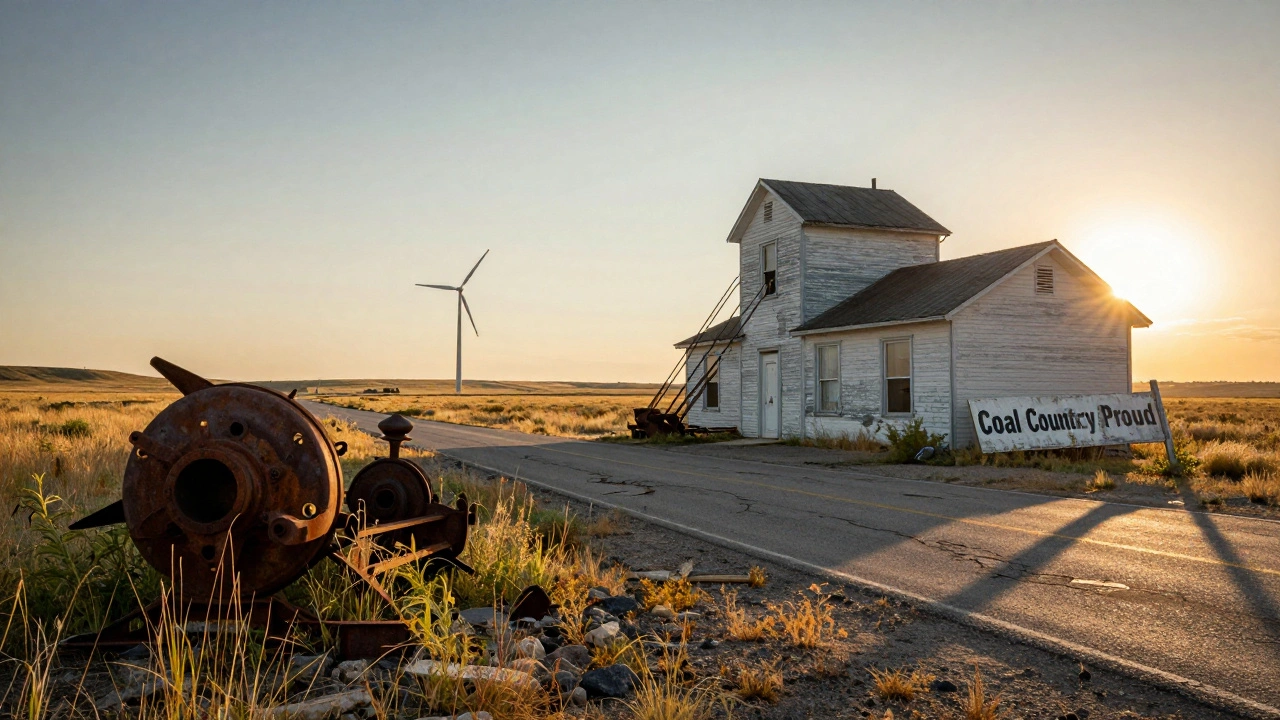
When a coal plant shuts down or an oil field closes, it’s not just machines that go silent-it’s livelihoods, tax bases, and entire towns that feel the impact. In Campbell County, Wyoming, coal once paid for 39% of the county’s revenue. When that dried up, schools struggled, roads cracked from disrepair, and young people left in droves. This isn’t an exception. It’s the rule when fossil fuel decline happens without planning. That’s where just transition planning comes in-not as a nice-to-have, but as a necessary shield for workers and communities caught in the crossfire of climate action.
What Just Transition Planning Really Means
Just transition planning isn’t about handing out unemployment checks or sending miners to solar panel training with no follow-up. It’s a full-system overhaul. It’s asking: Who will lose their job? What happens to the local hospital that relies on coal tax dollars? Where will the next paycheck come from? And how do we make sure the new clean energy economy doesn’t leave people behind? The term started in labor unions in the 1970s, but today it’s backed by science, policy, and real-world data. The UNFCCC says climate policies must respect the need for decent work. The Paris Agreement says so too. And yet, out of 68 countries that mention just transition in their climate plans, only 17 have actual policies for fossil fuel workers. That gap is dangerous. A just transition has four moving parts: assessing the damage, building policies to fix it, finding the money to pay for it, and making sure someone is held accountable. Without all four, you’re not transitioning-you’re abandoning.Why Speed Kills Communities
Climate targets are urgent. But communities aren’t. That’s the core tension. Germany’s Ruhr Valley shut down coal mines over 20 years. They gave workers three to five years’ notice before each plant closed. Result? Re-employment rates jumped 27% compared to places that pulled the plug overnight. In Australia, the Hazelwood coal plant shut down in 2017 with no warning. Within six months, unemployment in the town hit 14.5%. People didn’t just lose jobs-they lost hope. The University of Texas found that even if the U.S. shuts down all coal plants by 2035, only 15% of their total operational life is lost. That’s not a sudden collapse-it’s a slow fade. But without planning, that fade turns into a cliff. Communities that get 70-90% of their tax revenue from fossil fuels can’t wait for market forces to fix things. They need a roadmap.What Works: Real Examples, Not Promises
Look at Spain. When coal mines closed in Asturias and León, the government didn’t just retrain workers. They sat down with unions, local leaders, and businesses. They created tripartite committees that made decisions together. By 2023, 73% of displaced coal workers had new jobs-many in renewable energy, but also in healthcare, tech, and local manufacturing. Germany didn’t just hand out grants. They created the Lausitz Agency, a dedicated office with staff trained in regional economic development. They didn’t just build wind farms-they invested in rail lines, broadband, and small business incubators. The result? Faster implementation, 40% quicker than regions relying on scattered state agencies. Canada’s Just Transition Act is legally binding. It requires oil and gas companies to submit detailed plans for worker retraining and community reinvestment. Alberta’s Transition Training Grant gives workers up to CAD$10,000 for education or certification. Completion rates? 68%. Job placement? 79%. And the EU? They’re spending €55 billion from 2021 to 2027. But here’s the kicker: 75% of that money must directly fight climate change. That’s not charity-it’s alignment. Every dollar spent on a new job also cuts emissions.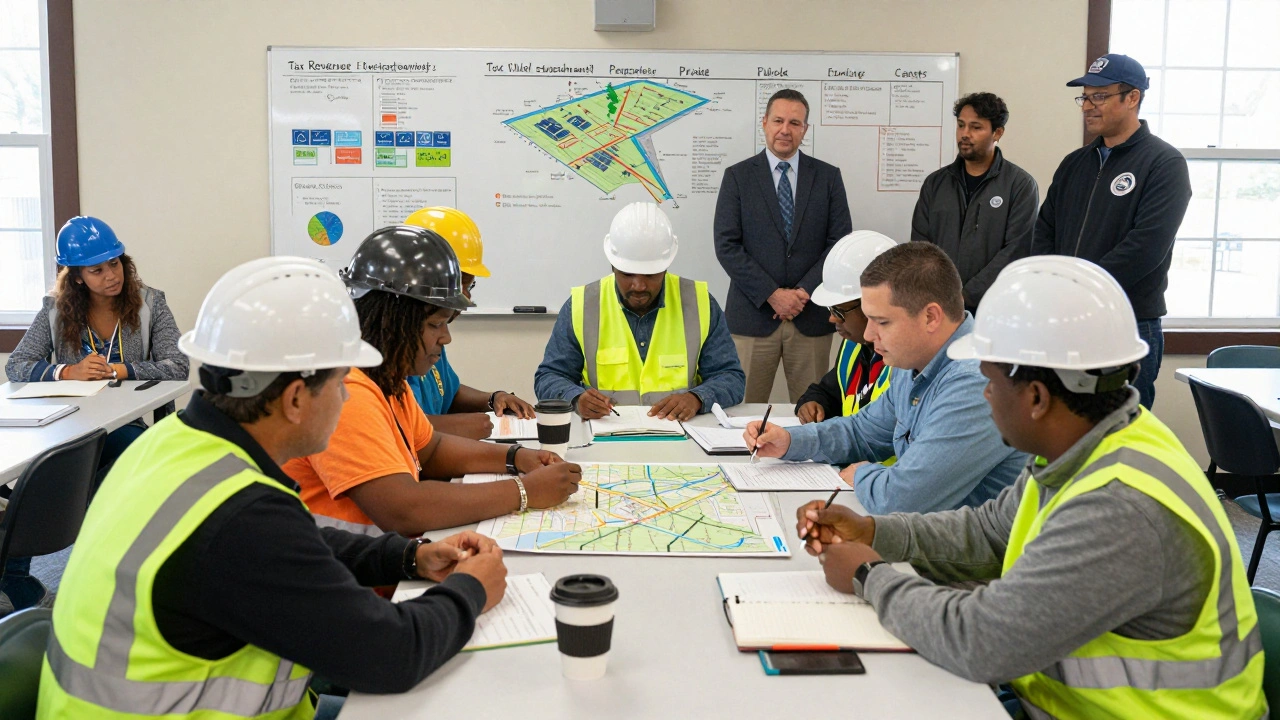
Where the U.S. Falls Short
The U.S. Inflation Reduction Act put $11 billion toward coal communities. That’s good. But it’s also scattered. There’s no national plan. No mandatory timelines. No requirement for states to even consult workers. In 2023, the Appalachian Regional Commission found that 60% of coal-dependent counties had no formal transition strategy. That means in places like Boone County, West Virginia, or Perry County, Kentucky, local leaders are guessing. They’re applying for grants one at a time. They’re hoping federal money arrives before the last mine closes. And here’s the hidden problem: skills mismatch. A Columbia University study of 12 coal communities found only 38% of displaced workers had skills that could transfer to clean energy jobs without serious retraining. You can’t just send a 52-year-old coal miner to a 6-week solar installer course and call it a day. He needs certifications, transportation help, childcare support, and a job guarantee after training.The Money Gap
The world pledged $24.7 billion for just transition efforts. But the World Bank says we need $66.3 billion every year through 2030. That’s a 63% funding gap. South Africa got $8.5 billion from rich nations to help phase out coal. India? Almost nothing. The World Bank rates national frameworks on a 10-point scale. South Africa scored 7.2. India scored 2.8. Why? Because India’s renewable push didn’t include a single policy to protect coal miners. Corporate commitments are growing. Shell now spends 15% of its $22 billion annual budget on just transition projects in the regions where it operates. But corporations can’t replace governments. They don’t own schools, hospitals, or public transit.
What Communities Need Now
If you’re in a fossil fuel town, here’s what you need to demand:- Advance notice-at least 3 years before any facility closes.
- Worker retraining with pay-not just tuition, but living stipends during training.
- Local hiring guarantees-clean energy projects in your area must hire locally first.
- Revenue replacement-if coal paid for your fire department, who pays now? A new tax? A state fund? A federal grant? It has to be locked in.
- Community ownership-can your town co-own a wind farm or solar microgrid? That’s how you keep wealth local.
The Bigger Picture
Just transition isn’t about saving coal jobs forever. It’s about making sure the next economy doesn’t repeat the same mistakes. Fossil fuel workers aren’t the enemy. They’re the people who kept the lights on while others debated climate policy. Now, they’re being asked to leap into a new system with no safety net. That’s not fair. And it’s not smart. The International Energy Agency says 85% of fossil fuel workers can find comparable jobs in clean energy-if they’re given the right tools. But tools don’t appear magically. They’re built through planning, funding, and political will. The 2023 Silesia Declaration, signed by 118 countries, says this: by 2030, every fossil fuel phase-out plan must include worker and community protections. That’s not a dream. It’s a deadline.What You Can Do
If you’re a worker in a fossil fuel community: find your local transition office. Ask for a copy of their plan. Show up to public meetings. Demand to be at the table. If you’re a policymaker: don’t wait for a crisis. Start assessments now. Map your tax base. Survey your workforce. Talk to unions. Build partnerships with community colleges. If you’re an investor or activist: fund local solutions, not just big tech. Support community land trusts, worker co-ops, and local clean energy projects. The future isn’t in Silicon Valley-it’s in the towns that kept the grid running. The clean energy transition is coming. The only question is: who gets to ride the train-and who gets left on the platform?What is just transition planning?
Just transition planning is a structured approach to phasing out fossil fuels while protecting workers and communities that depend on them. It includes economic assessments, retraining programs, revenue replacement strategies, and community investment plans to ensure no one is left behind during the shift to clean energy.
Why can’t we just shut down coal plants and move on?
Shutting down fossil fuel operations without planning devastates local economies. In towns where coal or oil pays for 70-90% of tax revenue, schools, hospitals, and roads collapse overnight. Workers lose income, families move away, and businesses close. Just transition planning prevents this by giving communities time, money, and tools to rebuild.
Do clean energy jobs pay as much as fossil fuel jobs?
Yes, in most cases. Wind turbine technicians, solar installers, and grid modernization engineers often earn median wages equal to or higher than coal miners and oil rig workers. The difference isn’t the pay-it’s access. Without retraining, support, and local hiring policies, fossil fuel workers can’t get into those jobs.
How long does just transition planning take?
Effective planning takes 18-24 months for data collection and community input, followed by 6-12 months to design policies. Implementation then unfolds over 5-10 years. Rushing leads to failure. Germany and Spain took years to get it right. Communities that waited until the last minute-like Australia’s Hazelwood-paid a heavy social cost.
Is just transition only for coal workers?
No. It includes oil and gas workers, truckers who haul fuel, refinery employees, and even small businesses that supply services to fossil fuel sites. It also covers communities that rely on fossil fuel tax revenue for public services. The goal is to protect everyone whose livelihood is tied to the old energy system.
What’s the biggest mistake in just transition planning?
The biggest mistake is treating it as a workforce retraining program alone. You can’t just teach a coal miner to install solar panels and call it done. You need to replace lost tax revenue, rebuild local businesses, invest in housing and healthcare, and give communities control over their own future. It’s an economic transformation-not a job swap.