Nuclear Verification Technology Calculator
Nuclear Verification Calculator
Estimate how different investment levels in monitoring technology affect detection capabilities for uranium enrichment levels. Based on IAEA's 2026 capabilities and emerging technologies.
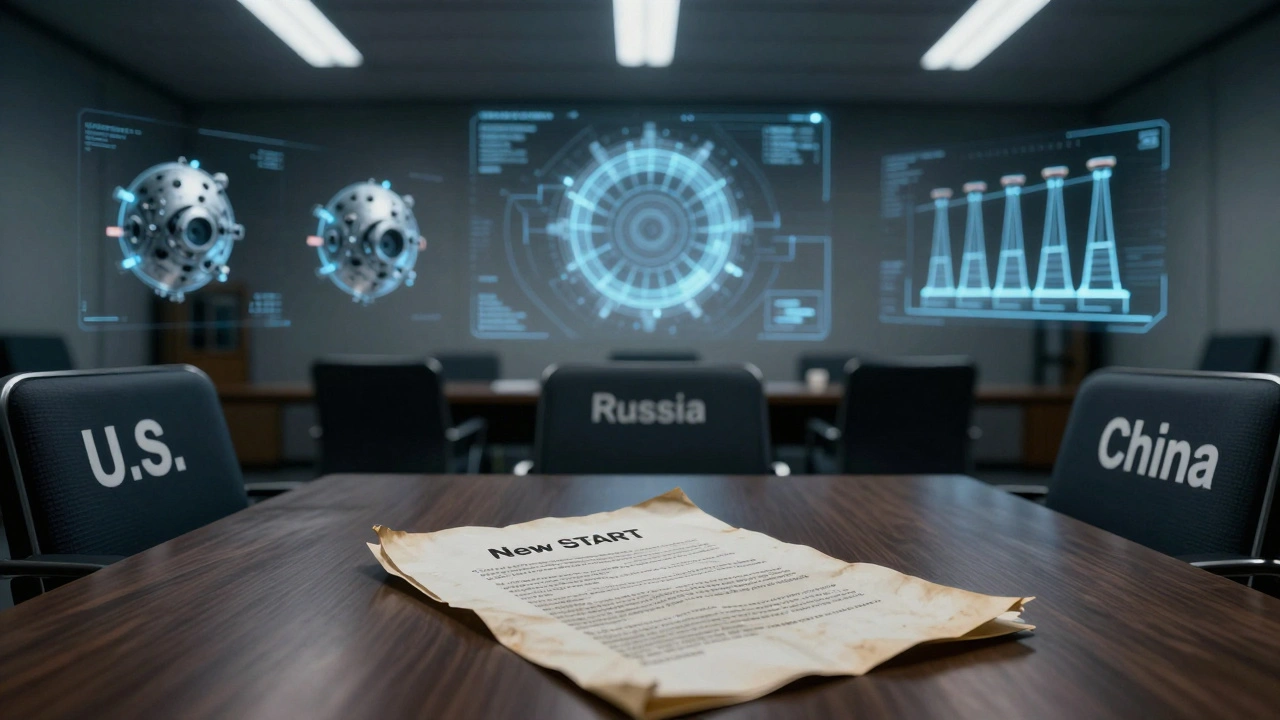
The world is at a breaking point in nuclear security. With the nuclear security regime crumbling under the weight of expired treaties, rising arsenals, and outdated technology, the systems meant to prevent nuclear war are no longer working. The New START treaty between the U.S. and Russia expires on February 5, 2026. That’s it. No more inspections. No more data sharing. No more transparency. The two countries hold 87% of the world’s 12,100 nuclear warheads. And now, there’s nothing legally stopping either side from building more.
What’s Left of the Nuclear Security Framework?
The foundation of global nuclear control is the Treaty on the Non-Proliferation of Nuclear Weapons (NPT), signed by 191 countries. It was supposed to stop the spread of nuclear weapons while encouraging peaceful nuclear energy and pushing nuclear-armed states toward disarmament. But after two failed Review Conferences in 2020 and 2022, it’s clear the treaty is losing credibility. Non-nuclear states are furious. They see nuclear-armed countries modernizing their arsenals instead of reducing them. Meanwhile, nuclear powers argue that without trust, disarmament is impossible.The International Atomic Energy Agency (IAEA) is the only body left with any real authority to monitor nuclear materials. With 178 member states, it runs safeguards-inspections, environmental sampling, and facility design checks-to make sure no country is secretly turning peaceful nuclear programs into weapons. But its tools are old. It can detect uranium enriched above 20% with 95% confidence. Below that? Not so much. And modern centrifuges can hide in a warehouse. The IAEA’s 2026 budget? $550 million. That’s a 2% increase from last year. It’s not enough to cover the growing number of facilities, let alone upgrade to new tech.
The Collapse of Verification
Verification used to be the backbone of nuclear security. New START allowed 18 on-site inspections a year. It required both sides to notify each other when missiles moved. It counted every warhead. All of that is gone. As Emmanuelle Maitre from France’s Foundation for Strategic Research put it in late 2025: “What remains is only the voluntary commitment to stay within the limits.” Voluntary. That’s not a treaty. That’s a hope.Other treaties have already vanished. The Open Skies Treaty ended in 2020. The Intermediate-Range Nuclear Forces Treaty collapsed in 2019. The Anti-Ballistic Missile Treaty died in 2002. Each one removed a layer of oversight. Now, there’s no way to verify if Russia is secretly building more ICBMs. No way to confirm if China is expanding its silo fields. Satellite imagery from companies like BlackSky and Planet Labs helps, but it’s not official. It’s not legally binding. It’s just a guess.
China’s Nuclear Surge and the New Multipolar Threat
The old nuclear world was bipolar: U.S. vs. Russia. Now it’s multipolar-and messy. China is building about 100 new nuclear warheads every year. It now has more ICBM silos than the U.S. has active Minuteman III missiles. Russia is testing bizarre new weapons like the Burevestnik, a nuclear-powered cruise missile that can fly for weeks. And China and Russia are working closer than ever, sharing military tech and coordinating strategic messaging.This isn’t just about numbers. It’s about strategy. The old rules of deterrence-mutual assured destruction-don’t work when you have hypersonic missiles that can evade radar, cyberattacks that could scramble command systems, or satellites that can be knocked out in minutes. The International Institute for Strategic Studies warned in December 2025 that “AI, offensive cyber, and anti-satellite weapons are creating new vulnerabilities for nuclear powers.” That means the balance of terror is no longer stable. It’s fragile.
Enrichment: The Silent Proliferation Risk
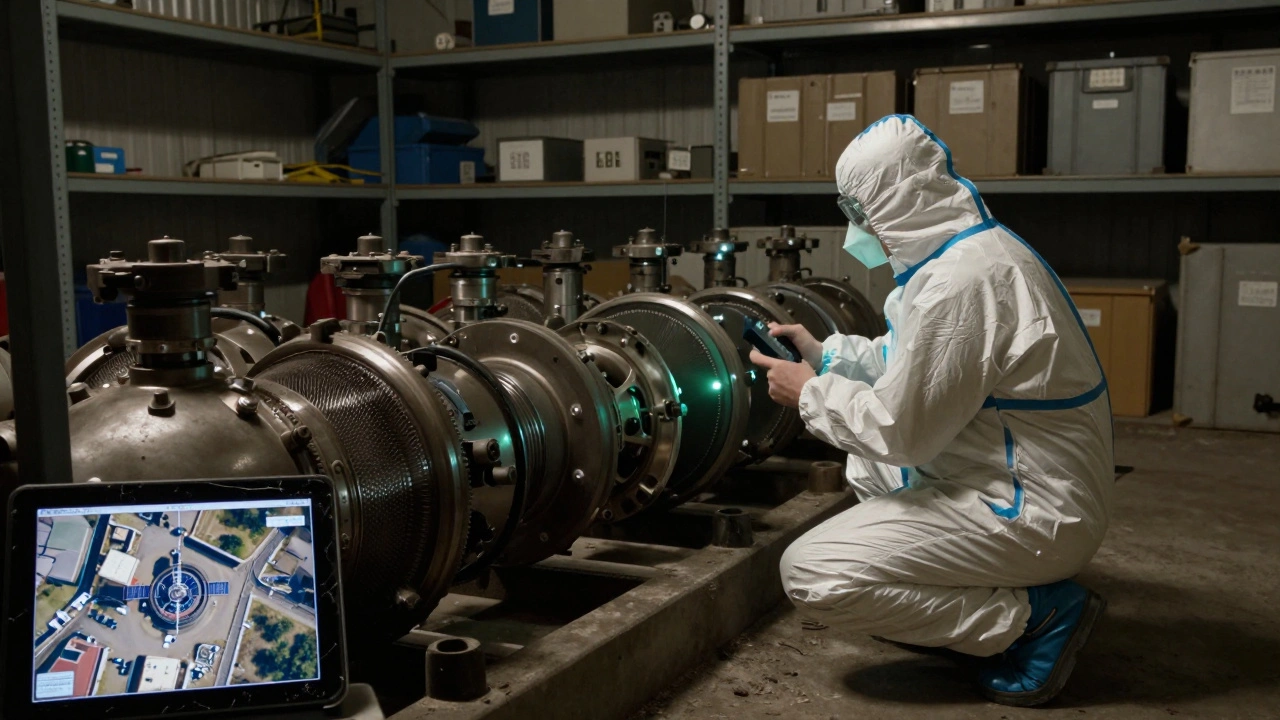
Uranium enrichment is the key to making nuclear weapons. But it’s also essential for nuclear power. That’s the problem. Countries like India, China, and Kazakhstan are expanding their civilian nuclear programs. Their enrichment capacity is growing by 15% a year, according to the PIR Center. More enrichment means more opportunities for diversion. A single centrifuge cascade can fit in a shipping container. You don’t need a huge facility. You don’t need a big budget. You just need the right tech and secrecy.The IAEA can’t monitor every enrichment plant in the world. It prioritizes based on risk. But risk is changing. South Korea has hinted at wanting nuclear weapons. Turkey is talking about it. Saudi Arabia is watching Iran closely. If one country goes nuclear, others will follow. The NPT was built on the idea that no one else should have these weapons. But if the nuclear-armed states keep modernizing, why should others wait?
The Rise of the Ban Treaty-and the Divide It Created
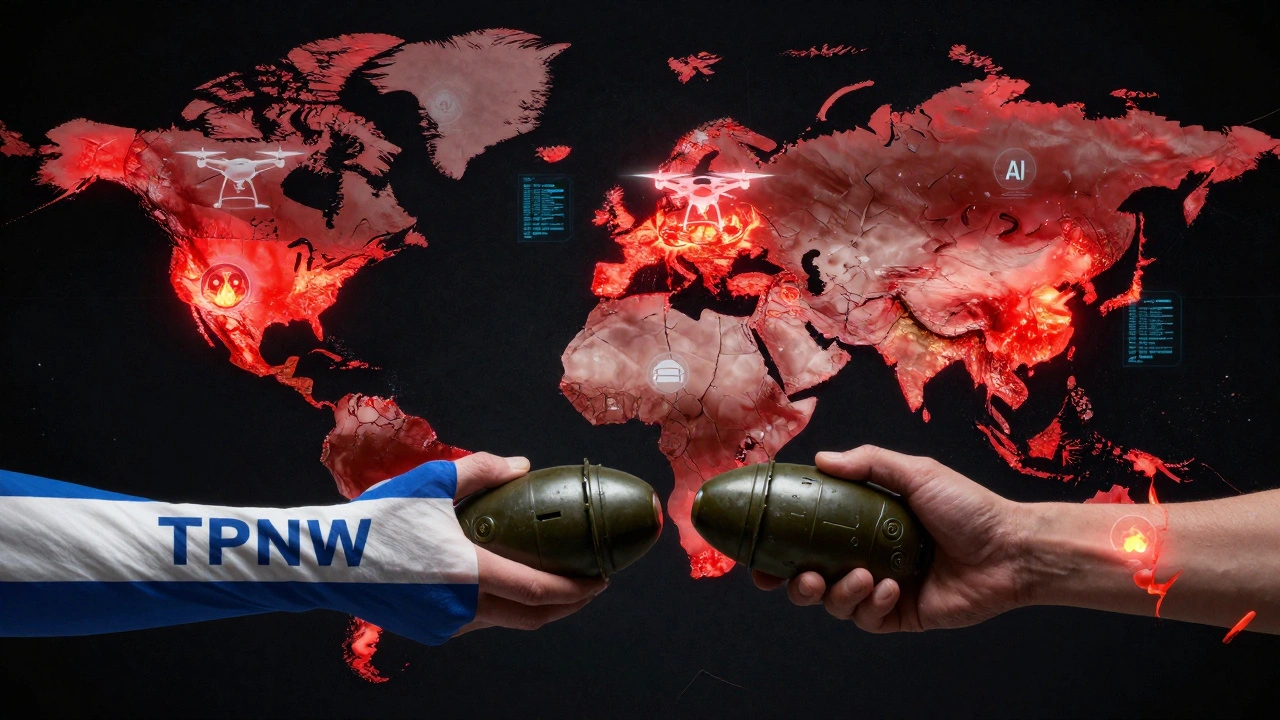
In January 2021, the Treaty on the Prohibition of Nuclear Weapons (TPNW) entered into force. It bans nuclear weapons outright. 92 countries have signed it. But not one nuclear-armed state is on the list. Not the U.S. Not Russia. Not China. Not India. Not Pakistan. Not North Korea. Not the UK or France. They all call it meaningless. And they’re right-in a way. Without the nuclear powers, the treaty can’t disarm anyone.But it’s not meaningless. It’s a statement. It’s the voice of the global majority saying: “We’re tired of living under the threat of nuclear annihilation.” The first TPNW Review Conference is happening in 2026, right after the NPT Review Conference. For the first time, the two camps will be in the same room, speaking past each other. The divide isn’t just political-it’s moral. One side says: “Control it.” The other says: “Eliminate it.” Neither side is winning.
Monitoring Tech Can’t Keep Up
The IAEA still relies on old-school methods: swabbing surfaces for uranium particles, counting fuel rods, and sending inspectors to take photos. But the world has moved on. AI can now analyze satellite images to spot construction at nuclear sites. Drones can collect air samples over remote areas. Cyber tools can detect hacking attempts on nuclear plant networks. These technologies exist. But the IAEA can’t afford them at scale.Private companies like CrowdStrike and Mandiant can monitor cyber threats to nuclear facilities. But they don’t share data with the IAEA. Governments don’t fund the upgrades. Budgets are tight. Staff are overworked. The agency’s 2026 work program says it wants to “enhance radiation protection for medical and industrial applications.” That’s important. But it’s not about stopping nuclear war. That’s the real crisis.
The 2026 Turning Point
April 2026 is make-or-break. The NPT Review Conference in New York will be the first major gathering since New START expired. Experts like Alexandra Bell from the Bulletin of the Atomic Scientists say, “At best, I think we should try to preserve what we have.” That’s not a vision. That’s surrender.Meanwhile, the U.S. and Russia are already talking about new nuclear tests. Former President Trump ordered a review of nuclear testing in 2025. Russia has signaled it might test if the U.S. does. China has expanded its Lop Nur test site. The global moratorium on testing-held since 1996-is cracking. One test could trigger a chain reaction. Others would follow. The world could slide back into the 1950s.
What Comes Next?
There’s no easy fix. But here’s what’s needed:- Emergency talks between the U.S. and Russia to extend or replace New START-even without inspections, even with limits, something is better than nothing.
- IAEA funding boost-at least 20% increase-to deploy AI-driven satellite analysis, wide-area drones, and real-time environmental sensors.
- Transparency agreements with China, even if they’re not formal treaties. Track silo construction. Share enrichment capacity data.
- Non-nuclear states must stop treating disarmament as a moral demand and start treating it as a strategic necessity. Pressure works, but only if it’s backed by real policy.
- Private sector integration-companies with monitoring tech need to be legally required to share non-sensitive data with the IAEA.
The nuclear security regime isn’t dead yet. But it’s on life support. The tools are outdated. The trust is gone. The treaties are expired. And the world is moving faster than the rules can keep up. If nothing changes by the end of 2026, we won’t be talking about nuclear security anymore. We’ll be talking about how we let it fall apart.