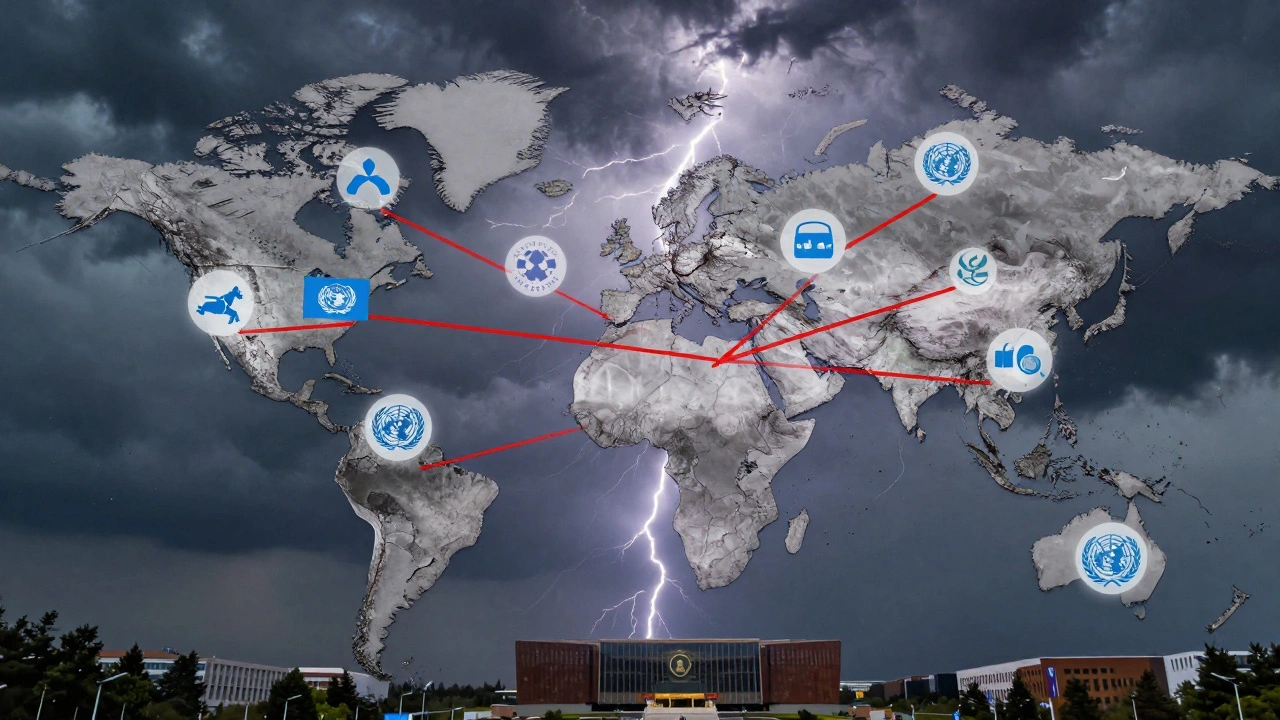
The United Nations is at a crossroads. After 80 years, the world it was built to serve has changed dramatically-wars rage in plain sight, climate disasters multiply, and trust in global institutions is eroding. The UN’s decision-making machinery, designed for a mid-20th century world, is now creaking under the weight of bureaucracy, duplication, and political gridlock. In March 2025, Secretary-General António Guterres launched the UN80 Initiative, the most ambitious reform effort since Kofi Annan’s 1997 overhaul. This isn’t another committee report. It’s a full-system reset aimed at making the UN actually work when the world needs it most.
Why the UN Can’t Keep Doing Things the Same Way
The UN has 26 separate agencies, funds, and programs. Some have overlapping mandates. Others operate in silos, even when responding to the same crisis. In Yemen, for example, five different UN teams might be working on food, health, shelter, and security-all without sharing a single database. Meanwhile, the Security Council, where five permanent members hold veto power, has been paralyzed in Ukraine and Gaza. Between 2020 and 2025, the P5 used their vetoes more than 40 times to block action on conflicts, humanitarian access, or sanctions. The result? A system that spends $50 billion a year but delivers fragmented, slow, and often redundant results. In 2025, a UN internal review found that 30% of its global resources were tied up in duplicate reporting, parallel logistics, and conflicting performance metrics. Developing countries, which rely most on UN aid, are seeing fewer field staff, fewer offices, and longer waits for support. The UN can’t afford to wait anymore. Its funding is shrinking. Its credibility is slipping. And its people are suffering.The UN80 Initiative: Three Workstreams, One Goal
The UN80 Initiative doesn’t tinker. It restructures. It’s built around three clear workstreams, each targeting a core weakness. Workstream 1: Modernizing Operations-This is about cutting waste. The UN plans to reduce its core budget by 15% ($500 million) in 2026. How? By moving administrative roles from expensive cities like New York and Geneva to lower-cost duty stations. It’s consolidating IT systems, merging procurement functions, and shrinking its global real estate footprint. Nearly 2,700 jobs-about one in five-will be eliminated, mostly in back-office roles. The goal isn’t to cut staff who help people. It’s to cut the layers between them and the people they serve. Workstream 2: Mandate Review-Not every UN program still makes sense. Some were created for problems that no longer exist. Others have been absorbed by better-equipped agencies. The UN is now reviewing every single mandate. Proposals include merging the UN Development Programme (UNDP) and the UN Office for Project Services (UNOPS) into a single development engine. UNFPA and UN Women would combine into one gender and population agency. UNAIDS, which has operated separately since 1996, would be dissolved and its expertise folded into the World Health Organization. This isn’t about shrinking human rights or development work. It’s about making sure the right teams have the tools to do it better. Workstream 3: Shifting Paradigms-This is the most radical part. The UN is trying to break down the walls between peacekeeping, humanitarian aid, and development. Right now, these are three separate budgets, three separate reporting lines, three separate cultures. UN80 proposes creating integrated teams on the ground. In Central Africa, for example, a single UN team would handle security coordination, food distribution, and long-term farming support-all under one leader. The same model is being tested in Cyprus and Yemen. The idea? If you’re helping a war-torn community, you shouldn’t need to call five different offices.
Who Supports It? Who’s Fighting It?
The United States has publicly backed UN80’s efficiency goals. The Better World Campaign, a U.S.-based advocacy group, says Washington must stay engaged to make sure reforms don’t become a cover for underfunding. The General Assembly endorsed the initiative in Resolution 79/318, giving it formal legitimacy. But resistance is strong. Many developing nations fear that cutting the UN’s country presence will leave them with no one to turn to. The proposal to make the Resident Coordinator the single point of contact sounds good in theory-but what if that one person is underpaid, overstretched, and lacks authority over specialized agencies? Human rights groups worry that merging agencies will dilute focus. Will gender equality still get the attention it needs if it’s folded into a broader population agency? Will HIV/AIDS programs lose funding if they’re absorbed into WHO? The biggest obstacle? The UN’s own culture. Agencies have fought for decades to protect their budgets, staff, and autonomy. They have boardrooms, donor relationships, and internal power structures. Merging UNDP and UNOPS isn’t just a paperwork change. It’s a cultural earthquake. One former UN official told The Global Observatory, “Integrating these proposals into the institutional culture of each agency is an inherently difficult task.”What Success Looks Like-And What Failure Means
Success won’t be measured by how many memos are written. It’ll be measured by how fast aid reaches a family in Sudan, how quickly a peace deal is brokered in the Congo, or how many women get reproductive care in a remote village. The UN80 Action Plan sets a clear benchmark: every dollar, every decision, every mandate must deliver greater results for people and the planet. By late 2026, the UN will publish a public tracker showing which reforms were implemented, where savings were made, and how service delivery improved. If the numbers don’t move-especially in crisis zones-then the reform will be seen as another failed ritual. If it fails, the consequences are global. Other international organizations-like the World Health Organization or the World Bank-will see the UN’s collapse as proof that multilateralism is broken. Countries will turn to minilateral groups: the Global South forming its own trade blocs, NATO expanding into climate response, China and Russia building parallel institutions. The UN’s decline could mean the end of universal norms-human rights, disarmament, climate cooperation-being enforced by a single, legitimate body.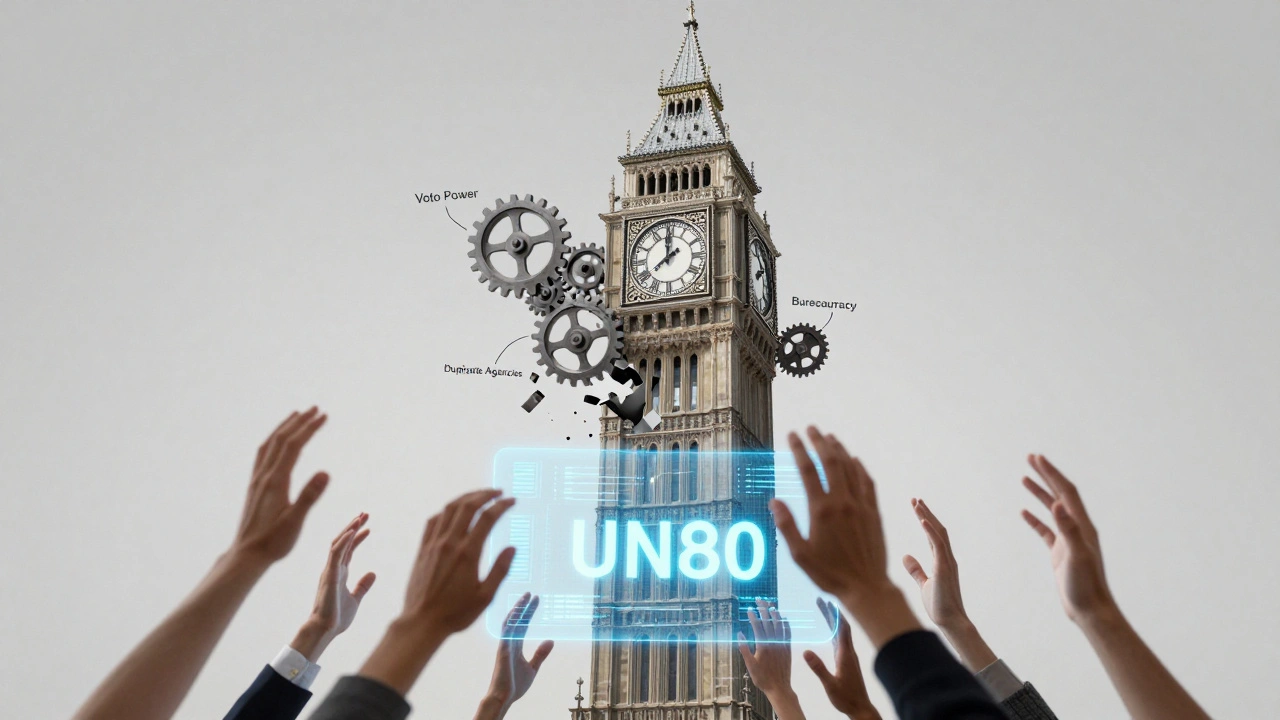
The Real Test: Momentum and Accountability
The UN80 Initiative has one advantage past reforms didn’t: urgency. Resources are shrinking. Crises are accelerating. The world is watching. The real question isn’t whether the plan is smart-it’s whether the UN has the political will to execute it. The creation of a dedicated UN80 implementation team by Guterres is a critical move. So is the plan to hold regular public briefings on progress. Transparency is the antidote to suspicion. If member states can see that cuts are leading to faster results, they’ll be more likely to support deeper changes. But if the process stays hidden, if decisions are made behind closed doors, and if no one is held accountable for delays, then UN80 will join the long list of UN reform efforts that produced glossy reports but no real change.What Comes Next?
The next six months are decisive. The Fifth Committee will vote on the 2026 budget cuts by December 2025. If the 15% reduction is approved, implementation begins in January 2026. The first mergers-UNDP and UNOPS, UNFPA and UN Women-are expected to be finalized by mid-2026. By the end of the year, the UN will release its first public impact report. If the numbers show that fewer staff are delivering more aid, if crisis response times drop, if donors see better ROI on their contributions-then UN80 will become the model for global governance reform. If not, the world may be forced to accept a new reality: that the UN, as we know it, can no longer keep up. The stakes aren’t just institutional. They’re moral. The UN was created to prevent another world war. Today, it’s being asked to prevent a world of fragmentation, inequality, and unchecked suffering. It’s time for it to prove it can still do the job.What is the UN80 Initiative?
The UN80 Initiative is a comprehensive reform plan launched by UN Secretary-General António Guterres in March 2025 to modernize the United Nations system. It includes 87 specific actions grouped into three workstreams: modernizing administrative operations, reviewing and consolidating mandates, and restructuring program delivery to improve coordination. The goal is to reduce duplication, cut costs, and make the UN more effective in delivering aid, peace, and human rights.
How is UN80 different from past UN reforms?
Unlike past reforms that focused on single issues-like peacekeeping conduct or gender parity-UN80 is the first to overhaul the entire UN system at once. It targets administrative inefficiencies, mandates, and program structures across all pillars: peace, development, humanitarian aid, and human rights. It also includes measurable budget cuts and a public accountability tracker, making it more results-driven than previous efforts.
Will UN80 cut aid to developing countries?
The UN claims the reforms won’t reduce frontline aid. Instead, it plans to cut administrative overhead and consolidate support functions. But critics worry that reducing the UN’s physical presence in countries-by merging agencies and cutting field staff-will make it harder for local communities to access help. The plan relies on Resident Coordinators as single points of contact, but their authority and resources remain uncertain.
Why is the Security Council a problem for UN reform?
The five permanent members (China, France, Russia, UK, and US) hold veto power and often block action on conflicts like Gaza and Ukraine. This paralysis undermines the UN’s credibility and makes it harder to implement reforms tied to peace and security. Without cooperation from these countries, even well-designed reforms can’t be fully enforced.
What happens if UN80 fails?
If UN80 fails, global governance could fragment further. Countries may turn to regional or minilateral groups-like the BRICS bloc or the Global North alliances-to address crises. The UN’s role as the central forum for universal norms could weaken, leading to competing standards on human rights, climate, and security. This could make international cooperation slower, less fair, and more vulnerable to power politics.