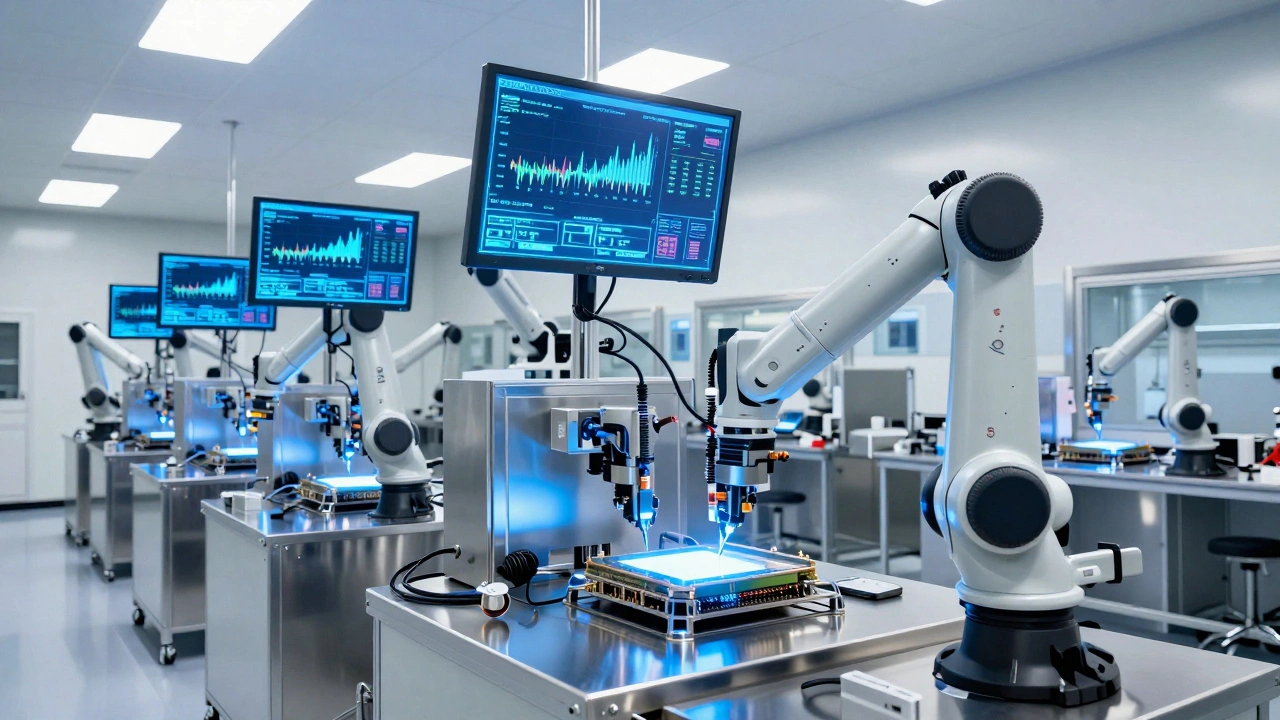
Singapore Manufacturing Value Calculator
Calculate Your Manufacturing Value
Determine if Singapore is the right manufacturing location for your high-value products
How Singapore's Manufacturing Ecosystem Creates Value
Singapore's value isn't just in lower costs - it's in higher returns per square meter and reduced risks.
Results
Enter your manufacturing details to see Singapore's value proposition
Singapore doesn’t make the most electronics. It makes the ones that power the future.
If you’ve ever used a smartphone, a medical scanner, or a data center server, you’ve likely interacted with something made in Singapore. Not because it’s cheap or massive, but because it’s precise. While Vietnam churns out millions of budget gadgets and Malaysia assembles basic circuit boards, Singapore builds the chips inside them-the ones that run AI models, store your DNA data, or control robotic surgery tools. This isn’t mass production. It’s high-stakes innovation, wrapped in clean rooms, robotic arms, and lines of code.
By 2025, Singapore’s manufacturing sector contributed 21.6% of the nation’s GDP, a number that’s held steady despite global supply chain chaos. That’s not luck. It’s strategy. The government didn’t just build factories. It built a system where the world’s biggest tech companies choose Singapore not for volume, but for reliability, speed, and intellectual security. Think of it as the Swiss watchmaker of global tech manufacturing-small, expensive, and impossible to replace.
What’s actually being made? Four pillars of high-value production
Singapore’s manufacturing isn’t a single industry. It’s four tightly linked, high-margin verticals:
- Semiconductors-25% of all manufacturing output. This includes memory chips (NAND flash), AI accelerators, and advanced packaging for high-bandwidth memory (HBM). Micron’s $7 billion HBM facility, launching in 2026, will produce nearly all of the company’s memory chips here.
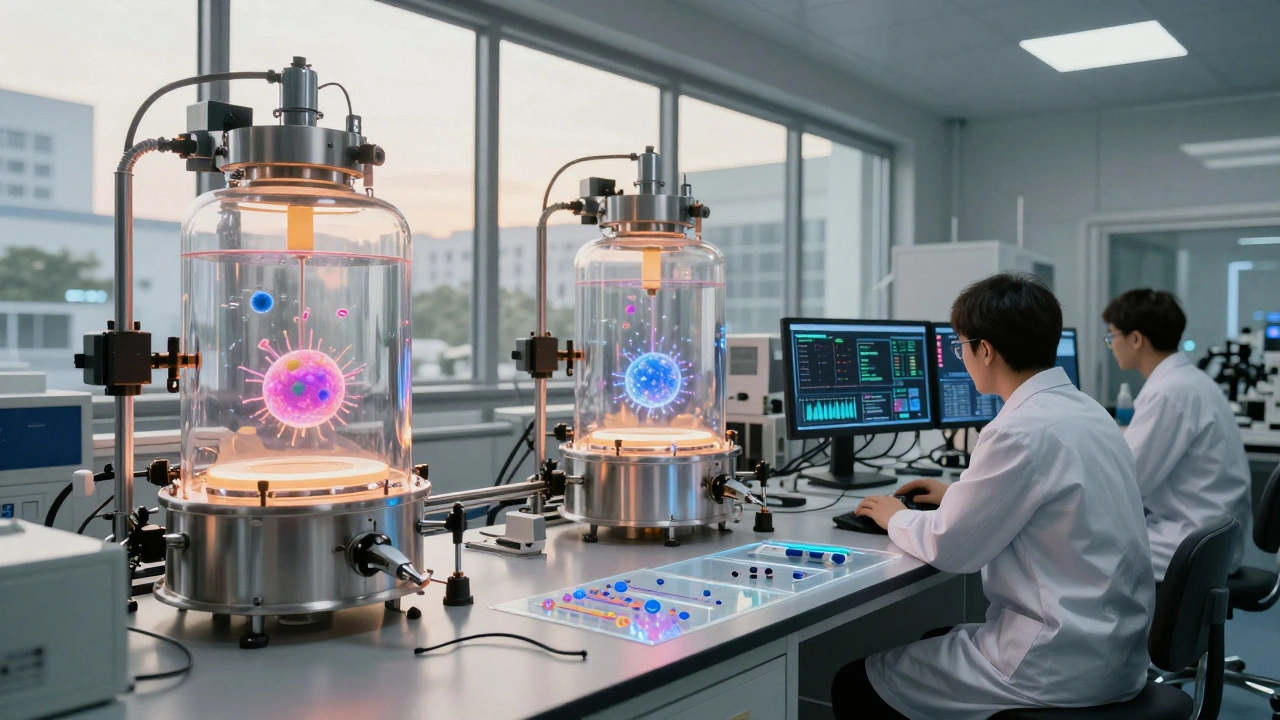
- Biomedical sciences-12% of output. Singapore is a global hub for cell and gene therapy manufacturing. The Health Sciences Authority (HSA) cuts approval times by 4-6 months compared to other Asian hubs, making it the go-to for startups racing to market.
- Precision engineering-This covers everything from medical implants to aerospace components. Companies here don’t just machine parts. They engineer them to tolerances thinner than a human hair.
- Advanced electronics-Not your phone’s motherboard. Think industrial sensors, smart grid controllers, and AI hardware for factories. This segment is growing fastest, fueled by demand from hyper-scalers like Amazon and Google.
These aren’t commodities. They’re proprietary, high-margin products. And they require more than assembly lines-they need digital brains.
Industry 4.0 isn’t a buzzword here. It’s the factory floor.
Singapore has six World Economic Forum Lighthouse factories-the most in Southeast Asia. These aren’t showrooms. They’re real, operating plants where AI predicts machine failures before they happen, robots adjust assembly paths in real time, and sensors track every bolt’s torque.
GlobalFoundries, added to the list in September 2025, uses real-time data from 12,000 sensors to optimize wafer yield. HP Inc’s facility cuts energy use by 30% through AI-driven climate control. At Micron, machine learning models analyze optical scans of memory chips to flag defects invisible to the human eye.
Adoption rates for Industry 4.0 tech hit 63% among large manufacturers in 2025-up from 41% in 2022. But it’s not just about buying robots. It’s about connecting them. Singapore’s IMDA has partnered with telcos to deploy Local 5G networks inside factories. This lets machines communicate with zero lag, enabling real-time predictive maintenance and autonomous logistics.
One manufacturer told me: “We used to shut down a line for a week to fix a sensor. Now, the system alerts us 72 hours before it fails. We fix it during lunch.”
GitHub activity? Yes. Code is part of the production line.
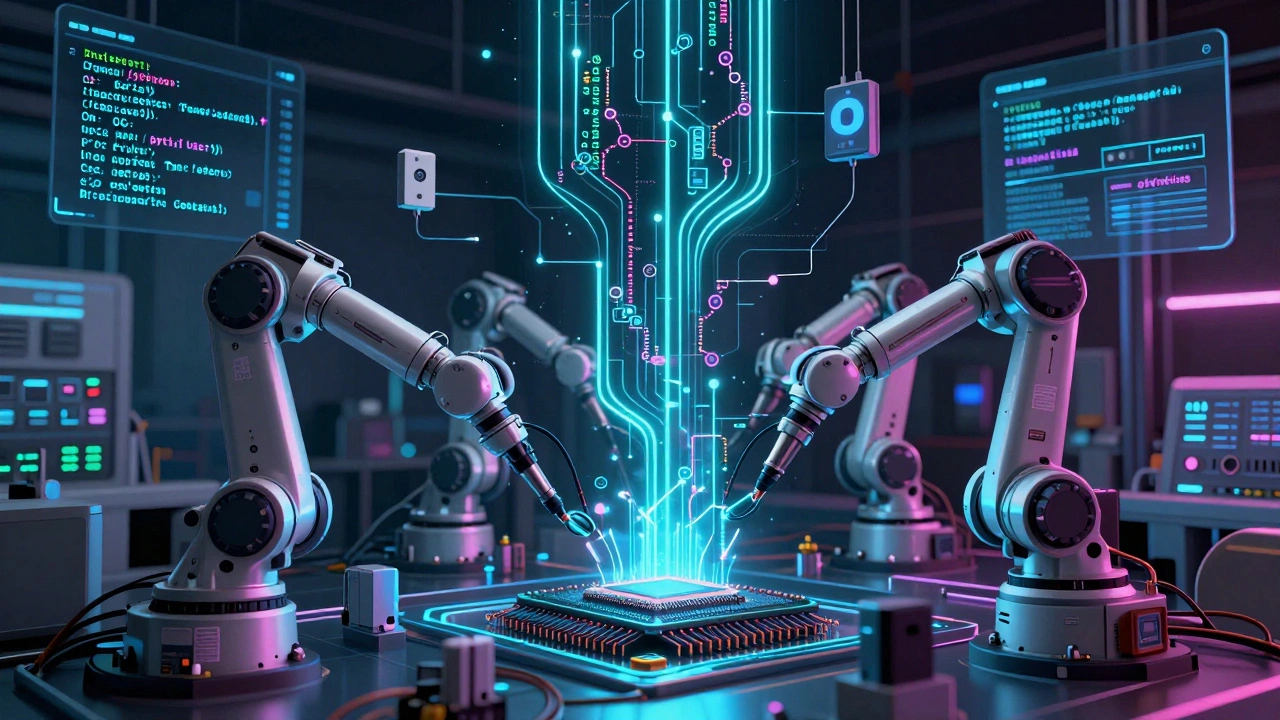
Most people think of manufacturing as physical. In Singapore, it’s also digital. The same engineers who design a semiconductor chip also write the firmware that controls its testing machines. The software that runs a bioreactor? Written in Python, tested on GitHub, and deployed via CI/CD pipelines.
Singapore’s semiconductor firms are among the top open-source contributors in Asia. GlobalFoundries, Infineon, and Micron all maintain active GitHub repositories for internal tools-automation scripts, calibration algorithms, defect detection models. These aren’t public projects. But they’re shared across teams, version-controlled, and audited like code in a bank.
Why does this matter? Because when you’re building a chip that must operate flawlessly at 100°C for 15 years, you can’t afford bugs. You need the same rigor as a fintech app. That means automated testing, peer reviews, and rollback protocols. In Singapore, manufacturing and software engineering aren’t separate departments. They’re the same team.
The cost problem-and how Singapore beats it
Singapore is expensive. Labor costs are 30-40% higher than in Thailand or Vietnam. Industrial land is scarce. Rent for a 10,000 sqm factory can hit $1.2 million a year.
So how do companies stay profitable?
They don’t compete on cost. They compete on value-per-square-meter.
Take Seagate. When PC demand dropped and tariffs hit, they didn’t shut down. They retooled. They moved from bulk hard drive assembly to producing high-end enterprise storage controllers-smaller volume, 10x the margin. Now, their Singapore plant makes fewer drives, but earns more per square foot than any plant in Malaysia.
Another tactic: automation funded by grants. The Productivity Solutions Grant covers up to 80% of automation costs. A small contract manufacturer used it to install six collaborative robots. Result? Labor costs dropped 22% in 18 months, even as wages rose.
But here’s the catch: getting the grant takes 45-60 days. Many SMEs give up. Only 37% of applicants complete the process. That’s a hidden bottleneck.
Who’s winning? Who’s struggling?
Biomedical manufacturing is booming. In 2025, it added 400 jobs and saw wage growth of 4.2%-the highest in the sector. Engineers say it’s because regulations are clear, approvals are fast, and the government invests in specialized training.
Electronics? Mixed. Demand for AI chips is strong, but consumer electronics is shrinking. One production supervisor on HardwareZone wrote: “We’re getting 15% less from clients who moved orders to Thailand. We need automation, but we can’t afford it without the grant.”
Skills shortages are real. Two-thirds of manufacturers say they can’t find technicians who understand both robotics and data analytics. The EDB reports 78% of new manufacturing jobs in 2025 required data skills. That’s not a trend. It’s the new baseline.
Singapore’s answer? The Industry 4.0 Human Capital Initiative. It’s a 3-year training pathway that turns electricians into AI-assisted maintenance specialists. Graduates get certified, placed in companies, and paid during training. Over 50,000 workers are targeted by 2028.
The future: Clean energy, flexible electronics, and AI hardware
The next wave isn’t just about making better chips. It’s about making new kinds of products.
- Clean energy equipment-Target: S$8 billion by 2030. Singapore is building factories for solar inverters, battery management systems, and smart grid components.
- Flexible electronics-Wearable health monitors that stick to skin. Sensors woven into uniforms for firefighters. These need new materials and printing techniques-areas where Singapore leads.
- AI hardware-Not just chips. Entire systems designed for edge computing: low-power, high-efficiency processors built for factories, not data centers.
- Continuous pharmaceutical manufacturing-Instead of batch processing, drugs are made in one continuous flow. Faster, cheaper, safer. Singapore is one of the few places where this is done at scale.
These aren’t guesses. They’re in the Manufacturing 2030 plan. The government is tripling the number of advanced manufacturing testbeds and launching a National Centre for Additive Manufacturing. This isn’t R&D. It’s production-ready innovation.
Why Singapore wins when others lose
When U.S.-China tensions spiked, many companies moved production out of China. Some went to Vietnam. Others chose Singapore.
Why Singapore? Not because it’s cheaper. Because it’s predictable.
It has:
- Strong IP protection-no theft fears
- English-speaking workforce-no language barriers
- Stable laws and politics-no sudden policy shifts
- Trade agreements with the EU, US, and ASEAN-no tariff traps
Silicon Box’s $2.65 billion semiconductor plant? Opened in 2023. No delays. No protests. Just permits, land, and a workforce ready to go.
As Dr. Tan Khee Giap of Singapore Management University says: “Success here isn’t measured in units made. It’s measured in value created per square meter.”
That’s the real edge. Not scale. Not speed. But intelligence-built into every machine, every line of code, every trained worker.
What’s next? The next 12 months
2026 will be a turning point:
- Micron’s HBM facility starts production-will supply AI data centers globally.
- GlobalFoundries ramps up its AI chip production-already at full capacity.
- Manufacturing 2030 grants open for clean energy tech-expect a surge in solar and battery startups.
- More Lighthouse factories announced-likely in biotech and quantum hardware.
Companies that can’t automate, can’t code, or can’t adapt won’t survive. Those that can? They’ll keep growing-even if the rest of the world slows down.
Why doesn’t Singapore just build more factories to compete with Vietnam?
Singapore doesn’t compete on volume. It competes on value. Building more factories would raise costs and waste scarce land. Instead, it focuses on high-margin, high-tech production-like AI chips and gene therapies-where precision matters more than quantity. A single semiconductor wafer factory here can generate more revenue than ten assembly plants in Vietnam.
Is GitHub really used in manufacturing in Singapore?
Yes. Engineers writing firmware for semiconductor testers, automating robotic arms, or controlling bioreactors use GitHub to version-control their code. It’s not public, but internal repositories are mandatory for quality control. If a sensor fails, they trace the code back to the last commit. It’s software engineering applied to physical production.
What’s the biggest threat to Singapore’s manufacturing future?
Talent shortage. While automation helps, you still need people who understand both machines and data. There aren’t enough technicians trained in AI-driven maintenance, robotics programming, or digital twins. Without solving this, even the best factories will stall. The government is training 50,000 workers by 2028, but the clock is ticking.
How does Singapore handle U.S.-China tech competition?
Singapore stays neutral. It doesn’t pick sides. Companies like GlobalFoundries and Micron operate under Singaporean law, not U.S. or Chinese policy. This neutrality makes it a safe hub for multinationals caught in trade wars. The government also provides direct support-like loan guarantees and R&D subsidies-to help firms navigate export controls without relocating.
Can small manufacturers afford Industry 4.0 in Singapore?
It’s tough, but possible. The Productivity Solutions Grant covers up to 80% of automation costs. Many SMEs start small-a single cobot, a sensor network for one line. The key is starting before you’re desperate. Those who wait often can’t afford the leap. The real cost isn’t the tech. It’s the delay.
What’s the role of the Singapore Economic Development Board (EDB)?
The EDB doesn’t run factories. It builds ecosystems. It attracts multinationals with tax incentives, secures land for high-tech zones, funds training programs, and connects companies with research institutes. It’s the silent architect behind Singapore’s manufacturing success-working behind the scenes to make sure the pieces fit together.
Final thought: It’s not about making more. It’s about making matter.
Singapore’s manufacturing story isn’t about size. It’s about significance. Every chip made here powers something bigger-a hospital, a server, a drone, a climate sensor. The nation’s edge isn’t in its ports or its taxes. It’s in its ability to turn precision into progress.
Other countries can copy robots. They can’t easily copy the culture of discipline, the legal certainty, or the deep integration of software and hardware. That’s why, even in a world of trade wars and supply chain chaos, Singapore keeps winning.