Geopolitical ESG Risk Calculator
Assess Your Investment Risk
Determine the geopolitical risk level of your ESG investments based on country exposure, industry, and supply chain concentration. This calculator helps you understand how fragmented global ESG frameworks impact your portfolio.
Your Geopolitical Risk Assessment
Risk Score: 0
Risk Level: Unknown
Investing Today Isn’t Just About Returns Anymore
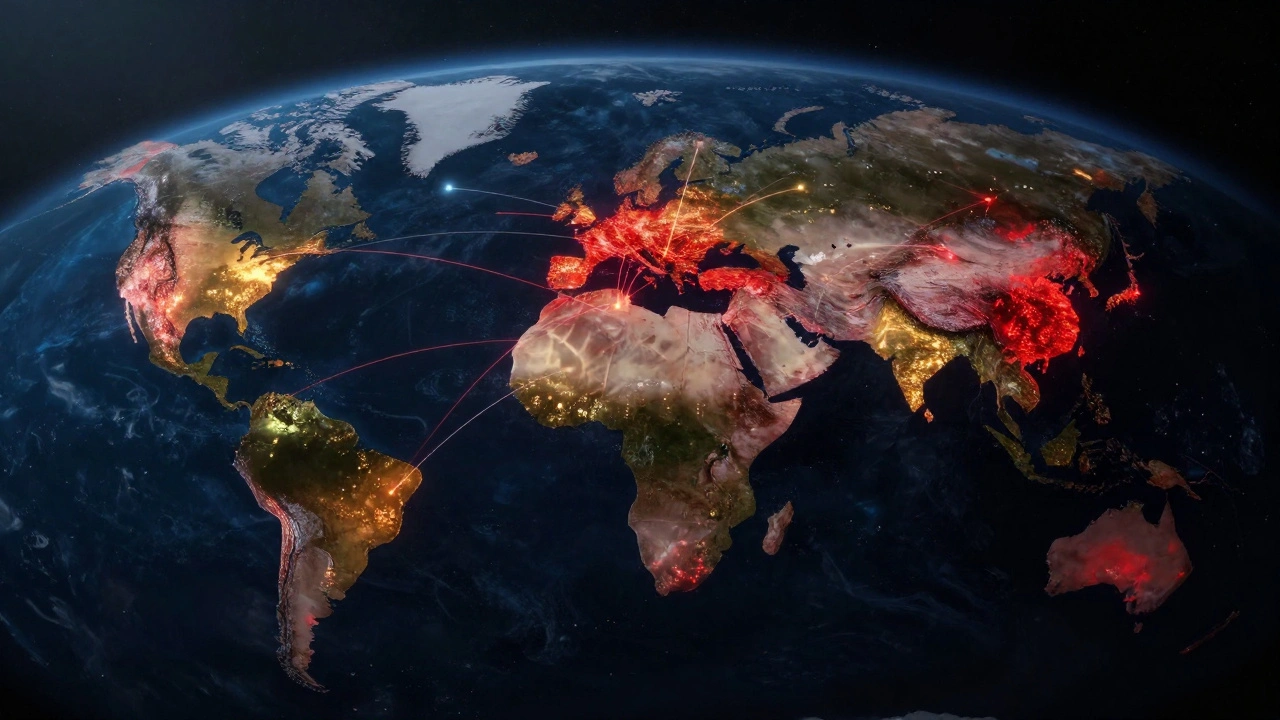
Five years ago, sustainable investing meant picking companies with good environmental records or diverse boards. Today, it’s about asking: Can this asset survive a war, a sanctions regime, or a supply chain cutoff? The world isn’t just shifting-it’s splitting. And investors who ignore that reality are risking more than missed returns. They’re risking total portfolio failure.
By late 2025, there are 59 active military conflicts worldwide-the highest number since World War II. That’s not a statistic. It’s a portfolio killer. When Russia invaded Ukraine in 2022, it didn’t just disrupt oil prices. It shattered the idea that ESG and national security could be treated as separate buckets. Now, they’re locked together. You can’t have clean energy if your wind turbine parts come from a country under sanctions. You can’t claim carbon neutrality if your battery minerals are mined by forced labor in a conflict zone.
Europe’s Rules Are Tight. The U.S.’s Are Chaotic.
Europe doesn’t just talk about sustainability-it enforces it. Since January 2025, over 50,000 companies operating in the EU must report detailed sustainability data under the Corporate Sustainability Reporting Directive (CSRD). That’s not optional. It’s legal. And it’s backed by real penalties. The EU’s Carbon Border Adjustment Mechanism now applies to steel, cement, aluminum, fertilizers, electricity, and hydrogen. Imports that don’t meet EU carbon standards face tariffs. That’s not a tax-it’s a trade weapon.
Meanwhile, in the U.S., it’s a patchwork. The Inflation Reduction Act poured $369 billion into clean energy. But 18 states, mostly Republican-led, passed laws banning public pension funds from considering ESG factors. One fund manager in Texas told me, "We can’t say ‘climate risk’ in a meeting. We say ‘supply chain resilience.’" That’s not strategy. That’s survival.
The result? A company with operations in Germany and Texas now needs two separate ESG reports. One for Brussels. One for Austin. Compliance costs for multinational firms jumped 22% in 2024. Siemens Energy spent $15.7 million just to keep up.
China and Asia Are Building Their Own Green System
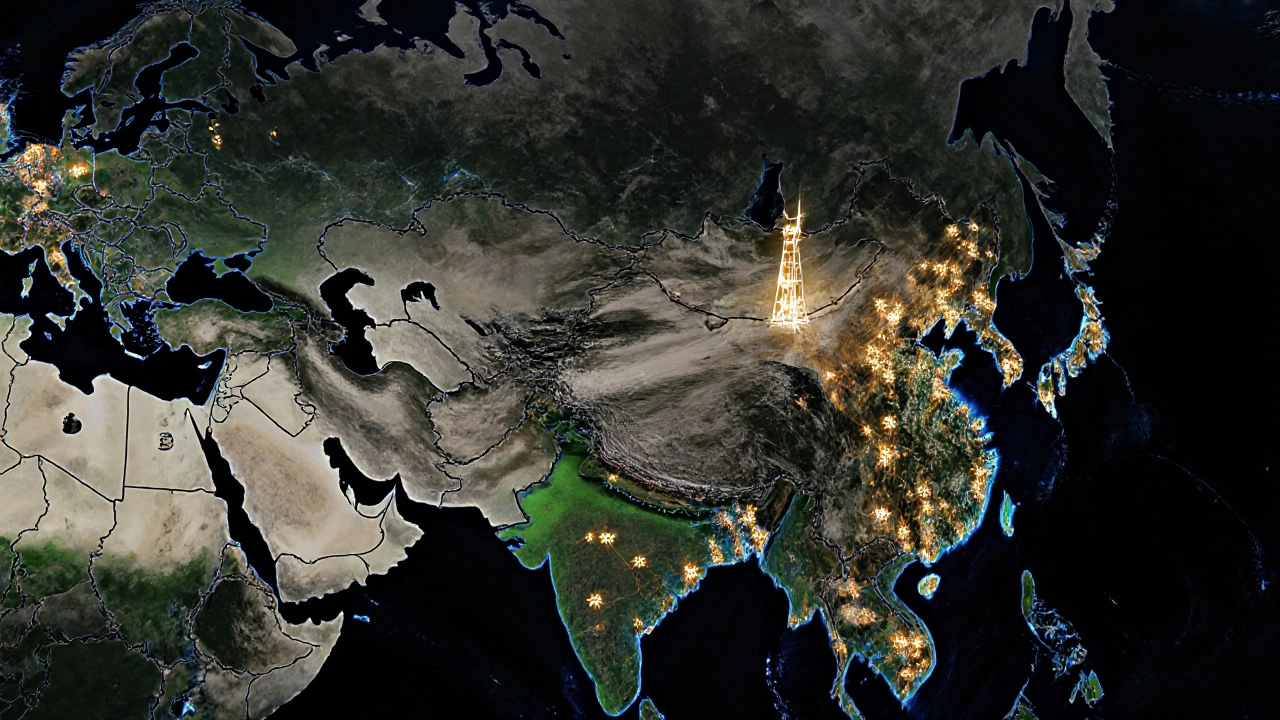
China isn’t waiting for Western approval. It built its own green finance machine. Since 2015, it’s issued $1.2 trillion in green bonds. That’s not a guess-it’s a fact tracked by the People’s Bank of China. And it’s not just about solar panels. China is investing in what it calls “electro-state” infrastructure: high-voltage power grids, lithium refineries, and electric vehicle factories that double as national security assets. If the U.S. cuts off rare earth exports, China already has the capacity to make its own magnets, batteries, and turbines.
India, Japan, and Australia aren’t far behind. Japan’s GX Promotion Act is directing $100 billion into hydrogen and nuclear tech. India is building five massive green hydrogen hubs, targeting 20% of global production by 2030. Australia is betting big on ammonia as a clean fuel export. These aren’t pilot programs. They’re industrial policies backed by sovereign wealth funds and state-owned banks.
What does this mean for investors? You can’t assume global standards anymore. A green bond issued in Shanghai isn’t the same as one issued in Frankfurt. The rules, metrics, and even definitions of “sustainable” differ. And if you’re managing money for European clients, you can’t just buy Chinese green bonds without running them through a compliance filter that costs hundreds of thousands of dollars a year.
Infrastructure Is the New Safe Bet
When geopolitics gets messy, investors run to what’s tangible. That’s why infrastructure is outperforming. In 2025, assets like modern power grids, long-duration battery storage, and resilient ports are delivering 12.3% annual returns-3.8 percentage points above projections. Why? Because they’re physical. You can’t sanction a transmission line. You can’t embargo a port. And every country needs them.
The iShares Thematic Outlook 2025 says the world needs $600 billion a year in infrastructure investment just to keep the energy transition on track. That number will hit $680 billion by 2026. And here’s the kicker: infrastructure has a geopolitical beta of 0.35. That means it barely moves when conflicts flare. Traditional stocks? Their beta is 0.72. They crash when tensions rise.
Brookfield Asset Management made $2.1 billion from upgrading European grids between 2022 and 2025. Why? Because the EU was desperate for energy independence. The U.S. is now doing the same with its $28.5 billion Resilient Supply Chain Investment Program, funding critical mineral processing and clean tech manufacturing. These aren’t subsidies. They’re strategic investments in national survival.
Two Systems. One Reality.
There’s no single global ESG system anymore. There are three:
- The EU Model: Rules, enforcement, transparency. High compliance cost. Low risk of policy reversal.
- The U.S. Model: Market-driven, state-by-state chaos. Low compliance cost for some. High risk of sudden regulatory swings.
- The China-Asia Model: State-backed, export-oriented, security-first. Low transparency. High scale.
Investors who treat these as variations of the same thing are setting themselves up for failure. You can’t use an EU ESG scorecard to evaluate a Vietnamese solar farm that uses Chinese-made panels. You can’t assume a U.S. company’s carbon reduction claim is valid if it sources its copper from a mine in a war-torn African nation.
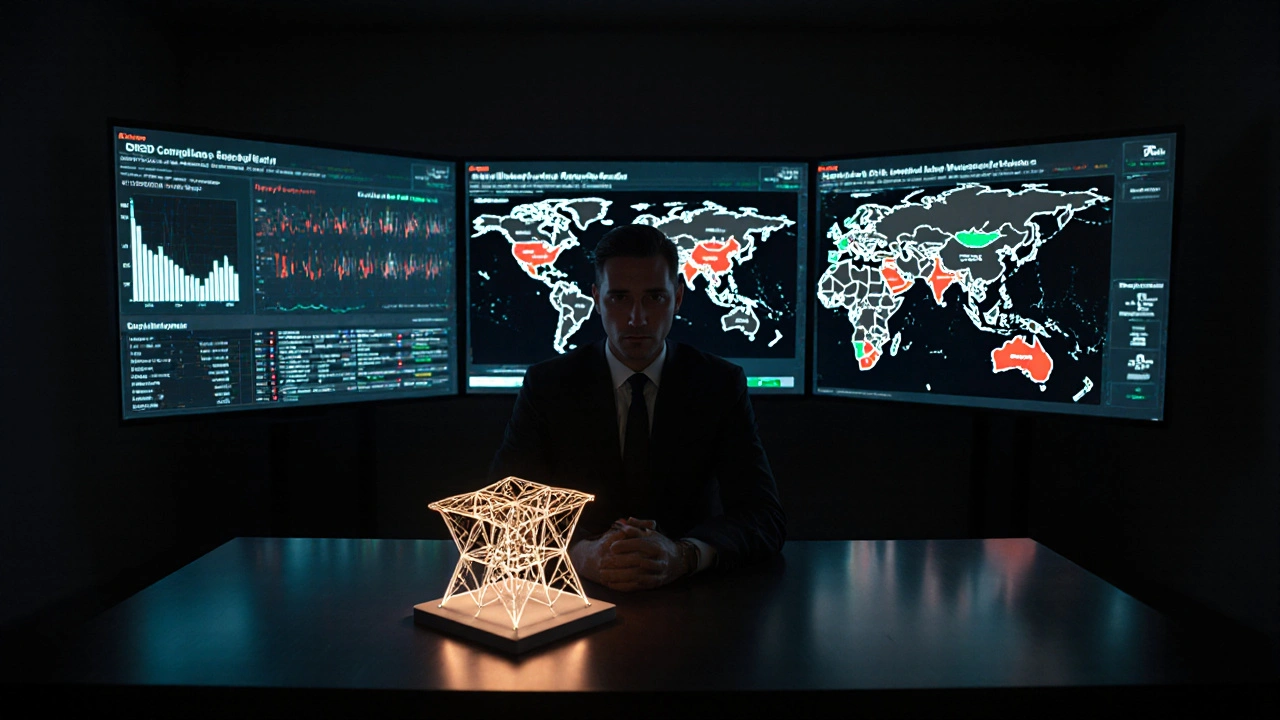
The solution? Dual-layer analysis. Leading firms like BlackRock now run every asset through two filters: the traditional ESG score, and a geopolitical risk score. The latter tracks things like: Is the company exposed to sanctioned entities? Is its supply chain concentrated in a conflict zone? Does its technology have dual-use potential-meaning it can be repurposed for military use?
BlackRock’s Geopolitical Risk Dashboard now has 120 analysts working full-time on this. State Street says it takes 6 to 9 months to train a portfolio manager to use it properly. That’s not a quick fix. It’s a new skill set.

What Happens When Green Finance Splits?
Dr. Susan Strange at the London School of Economics warns that fragmentation could raise transaction costs for global investors by 15% to 20%. That’s not theoretical. It’s happening now. A fund in London has to hire three different compliance teams: one for EU rules, one for U.S. state laws, and one for Chinese reporting standards. Each team uses different software. Each team defines “sustainability” differently.
And the cost isn’t just financial. It’s cognitive. Reddit user u/SustainableCapital put it bluntly: “Trying to reconcile EU Taxonomy with US anti-ESG sentiment feels like maintaining two separate investment universes.”
That’s the new reality. There’s no single ESG anymore. There’s ESG-EU, ESG-US, and ESG-Asia. And if you’re still trying to manage them as one system, you’re not managing risk-you’re ignoring it.
Where Do You Go From Here?
Here’s what works in 2025:
- Map your exposure. List every country where your portfolio has assets. Then ask: Is this country under sanctions? Is it part of a trade bloc? Does it have a green taxonomy? If you can’t answer, you’re flying blind.
- Invest in physical assets. Grids, ports, storage, automation. These don’t care about politics. They just need to work.
- Use regional benchmarks. Don’t compare a U.S. fund to a European one. They’re playing different games. Use EU-specific ESG indices for EU holdings. Use U.S. infrastructure returns for U.S. holdings.
- Build a geopolitical risk team. Even small firms can outsource this. Use tools like BlackRock’s dashboard or MSCI’s geopolitical scoring. It’s cheaper than losing $100 million because you bought a company that sources from a sanctioned entity.
- Accept that transparency is regional. If you’re investing in Asia, don’t expect the same level of disclosure as in Europe. Adjust your expectations. Build in buffers.
The old model-buy ESG funds and hope for the best-is dead. The new model is this: Know your geography. Know your risk. Know your rules. And never assume the world is still connected.
What’s Next?
By 2027, the world will have three distinct green finance ecosystems. No single standard will dominate. No global regulator will emerge. The fragmentation isn’t a bug. It’s the feature.
That’s scary. But it’s also an opportunity. The investors who win aren’t the ones who cling to old ideas. They’re the ones who build portfolios that work in multiple worlds at once. They’re the ones who see not just risk-but structure-in the chaos.
Can ESG investing still be profitable in a fragmented world?
Yes-but only if you adapt. Sustainable assets under management hit $38.7 trillion in 2025, but returns vary wildly by region. Infrastructure projects in Europe and the U.S. delivered 12%+ annual returns in 2025, while traditional ESG funds in politically volatile markets saw flat or negative performance. The key is shifting from generic ESG scores to targeted investments in physical, geopolitically resilient assets like grids, storage, and automation.
Why are U.S. and EU ESG standards so different?
The EU treats sustainability as a legal obligation, enforced through binding regulations like CSRD and the Carbon Border Adjustment Mechanism. The U.S. treats it as a market preference, with federal policy driven by administration changes and state laws actively blocking ESG integration. This creates a legal minefield for multinational companies trying to comply with both.
Is China’s green finance system trustworthy?
China’s system isn’t transparent by Western standards-it’s state-directed and focused on strategic outcomes, not disclosure. But it’s real. China has issued $1.2 trillion in green bonds since 2015 and leads in solar panel, battery, and high-voltage grid manufacturing. Investors should treat it as a separate system: high scale, low transparency, high strategic alignment. Don’t expect EU-style reporting. Do expect massive capital flow.
What assets perform best when geopolitics gets unstable?
Infrastructure. Power grids, long-duration battery storage, resilient ports, and automation equipment. These assets have low geopolitical beta (0.35), meaning they’re largely unaffected by conflict or sanctions. They’re also essential for energy transition, so governments fund them regardless of political ideology. In contrast, traditional equities have a geopolitical beta of 0.72-they crash when tensions rise.
How much does it cost to manage ESG in a fragmented world?
Large asset managers spend $2.1 million to $3.7 million annually on carbon accounting systems alone to reconcile EU and U.S. rules. Compliance costs rose 22% in 2024. Smaller firms can use outsourced tools like BlackRock’s Geopolitical Risk Dashboard or MSCI’s scoring models for under $100,000 per year. The cost of not doing it? Much higher-losses from sanctions exposure or stranded assets.
Should I avoid investing in countries with high geopolitical risk?
Not necessarily. Some of the highest returns are in high-risk regions-like India’s green hydrogen hubs or Brazil’s critical mineral projects. But you must structure the investment differently: use local partners, avoid direct ownership where possible, and build in political risk insurance. The goal isn’t to avoid risk-it’s to manage it with precision.
Investing in 2025 isn’t about finding the best ESG fund. It’s about building a portfolio that can survive in three different worlds at once. The ones who do it right won’t just make money. They’ll be the ones still standing when the next crisis hits.