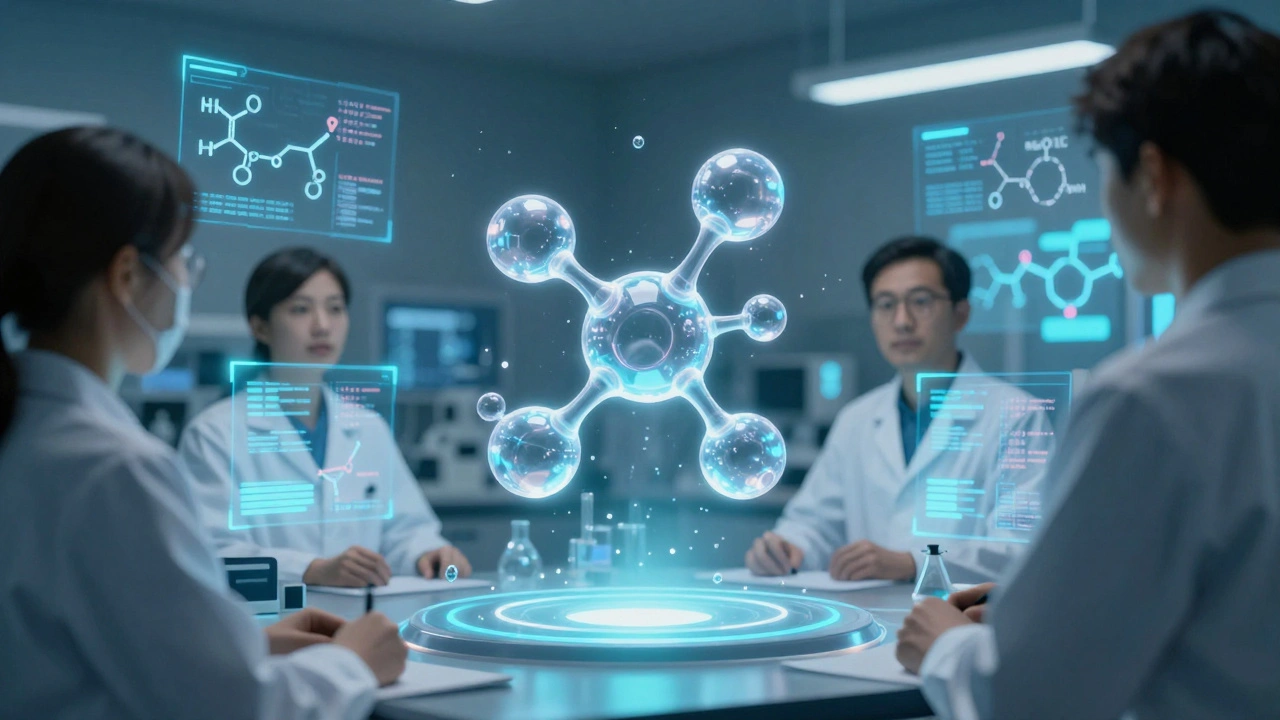
AI Drug Discovery: How Artificial Intelligence Is Speeding Up New Medicines
When it comes to finding new medicines, AI drug discovery, the use of artificial intelligence to identify and design new therapeutic compounds. Also known as machine learning for drugs, it’s turning a process that used to take over a decade and cost billions into something that can happen in months. Traditional drug development is slow because scientists have to test thousands of chemical compounds by hand—most fail, and the ones that don’t often cause unexpected side effects. AI changes that by learning from millions of past experiments, spotting patterns humans miss, and predicting which molecules will actually work before they’re ever made in a lab.
This isn’t science fiction. Companies are already using AI in healthcare, the application of artificial intelligence to improve medical outcomes and streamline clinical processes to target diseases like cancer, Alzheimer’s, and rare genetic disorders. Tools trained on protein structures and patient data can simulate how a drug binds to a cell, reducing failed trials by up to 40%. It’s not replacing chemists—it’s giving them superpowers. And it’s not just big pharma doing this. Startups in the U.S., UK, and Israel are using open-source AI models to build drugs for diseases no one else is trying to cure because the market is too small.
The real breakthrough isn’t just speed—it’s precision. AI helps avoid side effects by predicting how a compound will interact with other parts of the body, not just the target. It also identifies repurposed drugs—old pills already approved for other uses—that could work for new conditions. That cuts years off testing because safety data already exists. Meanwhile, pharmaceutical innovation, the development of new treatments through advanced science and technology is shifting from trial-and-error to data-driven design. Regulatory agencies like the FDA are starting to accept AI-generated data as part of approval filings, which means these drugs could reach patients faster than ever.
What you’ll find below isn’t a list of hype. These are real stories—how AI found a new antibiotic in a dataset no one had checked, how a startup used public research to build a treatment for a rare childhood disease in under two years, and how a hospital system is using AI to match patients with the right clinical trials before they even know they need one. This isn’t about robots writing prescriptions. It’s about smarter tools helping humans make better decisions, faster. And if you’re wondering how this affects you—whether you’re a patient, a researcher, or just someone who takes medicine—it’s already changing everything.