Geoeconomic Fragmentation: How the World Is Splitting Into Economic Blocs
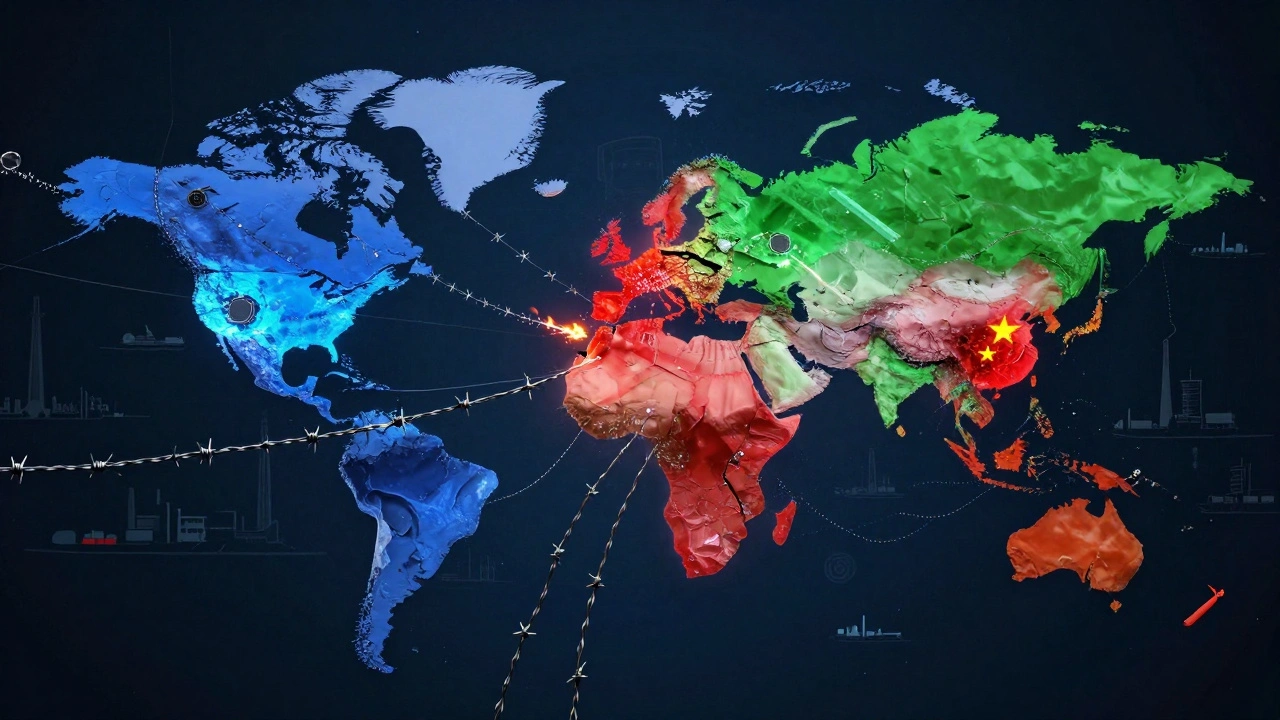
When we talk about geoeconomic fragmentation, the splitting of the global economy into competing regional blocs driven by political, security, and technological divides. Also known as economic decoupling, it’s not just about tariffs—it’s about who makes your chips, who controls your data, and whose currency you use to pay for oil. This isn’t theory. It’s happening right now, and it’s changing how companies operate, how governments invest, and how everyday goods get made and shipped.
Take supply chain resilience, the effort to rebuild production networks that aren’t dependent on single countries or regions. After the pandemic and the Ukraine war, no one trusts a single factory in one country to keep the lights on. The U.S. and Europe are pushing friend-shoring—moving production to allies like Mexico, India, or Poland. China is doubling down on self-reliance, building domestic tech ecosystems and pushing its digital yuan, a state-controlled digital currency designed to bypass Western payment systems. Meanwhile, countries in Southeast Asia and Africa are being pulled into these competing orbits, forced to pick sides just to keep their exports flowing.
And it’s not just goods. trade blocs, formal or informal alliances centered around shared economic rules and security interests. The EU’s Carbon Border Adjustment Mechanism, the U.S.-led IPEF, and China’s Belt and Road Initiative aren’t just trade deals—they’re power plays. Each bloc sets its own rules on data privacy, labor standards, and environmental rules. Companies that used to think globally now have to build separate strategies for each zone. One product, three compliance manuals. One supplier, five different audit checks. This is why geopolitical risk, the threat that political decisions will disrupt markets, supply chains, or investments. It’s no longer just a footnote in a risk report—it’s the main line item.
What’s next? More fragmentation. More sanctions. More tech wars. The era of seamless global trade is over. The winners won’t be the biggest companies—they’ll be the most adaptable. Those who can shift production fast, switch currencies without panic, and navigate conflicting regulations will survive. The rest will get stuck in the middle, paying higher costs and losing market share.
Below, you’ll find real breakdowns of how this is playing out—from how AI governance is splitting along East-West lines, to why climate finance is now tied to national security, and how digital currencies are rewriting the rules of global money. No fluff. Just what’s changing, who’s winning, and what you need to know before the next policy shift hits.