Manufacturing Automation: How Smart Factories Are Changing Work, Costs, and Global Supply Chains
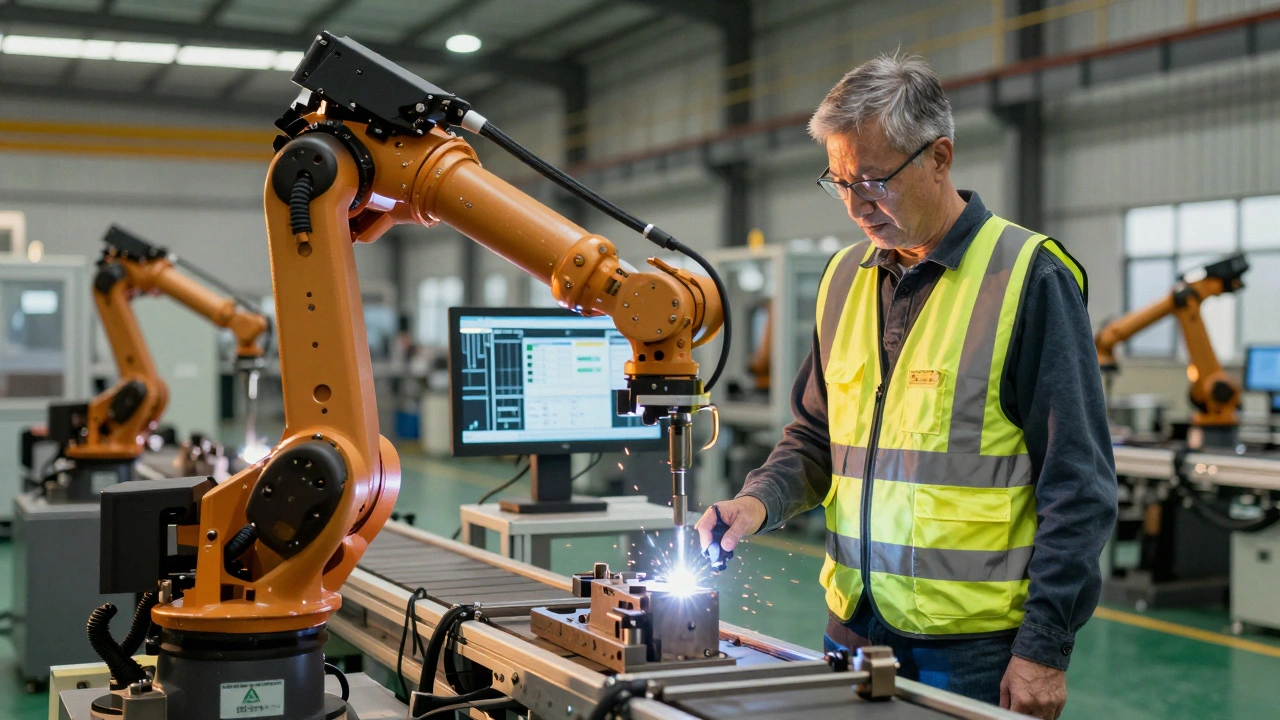
When you think of manufacturing automation, the use of technology to perform production tasks with minimal human input. Also known as automated manufacturing, it’s no longer just about robots on assembly lines—it’s about entire factories that think, adapt, and optimize in real time. This isn’t science fiction. It’s happening right now in factories from Michigan to Vietnam, where machines handle everything from welding to quality checks, guided by sensors and AI that learn from every cycle.
Manufacturing automation isn’t just about replacing workers—it’s about redefining what work means. industrial robotics, physical machines programmed to perform precise, repetitive tasks in production environments are getting smarter, cheaper, and more flexible. Meanwhile, smart factories, integrated systems where machines, software, and humans communicate to optimize production use real-time data to predict breakdowns, adjust workflows, and even reorder materials before stock runs out. These systems don’t just reduce errors—they slash downtime and cut energy use by up to 30% in some cases.
And it’s not just big corporations using this tech. Smaller suppliers are adopting modular automation tools to stay competitive, especially as global supply chains get more fragile. When tariffs, pandemics, or wars disrupt shipping, companies that automated early are the ones who kept producing. That’s why supply chain resilience, the ability of production networks to absorb shocks without collapsing is now tied directly to how much automation a factory has. The companies that survived 2020–2023 weren’t the ones with the cheapest labor—they were the ones with the most responsive systems.
At the same time, AI in manufacturing, the use of machine learning to analyze production data and make decisions without human input is turning factories into data centers with conveyor belts. It’s spotting patterns in machine vibrations before a bearing fails. It’s predicting which batches will need rework based on humidity levels. It’s even helping design new products faster by simulating how materials behave under stress. This isn’t theory—it’s what top manufacturers are using daily to stay ahead.
What you’ll find in this collection isn’t hype or vendor brochures. These are real stories from factories that made the leap: how one plant cut defects by 60% using vision systems, how another brought production back home because automation made local labor cost-effective, and how a small supplier in Poland now outperforms giants by automating just three critical steps. You’ll see the costs, the mistakes, the wins—and what actually works when you’re not just buying robots, but building intelligence into your operation.