Trade Tariffs: How Global Taxes on Imports Shape Economies and Supply Chains
When a country puts a trade tariff, a tax imposed on goods imported from other countries. Also known as import duties, it’s not just a revenue tool—it’s a weapon, a shield, and sometimes a self-inflicted wound. These taxes don’t just raise prices on foreign products. They ripple through factories, farms, and households, changing what gets made, where it’s made, and who pays for it.
Trade tariffs are tied to global supply chains, the network of production and distribution that moves goods across borders. When the U.S. slapped tariffs on Chinese electronics, companies didn’t just pay more—they moved entire factories to Vietnam or Mexico. When the EU taxed American steel, carmakers in Germany scrambled to find new suppliers. These aren’t theoretical shifts. They’re real decisions made by CEOs, not politicians. And they directly affect the cost of your phone, your car, and even your groceries.
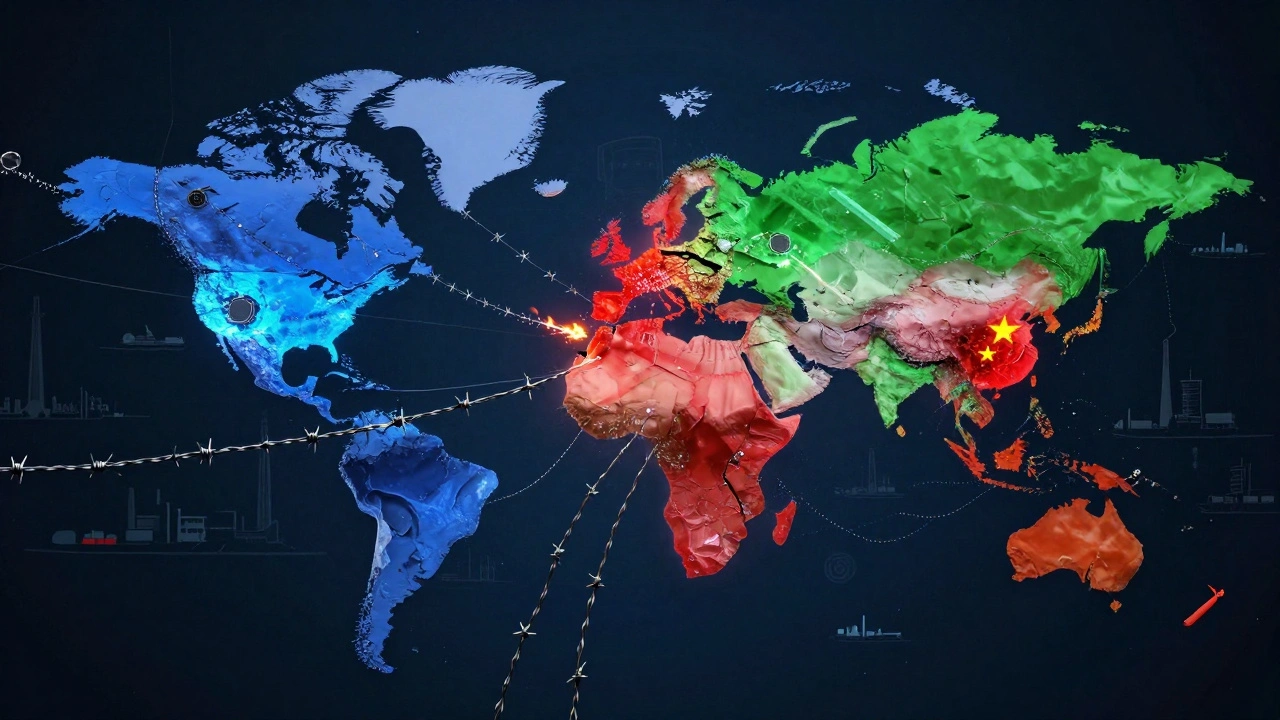
Trade tariffs also feed into trade wars, escalating cycles of retaliatory taxes between nations. Remember when the U.S. and China exchanged billions in tariffs between 2018 and 2020? It didn’t bring back American manufacturing as promised. Instead, it raised costs for U.S. farmers who lost Chinese buyers, and forced American manufacturers to pay more for parts they couldn’t get elsewhere. The same pattern shows up in Canada’s dairy tariffs, India’s tech import taxes, and the EU’s carbon border adjustments. These aren’t isolated moves—they’re part of a new global playbook where economic policy is used as geopolitical leverage.
And then there’s economic sanctions, restrictions on trade used to pressure nations politically. While not all tariffs are sanctions, they often overlap. When countries block steel, semiconductors, or rare earth minerals, they’re not just taxing—they’re cutting off lifelines. The result? Short-term pain for the target, but long-term disruption for everyone else. Supply chains get longer. Prices get higher. Innovation slows.
What you’ll find below isn’t a list of headlines. It’s a collection of deep dives into how these forces actually play out. From how AI is tracking tariff evasion in real time, to why green energy tariffs are becoming the new battleground, to how small nations are using targeted taxes to punch above their weight. These aren’t abstract theories. They’re real stories of factories closing, workers retraining, and markets shifting under the weight of a single policy decision.