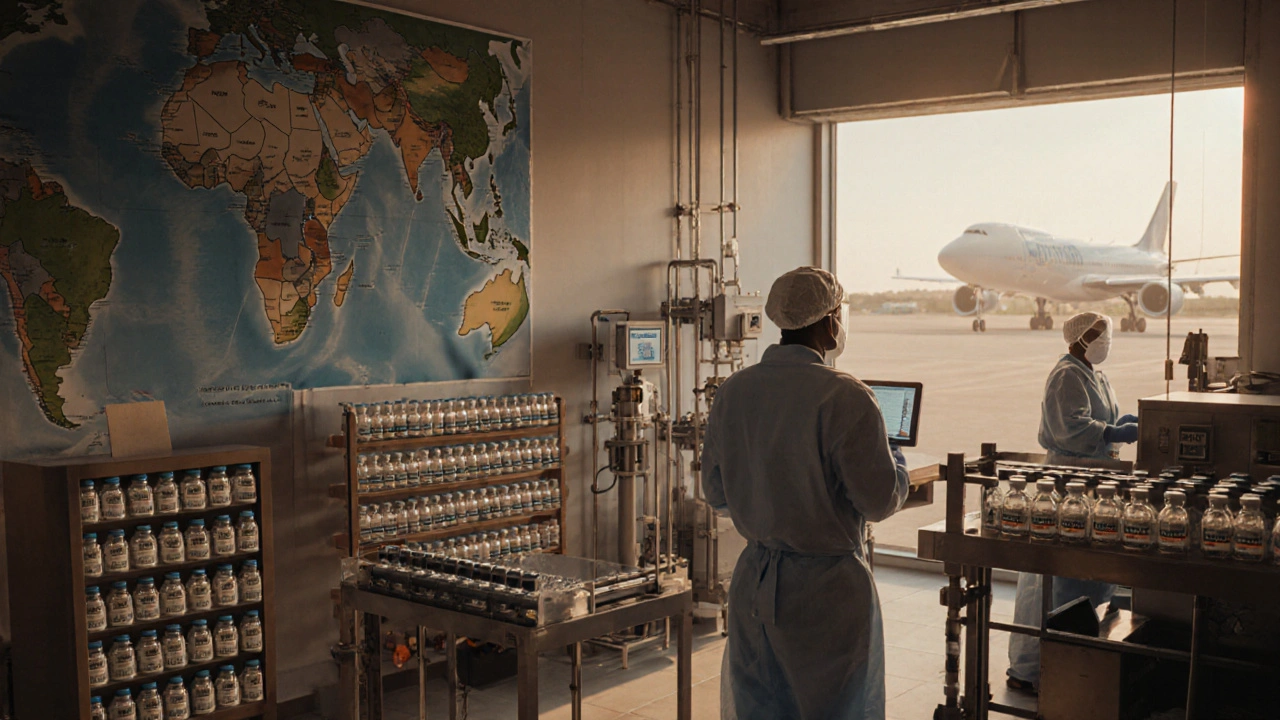
Vaccine Access Inequality: Why Some Countries Get Shots and Others Don’t
When a new vaccine rolls out, it’s supposed to save lives everywhere—but too often, it doesn’t. vaccine access inequality, the gap between who gets life-saving vaccines and who doesn’t, based on wealth, geography, or political power. Also known as global health inequity, it’s not a glitch in the system—it’s built into how the system works. In 2021, high-income countries bought up most of the world’s COVID-19 doses. By the time low-income nations got their first shipments, millions had already died. This wasn’t an accident. It was the result of contracts signed before the vaccines even existed, with little regard for who needed them most.
This isn’t just about COVID. vaccine distribution, how vaccines move from factories to clinics, especially across borders and borders with weak infrastructure is still controlled by a handful of corporations and wealthy governments. low-income countries, nations with limited healthcare budgets, weak supply chains, and little political leverage often wait months—or years—for basic vaccines like polio or measles. Meanwhile, rich countries boost their populations every 6 months. The result? health disparities, differences in health outcomes tied to income, race, or location keep growing. A child in Malawi is 50 times more likely to die from measles than one in Canada. That’s not bad luck. That’s policy.
It’s not just about money. It’s about power. When countries hoard doses, they don’t just protect their own people—they delay global immunity. Viruses don’t care about borders. The longer the gap, the more chances the virus has to mutate, putting everyone at risk. And when aid comes, it’s often too late, too little, or tied to conditions that make it useless on the ground. No cold chain? No power? No trained staff? A vaccine in a box means nothing.
What you’ll find below are real stories, data-driven breakdowns, and policy critiques that show how vaccine access inequality isn’t a distant problem—it’s alive right now, in every country that can’t afford to vaccinate its kids, in every clinic without refrigeration, in every parent who watches their child get sick because the world looked away. These aren’t abstract debates. They’re life-or-death decisions made in boardrooms and summit halls. And they’re leaving millions behind.