Vaccine Manufacturing Equity: Fair Access, Global Supply, and Who Gets Left Behind
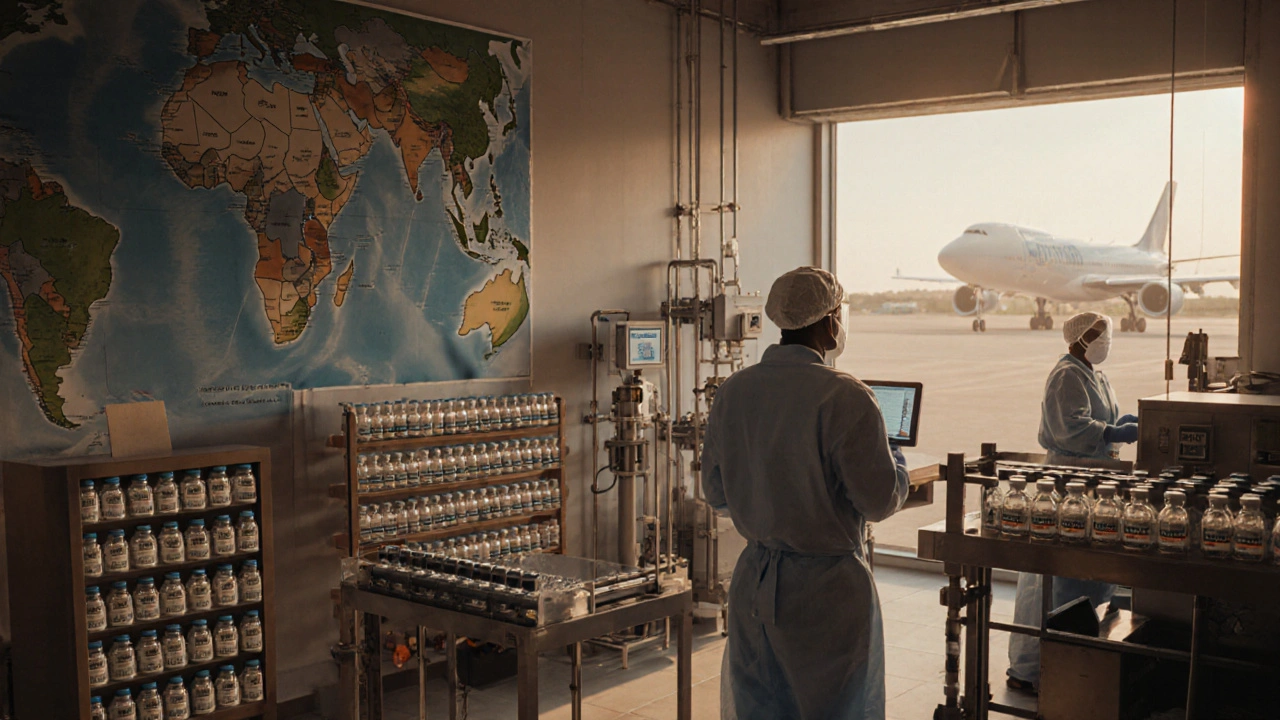
When we talk about vaccine manufacturing equity, the fair distribution of vaccine production capacity, resources, and intellectual property across nations. Also known as global vaccine justice, it’s not just about delivering doses—it’s about letting low- and middle-income countries build their own ability to make them. For years, the world acted like vaccines were a charity gift, not a public good. Rich nations locked up supply deals, patented formulas stayed locked in Western labs, and manufacturing hubs in Africa, Southeast Asia, and Latin America were left with empty factories and broken promises.
This isn’t just a moral failure—it’s a public health disaster waiting to happen. When a new variant emerges, countries without local production wait months for shipments. During COVID-19, Africa produced less than 1% of its own vaccines despite having 17% of the world’s population. Meanwhile, countries like South Africa and India had the skills and infrastructure but were blocked by patent laws and export bans. vaccine production inequality, the gap between who can produce vaccines and who can only receive them isn’t accidental. It’s built into trade rules, patent systems, and global funding priorities. Even when tech is shared, the lack of trained workers, sterile facilities, and cold-chain logistics keeps many nations dependent.
pandemic preparedness, the global effort to prevent future health crises through early detection, rapid response, and local manufacturing only works if every region can respond on its own. Countries that invested in local production—like Rwanda’s drone-delivered vaccine network or Senegal’s biotech labs—are now leading in speed and resilience. But most still rely on donor-driven aid, which arrives too late and in unpredictable amounts. health system disparities, the unequal access to medical infrastructure, funding, and workforce training between rich and poor nations don’t vanish after a pandemic ends. They just hide until the next one.
What’s changing? A few breakthroughs are shifting the balance. The WHO’s mRNA tech transfer hub in South Africa is training technicians from 15 countries. Indonesia is now making its own COVID boosters. Brazil is negotiating licenses for flu and dengue vaccines. But progress is slow, and political will is patchy. The next big test won’t be another pandemic—it’ll be whether the world finally treats vaccine manufacturing as a right, not a privilege.
Below, you’ll find real stories from the front lines: how nations are building capacity, how patents are being challenged, and why the next global health crisis will be decided not in Geneva, but in Lagos, Jakarta, and Mexico City.