
System Trust Calculator
How narrative framing affects belief in a rigged system and democratic outcomes. Based on data from the Frameworks Institute and Oxford University studies.
Input Your Scenario
Results
Key Insight
When specific explanations are paired with actionable solutions, civic engagement increases by 28% according to real-world data from cities implementing participatory budgeting.
More than two-thirds of Americans believe the system is rigged. It doesn’t matter if you’re a Republican, Democrat, or independent - the feeling is nearly universal. You don’t need to agree on solutions to agree that the game is fixed. This isn’t just anger. It’s a deep, shared belief that the rules were written by someone else, for someone else, and you’re stuck playing by them.
What Does It Mean When People Say the System Is Rigged?
When someone says the system is rigged, they’re not just complaining about bad luck. They’re pointing to patterns: the tax code has over 17,800 loopholes that mostly help the top 1%. Corporate lobbying hit $3.87 billion in 2023, shaping laws while ordinary voters watch from the sidelines. Elections feel meaningless when the same names keep winning, no matter who you vote for. And when the top 1% captured nearly half of all income growth between 1980 and 2016, it’s hard to argue that fairness is built into the system. This isn’t a fringe idea. It’s backed by data. A 2023 Oxford study created a scale to measure this belief, using three simple questions: Does the economy favor the powerful? Do politicians ignore people like you? Do elections even matter? The scale had a reliability score of 0.87 - meaning it consistently captures what people really think. And across six countries, from the U.S. to Germany, people who scored high on this scale were 15 percentage points more likely to support policies that redistribute wealth.How Politicians Use the Narrative - and Why It Works
Both Bernie Sanders and Donald Trump used the phrase “the system is rigged” in 2016. One blamed Wall Street. The other blamed Washington insiders. Yet both tapped into the same feeling. The power of the phrase isn’t in its accuracy - it’s in its simplicity. It turns complex problems into a clear story: us versus them. Left-wing leaders like Sanders and Jeremy Corbyn point to economic elites: CEOs, hedge funds, big banks. Their solution? Stronger unions, higher taxes on the wealthy, public ownership of key services. Right-wing leaders like Trump point to political elites and globalists: bureaucrats, international treaties, immigrants. Their solution? Strongman leadership, border walls, dismantling institutions. Even centrists like Theresa May admitted it. In 2016, she said a minority of businesses “game the system and work to a different set of rules.” That’s telling. It means even those who don’t want to tear down the system admit it’s been bent.Why This Narrative Spreads - and Why It’s So Dangerous
The reason this idea sticks is because it connects to something real: inequality. But it’s not just about money. It’s about power. When people feel like their vote doesn’t count, their voice doesn’t matter, and their effort doesn’t pay off - they stop trying. And that’s exactly what happens when the narrative is left vague. Research from the Joseph Rowntree Foundation shows that when people hear “the system is rigged” without any explanation of how or who’s responsible, fatalism spikes. One in five people say, “I can’t see a way out of it.” That belief cuts voter turnout by nearly 20 percentage points. People don’t just stop voting - they stop showing up at meetings, signing petitions, or even talking to neighbors about change. Worse, vague versions of this narrative fuel authoritarianism. When you’re told the system is broken but never shown how to fix it, you start looking for a savior. Someone who’ll smash the system for you. That’s why the same belief that leads to support for fairer taxes can also lead to support for leaders who promise to bypass democracy entirely.
How to Use the Narrative Without Destroying Democracy
Here’s the good news: the narrative can be a force for good - if it’s used right. The Frameworks Institute tested hundreds of messages. They found that when people hear specific explanations, support for reform jumps. Saying “the rich don’t pay their fair share” gets you nowhere. But saying “the tax code has 17,842 loopholes - 89% of them benefit the top 1%” increases policy support by 22 points. Even better? Pair that with a solution. Robert Reich’s 2024 thread explaining how corporate lobbying writes laws reached over 12 million people. Why? Because he didn’t just complain - he showed how it works and what to do about it. When people see a path forward, 74% feel hopeful. Without it, only 29% do. Successful groups like the UK’s Compass organization don’t just point out the problem. They build alternatives. They run participatory budgeting programs where residents decide how to spend local funds. In cities that did this after raising awareness about rigged systems, civic engagement rose 28% and trust in government jumped 19%.Who Believes It - And Who Doesn’t
This isn’t a belief shared equally. It’s strongest among those who feel the system’s weight the most. Among people earning under $30,000 a year, 78% say the system is rigged. For those without a college degree, it’s 73%. Black Americans report it at 71%. Meanwhile, only 52% of those earning over $100,000 agree. That gap matters. It means the narrative isn’t just political - it’s economic. And it’s racial. When someone with a six-figure income says, “I worked hard and got ahead,” they’re not denying the system’s flaws. They’re protecting their place in it. The data shows this isn’t about ideology. It’s about experience. If you’ve waited months for a social service, watched a factory close while executives got bonuses, or seen your child’s school underfunded while a billionaire gets a tax break - you don’t need to be told the system is rigged. You’ve lived it.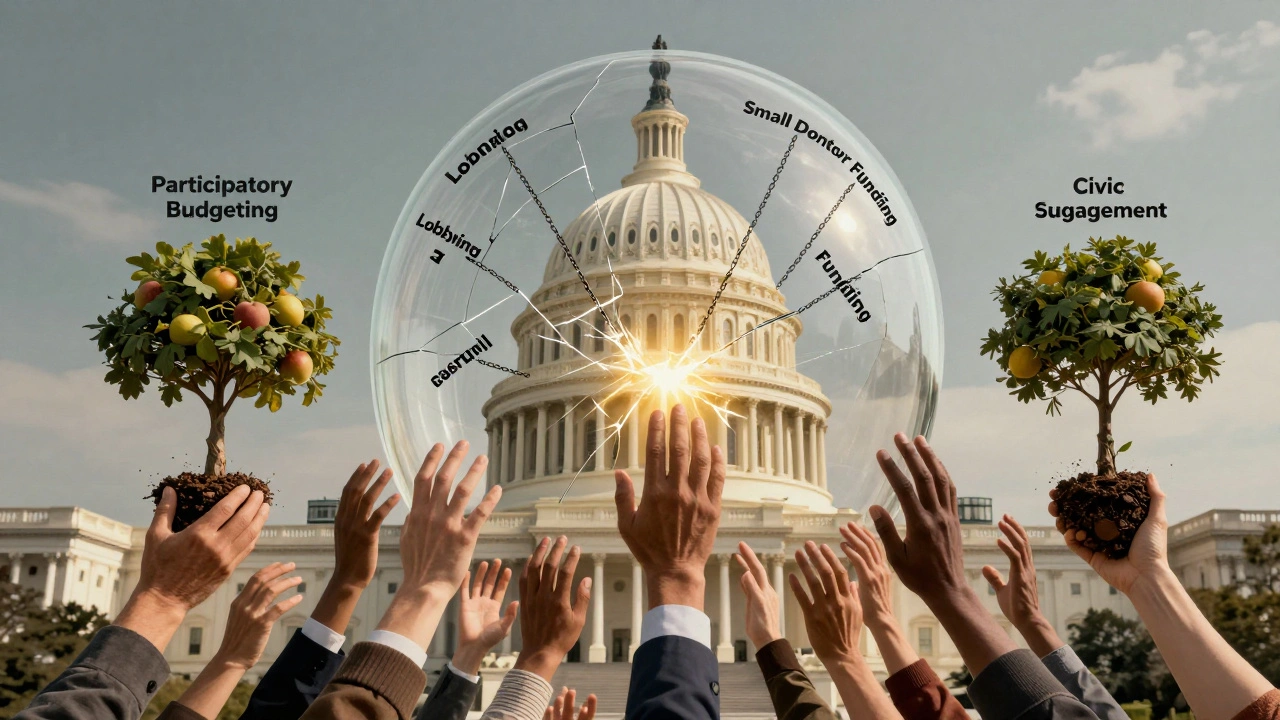
The Real Threat: When the Narrative Becomes a Weapon
The biggest danger isn’t that people believe the system is rigged. It’s that one side turns that belief into a tool to destroy democracy itself. In 2023, 68% of Republicans said they believed the 2020 election was rigged - despite zero evidence of fraud. That’s not skepticism. That’s a rejection of the foundation of democracy: the idea that elections reflect the people’s will. When you tell people the vote doesn’t matter, and then claim it was stolen, you’re not fixing the system. You’re killing it. This is why experts like Elizabeth Suhay warn against oversimplification. The system isn’t rigged by one villain. It’s the result of decades of policy choices, deregulation, campaign finance laws, and weakened labor rights. Blaming “the elites” as a single group ignores how complex systems actually work - and makes real solutions harder to build.What Comes Next? Rebuilding Trust, One Step at a Time
The system isn’t beyond repair. But it won’t fix itself. And it won’t be fixed by rage alone. The most effective responses combine truth with agency. Name the problem clearly: “Corporate lobbying writes laws that hurt working families.” Then show how people can change it: “Join your local democracy voucher campaign - it gives every voter $100 to give to candidates who take no corporate money.” Cities like New York and Seattle have already tested this. Democracy vouchers led to more small-donor candidates, more diverse candidates, and higher voter turnout. It didn’t fix everything - but it proved change is possible. The real question isn’t whether the system is rigged. It’s whether we’re willing to rewrite the rules - together.Is the belief that the system is rigged just a myth?
No. While the phrase is emotionally charged, the underlying facts are well-documented. Data from the World Inequality Database shows the top 1% captured nearly half of all income growth from 1980 to 2016. Corporate lobbying spending reached $3.87 billion in 2023. Surveys from the Frameworks Institute and Oxford University confirm that 67% of Americans believe the system favors the powerful. This isn’t opinion - it’s measurable reality.
Does believing the system is rigged make people more likely to vote?
It depends. If the belief is paired with a sense of agency - like knowing how to fix the problem - then yes, turnout increases. But if people feel powerless, with no clear path to change, belief in a rigged system actually reduces voter turnout by up to 19 percentage points. Fatalism kills participation. Hope drives it.
Why do both left and right use the same phrase but with different targets?
Because the phrase works. It’s a powerful emotional shortcut. Left-wing leaders target economic elites - corporations, Wall Street, billionaires - and call for collective action. Right-wing leaders target political elites - bureaucrats, globalists, immigrants - and call for strong leadership. The common thread isn’t the enemy. It’s the feeling that ordinary people are being shut out. The solution depends on who you believe is pulling the strings.
Can the ‘system is rigged’ narrative be used to build democracy, not break it?
Absolutely. When the narrative includes specific explanations - like how lobbying shapes tax law - and connects to real solutions - like democracy vouchers or participatory budgeting - it increases trust and engagement. Cities that used this approach saw 28% higher civic participation. The key is replacing anger with agency. People don’t want to burn the system down. They want to rebuild it so it works for them.
Is this belief growing, or is it just louder now?
It’s growing - and getting more specific. In 2008, only 32% of Americans believed the system was rigged. By 2023, that jumped to 67%. Since 2020, references to “the tax system is rigged” have increased by 220%, and “the election system is rigged” by 180%. People aren’t just feeling it - they’re naming exactly what they think is broken. That’s a sign the narrative is maturing, not fading.
Does this belief lead to extremism?
It can - but only when it’s vague. When people hear “the system is rigged” without details, authoritarian tendencies rise by 27%. But when they’re given clear explanations - like how money influences politics - xenophobia drops by 31%. The problem isn’t the belief itself. It’s what replaces it. A vague villain invites fear. A specific problem invites solutions.