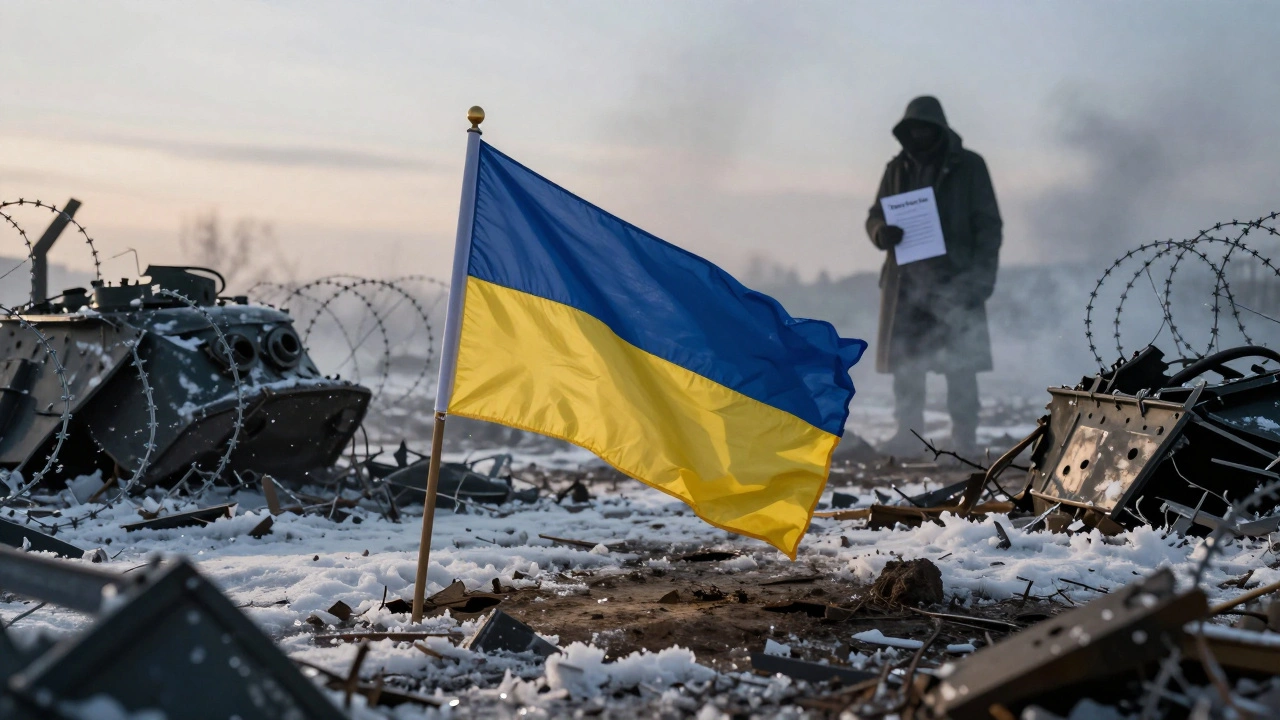
Ukraine Peace Plan Impact Calculator
This calculator helps visualize how key aspects of the U.S.-backed Ukraine peace plan would impact Ukraine's sovereignty, military capability, and security. Adjust the sliders below to see the potential consequences of different scenarios.
Percentage of Ukrainian territory Ukraine would surrender under the plan
Percentage of Ukraine's current military strength allowed by the plan
Timeline for holding presidential elections
Legal immunity for war crimes
U.S. military commitment to enforce the agreement
What’s Really in the U.S.-Backed Ukraine Peace Plan?
On November 20, 2025, Axios dropped a bombshell: former President Donald Trump had drafted a 28-point peace plan for Ukraine, and the White House was pushing Kyiv to accept it - fast. This wasn’t just another diplomatic proposal. It was a radical rewrite of how Europe thinks about security, sovereignty, and war. The plan didn’t ask for a ceasefire. It demanded territorial concessions, military caps, and a U.S.-led peace council with no clear way to enforce it. And it was being pushed on Ukraine while Russia still occupied nearly 20% of its land.
The plan’s first point says Ukraine’s sovereignty is affirmed. But then it goes downhill. Point 3 lets NATO expand further - but only if Russia gets to keep the territory it seized. Point 25 forces Ukraine to hold presidential elections within 100 days of signing, even though its constitution says the next vote isn’t due until 2029. Point 26 gives blanket amnesty to everyone involved in the war - including alleged war criminals - and bans any future legal action. That’s not peace. That’s legal erasure.
Why Ukraine Is Refusing
Ukraine has spent two years building its Peace Formula: full withdrawal of Russian troops to 1991 borders, $500 billion in reparations, and no territorial compromises. That’s not just policy - it’s survival. Zelenskyy’s government has rejected every version of this Trump plan because it asks Ukraine to give up more land than it already lost. The White House admits this. A senior official told Axios the plan is “challenging for Ukraine.” That’s an understatement. It’s a demand to surrender what’s left of its territorial integrity.
And it’s not just about land. The plan caps Ukraine’s military at a level far below the 1 million troops Zelenskyy authorized in December 2024. It forces Kyiv to hand over control of its gas infrastructure to U.S. companies. It strips Ukraine of its right to defend itself fully. Why would any country agree to that? Because the alternative, according to the White House, is losing even more territory. That’s not negotiation. It’s coercion dressed up as diplomacy.
The U.S. Is Playing a High-Stakes Game
The Trump administration isn’t trying to end the war. It’s trying to end U.S. involvement - and fast. The plan offers no clear U.S. military commitment to enforce the “decisive coordinated response” if Russia breaks the deal again. That’s not a deterrent. That’s a loophole. If Russia invades again, the U.S. can say, “We didn’t promise to fight.”
This is a classic Trump move: trade short-term quiet for long-term risk. He compares it to Gaza, but that analogy doesn’t hold. Gaza’s ceasefire involved a third party (Egypt and Qatar) and was temporary. This plan tries to lock in Russian gains permanently, with no real consequences for future violations. The Peace Council, chaired by Trump, has no members named, no enforcement rules, and no legal teeth. It’s a photo op with a treaty attached.
Europe Is Caught in the Middle
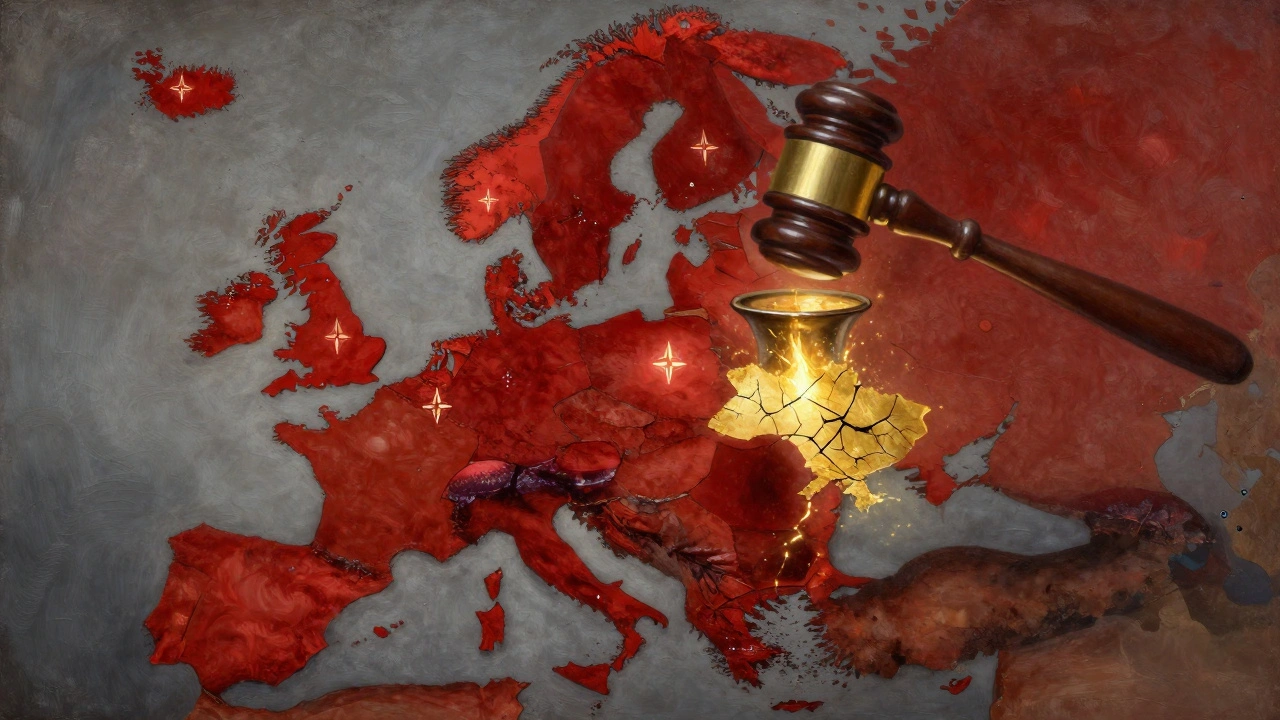
European leaders didn’t help write this. They weren’t consulted. And now they’re being asked to live with the fallout. The plan allows NATO expansion - but only if Ukraine is neutered. That’s a contradiction. If Ukraine can’t defend itself, why would Poland, Romania, or the Baltics trust NATO’s promise of protection? Why would Germany invest billions in defense if the U.S. is willing to trade territory for silence?
Markets reacted immediately. Rheinmetall’s stock jumped 4.2% after the plan leaked - investors thought European defense spending might rise as NATO members brace for uncertainty. Leonardo’s stock fell 3.1% - Italian defense firms feared reduced U.S. demand if the war slows. This isn’t just politics. It’s economics. And it’s sending shockwaves through Europe’s entire security architecture.
Legal and Constitutional Nightmares
The plan doesn’t just ignore Ukraine’s interests - it violates its laws. Ukraine ratified the Rome Statute in 2000. That means it’s legally bound to prosecute war crimes. The amnesty clause in Point 26 makes that impossible. There’s no way Ukraine’s courts or international partners like the ICC can accept this. It’s not just unpopular. It’s illegal under international law.
And then there’s the election deadline. Ukraine’s constitution says presidential elections happen every five years. The next one is in 2029. Forcing one in 100 days would require suspending the constitution - something Zelenskyy has no legal authority to do without a national referendum. The plan assumes Ukraine will break its own laws to please Washington. That’s not diplomacy. It’s a demand for constitutional surrender.
Who Benefits? And Who Pays?
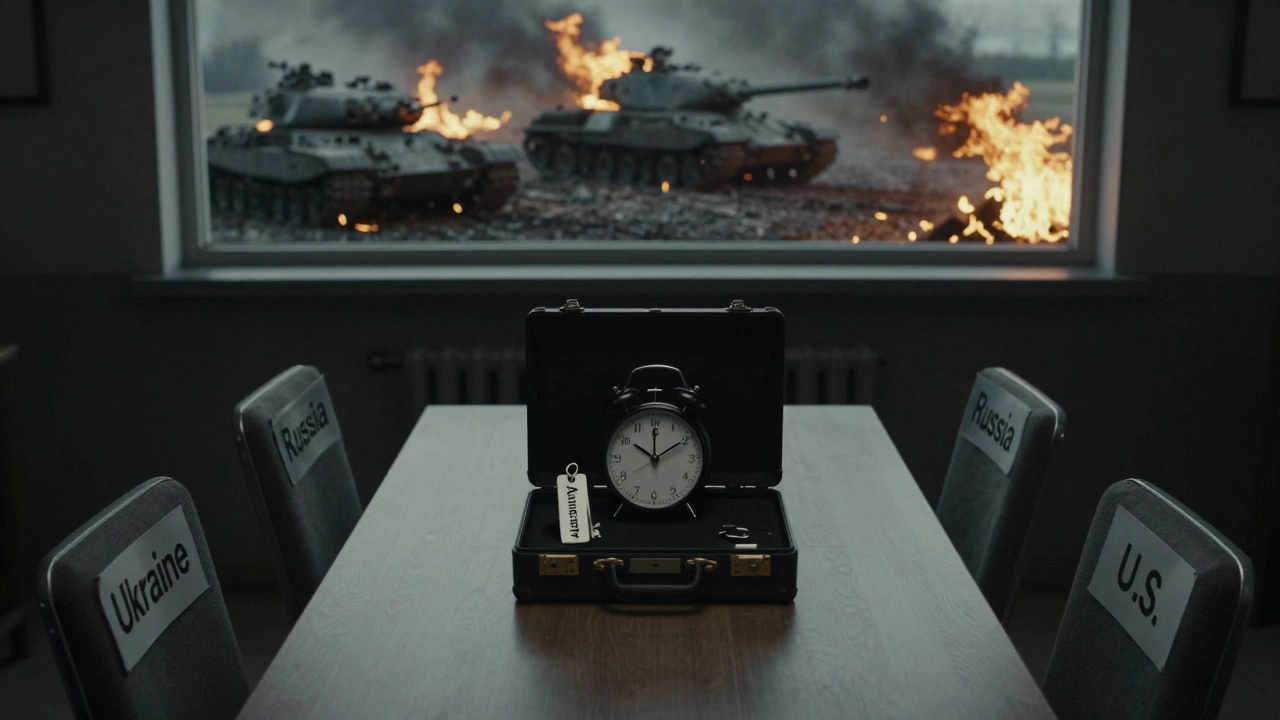
Russia wins. It keeps the land it stole. It gets economic relief through U.S.-managed infrastructure deals. It avoids accountability for war crimes. And it gets a U.S.-backed peace deal that looks like victory - even if it’s built on lies.
The U.S. wins too - in the short term. It gets a headline: “Trump Ends Ukraine War.” It avoids more aid bills. It reduces pressure on its own military. But the long-term cost? Europe’s trust in American leadership. NATO’s credibility. The idea that sovereignty matters.
Ukraine pays everything. Its land. Its future. Its legal rights. Its ability to defend itself. And for what? A promise of a “decisive coordinated response” that doesn’t say who will respond, how, or when.
What Happens Next?
Zelenskyy hasn’t said no outright - but he hasn’t said yes either. He’s waiting. Because he knows what happens if he signs. The U.S. walks away. Russia rearms. Europe panics. And Ukraine is left with a peace treaty that gives away its future.
Europe’s best hope is to push back. Not with words. With action. Increase defense spending. Fast-track Ukraine’s access to the European Peace Facility. Build independent security partnerships outside U.S. influence. Because if this plan moves forward, the rules of European security change forever: might makes right, and the U.S. is okay with that.
The real question isn’t whether Ukraine will accept this deal. It’s whether the rest of Europe will let it happen.
Is This Peace - Or Surrender?
Peace isn’t just the absence of war. It’s the presence of justice, security, and sovereignty. This plan gives Ukraine none of those. It gives Russia everything it wanted. And it gives the U.S. a quick exit - at the cost of decades of Western credibility.
If this plan becomes policy, the map of Europe won’t just change on paper. It will change in people’s minds. The idea that borders can’t be redrawn by force? Gone. The idea that alliances protect the weak? Doubtful. The idea that the U.S. stands for something more than short-term deals? That’s gone too.
This isn’t a peace plan. It’s a warning.
Is the Trump peace plan officially approved by the U.S. government?
No, the plan has not been formally adopted. As of November 2025, it was presented as a draft framework by the Trump administration and is being pushed as a negotiation starting point. It lacks congressional approval, NATO endorsement, or Ukrainian consent. The White House is using it to pressure Kyiv, not as a finalized policy.
Why does the plan demand Ukraine hold elections in 100 days?
The 100-day election mandate is designed to create political legitimacy for the peace deal by forcing a new government into power quickly. But it violates Ukraine’s Constitution, which mandates presidential elections every five years, with the next one due in 2029. Implementing this would require suspending constitutional protections - something Zelenskyy has no legal authority to do without a national referendum.
Does the plan allow NATO to expand?
Yes, Point 3 of the plan explicitly allows for “further” NATO expansion - but only after Ukraine accepts massive territorial losses. This creates a contradiction: NATO expands while its most vulnerable member is forced to disarm. The plan doesn’t name which countries might join, but it signals to Eastern European allies that U.S. security guarantees are conditional on Ukraine’s surrender.
What’s wrong with the amnesty clause in the plan?
The amnesty clause (Point 26) bans all future legal claims for war crimes, including those committed by Russian forces. This directly conflicts with Ukraine’s obligations under the Rome Statute, which requires prosecution of war crimes. It also violates international law and the principles of the International Criminal Court. No country that ratified the Rome Statute can legally accept such an amnesty.
Why doesn’t the plan specify U.S. military commitments?
The plan’s failure to define U.S. military action is its biggest weakness. It promises a “decisive coordinated response” to future Russian aggression - but doesn’t say what that response is, who will carry it out, or under what conditions. This makes the entire agreement meaningless if Russia violates it. It’s a legal fiction designed to look strong on paper while giving the U.S. an easy out.
How has Europe reacted to the plan?
European leaders have not publicly endorsed the plan. Behind closed doors, many are alarmed. The fact that the U.S. drafted it without consulting NATO allies suggests a breakdown in transatlantic coordination. Defense companies reacted quickly: German firm Rheinmetall’s stock rose as investors feared Europe would need to build its own defenses, while Italy’s Leonardo fell on fears of reduced U.S. arms demand. Public opinion polls aren’t available, but government officials are quietly preparing contingency plans.