
Job Automation Risk Calculator
Assess Your Job's Automation Risk
Based on the article's research showing 30% of U.S. jobs could be fully automated by 2030 and 60% will require new skills, this tool helps you understand your personal risk level.
Your Automation Risk Assessment
Risk Score
0%
Low Risk
Your Risk Profile
Recommended Actions
By 2030, the way we work will look nothing like it does today. Machines aren’t just helping us-they’re replacing tasks, reshaping roles, and forcing entire industries to rebuild from the ground up. This isn’t science fiction. It’s happening now. In the U.S., 30% of current jobs could be fully automated by 2030. Another 60% will change so much that workers will need to learn new skills just to keep their jobs. Globally, 170 million new jobs will be created, but 92 million will vanish. The real story isn’t about robots taking over-it’s about who gets left behind, who gets ahead, and what we do about it.
Automation Isn’t Just Coming-It’s Already Here
Think automation means factory robots? It’s more than that. Generative AI is already replacing administrative assistants, graphic designers, and even entry-level coders. PwC’s 2025 Global AI Jobs Barometer found that 23.5% of U.S. companies have already replaced workers with ChatGPT or similar tools. That’s not a pilot program. That’s a trend. The OECD says 28% of jobs in developed countries face high automation risk by 2030. These aren’t fringe roles-they’re the routine, repetitive ones: data entry, cashiers, basic customer service, invoice processing. The jobs that feel safe because they’re "human"? Many of them are now on the chopping block.
In manufacturing, automation has already cost the U.S. 1.7 million jobs since 2000. By 2030, McKinsey estimates 27% of all work hours in the U.S. could be automated. That’s not a guess. It’s a projection based on current adoption rates. Healthcare? Only 20% of work hours there are automatable. Why? Because people still need nurses, therapists, and caregivers. But even there, AI is stepping in to handle scheduling, diagnostics, and patient triage. The shift isn’t about replacing humans entirely-it’s about changing what humans do.
Where the Jobs Are Going-And Where They’re Vanishing
Yes, jobs are disappearing. But more are being created. The World Economic Forum projects 170 million new roles globally by 2030. That’s 78 million more than the jobs lost. The growth isn’t in tech alone. It’s in the things we can’t automate: care, education, construction, and delivery.
- Care jobs: Nursing, home health aides, elder care-these roles are exploding. Why? Aging populations. In the U.S., over 10% of the population will be over 80 by 2030. That means demand for caregivers will outpace supply by millions.
- Education: Secondary school teachers, special education aides, and adult literacy instructors are in high demand. Schools are struggling to hire. AI can grade essays, but it can’t build trust with a struggling teen.
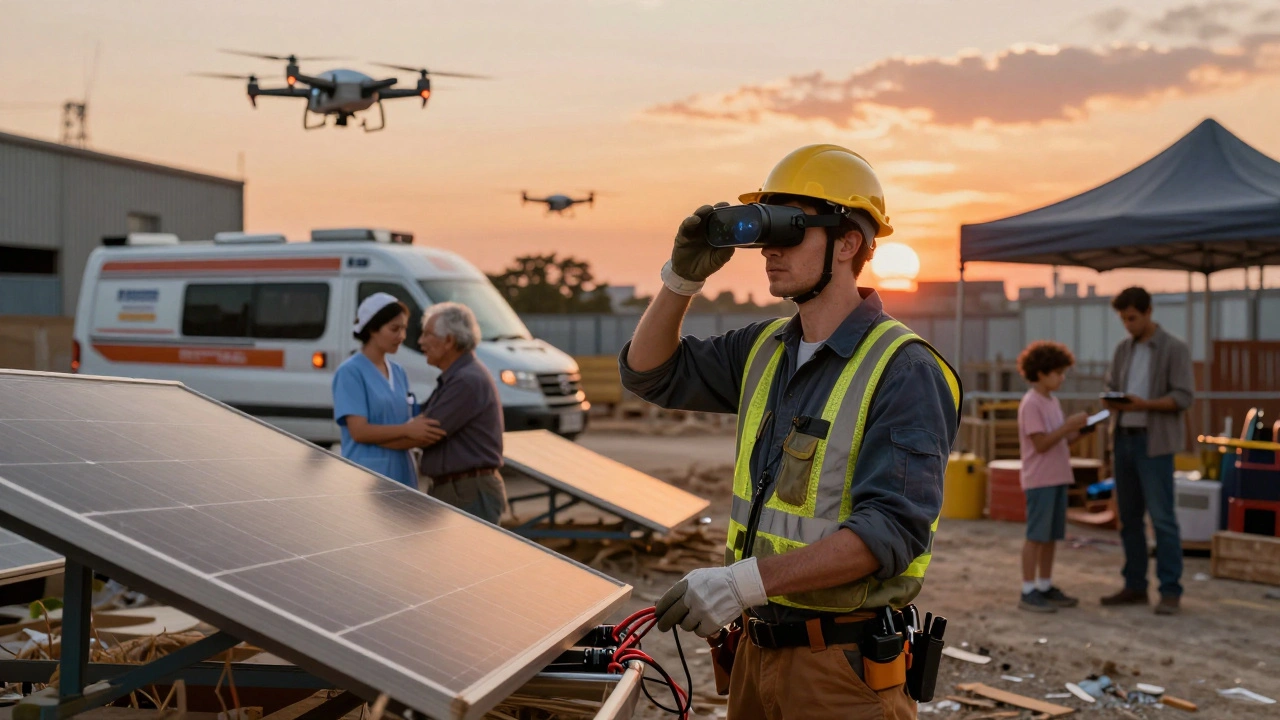
- Construction and skilled trades: Electricians, plumbers, HVAC technicians-these jobs are growing because infrastructure is aging and renewable energy systems need installation. The U.S. alone needs 500,000 more skilled workers in these fields by 2030.
- Delivery and logistics: With e-commerce still rising, last-mile delivery jobs are expanding. Drones and robots help, but humans still handle the final step: handing the package to the door.
Meanwhile, roles like cashiers, bookkeepers, and routine graphic designers are shrinking fast. Generative AI can now produce logos, ads, and social media posts in seconds. A designer who only knows Photoshop is at risk. A designer who understands branding, user psychology, and AI tools? That person is in demand.
The Skills That Matter Most by 2030
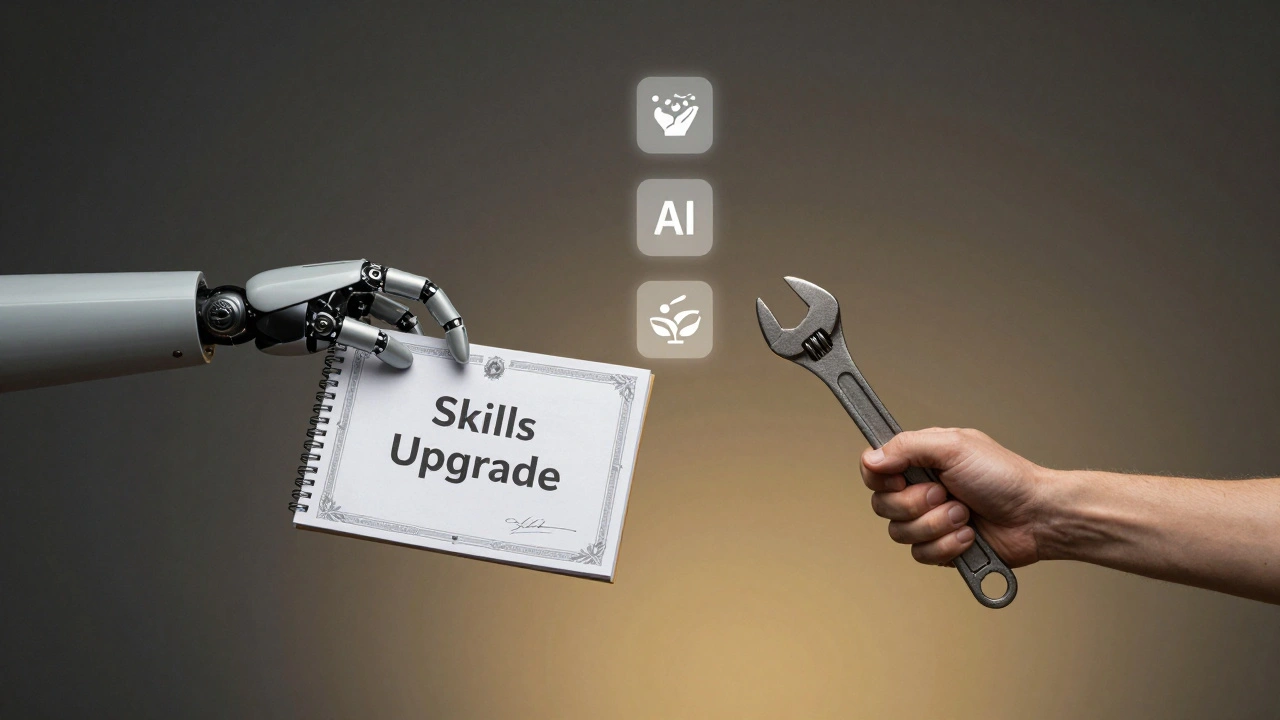
It’s not just about learning Python or coding. The biggest shift is in the mix of skills you need. The WEF says nearly 40% of all job skills will change by 2030. And the most valuable ones? They’re the ones machines can’t replicate.
- Creative thinking: AI can generate ideas, but it can’t invent a new business model or solve a human-centered problem in a way that feels authentic.
- Resilience and adaptability: Jobs will change. Industries will collapse. Workers who can pivot quickly will thrive.
- Emotional intelligence: Whether you’re a nurse, a teacher, or a manager, understanding human emotions is irreplaceable.
- Technical fluency: You don’t need to be a data scientist, but you do need to understand how AI works-what it can and can’t do.
Here’s the kicker: research shows that combining technical skills with human skills boosts impact by 50%. A nurse who uses AI to predict patient deterioration? That’s powerful. A mechanic who uses augmented reality glasses to fix an electric vehicle? That’s the future. The winners won’t be the ones who resist tech-they’ll be the ones who use it.
Employers Are Betting on Two Paths
Companies aren’t sitting still. Their strategies fall into two camps: upskilling or replacing.
Seventy-seven percent of employers plan to upskill their current workers. That means training, reskilling, and internal mobility. One company in Albuquerque shifted 120 office staff from paper processing to data analysis roles after a six-month AI training program. They didn’t lay anyone off. They upgraded.
But 41% of employers plan to cut staff where AI can take over. That’s not cruelty-it’s economics. If a task can be done cheaper and faster by a machine, many businesses will choose that path. The challenge? These cuts aren’t evenly distributed. They hit younger workers, lower-wage roles, and those without access to training.
Some companies are doing both: moving workers into new roles. A retail chain in Texas moved 300 store clerks into tech support and inventory management roles after automating checkout. They kept the people. They just changed the work.
The Hidden Forces Changing Work
It’s not just AI. It’s not just automation. It’s the combination of three big shifts:
- Demographics: As baby boomers retire, there aren’t enough younger workers to replace them-especially in skilled trades and healthcare.
- Economic pressure: Half of employers say rising costs are forcing them to rethink staffing. That means fewer hires, more automation, and more pressure on workers to do more with less.
- Climate transition: The push for renewable energy is creating 24 million new jobs by 2030-but only if we invest in training. Without it, 72 million jobs could be lost to climate disruptions.
These forces aren’t separate. They’re connected. An aging population means more demand for home care. But if those workers aren’t paid fairly or trained properly, the system breaks. A green energy boom needs electricians. But if training programs are underfunded, companies can’t fill the roles. The future of work isn’t just about technology-it’s about policy, equity, and investment.
What Happens If We Do Nothing?
One scenario: AI advances fast. Workers don’t. Companies automate everything they can. Inequality grows. Cities with tech hubs thrive. Rural areas and small businesses collapse. Workers who can’t afford training or time off to learn fall deeper into poverty. The economy grows, but the workforce fractures.
Another scenario: governments, schools, and employers work together. Training is free. Apprenticeships are expanded. Workers get time off to learn. Skills are recognized across industries. New roles are created with dignity and fair pay. The result? A more resilient economy, stronger communities, and a workforce that doesn’t just survive-it thrives.
The difference? Choice. We’re not passive observers. We’re participants. What we do in the next five years will decide whether 2030 is a time of chaos-or transformation.
Will AI take my job by 2030?
It depends on what you do. If your job involves routine tasks-data entry, scheduling, basic customer service-then yes, automation is likely. But if your work involves problem-solving, human interaction, creativity, or skilled hands-like nursing, teaching, plumbing, or electrician work-you’re not at risk of being replaced. You’re at risk of being upgraded. The goal isn’t to avoid AI-it’s to learn how to use it.
What jobs are safest from automation?
The safest jobs are those requiring physical dexterity, emotional intelligence, or complex decision-making. Nurses, teachers, construction workers, plumbers, electricians, social workers, and mental health counselors are all in high demand and hard to automate. Even in tech-heavy fields like cybersecurity or data analysis, human judgment is still critical. Machines can flag anomalies, but only people can decide what they mean.
Can I retrain if I lose my job to AI?
Yes-but it’s not always easy. Many companies are offering free training, but you’ll need time, access, and support. Community colleges, nonprofit programs, and online platforms like Coursera or LinkedIn Learning offer affordable upskilling. Look for programs that combine technical skills with soft skills. A certification in AI-assisted healthcare administration, for example, can open doors in nursing support. The key? Start early. Don’t wait until you’re laid off.
Is the skills gap real, or is it just an excuse for employers not to pay more?
It’s real-and it’s urgent. Sixty-three percent of employers say the skills gap is their biggest barrier to growth. But it’s not just about pay. It’s about access. Many workers can’t afford to take time off to learn. Training programs aren’t always available in rural areas. And some industries still don’t value non-degree paths like apprenticeships. Fixing this requires investment-not just from employers, but from governments and educators too.
How can I prepare for the future of work?
Start with three steps: First, audit your current skills. What do you do daily that could be automated? Second, identify one human skill you can strengthen-communication, adaptability, empathy. Third, pick one technical skill to learn-AI basics, data literacy, or digital tools in your field. Even two hours a week can make a difference. The future doesn’t belong to the most skilled. It belongs to the most adaptable.