Capital Flow Impact Calculator
Investment Impact Calculator
Results
Enter investment details to see impact analysis
Money doesn’t care about borders-but governments do. In 2025, the flow of capital across countries is changing faster than most investors realize. What used to be a seamless web of global investment is now breaking into regional pockets, shaped by politics, policy, and fear. If you’re trying to understand where money is going-and where it’s not-you need to look beyond headlines and into the numbers behind FDI and portfolio shifts.
What’s Really Moving: FDI vs. Portfolio Investment
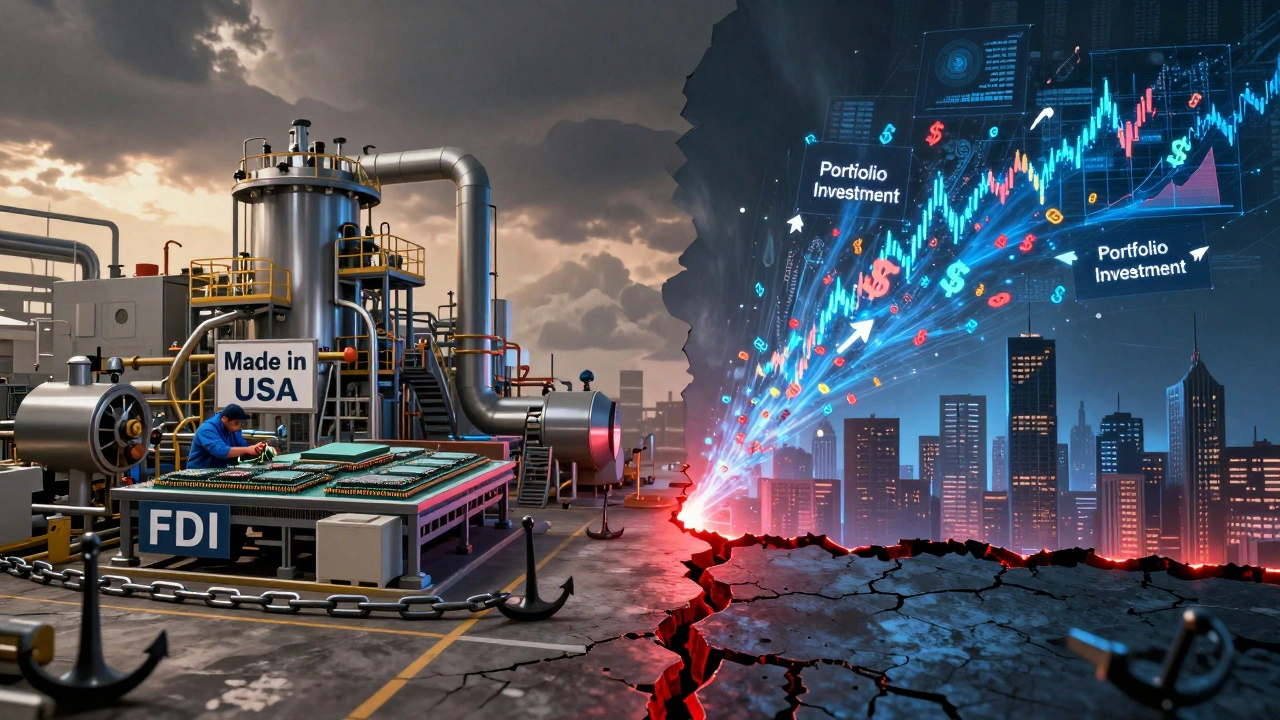
Not all cross-border money is the same. There are two main types: foreign direct investment (FDI) and portfolio investment. They behave like different animals in a storm.FDI is when a company from one country builds or buys a lasting stake in a business abroad-like Samsung building a chip factory in Texas or a German automaker opening a plant in Mexico. The key? Control. You need at least 10% ownership to count as FDI, and you’re in it for the long haul. The average project costs $28.7 million. These aren’t quick trades. These are factories, jobs, supply chains.
Portfolio investment is the opposite. It’s buying foreign stocks or bonds without any say in how the company runs. Think of it as buying shares in a Japanese tech firm or snapping up Brazilian government bonds. You don’t care about management. You care about returns. And you’re ready to bail out the second things look shaky. The average holding period? Just 11.3 months. During the 2020 market crash, $187 billion vanished from emerging market bond funds in days. That’s portfolio investment: fast, fluid, and fragile.
The Great Fracturing: How Geopolitics Is Rewriting the Rules
The world used to act like one big market. Now, it’s splitting into blocs.Between 2021 and 2023, FDI from China to Europe dropped 22%. US-China venture capital deals fell 37%. Meanwhile, investment within regional groups-like the EU, ASEAN, or the US-Mexico-Canada zone-jumped 18.5%. Why? Because trust is breaking down. Sanctions, export controls, and national security fears are making companies rethink where they put their money.
Take the US. Between 2021 and 2023, FDI into American manufacturing rose 23.4%. Not because the US suddenly became the cheapest place to make things. But because companies were forced to reshore. The CHIPS Act, defense supply chain rules, and fears of being cut off from Chinese suppliers pushed billions into domestic production. Meanwhile, portfolio flows into the same sector? Down 8.2%. Investors don’t want to bet on a factory they can’t control.
Emerging markets are getting hit hardest. During the Ukraine war, portfolio flows to these countries swung 3.2 times more violently than FDI. When panic hits, money flees. But factories? They stay. They’re too expensive to move. Too tied to local labor, permits, and infrastructure. That’s why FDI is becoming the anchor in a stormy economy.
The New Winners: Regional Blocs and Green Infrastructure
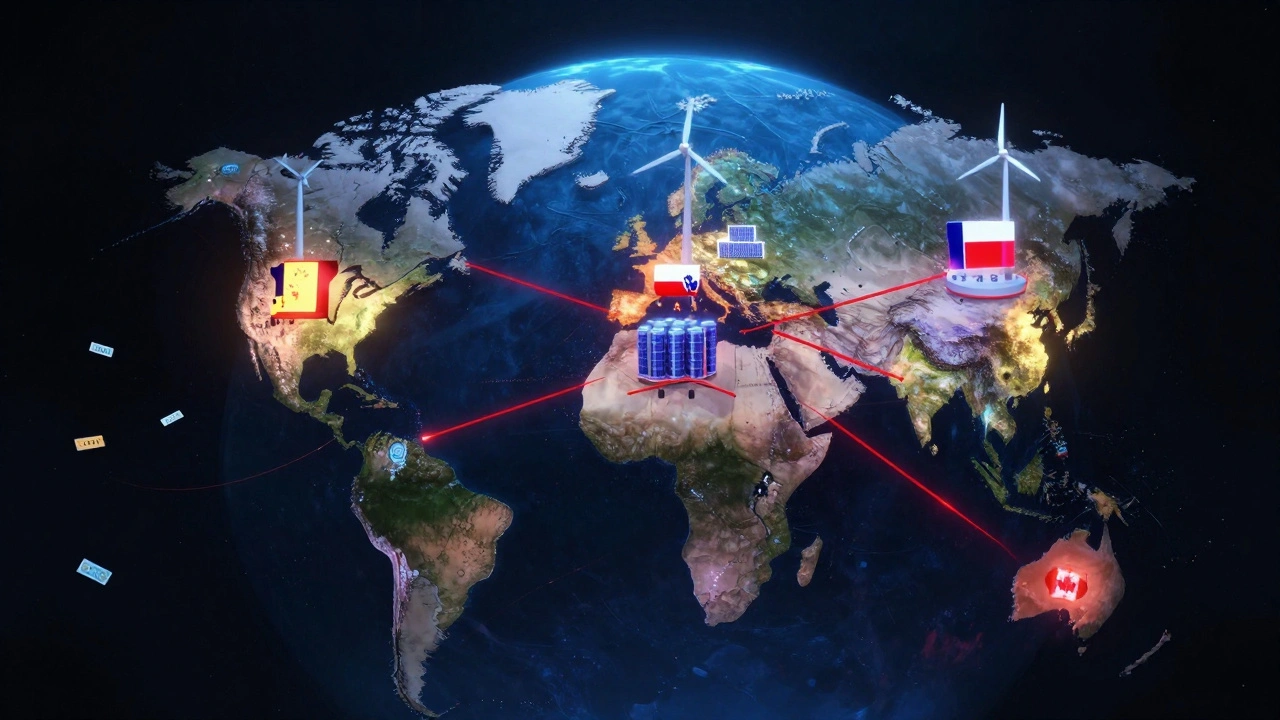
The money isn’t disappearing-it’s just moving differently.Global FDI into renewable energy jumped 31.2% in 2023, even as overall investment stalled. But here’s the twist: 72% of that money stayed within regional blocs. A French company investing in a solar farm in Spain. A Saudi fund backing wind turbines in Poland. A US firm building battery plants in Canada. Cross-regional deals? They’re down 41% since 2019.
Green bonds tell the same story. In 2024, $1.24 trillion were issued worldwide. But 82% of the buyers were from the same region as the issuer. If you’re issuing a green bond in Germany, your biggest investors aren’t in India or Brazil-they’re in France and Italy.
And then there’s digital infrastructure. US-China investment in data centers, cloud networks, and AI hardware collapsed from $14.2 billion in 2019 to $2.3 billion in 2024. But within the EU and ASEAN, those same investments rose 37%. The tech race isn’t global anymore. It’s local.
The Hidden Costs: Why Fragmentation Is Expensive
This isn’t just about where money goes. It’s about how much it costs to move.The IMF says fragmentation is raising the cost of capital for emerging markets by 1.5 to 2 percentage points. That means a country that used to borrow at 5.2% now pays 8.7%. Why? Because investors demand higher returns to compensate for uncertainty. They don’t trust the rules anymore. They don’t know if their money will be locked up, taxed differently, or seized next year.
And it’s not just emerging markets. The US 10-year Treasury yield is 0.75 percentage points higher than it should be based on global demand. Why? Because foreign investors-who used to buy US debt without hesitation-are now pulling back. The same thing is happening in Europe. The ECB found that European firms receiving FDI saw 23.7% higher productivity growth… but also 18.4% more output volatility. Foreign investment brings innovation, but also risk.
The payment systems are breaking too. In 2019, there were three major global networks for cross-border payments. Today, there are 14 competing regional ones. The BIS says this is adding 22 to 35 basis points to every transaction. That’s $1.2 billion extra in costs every year for just one type of trade. Multiply that across all capital flows.
Tracking the Money: The Data Is Broken
Here’s the scary part: we don’t even know how much is moving.57% of countries report FDI and portfolio flows differently. Some count a 9% stake as FDI. Others say no unless you have 15%. Some report flows monthly. Others wait six months. The result? Official global data has gaps of 18 to 22%. That’s like trying to count traffic on a highway while blindfolded.
Even worse, some investors are gaming the system. In 2023-2024, the US Treasury found that 31% of investments labeled as FDI were actually short-term plays disguised as long-term commitments-just to avoid capital controls. That’s not fraud. It’s adaptation. But it makes tracking impossible.
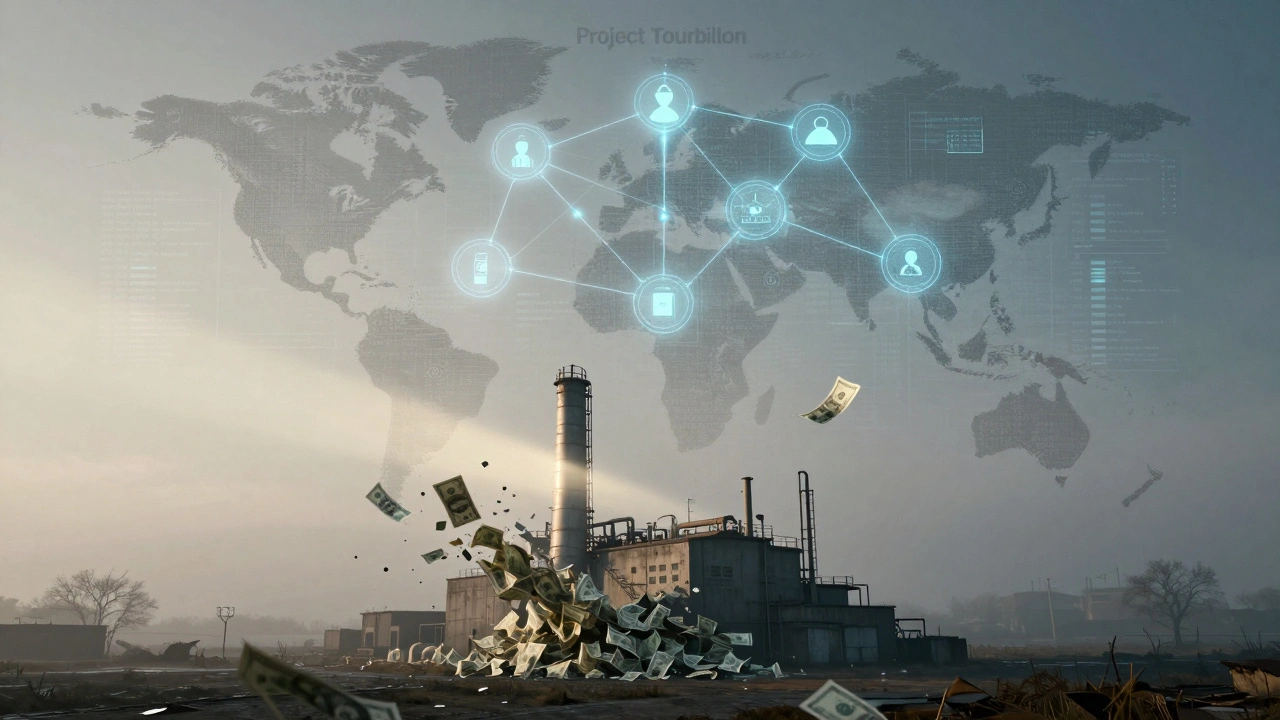
Some institutions are trying to fix this. The Bank for International Settlements launched Project Tourbillon, using blockchain to track capital flows in real time across 11 central banks. It cut reporting delays from 90 days to 72 hours. But it only covers 38% of global flows. The rest? Still in the dark.
What Comes Next: The 2030 Outlook
By 2030, 65% of all FDI will happen within regional blocs. That’s up from 48% in 2019. Portfolio flows? They’ll cluster in neutral hubs-Singapore, Switzerland, Luxembourg-places with stable rules, strong privacy laws, and no political baggage.But there’s a catch. The World Bank warns that if fragmentation keeps accelerating, global investment efficiency could drop by 12-18%. That’s $1.2 to $1.8 trillion lost every year by 2030. Companies will pay more to raise capital. Governments will struggle to fund infrastructure. Innovation will slow because ideas can’t flow as freely as money.
And the biggest losers? Emerging markets. They’ll bear 65% of the extra cost. They don’t have the deep markets or political stability to attract FDI. So they’re stuck with volatile portfolio flows that vanish at the first sign of trouble.
The world isn’t going back to globalization. The system is too broken. But it doesn’t have to collapse. The key is building trusted regional networks-not walls. Clear rules. Transparent data. Shared standards. Otherwise, we’re not just fragmenting capital. We’re fragmenting growth.
What’s the difference between FDI and portfolio investment?
FDI means owning at least 10% of a foreign company and having influence over its operations-like building a factory or taking a board seat. It’s long-term and stable. Portfolio investment is buying stocks or bonds without control. You’re a passive investor. It’s fast-moving and easily reversed. FDI stays through crises. Portfolio investment runs.
Why is FDI more stable than portfolio flows during economic fragmentation?
FDI requires massive upfront investment-factories, equipment, hiring. You can’t pull it out quickly. It’s tied to local labor, regulations, and supply chains. Portfolio flows are liquid. You can sell shares in minutes. When tensions rise, investors flee to safety. FDI can’t. That’s why FDI dropped 12.3% during Russia sanctions, while portfolio flows dropped 38.7%.
How is green energy investment changing due to fragmentation?
In 2023, global FDI into renewable energy rose 31.2%, but 72% of it stayed within regional blocs. A German company investing in Polish wind farms. A US firm building solar plants in Canada. Cross-border deals between distant regions fell sharply. Investors now prefer familiar markets with aligned regulations, subsidies, and political stability.
Why are emerging markets hit hardest by capital flow fragmentation?
They rely heavily on portfolio flows, which vanish during crises. They lack deep domestic markets to absorb shocks. Their currencies are more volatile. And they face higher borrowing costs-up to 2 percentage points more-because investors fear policy changes or capital controls. FDI is harder to attract without stable institutions, so they’re stuck with the riskiest form of capital.
Can we trust the official numbers on cross-border capital flows?
Not fully. 57% of countries report FDI and portfolio data differently. Some classify small stakes as FDI to attract investment. Others delay reporting. The US Treasury found 31% of "FDI" in 2023-2024 was actually short-term money hiding behind long-term labels. Official stats are a best guess-not a complete picture.
What role do payment systems play in capital flow fragmentation?
In 2019, three global payment networks handled most cross-border transactions. Today, there are 14 regional ones. This balkanization adds 22-35 basis points to every transaction. That’s not just a fee-it’s a tax on global trade. It slows capital movement, increases risk, and makes it harder for small investors to participate.