Grid Upgrade Cost Calculator
Compare the cost, time, and capacity benefits of traditional transmission lines versus reconductoring.
Reconductoring provides 5-15% additional capacity through digital twin optimization without new infrastructure. This calculation shows the direct benefits of using advanced conductors.
Why Reconductor?
Unlike traditional transmission lines that take 12-17 years, reconductoring replaces existing wires with advanced conductors like ACCC®. These can carry double the current without overheating, with 30% less energy loss. In 2025, over 1,450 global projects used this technology to avoid new right-of-way requirements.
The electrical grid isn’t just aging-it’s breaking under the weight of a world that’s changing faster than it was designed to handle. In 2026, the system that once delivered power from distant coal and gas plants to homes and factories is now being asked to manage billions of solar panels, thousands of wind turbines, and data centers that guzzle electricity like never before. The result? A grid that’s overstretched, outdated, and dangerously unprepared. This isn’t a future problem. It’s happening right now. From California to Germany to Texas, power lines are hitting their limits, renewable energy is being wasted, and blackouts are becoming more frequent during peak hours. The solution isn’t just building more power plants. It’s rebuilding the grid itself-with smarter wires, faster storage, and smarter use of electricity.
Grid Upgrades: Doubling Capacity Without New Lines
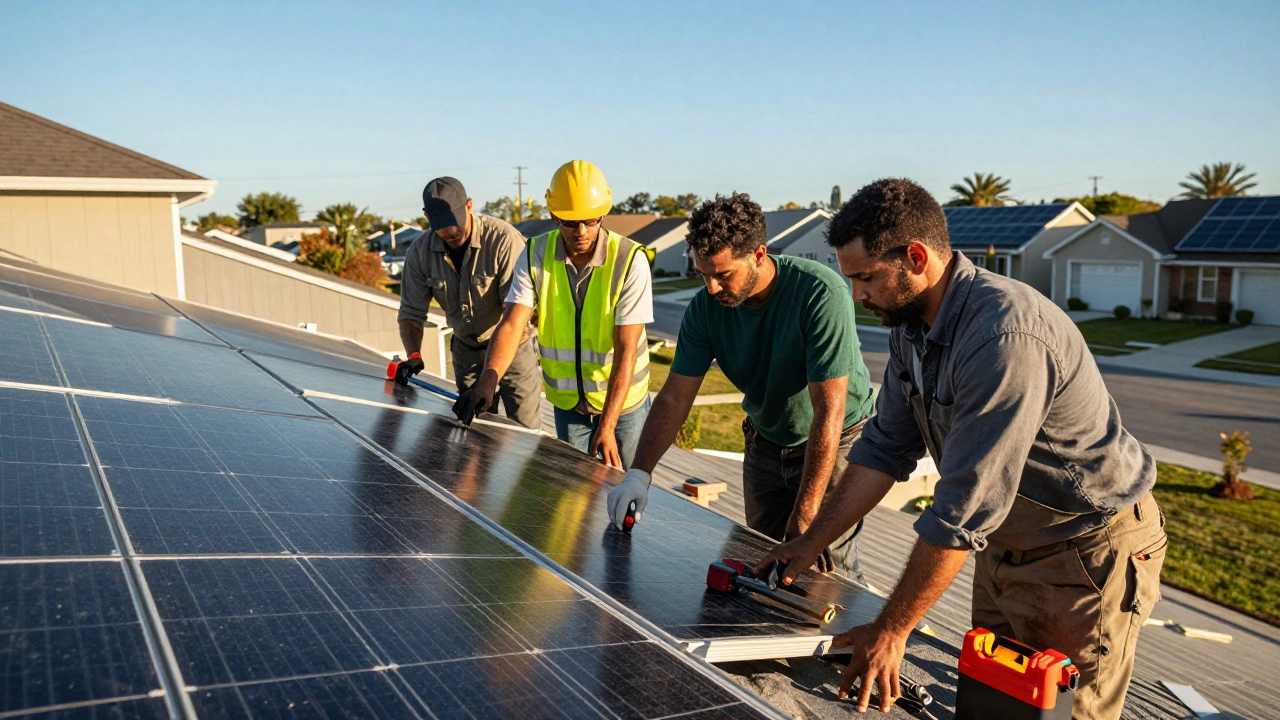
Most people think expanding the grid means building new transmission lines. It doesn’t. The fastest, cheapest, and most proven way to add capacity is to upgrade what’s already there. This is called reconductoring. Instead of clearing forests and digging up land for new towers, utilities replace old aluminum cables with advanced composite-core conductors like the ACCC® conductor. These new wires are lighter, stronger, and can carry nearly double the current without overheating. They also lose 30% less energy as heat, which means more power reaches homes and businesses.
Projects using this technology are cutting years off timelines. Where new transmission lines take 12 to 17 years to permit and build in Europe, reconductoring can be done in 12 to 24 months. The U.S. Department of Energy, the European Commission, and energy ministries in India, Brazil, and the UK have all endorsed this approach. In 2025 alone, over 1,450 reconductoring projects were completed worldwide. One utility in Iowa replaced a 50-year-old line and doubled its capacity overnight-no new right-of-way needed. That’s the kind of speed the energy transition demands.
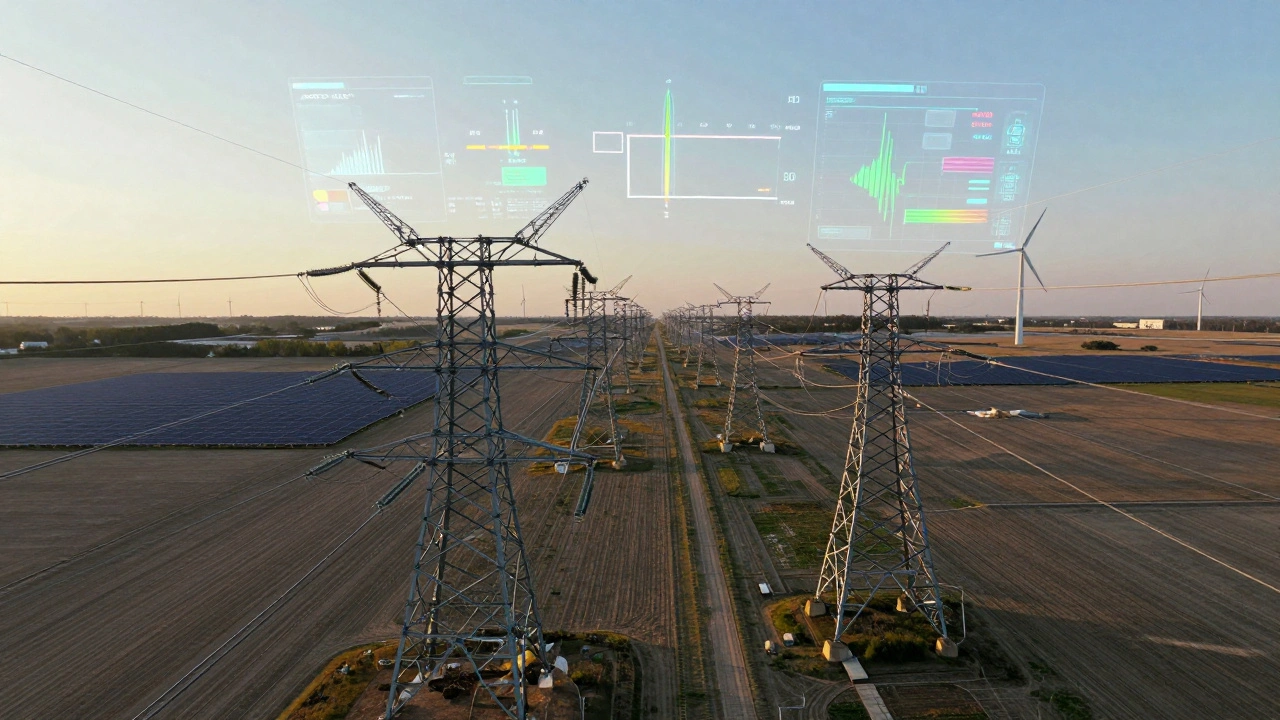
But upgrades aren’t just about wires. Digital tools are making old grids smarter. Digital twins-virtual replicas of physical grid systems-are now used by utilities to simulate stress tests, predict failures, and optimize power flow. These systems can extract 5% to 15% more capacity from aging infrastructure without adding a single new component. That’s like getting a free power plant out of your existing system.
Storage Scaling: The Missing Link for Renewables
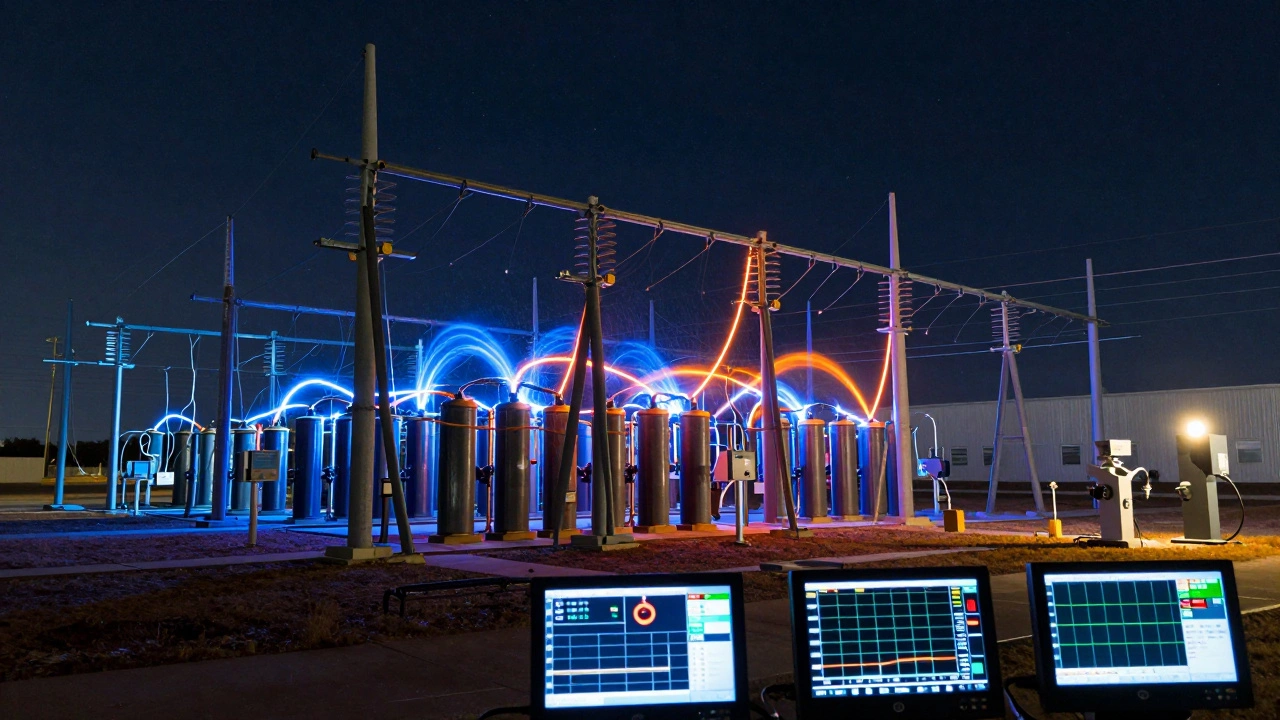
Solar and wind are cheap and clean, but they don’t produce power on demand. When the sun sets or the wind drops, the grid needs backup. That’s where battery storage comes in. In 2026, hundreds of gigawatts of battery projects are sitting in interconnection queues across the U.S.-more than the entire existing grid can handle. The bottleneck isn’t the batteries themselves. It’s the transmission lines that can’t move the power from where it’s made to where it’s needed.
Storage isn’t just about filling gaps. It’s about stability. Large battery systems now include cyber-resilient communication systems that automatically respond to grid fluctuations during storms or heatwaves. In Texas, during the 2025 winter freeze, battery systems kept critical hospitals and water pumps running when the grid was overwhelmed. In California, storage units are now paired with solar farms to smooth out the evening ramp-when solar output drops but demand spikes as people come home and turn on appliances.
Costs are falling fast. Utility-scale lithium-ion batteries dropped below $100 per kilowatt-hour in 2024 and are now trending toward $70. New chemistries like iron-air and flow batteries are entering the market, promising longer durations and lower fire risks. Municipal utilities are also adding storm-hardening features: automated switches that isolate damaged sections without sending crews into the field, and hardened poles that survive high winds and ice.
The real challenge? Coordination. Many storage projects are stuck because local grids can’t handle the influx. A battery in Nevada might be ready to go, but if the transmission line to Arizona is full, the power can’t move. That’s why storage scaling must happen alongside grid upgrades-not after.
Flexible Demand: Turning Consumers Into Grid Partners
What if you could reduce electricity use during peak hours without turning off your lights? That’s the idea behind flexible demand. Instead of building more power plants or wires, you shift when and how electricity is used. It’s like traffic management for power.
Large industrial users and data centers are leading the way. Google, for example, uses AI to adjust the timing of its machine learning training runs. When the grid is overloaded or renewable output is low, Google’s systems pause non-urgent computations. When wind is blowing hard or the sun is shining, they ramp up. This isn’t just about saving money-it’s about getting faster interconnection approval. Utilities now reward companies that offer flexible demand with priority access to grid connections.
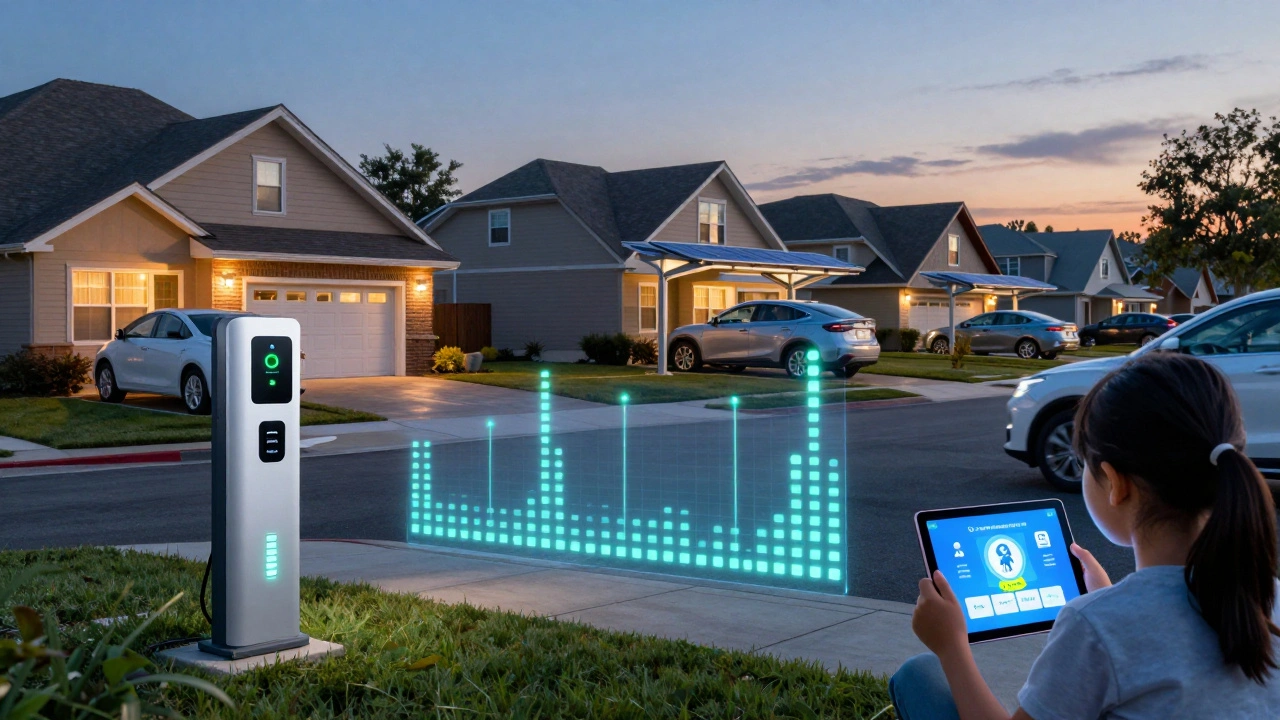
Residential customers aren’t far behind. Smart thermostats, EV chargers, and home batteries can now respond to grid signals. In Germany, households get paid to reduce usage during evening peaks. In Australia, utilities offer discounts to customers who let their EVs charge only when there’s excess solar on the grid. These programs are growing fast, with the Smart Electric Power Alliance reporting a 37% jump in utility participation from 2024 to 2026.
Flexible demand is the cheapest and fastest way to add grid capacity. According to RMI, it costs about half as much and takes 5 to 10 times less time than building new power plants or transmission lines. It’s not a replacement for storage or grid upgrades-it’s the glue that holds them together. Without flexible demand, even the best batteries and the strongest wires won’t be enough.
The Bottleneck: Permitting, Politics, and Speed
The biggest barrier to transformation isn’t technology. It’s bureaucracy. In Europe, getting permission to build a new transmission line still takes an average of 15 years. In the U.S., it’s not much better. While reconductoring and digital tools can be deployed in months, new corridors face lawsuits, environmental reviews, and local opposition that delay projects for decades.
That’s why policy reform is critical. In 2026, 17 U.S. states passed laws to speed up transmission approvals. Some created fast-track pathways for grid-enhancing technologies. Others restructured how utilities are paid-shifting from a model that rewards building more infrastructure to one that rewards efficiency and reliability. Europe’s Grid Action Plan is doing something similar, forcing cross-border coordination so power can flow freely between countries.
But progress is uneven. South Asia, Africa, and Latin America are leapfrogging old systems entirely, installing smart grids and battery storage in rural areas where the grid never existed. Meanwhile, mature markets are stuck in planning cycles designed for a world of steady, predictable demand. The gap is widening. And as AI-driven data centers grow-accounting for 12% of U.S. electricity demand growth through 2026-the pressure is mounting.
What Happens If We Don’t Act?
The consequences of inaction are already visible. In California’s CAISO grid, renewable energy is being curtailed-thrown away-because there’s no way to move it. In Texas, ERCOT faces negative pricing: utilities pay customers to use electricity just to avoid overloading the grid. In the Midwest, wind farms sit idle because transmission lines to population centers are full.
The IEA says global electricity demand is rising twice as fast as overall energy demand. By 2040, the grid will need to double its capacity just to keep up. If we rely only on traditional methods-new towers, new lines, new power plants-we’ll never get there in time. The cost? Trillions in wasted investment, lost economic growth, and failed climate goals.
The good news? We have the tools. We know how to upgrade wires, scale storage, and shift demand. What’s missing is the urgency. The grid is no longer just infrastructure. It’s the foundation of our economy, our climate resilience, and our technological future. The question isn’t whether we can transform it. It’s whether we’ll do it before it breaks.
What Comes Next?
The next five years will decide the fate of the energy transition. Utilities must stop treating grid upgrades as optional maintenance and start treating them as mission-critical infrastructure. Regulators must cut permitting timelines and reward innovation. Companies must adopt flexible demand as standard practice. And consumers? They’ll need to see themselves not just as users of electricity-but as active participants in its management.
Success won’t come from one big breakthrough. It’ll come from millions of small actions: a utility replacing an old line, a data center shifting its workload, a homeowner charging their EV at night, a city installing smart switches. Together, these actions are building a new grid-one that’s faster, smarter, and more resilient than anything we’ve ever had.
Why can’t we just build more power plants instead of upgrading the grid?
Power plants generate electricity, but the grid moves it. Even if you build 10 new solar farms, if the transmission lines can’t carry the power to cities, it’s useless. In 2026, over 1,350 gigawatts of new generation and hundreds of gigawatts of storage are stuck in interconnection queues because the grid can’t handle them. Upgrading the grid is the only way to unlock all that clean energy.
Is battery storage the solution to renewable intermittency?
Batteries are essential, but they’re not a silver bullet. They help store excess solar and wind for later use, but they can’t solve transmission congestion. A battery in Wyoming can’t help a city in California if the power line between them is full. Storage works best when paired with grid upgrades and flexible demand-so power can be stored, moved, and used when needed.
How does flexible demand actually work for regular households?
Smart devices like thermostats, EV chargers, and home batteries can be programmed to respond to grid signals. For example, your EV might charge only when electricity is cheap and abundant-like midday on a sunny day. Some utilities even pay you a small amount for letting them temporarily reduce your usage during peak hours. It’s automatic, requires no extra effort, and lowers your bill.
Why is reconductoring faster than building new transmission lines?
Reconductoring replaces the wires on existing towers. No new land rights, no new permits for towers, no environmental reviews for new corridors. It’s like swapping out a worn-out engine in your car instead of buying a whole new vehicle. Projects take 12-24 months, compared to 12-17 years for new lines. That’s why utilities in the U.S., Europe, and Asia are choosing it as their first step.
Are these upgrades expensive?
Yes, but not as expensive as doing nothing. The European Commission estimates €584 billion in grid investment is needed by 2030. That sounds huge-but the cost of not upgrading is higher. Curtailment of renewable energy, blackouts, delayed industrial projects, and lost economic growth add up to trillions. Reconductoring and flexible demand cost half as much as new transmission lines and deliver results in a fraction of the time.