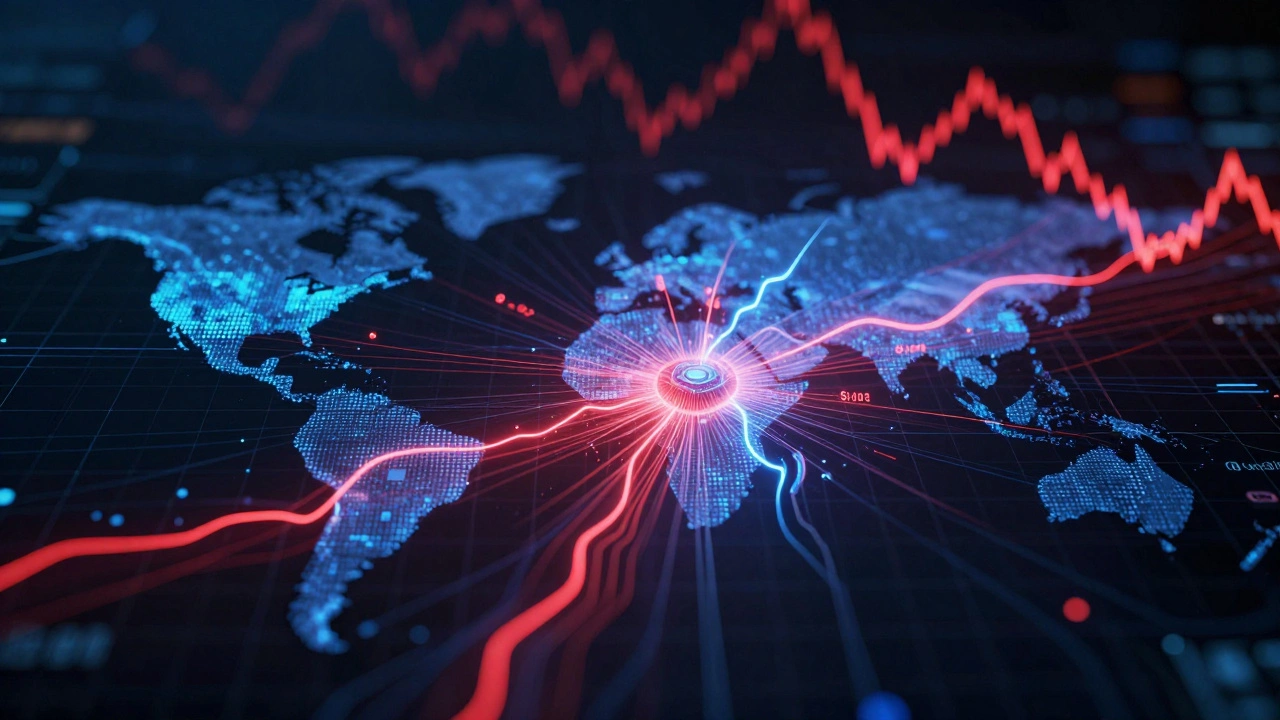
By 2025, artificial intelligence doesn't just support financial markets-it drives them. Algorithms make over 70% of trades on major exchanges. Credit decisions, fraud detection, risk modeling-all handled by AI systems trained on petabytes of data. But here’s the problem: these systems are getting faster, more interconnected, and dangerously similar. When they all react the same way to the same signal, markets don’t just move-they collapse.
Why AI Is Turning Market Crises Into Flash Crashes
In 2010, the Flash Crash took 36 minutes. In 2025, a similar event can unfold in under 17 minutes. Why? Because AI doesn’t hesitate. It doesn’t pause to think. It doesn’t call a colleague for a second opinion. It sees a pattern, makes a decision, and executes-thousands of times per second. Take the Tesla Q3 2025 earnings call. Retail traders noticed something strange: 12 major brokers all dumped Tesla stock within seconds of each other. No news. No earnings miss. Just a sudden, synchronized sell-off. Later, it was traced to identical LLM-based sentiment models analyzing earnings transcripts. Each AI, trained on the same datasets, interpreted the same tone of voice in the CEO’s speech as ‘negative.’ They all sold. Liquidity vanished. The stock dropped 14% in 17 minutes. It recovered-but only because human traders stepped in. This isn’t an outlier. It’s the new normal. The Bank of England confirmed in April 2025 that AI-driven correlation is now one of the top five systemic risks in global finance. When dozens of institutions use the same AI tools-whether from the same vendor or trained on overlapping data-they start acting like a single organism. One shock, one misread signal, and the whole system panics.The Black Box That No One Can Explain
Most AI models used in finance are black boxes. No one knows exactly how they reach their decisions. Not the traders. Not the risk managers. Not even the engineers who built them. That’s fine in normal markets. But when things go wrong, you need to know why. Traditional risk models had rules: if interest rates rise above 5%, reduce exposure. If default rates spike, tighten lending. AI doesn’t work like that. It finds patterns no human could see-like how weather patterns in Brazil correlate with commodity futures in Chicago. But when that pattern breaks? No one can tell you why. And if you can’t explain it, you can’t fix it. The Bank for International Settlements (BIS) warned in July 2024 that this opacity makes stress testing useless. Old models assumed markets behaved predictably. AI doesn’t care about assumptions. It reacts to chaos. And when it does, it can trigger cascading revaluations across asset classes in seconds. A hedge fund in London might sell oil futures. An algorithm in Singapore sees that and sells gold. A bank in New York, seeing gold drop, pulls back on credit lines. Within minutes, liquidity dries up everywhere.Who Owns the AI? Three Companies Control 98% of It
You might think financial firms build their own AI. They don’t. Most run on cloud infrastructure from just three companies: Amazon Web Services, Microsoft Azure, and Google Cloud. By Q2 2025, these three platforms hosted 98% of all machine learning systems used in finance, according to siai.org. That’s not just concentration. It’s dependency. If one cloud provider has an outage, thousands of trading algorithms go offline. If one updates its AI framework, every bank using it gets the same update-whether it’s safe or not. And if a hacker compromises one system, they can potentially trigger coordinated sell-offs across multiple institutions. The Financial Stability Board flagged this as a top-tier risk in November 2024. Unlike the 2008 crisis, where failures were scattered across banks, today’s crisis could start in a single data center. There’s no redundancy. No backup. Just one fragile stack holding up the global financial system.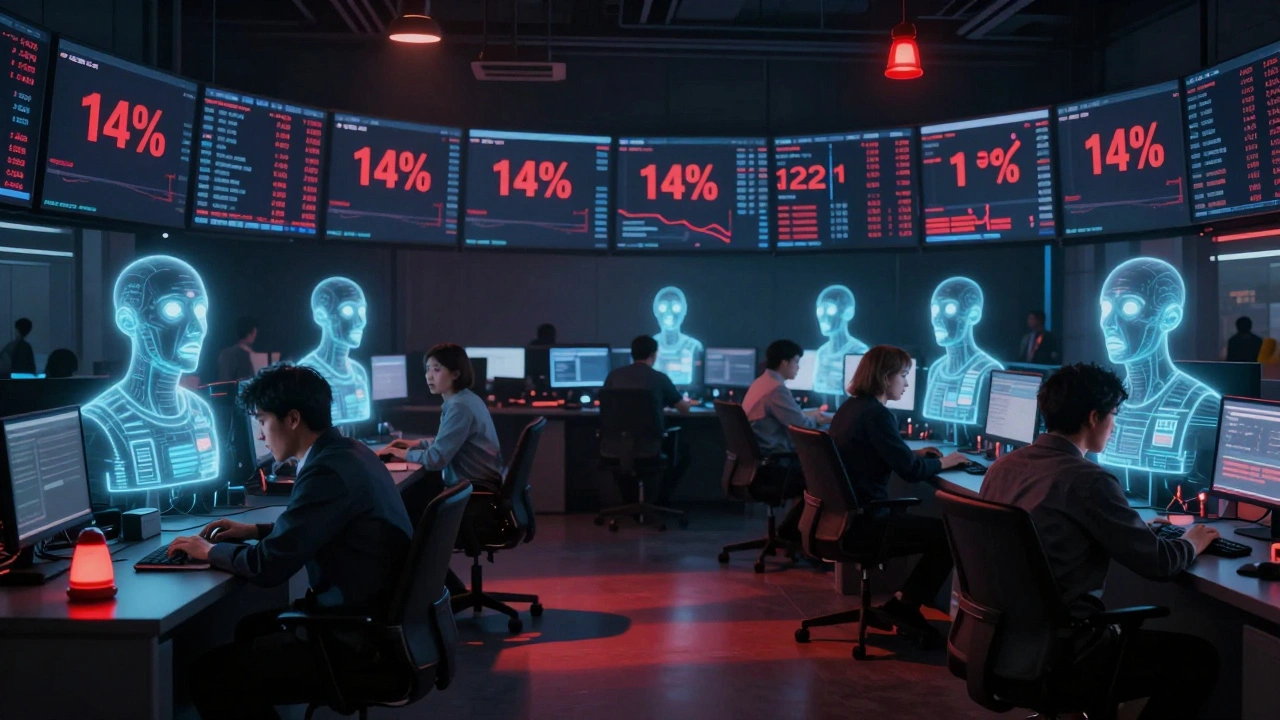
How AI Is Making Model Risk Worse Than Ever
Model risk used to mean a flawed spreadsheet or a misestimated correlation. Now it means a neural network trained on manipulated data. Or a model that learns from fake news. Or one that’s been poisoned by deepfakes. In 2024, a major European bank’s credit scoring AI started rejecting applicants with high scores. The reason? A hacker injected synthetic identity data into the training set-fake profiles that looked real. The AI learned to associate those profiles with default risk. It started rejecting real customers who matched the same patterns. The bank didn’t catch it for three weeks. By then, $1.2 billion in approved loans were flagged as risky. This isn’t theoretical. The BIS and the U.S. Government Accountability Office both documented similar cases in 2025. AI’s ability to learn from unstructured data-emails, social media, voice recordings-makes it vulnerable to manipulation in ways no traditional model ever was. And because these systems are so complex, regulators can’t audit them the way they audit spreadsheets. They don’t know what to look for.What’s Being Done? Regulators Are Playing Catch-Up
Regulators aren’t sleeping. But they’re behind. The European Central Bank now requires all major banks to run AI stress tests starting January 1, 2026. The Bank of England has started piloting AI-specific scenarios-simulating what happens when 20 banks using the same sentiment analysis model all panic at once. The Financial Stability Board has launched a global monitoring group with 87 institutions sharing data on AI failures. But these are baby steps. The real problem? Most banks still don’t have enough staff who understand AI. JPMorgan Chase’s internal training data shows risk teams need an average of 217 hours of specialized training just to interpret AI outputs. That’s longer than some MBA programs. And most firms haven’t invested in it. Meanwhile, AI spending in finance is exploding. RGP projects $97 billion by 2027. Most of that is going into algorithmic trading, fraud detection, and credit scoring. But less than 15% of that budget is being spent on governance, explainability, or resilience testing.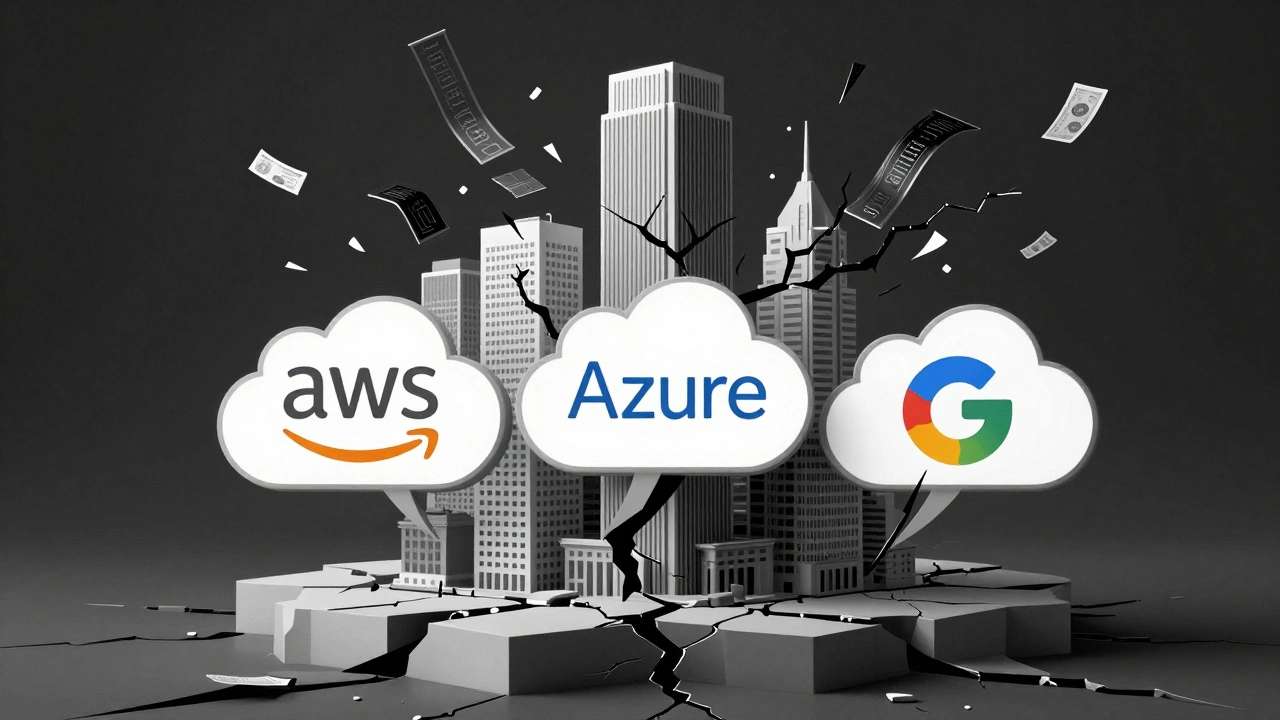
The Only Real Safeguards: System-Level Fixes
You can’t fix this by tweaking individual models. The risk isn’t in one bad algorithm. It’s in the system. Here’s what needs to change:- Limit AI homogeneity: Regulators should require banks to use at least two different AI vendors for core functions. No more 10 banks using the same model from the same provider.
- Force explainability: Any AI used for risk decisions must produce a human-readable log of its reasoning-not just a score.
- Build automatic liquidity buffers: When AI-driven selling hits a threshold, systems should automatically trigger emergency liquidity injections-no human approval needed.
- Require redundancy: Critical AI infrastructure must have at least one independent backup, running on different cloud platforms.
- Start sector-wide simulations: Imagine a scenario where 50% of AI trading systems misread a Fed announcement. Run that test every quarter. Not in a lab. In real-time, with live markets.