Education Investment Calculator
Find out if your country's education spending captures the demographic dividend. Based on World Bank research and Asian success stories:
When a country has more people in their working years than dependents, it doesn’t automatically mean economic growth. That’s the myth behind the demographic dividend. In reality, the real dividend isn’t just more workers-it’s more skilled workers. And that only happens when education is treated like infrastructure, not charity.
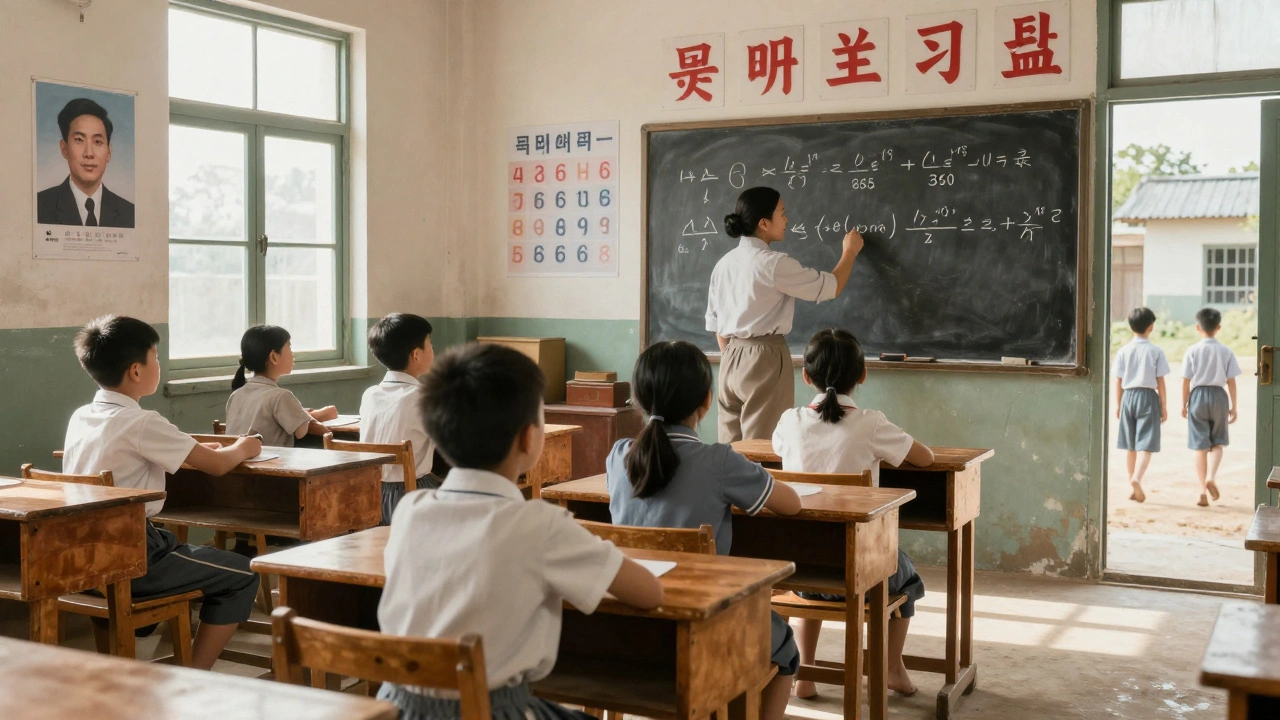
Look at South Korea in the 1950s. It was poor, war-torn, and had little natural resource wealth. But it made a decision: every child, no matter where they lived, would get a basic education. By 1965, nearly every child was in school. By 1970, GDP per capita started climbing. By 2020, it was over $30,000. That wasn’t luck. That was planning. Education came first. Growth followed.
What the Demographic Dividend Really Means
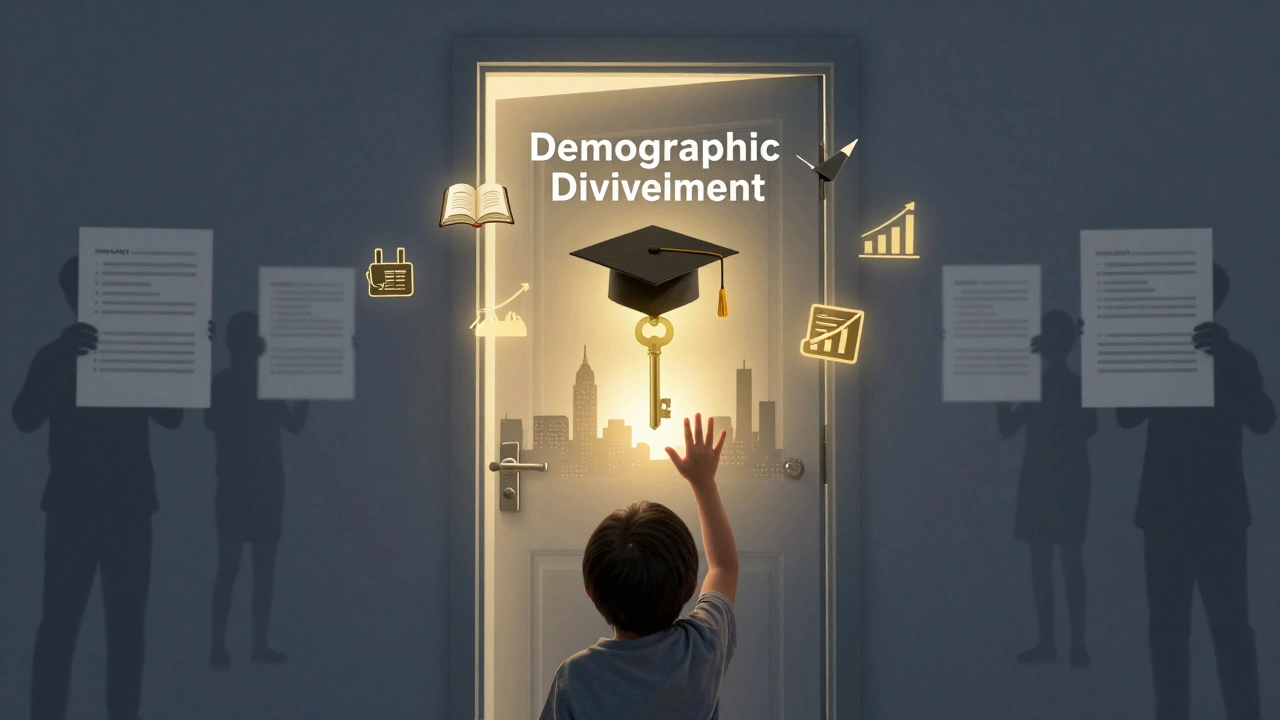
The demographic dividend sounds like a magic trick: fewer kids to feed, more adults to work, boom-economic growth. But history shows it’s more like a locked door. The key? Education.
Harvard’s 2019 study looked at five countries trying to cash in on their age shifts. Only two really succeeded: South Korea and Thailand-though Thailand’s success was partial. Why? Because Thailand focused on getting kids into school, not what they learned. By 2015, primary enrollment dropped from 96% to 87%. That’s not progress. That’s decay.
The real breakthrough came from a 2019 study in the Proceedings of the National Academy of Sciences. It found something shocking: when education levels are low, even a shrinking youth population can drag down income growth. In other words, if your kids aren’t learning, having more of them won’t help. It might even hurt.
The dividend isn’t about age structure. It’s about human capital. And human capital doesn’t grow on trees. It’s built, one classroom, one teacher, one curriculum at a time.
South Korea: The Blueprint That Worked
South Korea didn’t wait for economic growth to start investing in schools. It started schools to create economic growth.
In the 1950s, the government poured money into building rural schools, training teachers, and making primary education mandatory. By 1960, over 90% of children were enrolled. By 1970, secondary enrollment was rising fast. And then-boom-industrialization hit. Factories needed workers who could read, calculate, follow instructions. South Korea had them.
Here’s the key detail most miss: this wasn’t accidental. The education system was designed to feed the economy. Textbooks were rewritten to include technical skills. Vocational tracks were created alongside academic ones. And the government didn’t stop when kids left primary school. They kept investing in high school and college.
Today, South Korea spends 5.3% of its GDP on education-the highest in the OECD. Why? Because its population is aging. The dividend window is closing. So now, they’re investing in lifelong learning, retraining older workers, and pushing STEM education to keep productivity high. They didn’t just capture the dividend. They reinvented it.
Thailand: When Enrollment Isn’t Enough
Thailand started down the same path. By the 1980s, it had expanded access to nearly all children. But then it stopped. Quality slipped. Teachers weren’t trained. Classrooms were overcrowded. By 2015, primary enrollment had fallen from 96% to 87%. Why? Because no one was measuring learning.
Thailand’s mistake was treating education like a number game: more kids enrolled = success. But what if those kids can’t read? What if they can’t solve basic math? Then you don’t have a workforce-you have a ticking time bomb.
That’s why Thailand launched Education 4.0 in 2020. It’s trying to fix the damage. The goal? 95% secondary enrollment by 2030-with real learning outcomes. It’s late, but it’s a step in the right direction. The lesson? You can’t build an economy on empty classrooms.
Bangladesh: High Enrollment, Low Returns
Bangladesh has one of the highest primary enrollment rates in South Asia-over 90%. Girls are even enrolling more than boys. That’s impressive. But here’s the catch: 60% of its migrant workers earn less than $200 a month. Why? Because they’re unskilled. They can’t speak English. They don’t know how to use basic tools. They’re stuck in low-wage, dangerous jobs.
Bangladesh sends home $15 billion in remittances every year. That’s huge. But if those workers had better education, they’d earn more. Their families would invest more. The economy would grow faster. Instead, the country is stuck exporting labor, not talent.
The problem isn’t access. It’s quality. Teachers are underpaid. Training is minimal. Curriculums haven’t changed in decades. And no one’s holding schools accountable for what students actually learn.
That’s why Bangladesh’s demographic dividend remains locked. It has the people. It just doesn’t have the skills.
India: The Window Is Still Open-But for How Long?
India has the largest youth population on Earth. Over 600 million people are under 25. That’s a massive opportunity. But right now, only 47% of Indian youth are enrolled in secondary school. And even fewer are learning skills that match the job market.
Companies struggle to find workers who can read instructions, use computers, or work in teams. Meanwhile, millions of young people are stuck in informal jobs-street vendors, daily wage laborers, home-based workers-with no path to advancement.
The window for India’s dividend is wide open-but it’s closing fast. By 2040, India’s working-age population will peak. After that, aging will start. If education doesn’t catch up by then, India won’t become the next economic powerhouse. It’ll become another country with too many people and not enough jobs.
What Works? The Four Pillars of Success
Looking at the countries that got it right, four patterns stand out:
- Start early, go universal. South Korea didn’t wait. It made primary education mandatory and funded it fully. Within 15 years, nearly every child was in school.
- Focus on quality, not just numbers. Thailand had enrollment. South Korea had learning. The difference? Assessment. Testing. Teacher training. Accountability.
- Link education to the economy. South Korea didn’t just teach reading. It taught electronics, engineering, and export-ready skills. Thailand’s later reforms tried to do the same with vocational tracks.
- Plan for the long term. These countries didn’t change policy every election cycle. They had 10- to 20-year plans. They adjusted every five years based on labor market data and demographic projections.
And here’s the kicker: education spending isn’t a cost. It’s an investment. The World Bank says developing countries need to spend 4-6% of GDP on education to fully capture the dividend. Most spend 3-4%. That gap? That’s lost growth.
The Future Is Adaptive
Today, 65% of children entering primary school will work in jobs that don’t exist yet. That means we can’t just teach math and science. We have to teach how to learn.
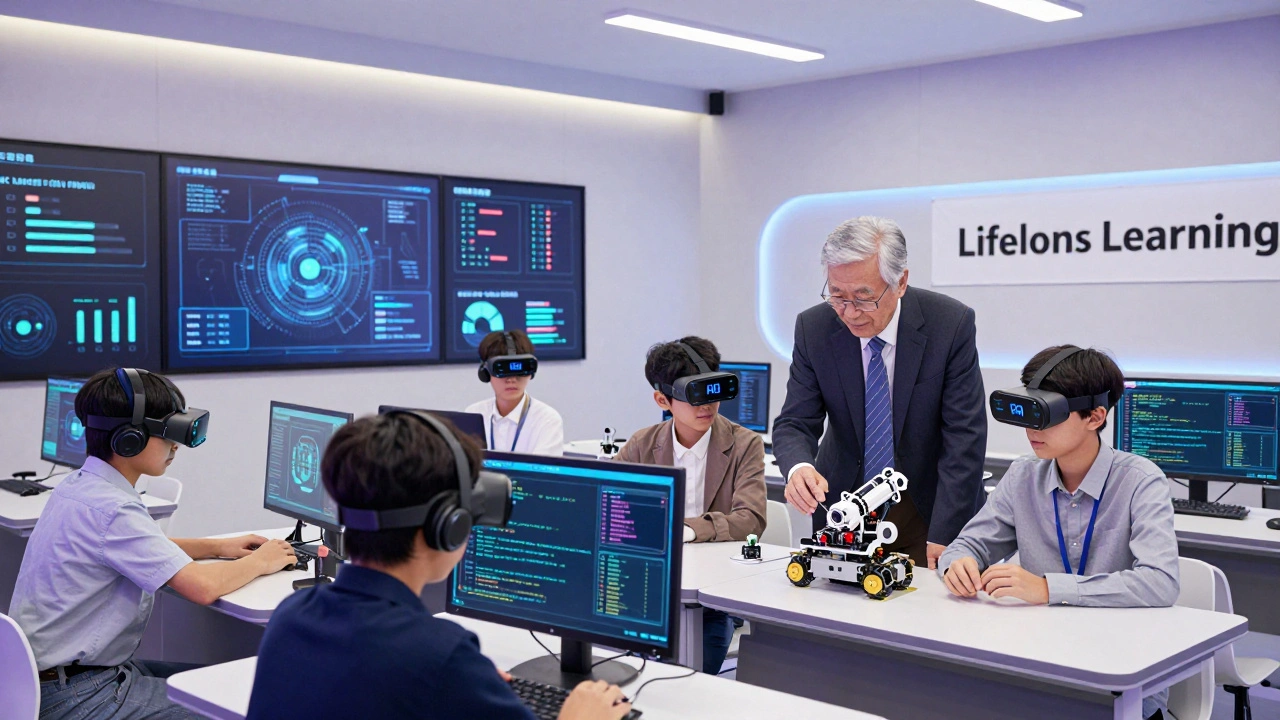
South Korea is already adapting. It’s pushing AI literacy, coding from grade 3, and reskilling programs for older workers. Thailand is trying to do the same. Bangladesh? Still stuck in rote memorization.
The next wave of growth won’t come from having more workers. It’ll come from having smarter, more adaptable ones. That’s the new dividend.
The lesson from Asia is clear: demographics are a window. Education is the key. And if you don’t turn that key before the window closes, you’ll be left watching someone else’s economy grow-while yours stalls.
What is the demographic dividend?
The demographic dividend is the economic growth potential that happens when a country has a larger share of working-age people (15-64) compared to dependents (children and elderly). But this only leads to growth if those workers are healthy, educated, and employed. Without education, it’s just a larger population-not a stronger economy.
Why did South Korea succeed while other countries failed?
South Korea invested in universal, high-quality education decades before its economy took off. It didn’t just build schools-it built a system tied to industrial needs. Teachers were trained, curriculums were updated, and vocational tracks were created to match factory and export demands. Other countries focused on enrollment numbers, not learning outcomes, and paid the price later.
Can a country get the demographic dividend without spending more on education?
No. Research shows that countries spending less than 4% of GDP on education rarely capture the full dividend. South Korea spends 5.3%. The World Bank recommends 4-6% for developing nations. Without that level of investment, you can’t train enough teachers, update curriculums, or provide learning materials. You’ll get more kids in school-but not more skilled workers.
Is enrollment the same as education quality?
Absolutely not. Thailand had high enrollment in the 2000s but saw learning outcomes decline. Bangladesh has near-universal primary enrollment, but many students can’t read or do basic math. Enrollment is a starting point. Quality-measured by test scores, teacher training, and curriculum relevance-is what turns potential into real growth.
What should governments do first to capture the demographic dividend?
Start by making sure every child finishes primary school with basic literacy and numeracy. Then, link secondary and vocational education to local job markets. Train teachers properly. Measure learning outcomes every year. And tie education spending to long-term economic plans-not political cycles. The goal isn’t to get kids into school. It’s to get them ready for the future.
How does gender play into the demographic dividend?
Girls’ education is the single biggest multiplier. When women are educated, they have fewer children, earn more, and invest more in their families. Bangladesh shows this: female primary enrollment is higher than male. If those girls get quality secondary and vocational training, they could transform the economy. But right now, many drop out early or aren’t trained for formal jobs.
Is the demographic dividend still relevant for Africa?
Yes-more than ever. Africa’s working-age population will grow by 600 million by 2050. That’s the largest demographic shift in history. But without education investment, it could become a crisis. Countries like Rwanda and Ethiopia are starting to link education to economic plans. If they act fast, they could avoid the mistakes of past nations and build real growth.