Competency Match Calculator
This tool helps you identify how well your skills match the competency requirements for a specific job. Enter your skills and the job's required competencies to see your match score and get personalized advice. The article explains that competency-based hiring predicts job performance at 89% accuracy, compared to just 18% for degree-based hiring.
Your Competency Match Analysis
Enter your skills and job competencies to see your match score.
For decades, if you didn’t have a four-year degree, your resume got tossed. It didn’t matter if you’d built apps since you were 14, fixed cars for your neighborhood, or led community projects that outperformed corporate teams. If your diploma wasn’t from a recognized university, you weren’t even in the game. But today, that’s changing - fast. Companies are no longer asking, Where did you go to school? They’re asking, What can you do? This shift isn’t a trend. It’s a necessity.
Why Degrees Don’t Predict Performance Anymore
A 2023 study in the International Journal of Selection and Assessment found that traditional hiring based on degrees and resumes only predicts job performance 18% of the time. That’s worse than flipping a coin. Meanwhile, structured skills assessments - where candidates solve real problems, not just recite textbook answers - predict performance at 89%. That’s not a small improvement. That’s a revolution. Think about it: a self-taught coder who built a mobile app used by 50,000 people has more relevant experience than a graduate who aced their OS class but never wrote production code. Yet for years, the latter got the interview. Why? Because hiring managers were told to look for credentials, not capabilities. McKinsey’s research confirms it: hiring for skills is five times more predictive of job success than hiring for education. And it’s not just about technical skills. Behavioral traits - how someone handles conflict, adapts to change, or owns a mistake - matter just as much. In fact, companies using competency-based hiring report 98% higher retention of top performers.What Competency-Based Hiring Actually Looks Like
This isn’t just about replacing a resume with a portfolio. It’s a full system redesign. Here’s how it works in practice:- For each role, HR and team leads identify 4 to 7 core competencies - not vague buzzwords like "team player," but concrete behaviors: "Can troubleshoot a system failure under pressure," or "Explains technical issues to non-technical stakeholders clearly."
- Assessments are built around those competencies. Instead of asking, "Tell me about a time you failed," they give candidates a real scenario: "Here’s a broken API endpoint. Walk us through how you’d fix it."
- Scoring is standardized. Every candidate gets graded on the same rubric. No more "I just had a good feeling about them."
- Tools like AI-powered platforms (Colleva, TestGorilla) automate parts of this - but only after humans define what skills actually matter.
The Talent Pool Explosion
Removing degree filters doesn’t just make hiring fairer - it unlocks talent you didn’t even know existed. According to the International Youth Foundation, companies that ditch degree requirements see their applicant pools grow by 900%. That’s not a typo. Nine hundred percent. Think about the single mom who took online coding bootcamps while raising kids. The veteran who learned cybersecurity through military training. The high school dropout who now runs a successful Shopify store. These people aren’t "underqualified." They’re underrepresented. McKinsey found that traditional hiring excludes 67% of Black workers and 79% of Latino workers - not because they lack skills, but because they lack the right diploma. Competency-based hiring doesn’t just improve performance. It fixes systemic bias. A 2023 Harvard Business Review study showed structured competency interviews reduce demographic bias by 63%. That’s not just good ethics. It’s good business. Diverse teams are more innovative, make better decisions, and outperform homogenous ones by 35%.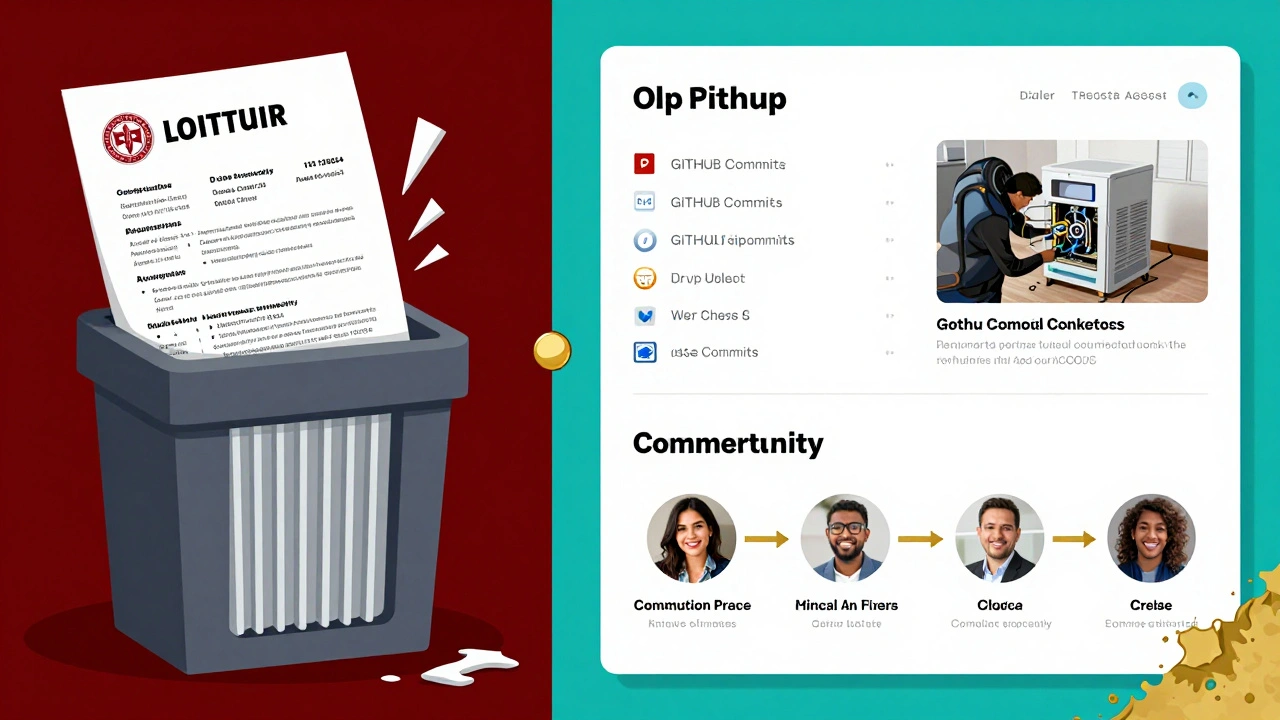
Where It’s Working - and Where It’s Not
Adoption varies wildly by industry. In tech, 82% of companies now use skills-based hiring. In healthcare, it’s 76%. Financial services? 68%. But in law firms? Only 43%. In academia? A staggering 89% still demand PhDs for roles that don’t require research. Why the gap? Culture. Legacy. Fear. Some hiring managers worry that without degrees, they’ll lose quality control. But data says otherwise. Companies using competency models report 41% higher productivity and up to 70% lower hiring costs. One global bank cut its time-to-hire from 52 days to 31 days - and improved new hire performance ratings by 22%. The failures? They happen when companies copy-paste generic competency models from consultants. One HR certification institute study found 22% of failed implementations used off-the-shelf frameworks that didn’t match their actual workflows. You can’t measure "customer empathy" the same way for a call center rep and a software engineer. Competencies must be tailored.The Cost and Effort - Is It Worth It?
Yes. But it’s not free. Building a competency framework from scratch costs between $15,000 and $25,000 per role family. That sounds steep - until you realize the average cost of a bad hire is 30% of that employee’s annual salary. And in tech, that can be $150,000 or more. Plus, hiring managers need training. About 16 to 24 hours of it. That’s not just a workshop. It’s a mindset shift. They need to learn how to ask the right questions, how to score objectively, and how to let go of their gut instincts. The learning curve? Smaller companies adapt in about 3.2 months. Enterprises take longer - 5.7 months on average. But once they do, the results stick. And the tools? Platforms like Colleva, Workday Skills Cloud, and TestGorilla make this scalable. LinkedIn’s Skills Path, launched in mid-2024, now lets users link their competencies directly to job applications. Over 17,000 companies are already using it.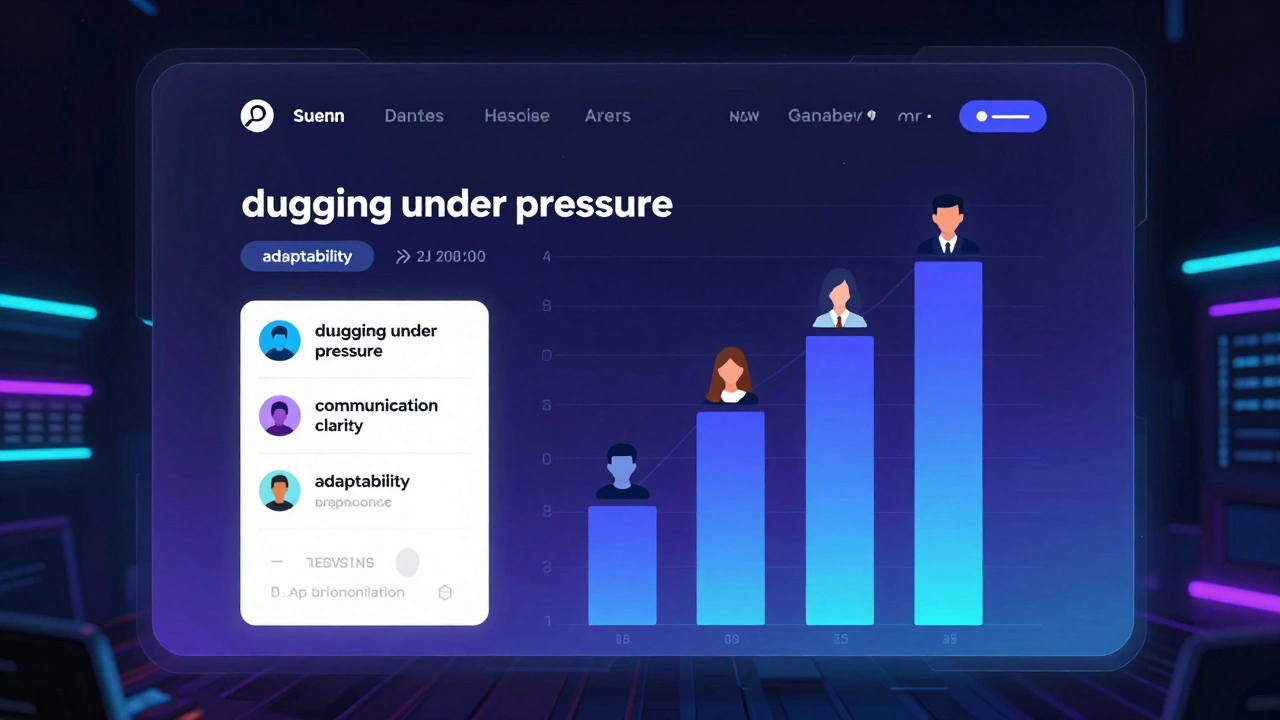
What’s Next? AI, Regulations, and the Future
The future of hiring isn’t just about skills - it’s about adapting skills. By 2026, Gartner predicts 65% of companies will use AI to dynamically update their competency models. Why? Because the skills needed today won’t be the same in 18 months. AI can track which skills are rising in demand, which are fading, and which roles are evolving. The U.S. Department of Labor’s 2023 Hiring Guidelines now encourage skills-based assessments to reduce systemic barriers. And in 2024, over 1,300 companies signed the White House Skills-Based Hiring Pledge - promising to stop requiring degrees for jobs that don’t need them. New competency standards are being built for emerging fields: AI ethics, climate resilience, remote team leadership. The Talent Transformation Alliance is leading this effort, with open-source libraries available to any company - free of charge.What You Can Do Today
You don’t need to wait for corporate policy to change. If you’re hiring:- Start by listing the 5 most important behaviors for your open role. Not "hardworking," but "can explain complex problems simply." Not "technical skills," but "can debug under deadline pressure."
- Replace your job description’s "Required: Bachelor’s degree" with "Proven ability to [do X]."
- Use a free skills assessment tool like TestGorilla or HackerRank to screen applicants - no resume needed.
- Train your team to score candidates the same way, every time.
- Build a portfolio. Even if you’re not a designer or developer - show your process. How did you organize a community fundraiser? What tools did you use? What was the result?
- Get certified. Free or low-cost certifications from Google, IBM, or Coursera carry weight now.
- Apply to companies that say "skills over degrees." They’re out there. And they’re growing.
Frequently Asked Questions
Do I still need a degree if I’m using competency-based hiring?
No. Competency-based hiring removes the degree requirement as a filter. Employers focus on what you can do, not where you studied. Many companies now explicitly state "no degree required" in job postings. Your skills, portfolio, and performance in assessments matter more than your transcript.
How do I prove my skills without formal credentials?
Create tangible proof: a GitHub repo with real code, a case study of a project you led, a video walkthrough of a problem you solved, or a certification from a recognized platform like Google or IBM. Employers using competency-based hiring value demonstrated ability over paper credentials. Even volunteer work or personal projects count if you can show impact.
Is competency-based hiring only for tech jobs?
No. While tech leads in adoption, industries like healthcare, retail, logistics, and customer service are quickly following. For example, hospitals now assess nurses on crisis response simulations, not just diplomas. Retail chains test sales staff on real customer scenarios. Any role with clear performance outcomes can benefit from skills-based evaluation.
What if my company still insists on degrees?
Start small. Propose a pilot program for one role - say, an entry-level position. Use skills assessments to hire two candidates without degrees and track their performance over six months. Compare them to degree-holding hires. Data speaks louder than tradition. Companies like Google and Apple have already dropped degree requirements for over half their roles - and they’re not losing talent.
Can competency-based hiring reduce bias?
Yes, significantly. Structured assessments remove unconscious bias tied to school names, accents, or names that sound "foreign." A 2023 Harvard study found these methods cut demographic bias by 63%. When everyone is judged on the same criteria - solving the same problem, answering the same questions - hiring becomes fairer and more accurate.
How long does it take to implement competency-based hiring?
Small teams can start seeing results in 3 to 4 months. Full rollout across an organization typically takes 4 to 6 months. The key is starting with one role, testing the process, training managers, and scaling from there. Rushing leads to failure. Patience and consistency win.