Peacekeeping Budget Impact Calculator
How Budget Shortfalls Impact Peacekeeping
UN missions are operating on 31.2% of required funding. This calculator shows how budget shortfalls translate to reduced operational capacity based on official UN data.
%
Operational Impact
Troop Reduction
0%
Patrol Coverage
0%
Humanitarian Access
0%
Based on UN data: 15% budget cut → 25% troop reduction. Reduced patrols correlate directly with increased attacks on aid convoys and health facilities.
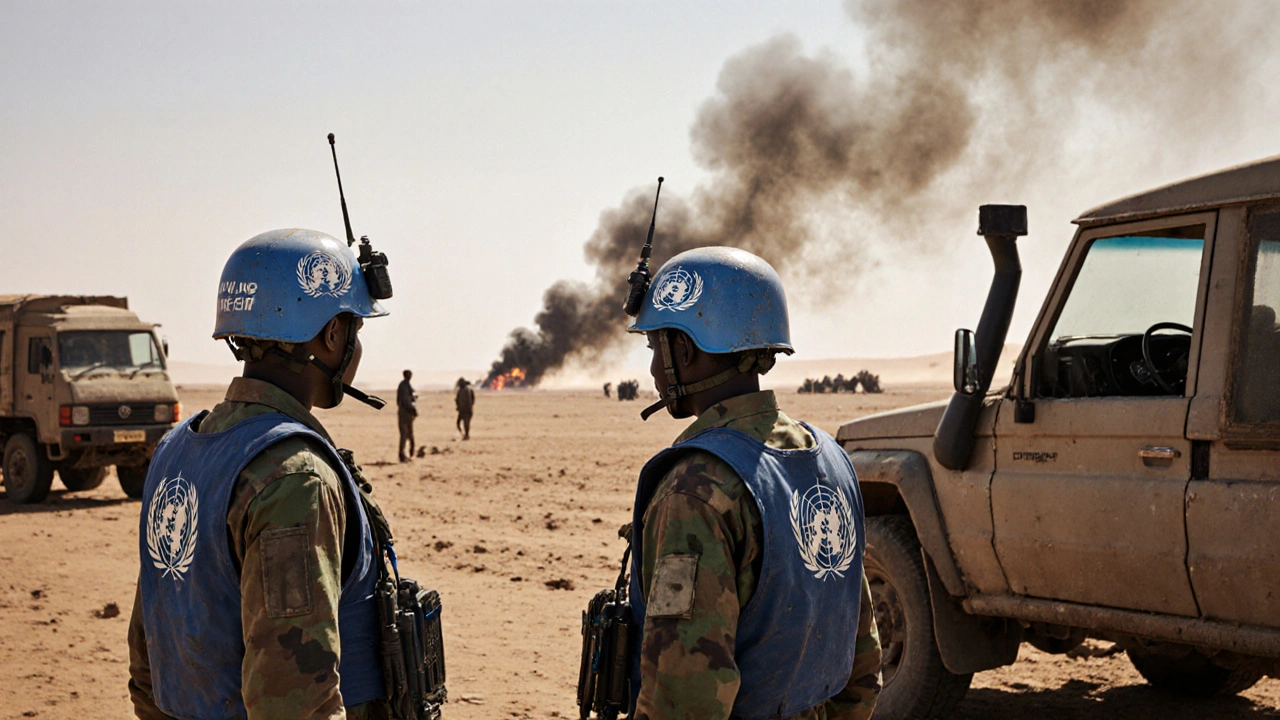
It’s 2025, and the United Nations is running out of money to keep the peace. Not because the world has gotten quieter - it’s gotten louder. Conflicts are rising. But the tools to stop them? They’re being stripped away. UN peacekeeping missions, once seen as a global safety net, are now operating on fumes. And the people who need protection the most are paying the price.
The Budget That Isn’t There
The UN’s peacekeeping budget for 2025-2026 is $5.38 billion. That sounds like a lot until you realize it’s $1 billion less than five years ago. In 2020-2021, the budget was $6.38 billion. Now, missions are being forced to cut spending by 15%. That doesn’t mean trimming a few expenses. It means shutting down field offices, firing civilian staff, and pulling out nearly a quarter of the troops on the ground. Why? Because nearly $2 billion of the $5.6 billion needed simply hasn’t been paid. The biggest chunk - $1.5 billion - is owed by the United States alone. Other major contributors are behind too. As of late October 2025, only 61 out of 195 UN member states had paid their full assessed contributions. That’s a 31.2% payment rate. When you’re relying on voluntary payments from sovereign nations, you’re not running a program. You’re running a gamble. And it’s not just cash flow. There’s $333 million in unpaid claims from troop-contributing countries for equipment they brought in - vehicles, generators, body armor. These are nations that risk lives to serve in peacekeeping. Now they’re being left unpaid. That’s not just unfair. It’s dangerous. Countries are starting to ask: why send our soldiers if we don’t get paid?Mission Impossible: When You Can’t Move, You Can’t Protect
Peacekeepers don’t work in offices. They drive through desert roads, patrol villages under threat, and guard aid convoys. Most of their vehicles run on diesel. Every year, UN missions use over 100 million liters of fuel. That’s not just a supply chain problem. It’s a death sentence. Fuel convoys need protection. For every two fuel trucks, you need one peacekeeper just to guard them. That’s a huge drain on already thin manpower. In places like South Sudan and the Democratic Republic of Congo, patrols have been cut. Fewer patrols mean fewer eyes on the ground. Fewer eyes means armed groups move more freely. And civilians? They’re left exposed. The UN’s own October 2025 update admitted that reduced mobility makes it harder to deliver humanitarian aid. Médecins Sans Frontières reported a 27% spike in attacks on health clinics in areas where MONUSCO peacekeepers pulled back. That’s not a coincidence. When peacekeepers leave, the vacuum doesn’t stay empty. Militias, armed gangs, and extremist groups fill it.Political Gridlock: Mandates Without Muscle
The UN Security Council still issues mandates - the legal blueprints for peacekeeping missions. But those mandates haven’t changed much since 2014. They still say: protect civilians, support elections, monitor ceasefires. But the world has changed. Today’s conflicts are messier. Non-state actors are stronger. Hybrid warfare is common. Yet the UN still tries to solve them with 2010s-era tools and 2020s-era budgets. The problem isn’t just money. It’s how money is approved. The Fifth Committee of the General Assembly controls the budget. Once they approve a mission’s staffing and equipment, that’s it. No adjustments. No flexibility. If a mission needs more vehicles next month because violence flares, they can’t get them. They have to wait six to eight months for a new budget vote. By then, it’s too late. Dr. Charles T. Call from American University put it bluntly: “The system disincentivizes missions from working with less because it is so difficult to scale up if needed.” In other words, missions are forced to ask for the maximum possible resources from day one - even if they don’t need them - just in case. That’s not smart planning. It’s survival mode.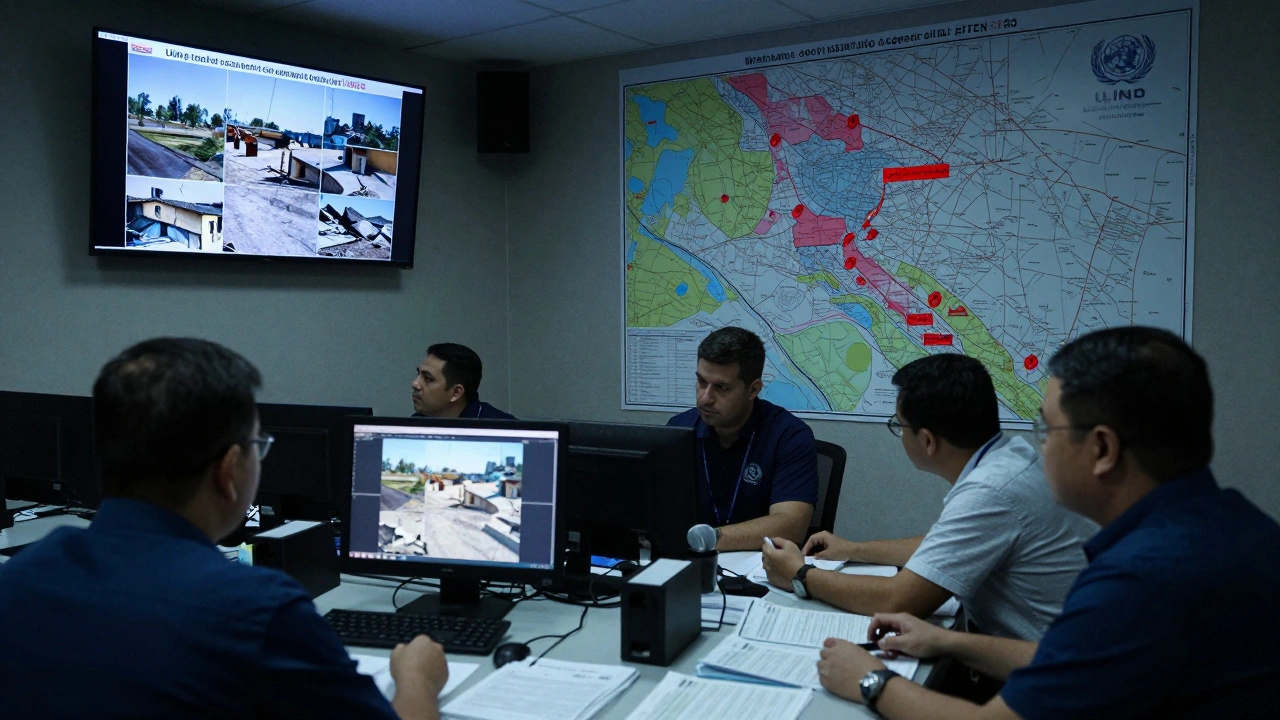
Who’s Left Behind
The people who feel this most are the ones on the ground. Humanitarian workers in South Sudan say they can’t reach remote communities anymore. The Norwegian Refugee Council documented that mission withdrawals don’t just remove soldiers - they remove airstrips, medical centers, communication networks, and data systems that help track violence against women and children. In the DRC, the partial withdrawal of MONUSCO led to a sharp rise in sexual violence and child recruitment. In Mali, the UN’s exit created space for extremist groups to expand their control. And in Sudan, where fighting continues, the UN’s reduced presence means fewer monitors to document atrocities. This isn’t theoretical. It’s happening right now. And the UN knows it. In a letter to member states on October 10, 2025, Secretary-General António Guterres warned that reduced UN presence risks emboldening armed actors and unraveling years of progress. But warnings don’t pay bills.Regional Alternatives: Not a Fix, But a Bandage
Some say the answer is regional organizations - the African Union, for example. The AU has moved faster in places like Somalia and the Sahel. But they don’t have the money. UN Resolution 2719 in 2023 allowed the AU to request assessed contributions from the UN for its operations. So far, they’ve received only 12% of what they asked for. Regional forces can deploy quicker. They understand local dynamics better. But they lack the global legitimacy and funding stability the UN still holds. And without UN funding, they can’t sustain long-term missions. So we’re stuck with a patchwork: underfunded UN missions, under-resourced regional forces, and no real alternative.
The Future Is Bleeding Out
The UN is trying to reform. They’re talking about “fitting peacekeeping for the future,” increasing efficiency, and partnering with regional actors. But talk doesn’t refill fuel tanks or pay for body armor. The numbers are clear: if current trends continue, peacekeeping capacity could drop by 40% within three years. That’s not a prediction. That’s a projection based on today’s unpaid bills and frozen budgets. We’re not talking about abstract diplomacy. We’re talking about whether a mother in Eastern Congo can get to a clinic without being attacked. Whether a child in South Sudan can go to school without fear. Whether a ceasefire means anything if no one is there to watch. The UN peacekeeping system was built on a promise: that the world would stand together to protect the vulnerable. That promise is fraying. Not because the need has disappeared. But because the will to pay for it has.What’s Next?
There’s no easy fix. But there are starting points:- **Enforce payment obligations**: Member states must be held accountable for their assessed contributions. The UN needs a mechanism to penalize chronic non-payers.
- **Flexible mandates**: Allow missions to adjust staffing and resources without waiting months for a budget vote. Emergency scaling must be possible.
- **Pay the troops**: Clear the $333 million backlog in contingent-owned equipment claims. Without this, countries will stop sending soldiers.
- **Invest in alternatives**: Support regional forces with predictable, long-term funding - not one-off grants.
- **Rebuild trust**: The UN must show it’s not just asking for money - it’s using it wisely. Transparency and results matter more than ever.