Sanctions Evasion Risk Assessment Tool
Assess Sanctions Evasion Risk
Enter transaction details to evaluate potential evasion risk based on methods described in the article.
Risk Assessment Result
Recommended Actions:
When countries impose sanctions, they’re not just sending a message-they’re trying to cut off money flows to hostile actors. But sanctions only work if they’re enforced. And that’s where the real challenge begins: sanctions evasion. Illicit actors don’t wait for permission to move money. They use shell companies, fake shipping documents, hidden ownership, and even alternative payment systems to slip through the cracks. The question isn’t whether evasion happens-it’s how allies are learning to spot it together.
How Sanctions Are Being Circumvented
Sanctions evasion isn’t one trick. It’s a toolkit. The 2025 Financial Action Task Force (FATF) report breaks it down into four main methods used by bad actors today.The first is corporate camouflage. Criminals set up layers of companies across different countries-some registered in tax havens, others in places with no public ownership records. These aren’t real businesses. They’re fronts. One company buys raw materials. Another ships them. A third pays for them. None of them are connected on paper. But together, they move goods that should be blocked-like dual-use tech that can be turned into weapons.
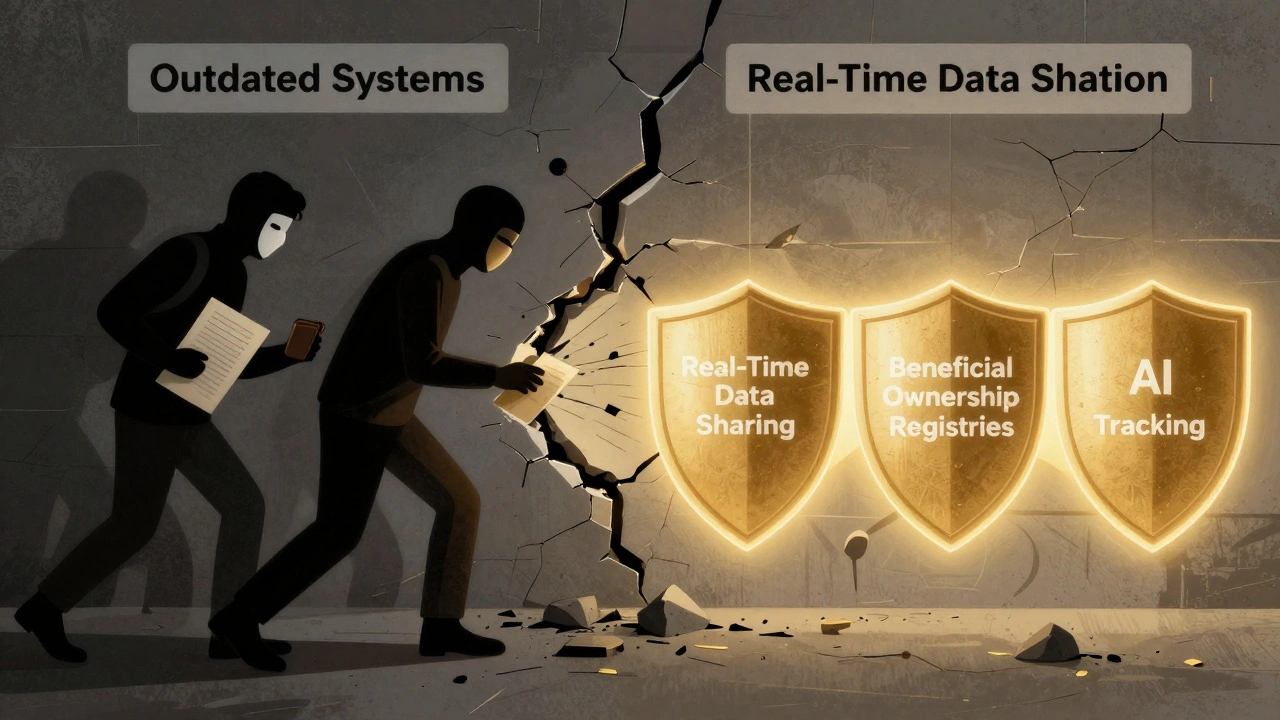
The second method hides who’s really in charge. Nominee directors, fake addresses, and offshore trusts make it nearly impossible to trace who owns the money. Even when banks do KYC checks, they’re looking at names on paper-not the people pulling the strings. That’s why FATF now insists on verified beneficial ownership registries. If every country had a public, up-to-date list of who owns what, it would be a lot harder to hide.
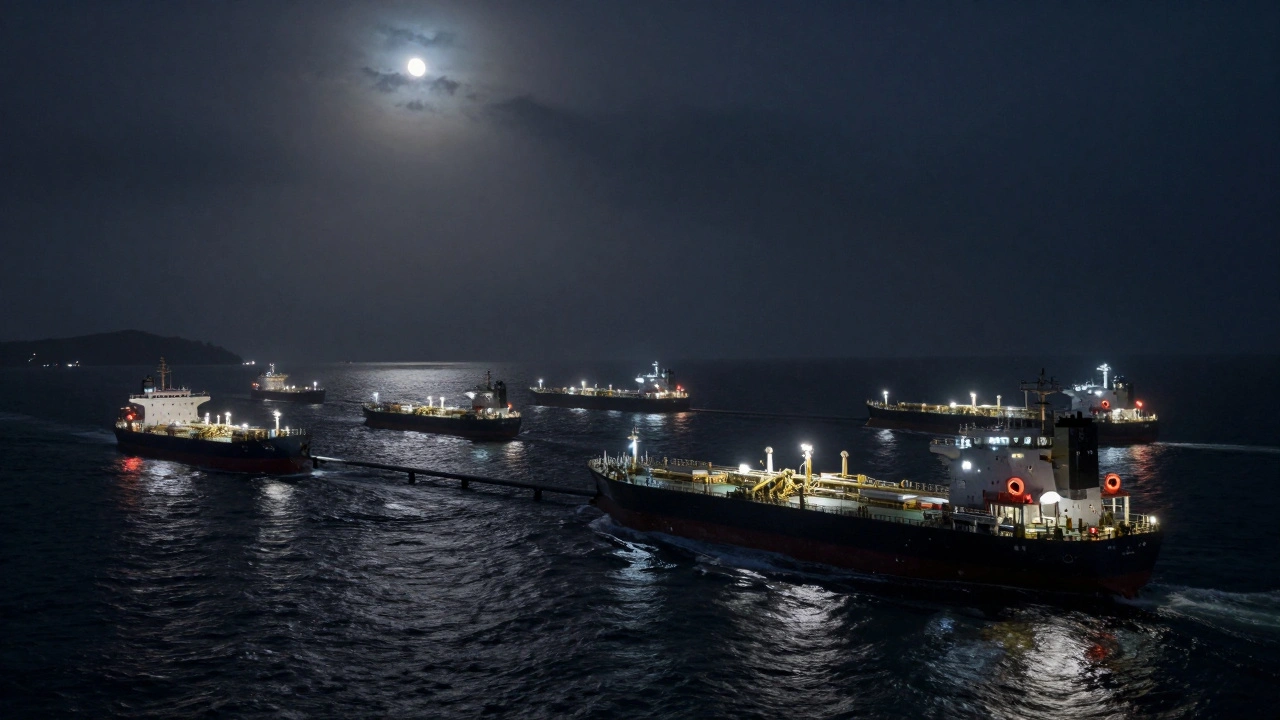
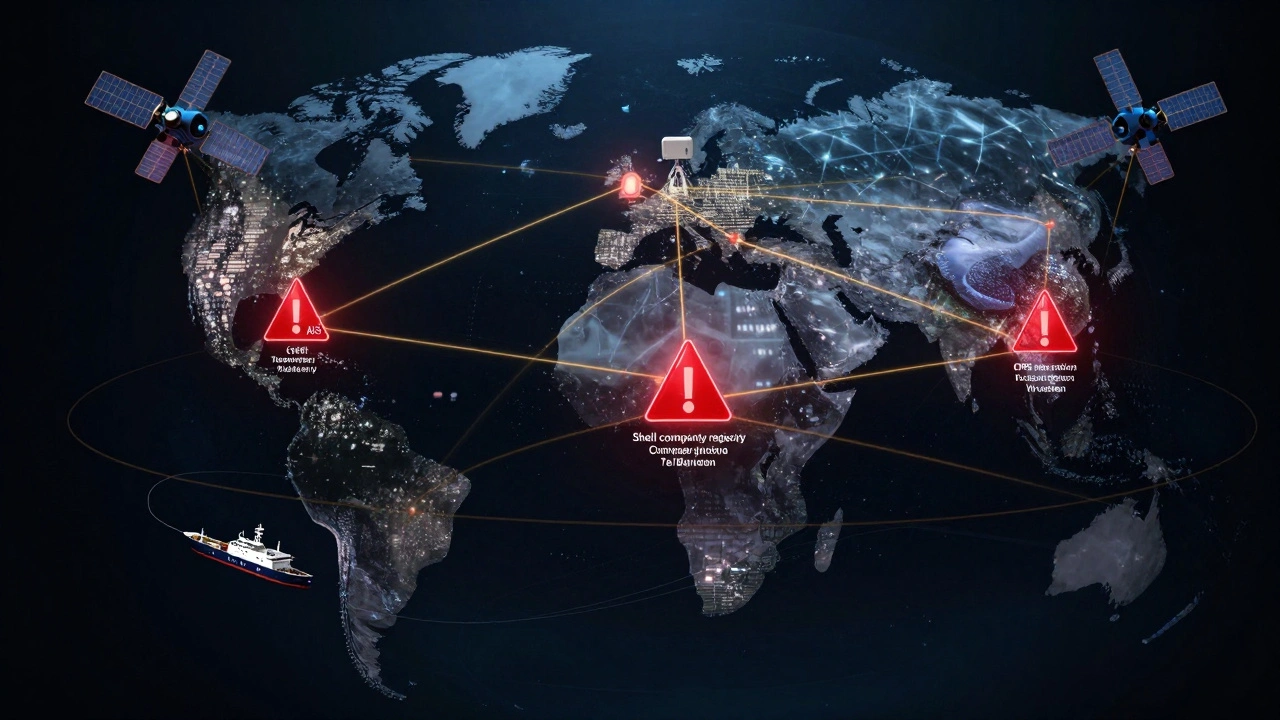
Then there’s deceptive shipping. Ships disable their AIS transponders-those GPS trackers that show location-right before crossing into restricted waters. They do ship-to-ship transfers in international waters, swapping cargo without ever docking. Bills of lading get altered. Port records are falsified. A shipment labeled as “plastic pellets” might actually be microchips headed for a sanctioned military facility. Tracking this requires more than paperwork. It needs satellite images, AI-powered geolocation, and real-time data sharing between maritime agencies.
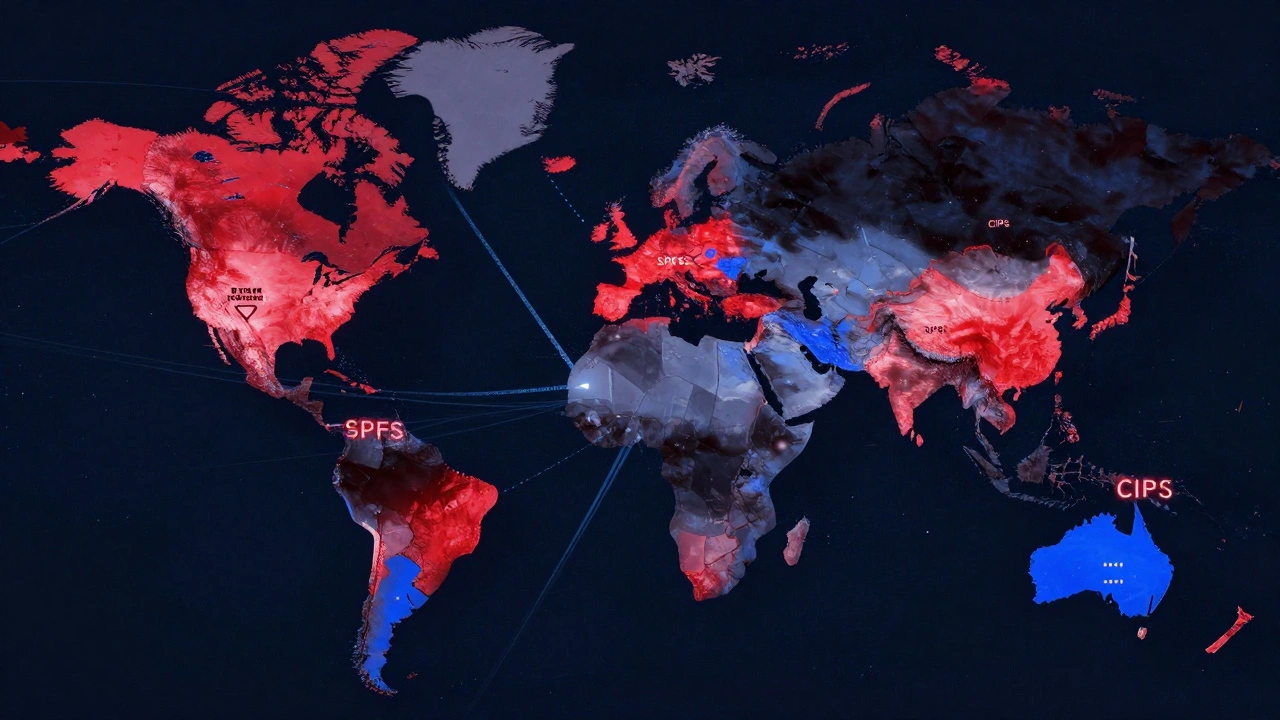
And finally, there’s the rise of virtual assets and alternative payment systems. Cryptocurrencies aren’t the only problem. The Cross-Border Interbank Payment System (CIPS), run by China, now has over 1,500 indirect participants. It’s not just a backup to SWIFT-it’s becoming a tool for sanctions evasion. Transactions that would trigger alerts in U.S. or EU banks slip through CIPS unnoticed because allies aren’t always monitoring it the same way.
What Allies Are Doing About It
The old way of doing things-waiting for reports, filing paperwork months later, and working in silos-isn’t enough anymore. Allies are building something new: a real-time, cross-border monitoring network.Tools like Sanction Scanner and ComplyAdvantage now pull data from over 220 jurisdictions, including OFAC, HM Treasury, the UN, and MAS. These platforms update hourly. If a person or company gets sanctioned at 2 p.m. in Washington, a bank in Frankfurt can know about it by 2:15 p.m. in Berlin. That’s not just faster-it’s preemptive.
Financial institutions aren’t just reacting. They’re looking for patterns. Red flags include:
- Companies with the same director across 5+ different entities
- Transactions with rounded amounts (like $50,000 or $100,000) sent to high-risk countries
- Letters of credit that change dramatically after being issued
- Payments made by third parties who aren’t named on the invoice
And it’s not just about banks. The U.S. Office of Foreign Assets Control (OFAC) now works directly with allied enforcement agencies to share intelligence. If a Dutch bank spots a suspicious trade route from Singapore to Iran via a Russian vessel, they can flag it-and within hours, U.S., UK, and Canadian analysts see the same pattern. That’s the power of shared data.
The Tech Behind the Monitoring
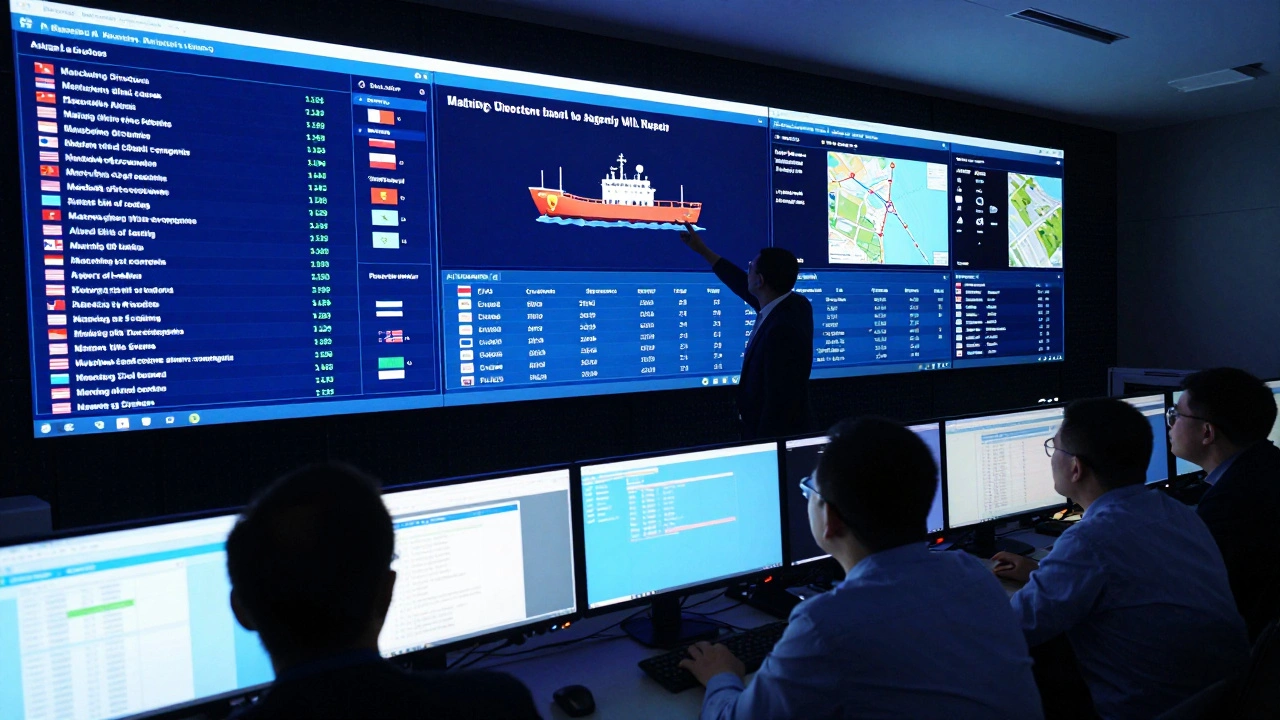
You can’t monitor global sanctions evasion with spreadsheets. You need systems that talk to each other.Moody’s intelligent screening platform, for example, automates workflows by pulling together sanctions lists, PEP databases, and watchlists into one unified interface. It doesn’t just flag names-it matches variations. “Ivan Petrov” might show up as “I. Petroff” or “Иван Петров.” The system learns those patterns. It also links transactions to shipping data, so if a company pays for steel from Ukraine but the cargo was last seen near a sanctioned port, the system raises the alarm.
Maritime monitoring is getting smarter too. Satellite imagery combined with AIS data lets analysts see when a ship turns off its tracker, then reappears 300 miles away with a new destination. AI models predict routes based on past behavior. If a vessel has a history of dodging inspections near Crimea, and now it’s heading toward a sanctioned port in Syria, the system flags it before it even gets there.
These tools don’t work in isolation. They’re connected through secure data-sharing networks like the Financial Intelligence Units (FIUs) in the EU and the U.S. FinCEN. These units don’t just collect reports-they analyze them together. A transaction flagged in Canada might be linked to a company registered in the UAE that was flagged in Germany two weeks earlier. That’s how you find hidden networks.
Where the System Still Fails
For all the progress, gaps remain. The biggest one? Information asymmetry.U.S. banks can monitor their own customers. But when a transaction flows through a foreign affiliate-say, a subsidiary in Dubai or Singapore-they often can’t see who the real customer is. That customer might be a sanctioned individual, or a company tied to a sanctioned country. But the U.S. bank only sees a transaction from a foreign bank. No name. No ID. No red flags. That’s a blind spot.
Another problem? Inconsistent rules. Some countries still don’t require public beneficial ownership registries. Others don’t enforce penalties for false declarations. A shell company registered in a non-compliant country can still move money through a compliant one. It’s like having a lock on your front door but leaving the back door wide open.
And then there’s CIPS. While Western financial systems are tightly monitored, CIPS operates with far less transparency. It doesn’t share data with OFAC or Europol. It doesn’t publish its participant list. That makes it a natural haven for sanctions evasion. Allies are starting to build monitoring protocols around it-but they’re playing catch-up.
What Success Looks Like
Success isn’t about stopping every single evasion attempt. It’s about making evasion harder, slower, and riskier.Effective programs track more than alerts. They track:
- Confirmed cases of evasion
- The total value of goods or money interdicted
- How long it takes to close a case
One U.S.-EU joint task force reduced case closure time from 45 days to under 12 by sharing real-time shipping manifests and bank records. Another group flagged $2.3 billion in suspicious trade flows in 2025 by linking trade data with vessel tracking and payment patterns.
Training matters too. Analysts now learn export-control basics-not just compliance jargon. They understand what dual-use goods are: the microchips in a washing machine that could be used in a missile guidance system. They know how to spot a fake bill of lading. They read the fine print on customs forms.
And they use shared rule libraries-digital playbooks updated by OFAC, the EU, and FATF-that tell them exactly what to look for. One rule might say: “If a shipment from Vietnam to Syria uses a Russian-flagged vessel and is paid in Chinese yuan via CIPS, escalate immediately.” That’s not guesswork. That’s intelligence.
The Future of Allied Enforcement
The next big step? Real-time pre-transaction controls.Right now, most systems flag transactions after they happen. But what if you could stop them before they clear? Some banks are testing this. If a payment is about to go to a sanctioned entity, the system pauses it and asks: “Who is the true beneficiary? Is the cargo being shipped to a sanctioned port? Is this payment routed through a third party?”
It’s not perfect. False positives still happen. Legitimate trade gets delayed. But the trade-off is worth it. A single shipment of advanced electronics to a sanctioned military unit can cost lives. A few extra hours of delay for a legitimate importer? That’s manageable.
And it’s not just about technology. It’s about trust. Allies need to share not just data-but trust. That means legal frameworks that allow cross-border data access without violating privacy laws. It means training programs that standardize how analysts think. It means holding countries accountable when they don’t comply.
The era of unilateral sanctions is over. The future belongs to coordinated enforcement. The tools are here. The data is available. What’s missing is the will to connect it all.