Sanctions Compliance Cost Estimator
How much do sanctions cost your business?
Calculate annual compliance costs based on your business size, jurisdictional coverage, and complexity.
Estimated Annual Compliance Cost
Industry BenchmarkBased on 2025 data: Mid-sized firms average $4.2M annually. This estimate includes monitoring, system updates, and false positive handling.
Sanctions aren’t what they used to be. Ten years ago, if a country wanted to punish another for violating international norms, it would go to the United Nations. Today, the UN’s role in sanctions is nearly invisible. In March 2025, UN-backed sanctions made up just 1.25% of all global sanctions. The rest? Unilateral actions by the U.S., EU, UK, and others-often with little coordination, and almost always with unintended side effects.
The New Sanctions Reality
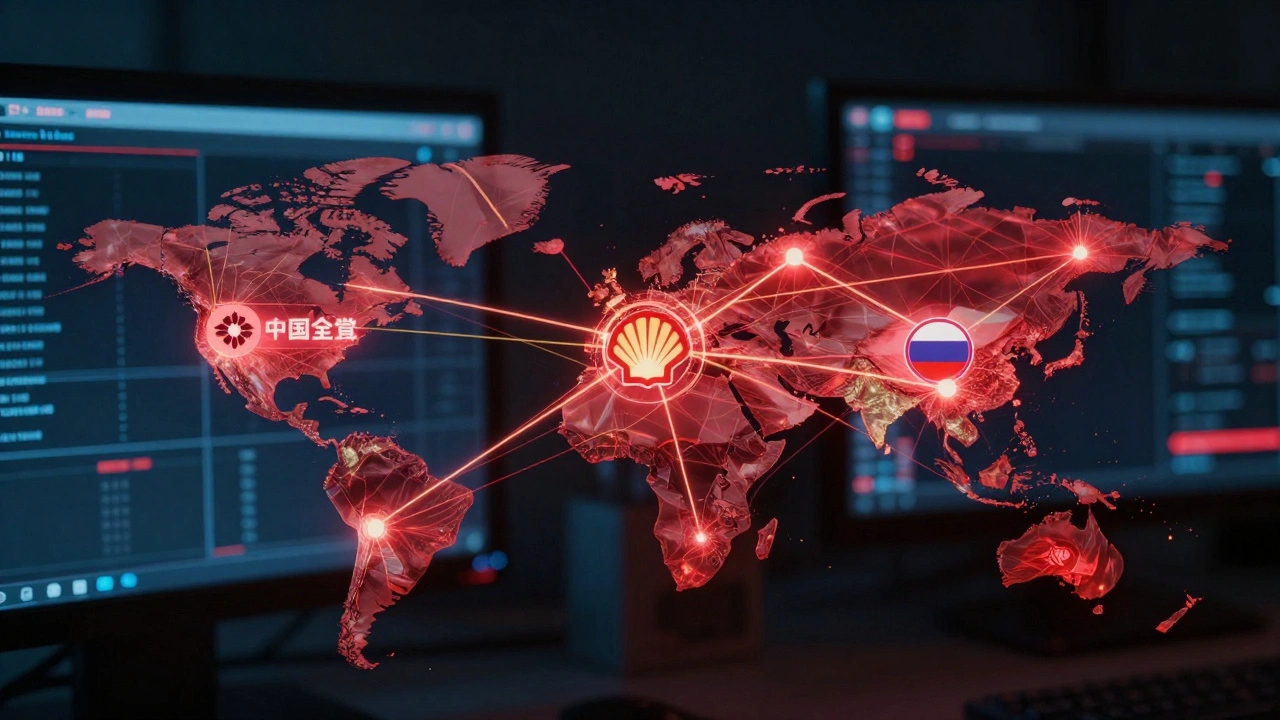
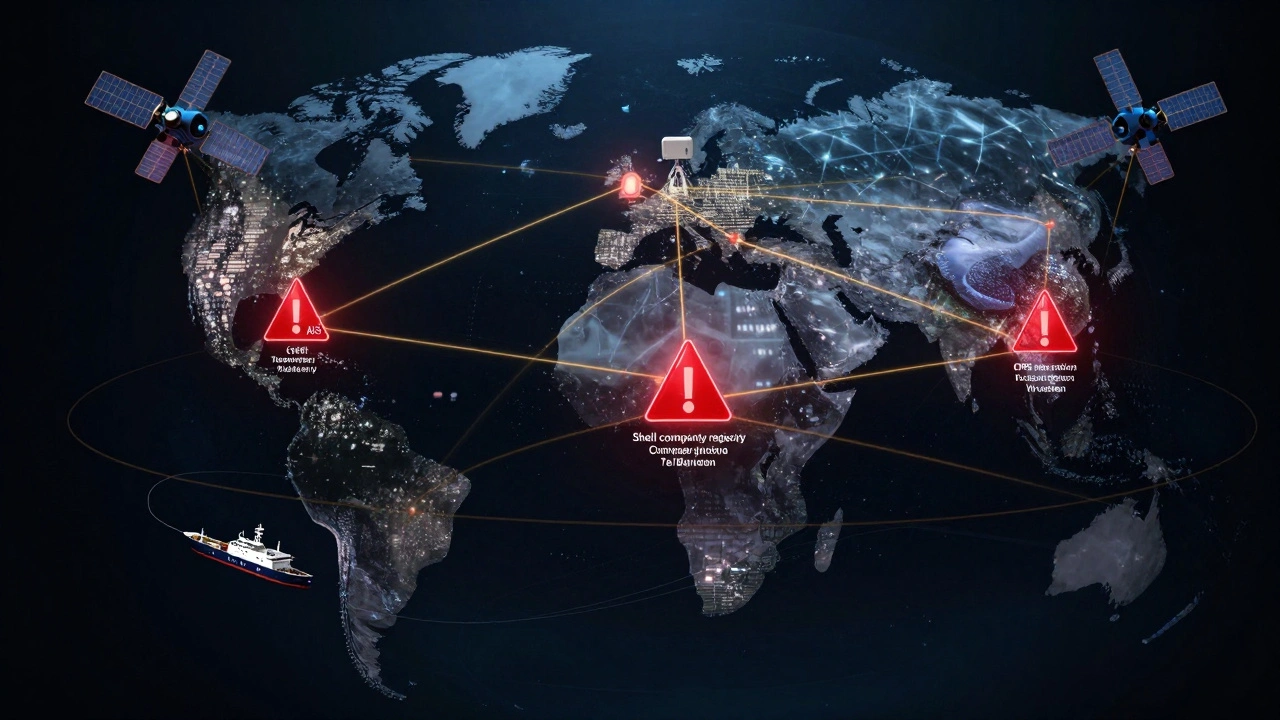
The global sanctions system today isn’t a single tool. It’s a patchwork of overlapping, conflicting, and rapidly changing rules. The U.S. Treasury’s Office of Foreign Assets Control (OFAC) lists over 9,400 sanctioned entities. The UK has nearly 3,800 under its own laws. The EU has over 2,100. These aren’t just names on a list. Each one triggers legal obligations for banks, shipping companies, insurers, and even small businesses trading across borders. What’s changed isn’t just the number. It’s the scope. Sanctions now reach far beyond direct trade. The U.S. uses secondary sanctions to punish foreign companies that do business with sanctioned entities-even if those companies are based in Germany, India, or Vietnam. In September 2025, the U.S. tightened its rule: any company with 50% or more ownership by a sanctioned party automatically becomes restricted. That means compliance teams now have to trace ownership chains down to the third or fourth layer, often across multiple countries with opaque corporate structures.Coalitions Are Fragmented, Not Unified
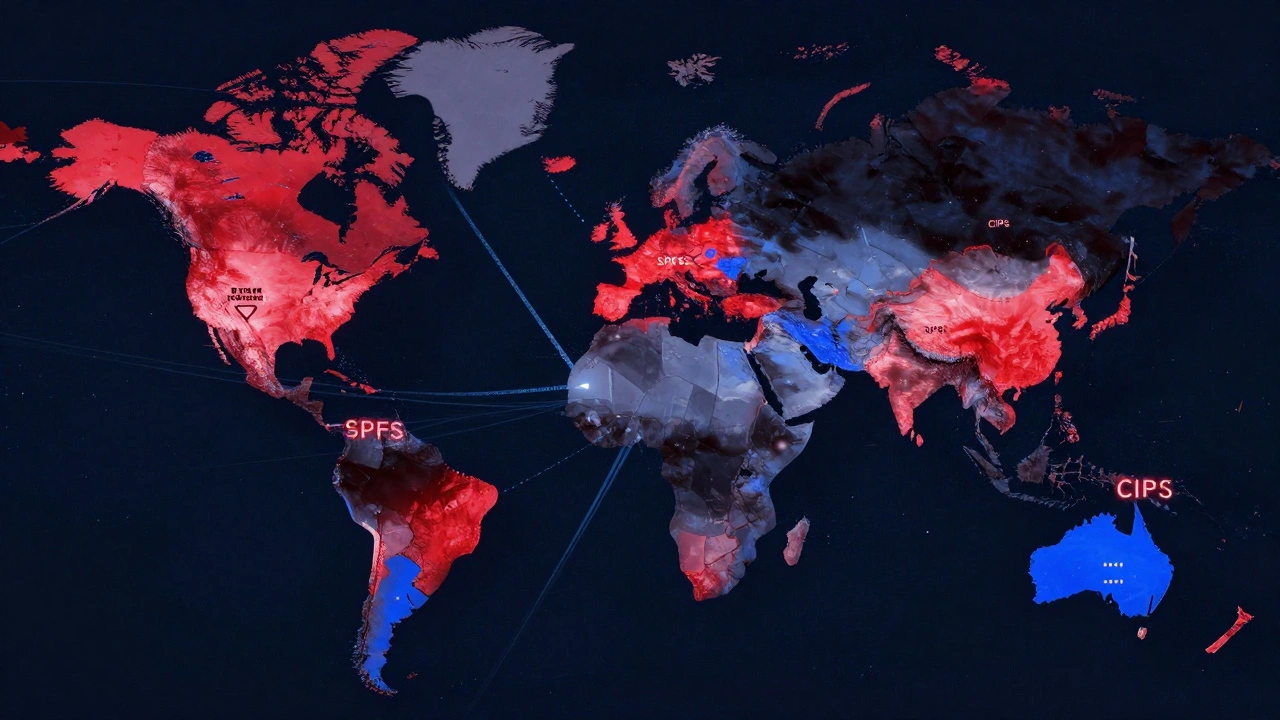
The idea of a united front against Russia, Iran, or North Korea sounds powerful. In practice, it’s messy. The U.S., EU, and UK coordinated 78% of all sanctions in 2025-but even among these allies, alignment is thin. The EU moved slowly on Russian LNG, wanting to phase out purchases by 2027. The U.S. pushed for immediate bans. The UK, caught in the middle, targeted 159 Russian-linked ships in 2025 alone, but many businesses couldn’t update their systems fast enough to comply. Meanwhile, China and Russia built their own systems. Russia’s SPFS financial messaging network now connects 588 institutions across 21 countries. China’s CIPS processed over 128 trillion yuan ($17.9 trillion) in transactions in 2025. These aren’t just alternatives-they’re designed to bypass Western controls. When Chinese companies process 83% of Russia’s refined oil exports, sanctions lose their teeth. The West didn’t just fail to isolate Russia-it created a new economic bloc that’s now operating outside its reach.Who’s Paying the Price?
The biggest victims of today’s sanctions aren’t the targets. They’re the middlemen. Small African importers can’t get insurance for shipments to sanctioned countries. Banks in Southeast Asia refuse to process payments for humanitarian aid to Syria, fearing U.S. penalties. The World Bank estimates the global trade finance gap-the difference between what businesses need and what banks are willing to provide-has ballooned to $1.73 trillion in 2025, up from $1.34 trillion in 2022. Humanitarian exemptions exist on paper. But in reality, only 17% of essential goods-medicine, food, farming equipment-make it through. Banks are too scared to risk even a minor error. One NGO in Lebanon reported that a shipment of insulin was held up for 11 weeks because the shipping company’s compliance officer couldn’t confirm the final recipient wasn’t linked to a sanctioned entity. The insulin expired before it arrived.
The Compliance Crisis
For businesses, the cost of compliance is exploding. Mid-sized financial firms now spend an average of $4.2 million a year just to stay out of trouble. That’s up from $1.7 million in 2022. JPMorgan Chase alone spends 18,500 analyst hours a month reviewing false alerts-90% of which turn out to be mistakes. A Barclays compliance officer told Risk.net: “We got a designation at 2 a.m. with a four-hour deadline to freeze accounts. No one slept that night.” The problem isn’t just volume. It’s speed. The UK government added 269 ships to its sanctions list in 2025-159 of them in a single year. Many firms had no automated systems to detect them. The “Affiliates Rule” introduced in early 2025 required companies to track 50% ownership across global subsidiaries. It was dropped 90 days later because no one could implement it. That kind of whiplash is destroying trust in the system.The Rise of the Evasion Industry
As sanctions tighten, evasion becomes more professional. The Atlantic Council’s 2025 report found a network of 146 intermediary companies across 37 countries, generating $29 billion a year in illicit trade. These aren’t rogue actors. They’re lawyers, freight forwarders, shell companies, and digital payment platforms operating in legal gray zones. One case: a Turkish firm buys Iranian oil, ships it to a port in the UAE, relabels it as Emirati crude, then sells it to an Indian refinery. No one in the chain is directly sanctioned. But every step relies on forged documents, fake invoices, and shell banks in Cyprus or Panama. The U.S. sanctions list can’t keep up. The EU doesn’t regulate the UAE. The UK doesn’t have jurisdiction over Turkish exporters. The system is full of gaps-and the evasion industry is filling them.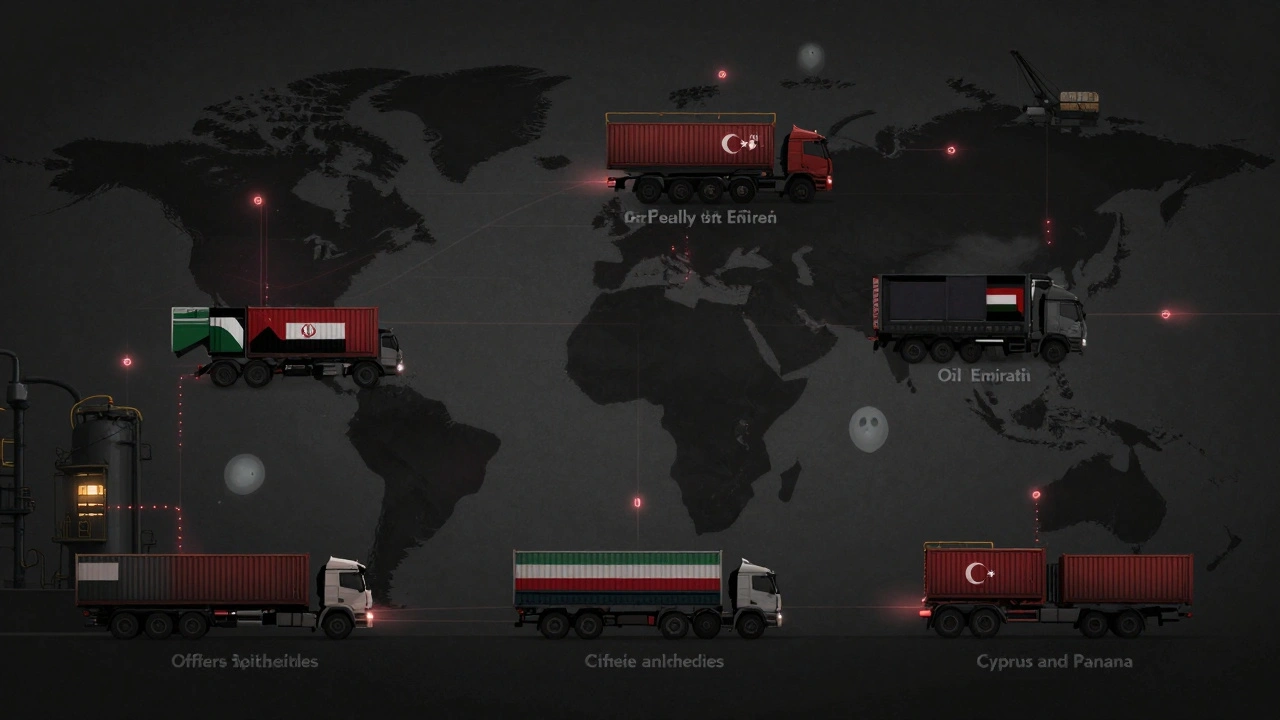
What’s Next? Sanctions Deflation
Experts are now talking about “sanctions deflation”-a term borrowed from economics to describe what happens when tools are overused until they lose power. Since 2016, the number of sanctions has tripled. Yet the number of successful behavioral changes-like Iran halting uranium enrichment or North Korea freezing missile tests-has dropped to near zero. The U.S. Senate’s move to repeal the Caesar Act (which targeted Syria) signals a shift. Even Washington is starting to question whether sanctions are worth the cost. Meanwhile, the EU’s 19th sanctions package tries to close the “China loophole” by targeting third-country facilitators. But that’s like trying to plug a leak with duct tape. If China keeps processing Russia’s oil, and Russia keeps using SPFS, then the West’s sanctions are becoming a sideshow.Can This Be Fixed?
There’s no easy fix. But three things could help:- Standardize data sharing. Right now, the U.S., EU, and UK use different formats, different lists, different update cycles. If they shared real-time, machine-readable sanctions data through a common API, compliance costs could drop by 40%.
- Focus on targets, not everyone. Instead of sanctioning entire sectors, go after specific individuals, vessels, or financial nodes. The UK’s ship-targeting strategy worked because it was precise. Broad bans hurt ordinary people and businesses.
- Build real humanitarian pathways. Create fast-track, audited channels for medicine and food. Make it easy for banks to approve these shipments without fear of punishment.
Are global sanctions still effective at changing behavior?
Effectiveness has dropped sharply. Since 2016, the number of sanctions has tripled, but successful behavioral changes-like halting nuclear programs or ending invasions-have nearly vanished. Sanctions now serve more as symbolic tools or economic pressure tactics than real levers of change. The targets, especially Russia and China, have built workarounds. The West’s overuse has diluted their impact.
Why are businesses struggling to comply with sanctions?
Because the rules are inconsistent, fast-changing, and extra-territorial. A company in Germany must follow U.S., EU, and UK rules at once, often with conflicting requirements. The U.S. can penalize foreign firms for doing business with sanctioned entities-even if that business is legal in Germany. Compliance teams now need daily updates from multiple sources, real-time tracking of ownership chains, and AI tools to flag risks. Many mid-sized firms lack the budget or tech to keep up.
How are China and Russia bypassing Western sanctions?
China uses its CIPS payment system to process trillions in transactions outside the SWIFT network. Russia uses SPFS, its own messaging system, to connect over 500 financial institutions across 21 countries. Both rely on third-country intermediaries-especially in the UAE, Turkey, and India-to re-export goods like oil, electronics, and dual-use tech. Chinese firms handle 83% of Russia’s refined petroleum exports, effectively shielding Russia from Western price caps and embargoes.
What are the biggest unintended consequences of current sanctions?
The biggest unintended consequences are humanitarian and economic. Global trade finance gaps have widened to $1.73 trillion, hitting small businesses in Africa and Asia hardest. Humanitarian aid delivery has dropped to just 17% of needed shipments. Banks are de-risking-refusing to serve entire countries-because compliance risk is too high. And evasion networks have grown into a $29 billion-a-year industry, making sanctions easier to circumvent than ever.
Is there a risk that sanctions will become obsolete?
Yes. Treasury Secretary Scott Bessent warned in November 2025 that if parallel financial systems like CIPS and SPFS become fully operational, Western sanctions could lose all leverage against major powers. The U.S. and EU are already losing control over key trade flows. If China and Russia continue expanding their alternatives, sanctions may become a relic of a unipolar world that no longer exists.