Sanctions Impact Estimator
Input Parameters
Key Insights
Based on article data: Russia maintained 93% of oil exports despite sanctions. Western economies lost 0.8% GDP per country annually. 58% of trade shifted to non-Western partners.
Results
Enter parameters to see results
Sanctions Were Supposed to Break Russia. They Didn’t.
When 32 Western nations locked arms in February 2022 to freeze Russian assets, cut off banks from SWIFT, and ban thousands of technologies, the goal was clear: starve Russia’s war machine into submission. Three years later, Russia still exports nearly as much oil as it did before the invasion. Its military production hasn’t slowed. Its economy didn’t collapse. Instead, it adapted-fast. The coalition didn’t fail because it was weak. It’s failing because it’s too slow, too divided, and too predictable.
The Coalition’s Biggest Strength Was Also Its Biggest Weakness
What made the sanctions so powerful at first was their scale. For the first time, the U.S., EU, UK, Canada, Australia, Japan, and South Korea acted as one. They froze $300 billion in Russian central bank assets. They blocked access to 75% of Russia’s banking system. They shut down exports of machine tools, semiconductors, and jet engines. The ruble crashed 45% in days. The world watched, stunned.
But that unity came at a cost. Every new sanction had to be approved by 32 governments. Each had different industries at risk. Germany feared losing gas deals. Hungary worried about its energy supply. Turkey wanted to keep trading. By the time they agreed on a new measure, Russia had already moved its goods, changed its shipping routes, or found a new middleman. The average delay for a new sanction? 27 days. The U.S. alone could act in three.
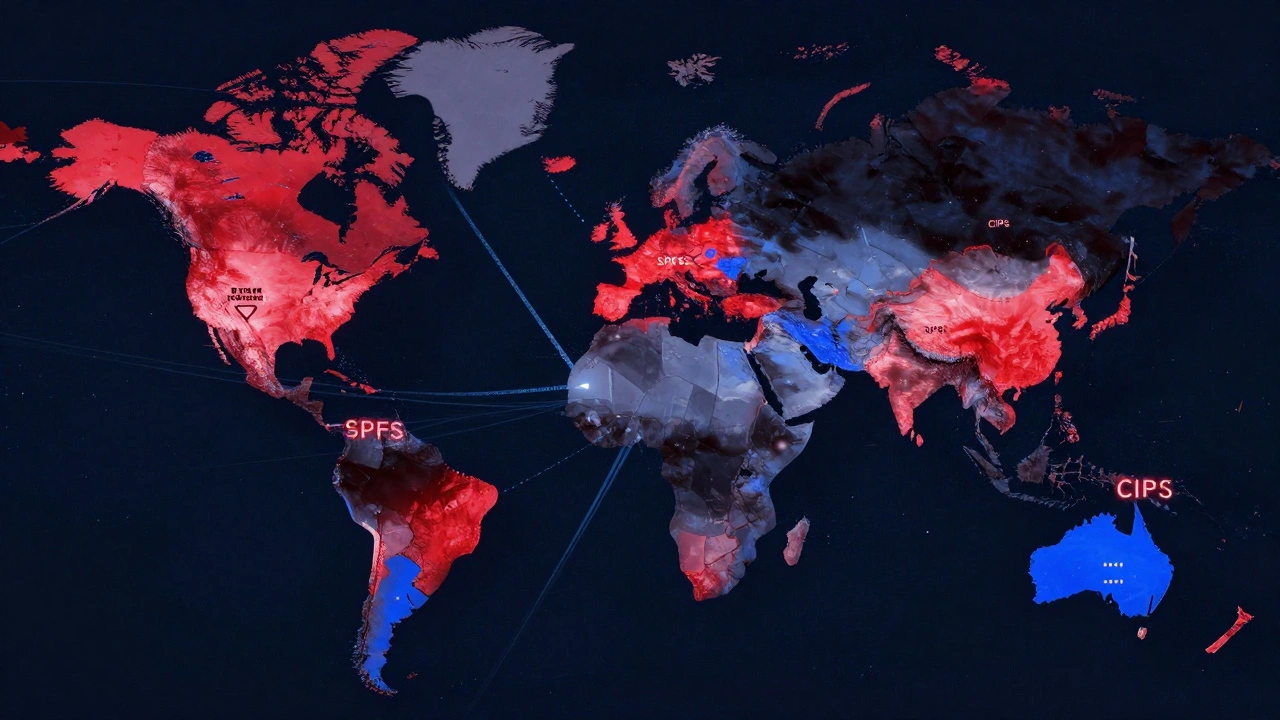
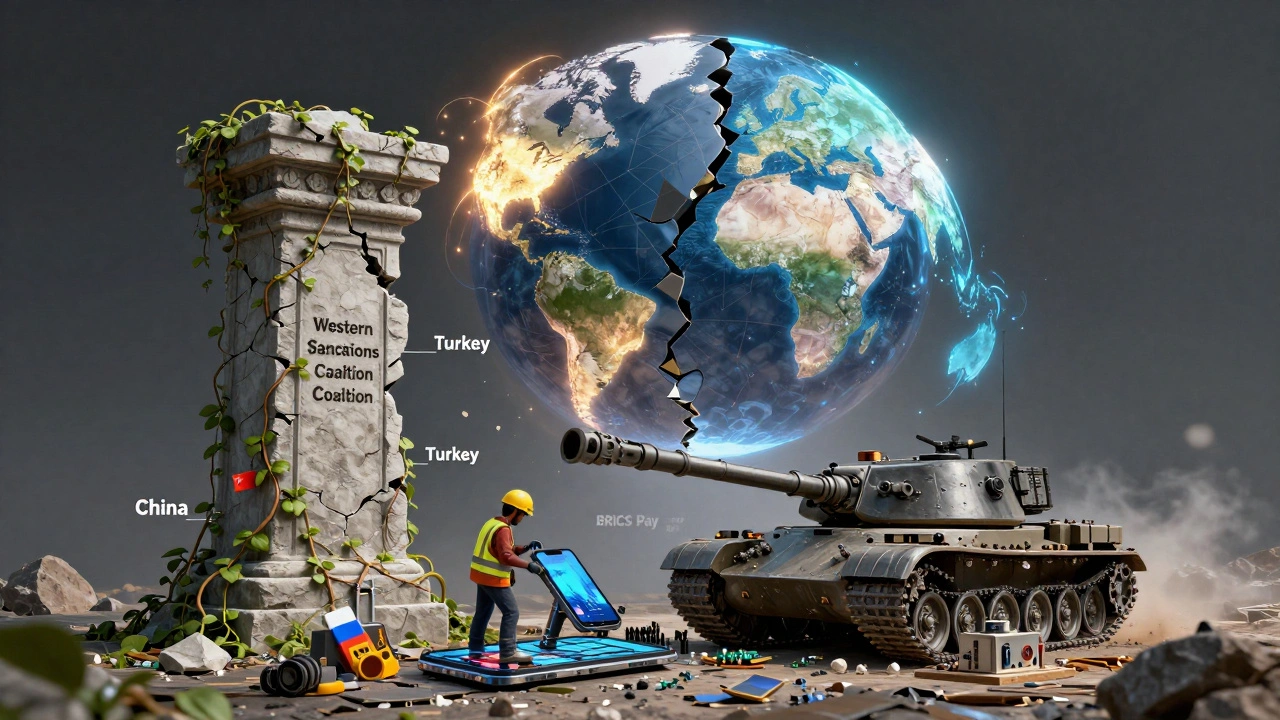
Meanwhile, Russia built a shadow economy. It didn’t need to win the global financial system. It just needed to bypass it. Now, 58% of Russia’s sanctioned trade flows through China, Turkey, Kazakhstan, and India. These countries don’t care about Western rules. They care about cheap oil, discounted weapons, and profitable deals. Russia turned its isolation into an advantage-selling assets at fire-sale prices to anyone willing to buy.
The Numbers Don’t Lie-Sanctions Are Leaking Everywhere
Let’s look at what actually happened:
- Russia lost an estimated $512 billion in potential revenue from frozen assets and oil price caps-but kept 93% of its pre-war oil export volumes.
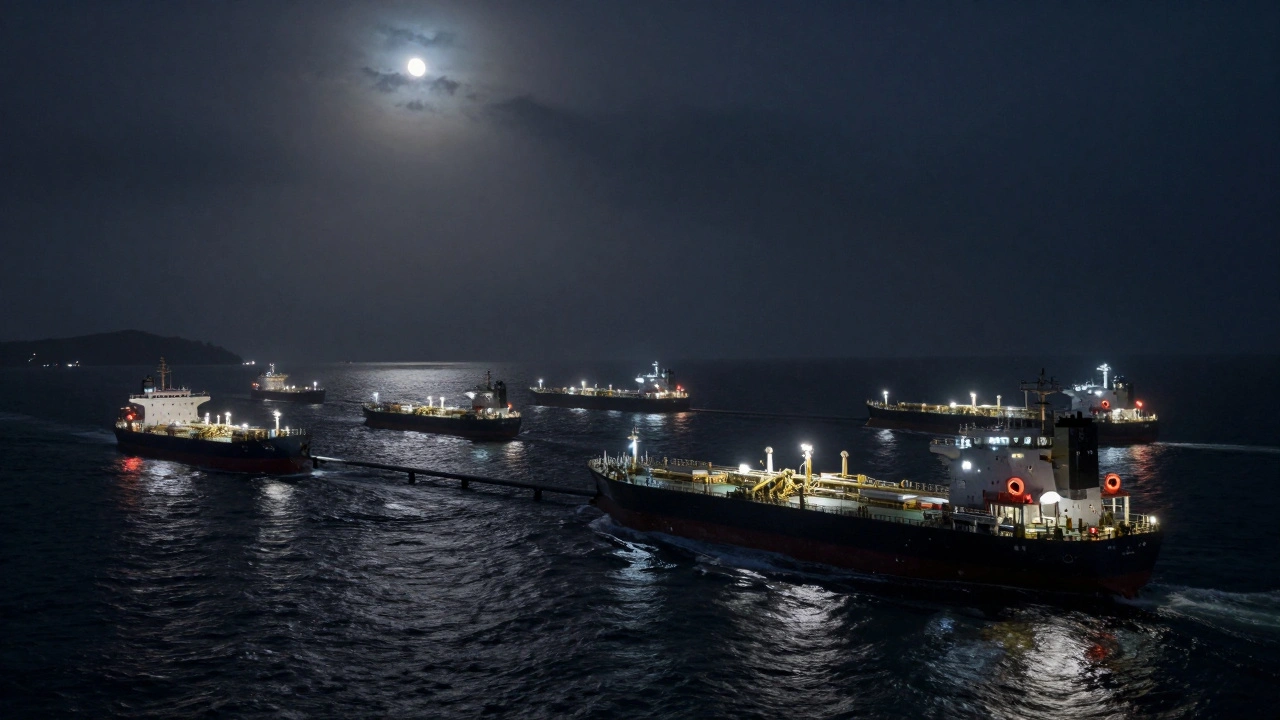
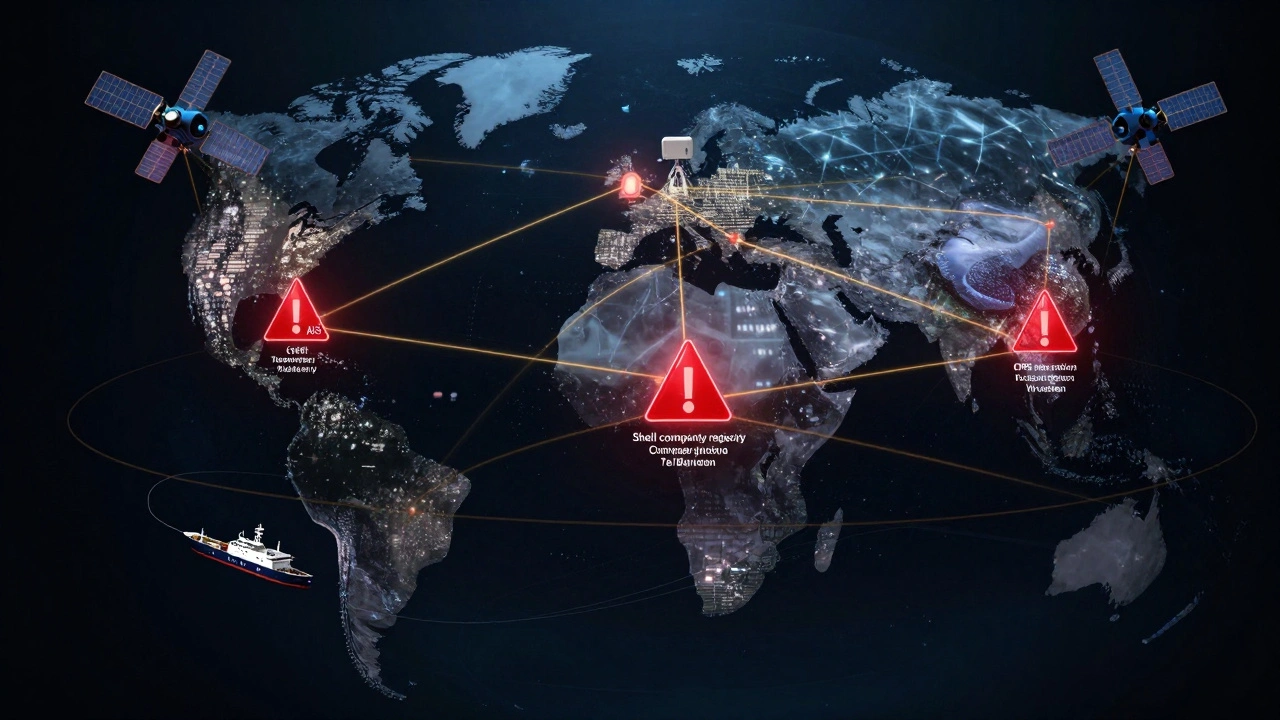
- Over 300 sanctioned tankers were replaced within 90 days. Each time, a new shell company, a new flag, a new owner-often registered in Panama or the Marshall Islands.
- Only 41% of sanctioned goods were successfully blocked by Q4 2025. The rest slipped through intermediary ports in Central Asia and the Middle East.
- China, Iran, and North Korea now share smuggling tactics with Russia. Iran’s experience in evading U.S. sanctions became Russia’s playbook.
The coalition’s enforcement tools are sharp-but only in places where Western institutions dominate. SWIFT? 98% effective. Global shipping? 41% effective. The problem isn’t the tools. It’s the gaps. The world isn’t just Western anymore. And Russia learned how to use that.
Western Countries Are Starting to Feel the Pain Too
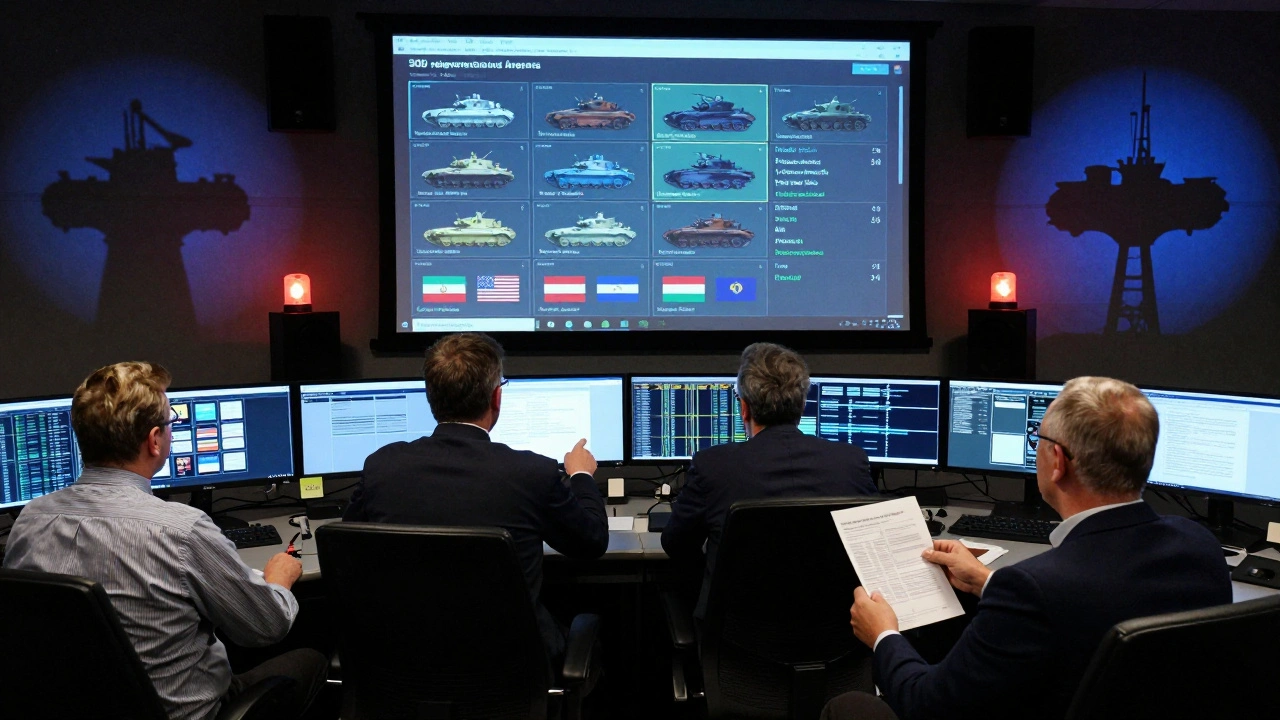
Sanctions aren’t free. They cost money. They disrupt supply chains. They raise prices. The European Commission found that 68% of coalition members saw their GDP growth drop by an average of 0.8% per year since 2022. That’s not a blip. That’s a drag on wages, investment, and public services.
Businesses are drowning in compliance. JPMorgan Chase spends $1.2 billion a year just checking transactions that might be linked to Russia. Small firms in Germany and France lost 12% of their international clients because they couldn’t tell if a buyer was clean. One German SME owner told me: "We didn’t want to break the rules. But we also couldn’t afford to keep hiring lawyers to check every invoice. So we stopped exporting entirely."
And the confusion is growing. The U.S. says: "Don’t do business with Russian intermediaries." The EU says: "We don’t recognize your secondary sanctions." That’s not a disagreement. It’s a legal minefield. In 2025 alone, 412 multinational companies got caught between conflicting laws. Some got fined. Others shut down operations. The coalition didn’t just target Russia-it fractured its own economic ecosystem.
Russia Isn’t Broken. It’s Learning.
CSIS’s economic models predicted Russia’s GDP would fall 8.5% by 2024. It fell 2.8%. Why? Because Russia didn’t try to match the West. It matched the need.
It built its own chip factories. It replaced German machine tools with Chinese ones. It turned its oil exports into barter deals-oil for food, oil for machinery, oil for electronics. It used its $643 billion sovereign wealth fund to buy time. And it didn’t just survive. It learned. Russian engineers now design systems that work without Western parts. Their drones use off-the-shelf smartphone chips. Their tanks run on diesel they refined themselves.
Meanwhile, the coalition keeps chasing the same targets. They sanction a vessel. Russia replaces it. They block a company. Russia reincarnates it under a new name. They ban a technology. Russia gets it from Iran, via Turkey, via Azerbaijan. The coalition is running in place. And Russia is getting faster.
The Real Threat Isn’t Russia-It’s the Collapse of Western Unity
The biggest danger isn’t that Russia will win. It’s that the coalition will unravel.
Look at Hungary. In April 2025, the U.S. quietly removed a close ally of Viktor Orbán from the sanctions list. No announcement. No explanation. Just a footnote in a State Department notice. Why? Because Hungary threatened to block EU-wide sanctions unless it got its way. That’s not diplomacy. That’s coercion-and it’s contagious.
Other countries are watching. If one member can bend the rules, why can’t others? If the U.S. imposes sanctions that hurt European businesses, why should they follow? If China is making money off Russia’s pain, why should they care about Western rules?
And now, the financial system is shifting. The BRICS Pay system processed $87 billion in Q4 2025. That’s not a lot compared to SWIFT-but it’s growing. And it’s growing because countries are tired of being punished for trading with Russia. They don’t want to choose between the U.S. and their neighbors. They want to trade without fear.
Can the Coalition Be Fixed? Maybe. But Not the Way It’s Trying.
Here’s what needs to change:
- Stop chasing ghosts. Sanctioning individual ships or companies doesn’t work anymore. Russia replaces them faster than you can name them. Focus on the systems: the shell companies, the payment processors, the logistics hubs.
- Fix the enforcement gap. The U.S. and EU need a unified legal framework. No more conflicting laws. No more "blocking statutes." Either you’re in the coalition, or you’re not.
- Invest in enforcement. Sanctions teams are understaffed, underfunded, and undertrained. OFAC says it takes 18 months to train an analyst. That’s too long. Hire forensic accountants. Train customs agents. Build AI tools that spot shell companies automatically.
- Target the enablers, not just the targets. China isn’t a sanction. It’s a lifeline. Turkey isn’t neutral-it’s a conduit. Sanction the banks that process Russia’s payments. Freeze the assets of the middlemen who move the goods. Don’t wait for consensus. Act where you can.
The coalition isn’t dead. But it’s losing its edge. If it keeps doing the same thing-slowing down, arguing, reacting-it will become a symbol of Western weakness. Not a tool of power.
What Happens If the Coalition Falls Apart?
If Western alignment cracks, Russia wins more than just survival. It wins legitimacy. Other countries will see sanctions as a weapon of the powerful-not a rule of law. China, India, Brazil, and others will build their own systems. The dollar’s dominance won’t vanish overnight. But it will erode. And when it does, the next time the West tries to isolate a country, no one will listen.
The war in Ukraine isn’t just about territory. It’s about who sets the rules. If the West can’t make sanctions work, it loses the next battle before it even starts.
Bottom Line: Sanctions Work Only If They’re Unified, Fast, and Smart
They were never meant to be a long-term war strategy. They were meant to be a shock. A signal. A way to buy time. But the West turned a shock into a marathon-and forgot to train.
Russia didn’t break the sanctions. It outlasted them. And now, the world is watching to see if the West can fix what it broke-or if it’s just going to keep talking while the rules change around it.