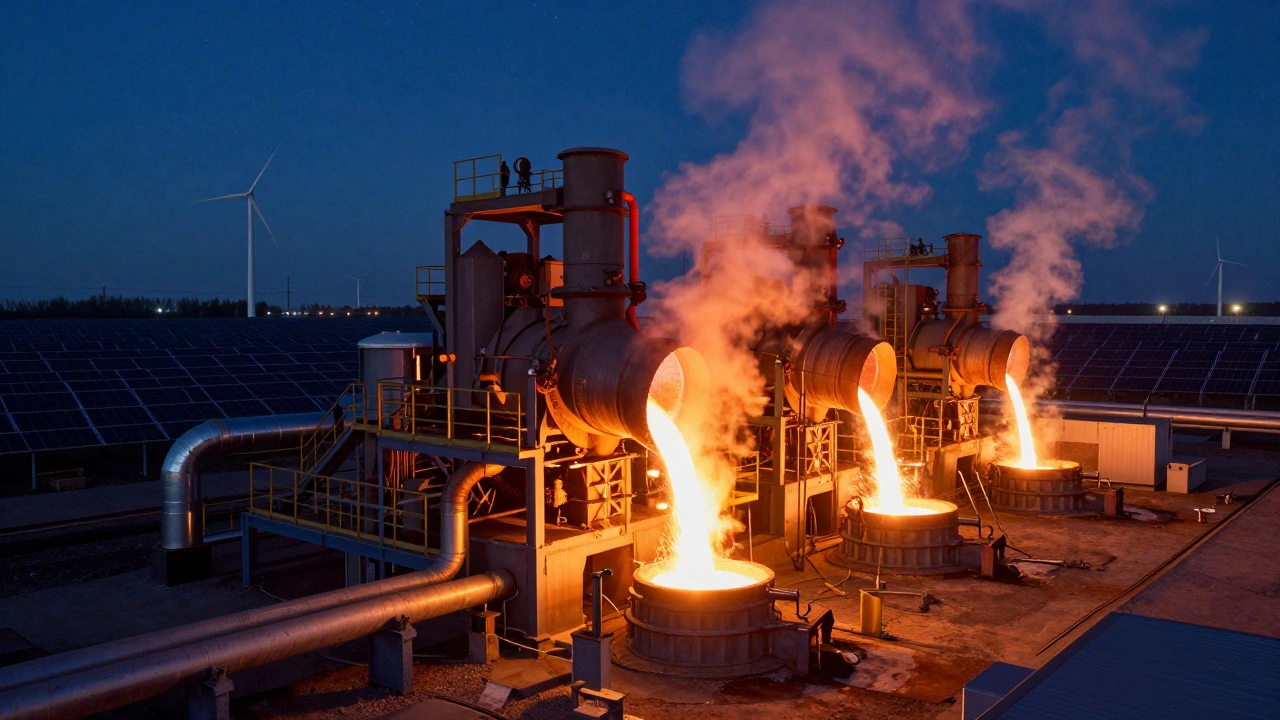
Financial Stability: How Economies Stay Strong Amid Crisis and Change
When we talk about financial stability, the condition where financial systems function smoothly, allowing businesses, households, and governments to plan, invest, and recover without systemic collapse. Also known as economic resilience, it’s not just about banks staying open—it’s about whether a single shock, like a war or a tech disruption, can ripple through the whole system without breaking it. Real financial stability doesn’t come from keeping interest rates low or printing more money. It comes from structure: clear rules, fair access, and systems that adapt before things fall apart.
Look at Central Bank Digital Currencies, digital forms of national money issued by central banks, designed to modernize payments and reinforce monetary control. Countries like China with its e-CNY and the EU with the digital euro aren’t just trying to replace cash—they’re redefining how money moves across borders and who controls it. That’s not just tech—it’s monetary sovereignty, a nation’s ability to manage its own currency without external interference. If you lose that, you lose power over your economy. And with private credit now hitting $1.5 trillion, non-bank lenders are stepping in where traditional banks won’t go. That’s not a bug—it’s a feature of a system that’s becoming more diverse, but also more fragmented. Green finance, the flow of capital into climate-friendly projects through bonds, funds, and transition loans is another layer. $2.9 trillion in green bonds issued so far? That’s not charity. It’s a market shift. Investors are no longer asking if climate risk matters—they’re asking how fast they can pivot before regulations force their hand.
Financial stability today isn’t about one central bank making the right call. It’s about how well the whole ecosystem holds together: from the farmer in Kenya using mobile money, to the factory in Poland refinancing with a private lender, to the city issuing a climate bond to build flood barriers. It’s about whether a teenager in rural Estonia can get a loan to start a remote business, or if a single war in Ukraine can freeze credit for half the continent. The old model—rely on big banks, trust the Fed, wait for bailouts—is gone. What’s left is a patchwork of tools, rules, and players, all trying to keep the system from tipping over.
What you’ll find in the posts below isn’t theory. It’s real-world examples of how financial stability is being rebuilt, challenged, and redefined—from AI-driven lending decisions to how Europe’s energy grid now affects its bond markets. These aren’t isolated trends. They’re connected threads in the same fabric. And if you want to understand where money is going—and who’s really in control—you need to see the whole picture.