Strategic Planning: How Modern Organizations Build Resilience and Adapt to Global Change
When it comes to strategic planning, the process of setting long-term goals and allocating resources to achieve them amid uncertainty. Also known as organizational foresight, it's no longer about predicting the future—it's about building systems that can bend without breaking. Today’s best strategies don’t just respond to crises; they anticipate them. That means linking resilience metrics, real-time signals that show how well an organization can recover from disruption to daily decisions, whether it’s a company adjusting its supply chain strategy, how goods and services move across borders amid geopolitical risk or a government redesigning pensions for an aging population.
From enterprise agility, the ability to quickly shift priorities without losing momentum to managing intergenerational equity, fair distribution of costs and benefits between young and old citizens, today’s planning must balance speed with fairness, innovation with stability. The most effective plans aren’t locked in PowerPoint slides—they’re living frameworks tested by simulation drills, workforce upskilling, and real-time data.
Below, you’ll find real-world examples of how organizations are rewriting the rules—not by guessing what’s next, but by building the capacity to handle anything that comes.
Effective crisis communication requires tailored messages for investors, regulators, and communities. Learn how to deliver timely, transparent, and trustworthy updates during emergencies to protect trust and reputation.
Cloud FinOps helps teams manage AI compute costs without sacrificing innovation. By linking spending to business value, automating optimization, and tracking unit economics, organizations cut waste while accelerating AI development.
As the U.S. population ages rapidly, healthcare systems face a crisis in workforce shortages, Medicare funding gaps, and outdated care models. The solution lies in prevention, home-based care, and age-friendly design-not more hospitals.
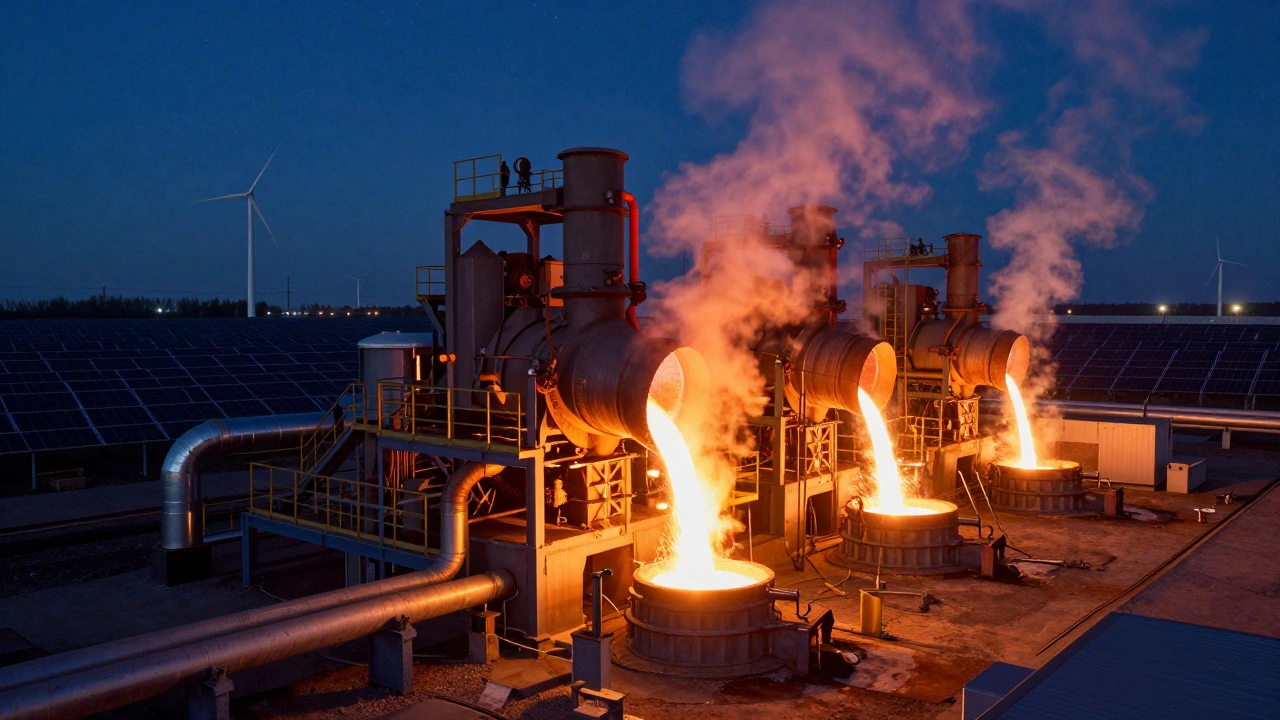
Industrial decarbonization requires a mix of hydrogen, CCUS, and electrification to cut emissions from steel, cement, and chemicals. Each technology tackles different challenges - and together, they’re the only path to net-zero manufacturing.
The WTO's Appellate Body is paralyzed after the U.S. blocked appointments for years. Now, trade disputes can't be resolved, countries are using temporary workarounds, and the global trade system is at risk of collapsing into chaos.
AI for small businesses isn't science fiction-it's a $18.7 billion market helping SMEs cut costs, save time, and boost sales with tools under $500/month. Discover 5 proven use cases that deliver ROI in under 90 days.
FX-linked supply contracts help businesses protect profit margins by tying international purchase prices to real-time exchange rates. This prevents currency swings from disrupting budgets, inventory, and supplier relationships.
Reskilling at scale transforms existing employees into workers for high-growth roles through personalized learning, internal mobility, and leadership-backed programs. Companies like AT&T, Walmart, and Accenture are saving millions and boosting retention by turning their workforce into their best talent pipeline.
The Indo-Pacific is the world's most volatile geopolitical flashpoint, where China's maritime coercion, U.S. alliance responses, and regional nations' balancing acts are reshaping global power. With rising tensions over the South China Sea, trade sanctions, and grey-zone tactics, the risk of conflict before 2030 is higher than ever.
Ukraine’s post-war recovery is at risk as high-level corruption scandals, like the $110 million Operation Midas case, divert critical aid funds, erode international trust, and strengthen Russian influence through stolen money and compromised institutions.
Trade disputes are resolved through the WTO's formal panel system or quiet bilateral talks. Most cases settle without panels, but when they don't, the process takes over a year-and enforcement is weak. Here's how it really works.
With New START expired, the world has no binding limits on U.S. and Russian nuclear arsenals for the first time in over 50 years. Without inspections or transparency, the risk of miscalculation and escalation is rising.