
Climate-Integrated Strategy: How Decarbonization Builds Real Competitive Advantage
Decarbonization isn't just about the environment-it's a strategic move that cuts costs, unlocks markets, and builds lasting competitive advantage. Companies tying climate action to core operations are outpacing competitors who treat it as a side project.
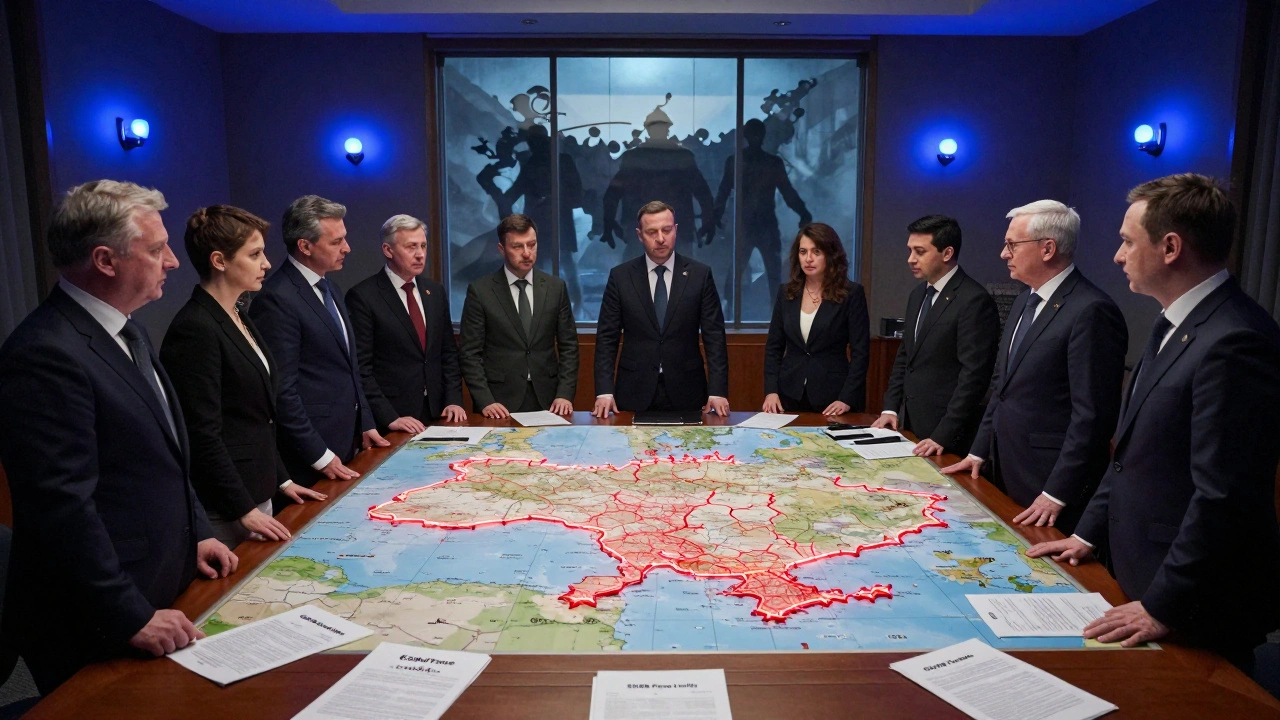
European Security Guarantees for Ukraine: Models, Costs, and Political Tradeoffs
European security guarantees for Ukraine are a new, complex framework of military, financial, and political commitments designed to protect Ukraine without NATO membership. They include funding, troop deployments, and frozen Russian assets - but face major costs, legal hurdles, and political divisions.

Iran’s Nuclear Program and IAEA Demands: Nonproliferation Risks in a Volatile Middle East
After U.S.-Israeli strikes damaged Iran's nuclear sites in 2025, the IAEA can't verify what remains. With 128kg of 60% enriched uranium unmonitored, the world faces a critical nonproliferation crisis - and time is running out.

Industrial IoT Security Guide: Protecting Smart Factories and Connected Infrastructure in 2026
Industrial IoT security prevents cyber threats from damaging physical factory equipment. Key strategies include network segmentation, encryption standards, and NIS2 compliance to maintain uptime and safety in 2026.

Leadership Mindsets for Complexity: Training Executives to Navigate Ambiguity
Executives must evolve their thinking to navigate ambiguity, not just their skills. This article explores vertical development, core leadership mindsets, and practical training methods to build cognitive resilience in complex environments.

Building Supply Chain Resilience for Health: Securing PPE, Diagnostics, and Essential Medicines
Healthcare supply chains failed during the pandemic. Now, hospitals are rebuilding with resilience in mind-securing PPE, diagnostics, and essential medicines through redundancy, direct sourcing, and collaboration.

Customs Modernization: How Advanced Analytics Are Transforming Trade Compliance
Advanced analytics is transforming customs operations by predicting fraud, cutting clearance times, and boosting revenue. Learn how AI-driven systems are replacing manual checks and what it takes to implement them.

Sovereign Cloud Architectures: Data Residency, Security, and Performance Tradeoffs
Sovereign cloud architectures ensure data stays within national borders to meet legal requirements, but they come with higher costs, slower international performance, and complex implementation. Learn how they work, who uses them, and whether your organization needs one.

Cross-Border Operating Standards: How Companies Harmonize Compliance Across Countries
Cross-border compliance harmonization helps global companies reduce legal complexity by aligning regulatory requirements across countries. Learn how risk-based approaches, AI tools, and international standards like ISO 37001 are reshaping compliance strategy in 2026.
AI-Driven Personalization: Closing the Gap Between Capability and Customer Experience Reality
AI-driven personalization can boost sales and loyalty - but only if companies stop guessing and start respecting customer trust. Learn how to close the gap between tech capability and real customer experience.

Dual-Use Technology Controls: Navigating Security, Compliance, and Market Access
Dual-use technology controls are reshaping global trade by restricting items with both civilian and military uses. From quantum chips to AI systems, compliance is costly and fragmented-forcing companies to adapt or lose access to key markets.

AI Safety Benchmarks: How to Measure Hallucinations, Bias, and Robustness in Foundation Models
AI safety benchmarks now measure hallucinations, bias, and robustness in foundation models to prevent real-world harm. Learn which tests matter, who uses them, and why passing them isn't enough.